This is an informal update vaguely and disorganizingly (that’s probably not a word, but I like it and it’s how I’m feeling) connected to my series about my cerebral palsy.
It’s not as “official” and well-crafted asI would like as some household/parenting issues greeted me as I walked in the door and I found it hard to recover once the dog started refusing to get in her crateand I discovered the teenager’s floor with multiple piles of kitten vomit, into which I stepped barefoot.
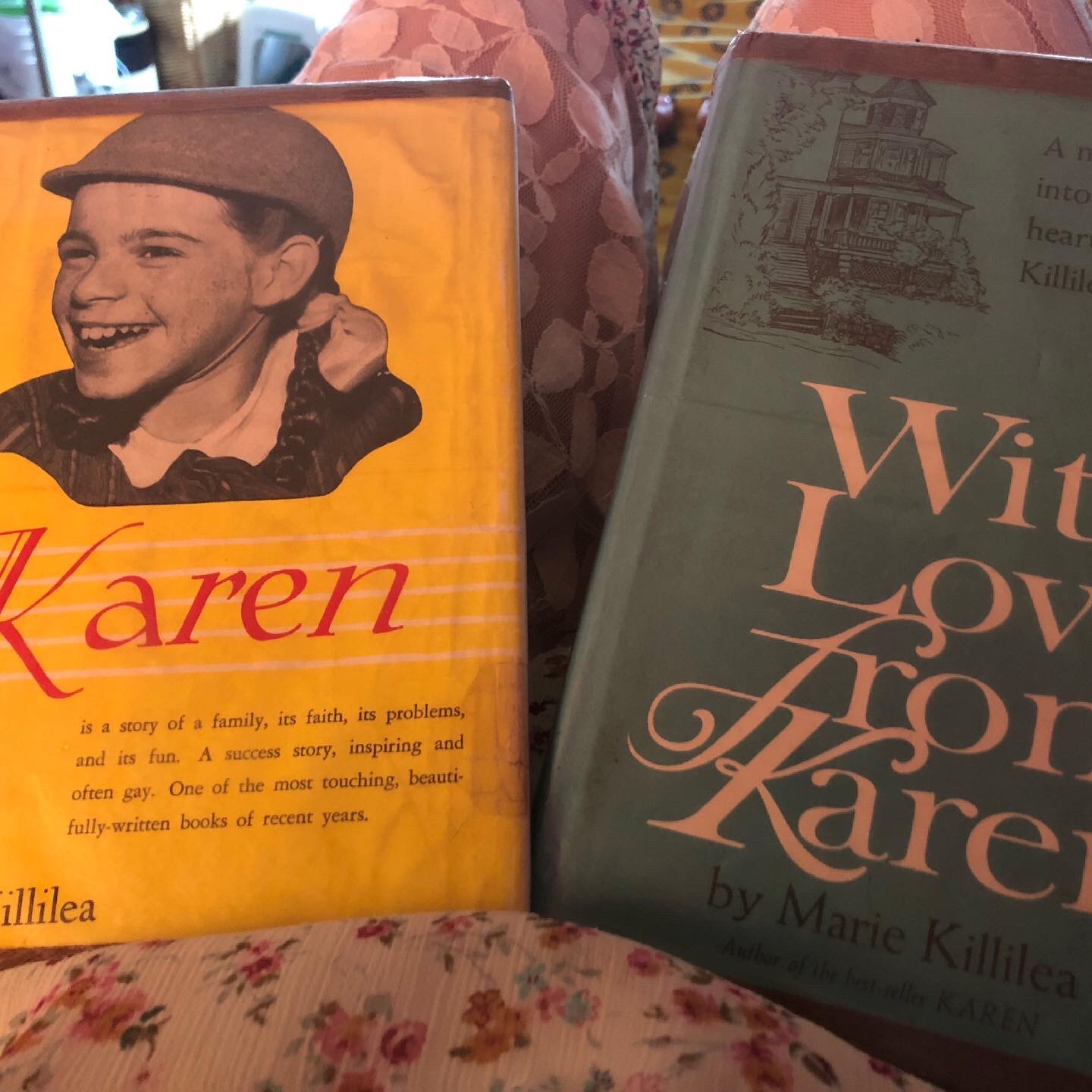
I finished the sequel to Karen by Marie Killilea today— With Love From Karen. That is another blog posted which I started but have postponed due to other events of the day more personal.
Late last night, I reached out to a local personal fitness trainer.
For those of you unaware, the average physical therapy can cost $350 per session, with the uninsured paying $125. If you have, like I do, high deductible medical insurance, this can add up to several thousand dollars in as little as a month.
Been there. Done that.
My amazing chiropractor (Nicole Jensen, Back in Line Wellness Center) bills me $125 a session when she gives me some brief physical therapy, advice and cracks every f*cked up bone in my body.
The high end of average cost for a personal fitness trainer is $70 per session, according to Google.
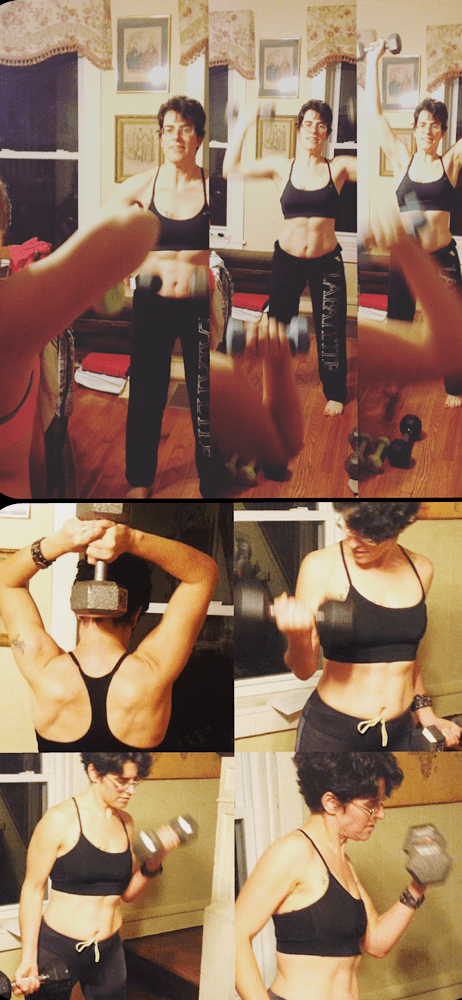
Six years ago almost to the day, I embarked on my first weight loss journey and shed 30 lbs in six weeks and looked like a skeleton.
By autumn, I looked like this:
Yes, the shadow of a person lifting two pound weights with me is the now teenager as an eleven-year-old.
I have two fitness dreams:
To run a 5k
To be an amateur body builder
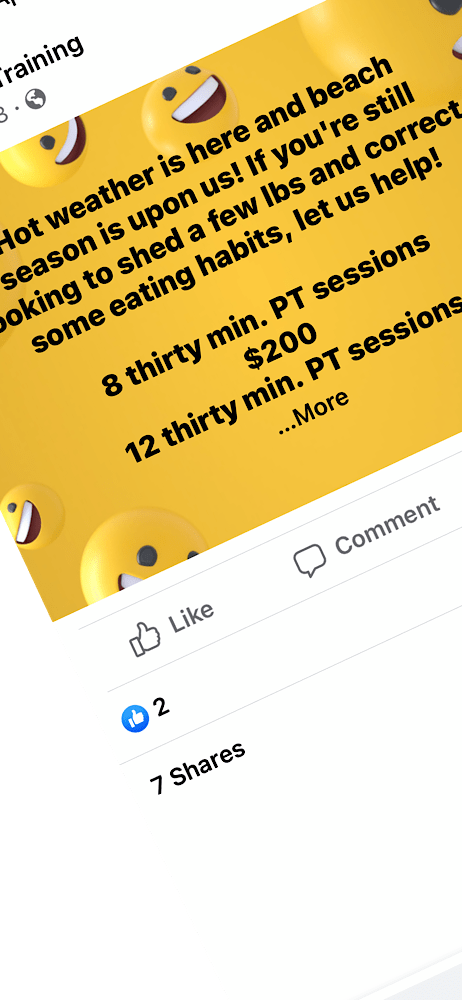
A local business, a fitness trainer only a few blocks from my home, has a summer special and good reviews on the internet.
Goofy crop is to obscure the identity of the trainer until I get permission to post.
I reached out with this message:
“I have quite the history of on again/off again weight training.
I went through a very emotionally traumatic loss of job experience in 2020 and turned to stress/comfort/ just plain bad eating and have gained 20 pounds. And stopped training.
I need to regain my discipline so I am hoping to see if you might be a good fit as a personal trainer— theoretically one session a week and I could maintain the effort at home.
I have already improved my diet, but the damage includes anemia so that makes it hard to work out especially in this heat.
I work second shift in a warehouse.
And perhaps the most important issue— I have mild cerebral palsy in the lower body so it’s super important that I keep my body strong and flexible.
I have two dreams— to actually run a 5k and to perhaps pursue amateur body building.
Please respond if this is something you might be willing/comfortable with/knowledgeable enough to undertake.
I am tentatively meeting with a trainer at this business at 11 a.m. Thursday for an assessment and to see if it’s a good fit.
This is a good way for me to improve my health and fitness as I’ve done so much physical therapy, I know what to do. I just need someone to make me do it. And check my form.
Who knows where this might lead? Maybe my dreams of being a body builder with cerebral palsy will come true.
Marie Killilea, mother of Karen Killilea and champion for research and improvement in medical treatment for those with cerebral palsy, wrote two memoirs and a children’s book about her daughter. She also wrote another book— though I don’t know the content of that one.
I’m puzzled by the title of this second memoir, as it refers to Karen’s correspondence with some American service men during the Korean War.
But the book focuses not on Karen, nor that correspondence, but family. The text itself is more beautiful and structured like a novel. Members of the family are cast with richness, though I think sometimes “Big Marie” (the author as her first born daughter is also Marie) gives the various pets in the household more literary attention than Karen.
Marie says she wrote the book in response to the huge volume of mail she received asking what happened next.
The second memoir focuses on all the children growing up, struggling with their futures and leaving home. Well, except for Karen, who, at least until she started showing Newfoundlands in dog shows, just exists in the background doing her physical therapy and for more than a year carries some unknown demon that she is wrestling and the family just lets her sulk. For a year.
The older children get married. A seven year quest for an annulment is chronicled. And elder Marie Killilea’s long-awaited miracle baby is conceived when she is 43. And then she is confined to bed.
Karen’s triumph is learning to put her own shoes and stockings on.
And in the end of the book — Karen reveals the source of her depression and her decision on how to approach her “freedom.”
I’m so disappointed not to know what happened to Karen. Remember Karen? I thought this was a book about Karen, not her damn dogs, the 80-year-old obstetrician, or what a holy Catholic family and their brood looks like.
This is part of a continuing serious about my journey even though I am more than midway through my 40s to understand my disability—cerebral palsy— after a lifetime of pretending it doesn’t exist
Since the teenager subscribed to the family plan of Spotify, my horizons have expanded.
I’ve found so many more podcasts, playlists and music than my 40-something brain can handle. But this allows me to learn new things.
For instance, that July is Disability Pride Month, but not Disability Awareness Month. And there is a Cerebral Palsy Day in October.
Disability Pride month started in 1990 to celebrate the updates to legislation mandating accessibility for those with special needs. And it even has a flag— black with rainbow zig zigs like a child’s depiction of lightning bolts.
How can you be proud of a disability? That sounds like it is anthropomorphizing the disability. Like it has a life. It does something.
I’m not proud of my disability. And I’m not proud to have it. It’s embarrassing and frustrating and, as I mentioned in my review of Netflix’s Special (read it here), when you have a mild disability people can’t see the depth of your struggles.
But I am proud that I get my ass out of bed every morning and do what has to be done.
And for the record, today is a hard day.
And one action I took, although small, I feel is mighty. I added a disability category on this blog and I organized it under the parent category “fitness.”
I started opening old posts and adding the tag, but I had to go get my second Covid shot (Pfizer) and then my neighbor accidentally cut the cable wires so now we have no internet.
And on our phones, the teenager and I share three gigs of cellular data. #singlemom
Anyway, no amount of stretching made my body relax. My back and lower limbs throbbed most of the day. And then after the Covid shot, my arm slowly got heavier and more sore. Now I hate to lift it.
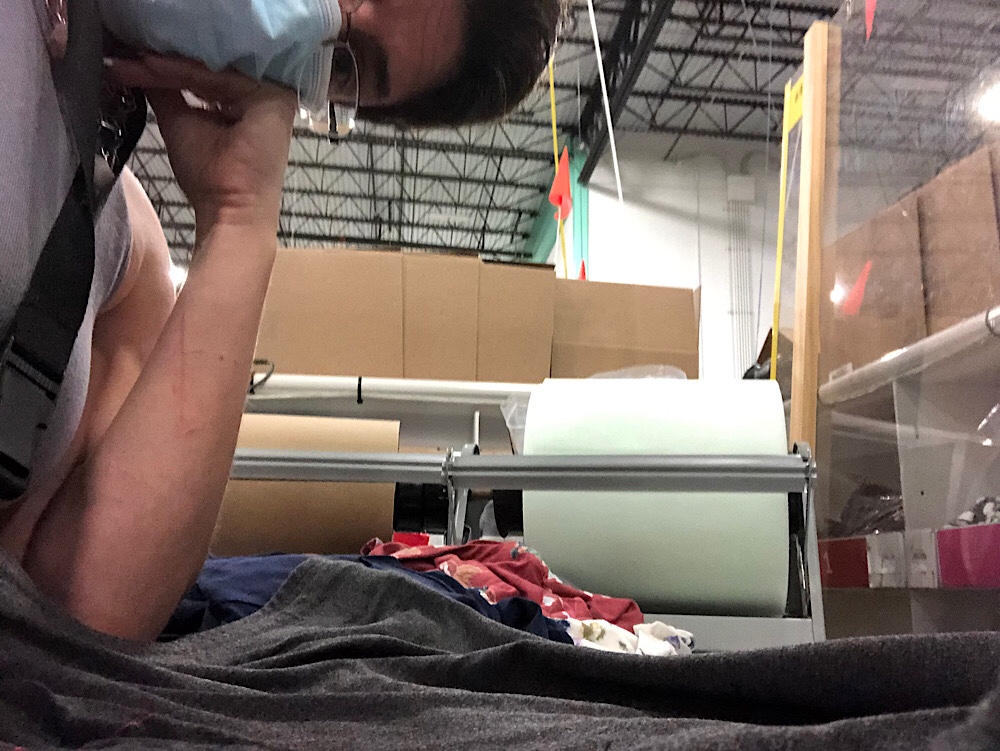
The person who gave me the shot told me to use the arm and drink lots of water. I worked in women’s returns processing at the Stitch Fix Bizzy Hizzy where I opened and hung clothes from more than 100 priority mail envelopes. More than 500 items.
The warehouse was probably 90+ degrees but thankfully not too humid.
When I have these days, I tend to bend by doing lunges (to stretch my body and redistribute my weight), do calf raises in place, stand on one foot, and try to stretch my hips and back as much as possible.
But still the pain level seemed to keep increasing.
So in the car I turned on the heated seat and blasted the air conditioning while drinking some cucumber flavored water.
And took two Tylenol PM to ease the pain enough to sleep.
Funny part is— yeah as if it is funny— I don’t think it’s my cerebral palsy causing the pain. My period is due in four days. I think it’s menstrual cramps.
Everything wrong with my body seems to start in my lower back and hips. Hell, my daughter came into this world through back labor. Is that focus on my back part of the CP?
I used to take a lot of ibuprofen, then Aleve, then meloxicam. After a while, I realized. None of it helped.
I was listening to Dax Shepherd’s Armchair Expert last night and they did a special episode on medical misinformation. They had some pretty rough feelings toward chiropractors. They pointed out that chiropractors can be good or bad, but that the field itself isn’t very regulated or science-based. They turned the conversation to physical therapists. They liked physical therapists.
What about chiropractors who have a physical therapy background? My chiropractor can find muscle tension and stretch out things I didn’t even know I had. And my body seized up from being crooked and she straightens it out.
Another piece in my understanding cerebral palsy series
Technology can offer an opportunity for a great equalizer or perpetuate a divide. In both cases, there is a complexity that arises.
That sounds vague.
But allow me to try and explain.
My friend Nancy, a talented poet and essayist, is blind. She has seen the rise of all sorts of technology from computers, to tablets, to the gambit of “smart” devices. She has experienced that when looking for accessibility, those helping her (whether it be staff at organizations for the blind or everyday customer service employees) view people without what they deem standard technology— smart phones, online banking, PayPal, computers— as lazy, poor or stupid.
I’m thinking about this, in part, because of the podcast A is For Abled. I listened to the debut 2019 episode (recorded on October 6 which the podcaster announced is world cerebral palsy day) at the Stitch Fix Bizzy Hizzy last night.
I am realizing more and more that platforms that YouTube, Spotify, Facebook, etc., provide more and more opportunities to connect with real people so many of the “products” people put out there are amateur. And I am not knocking on that.
But when people talk about there experiences you need to keep in mind that memories are not the best source of fact.
The first episode of A is for Abled discusses the host’s background— Kyle, his sister Cheyenne and his mother have a pretty comprehensive discussion about their family attitude toward Kyle’s cerebral palsy, his upbringing, public vs. private school in regards to disability resources and quality of education, sibling relationships, the various therapy and surgeries Kyle has had and society’s reactions to disabled children and more specifically Kyle’s gait, which they call “swagger.”
Kyle was 32 in 2019, so this makes him more than a decade younger than me. His mother was 19 when she had him and he is the oldest child. They are also African American so they make some comparison/contrast between society’s reaction to the disabled and the reaction to African Americans.
Apparently the show has completed two seasons. And it sounds like Kyle’s condition is very similar to mine.
Between his family, his therapy, his various exercise classes that his mom encouraged him to try (yoga, aqua aerobics, tai chi), private school and surgery, Kyle had a lot of interventions I didn’t have.
Things A for Abled pointed out (I have not fact checked these statements):
Like Karen Killilea (if you don’t know who I am referring to I talk about the Karen books here), Kyle had surgery (twice) for his hips to straighten them.
People with cerebral palsy often develop arthritis in their thirties.
People with cerebral palsy get worse as they age because the muscles and tendons continue to tighten. That’s why physical therapy and stretching is so important.
Hot Yoga not only provides the much-needed stretching and flexibility but also the heat automatically loosens the muscles.
To explore A is For Abled, find their website here.
These books are directly related to my quest to researchcerebral palsy, a disability I have, and chronicle my journey to whole health. With discipline, hopefully I will lose weight, return to strength training and someday pursue my longstanding goals of running a 5K and hobbying as a body builder.
Below please find my original interactions from the first memoir, Karen, by Marie Killilea: Starting the Karen Books.
As I said then, I thought this memoir would be about Karen. And her struggles with cerebral palsy. A condition no one knew anything about at the time.
Now this is not a complaint, but the book is about advocating for a child with cerebral palsy and Marie Killilea’s struggles as a mother— a mother with a history of pregnancy loss, devout Catholicism, children both precocious and sickly.
Karen is merely a two dimensional figure in the background. And the book chronicles many of Karen’s tribulations (limiting fluids to 20 ounces a day to prevent seizures and reduce spasticity, sores and discomfort from what would now be seen as barbaric full-body braces, and despite her keen intellect being banned from school) as well as her developmental triumphs.
The book ends with one such celebratory moment.
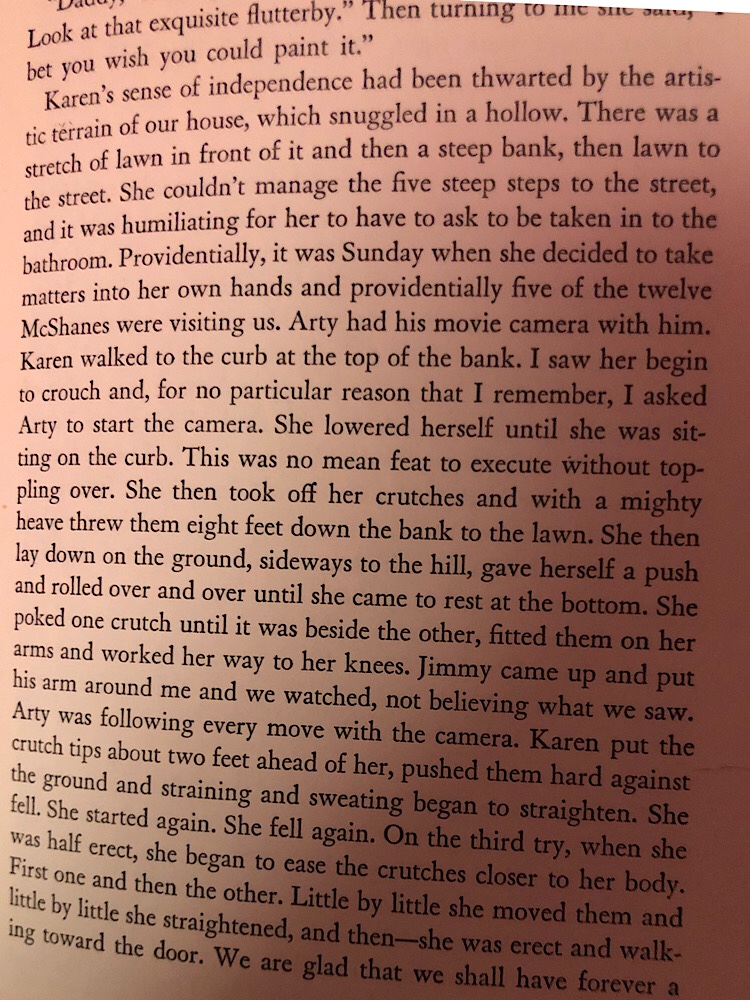
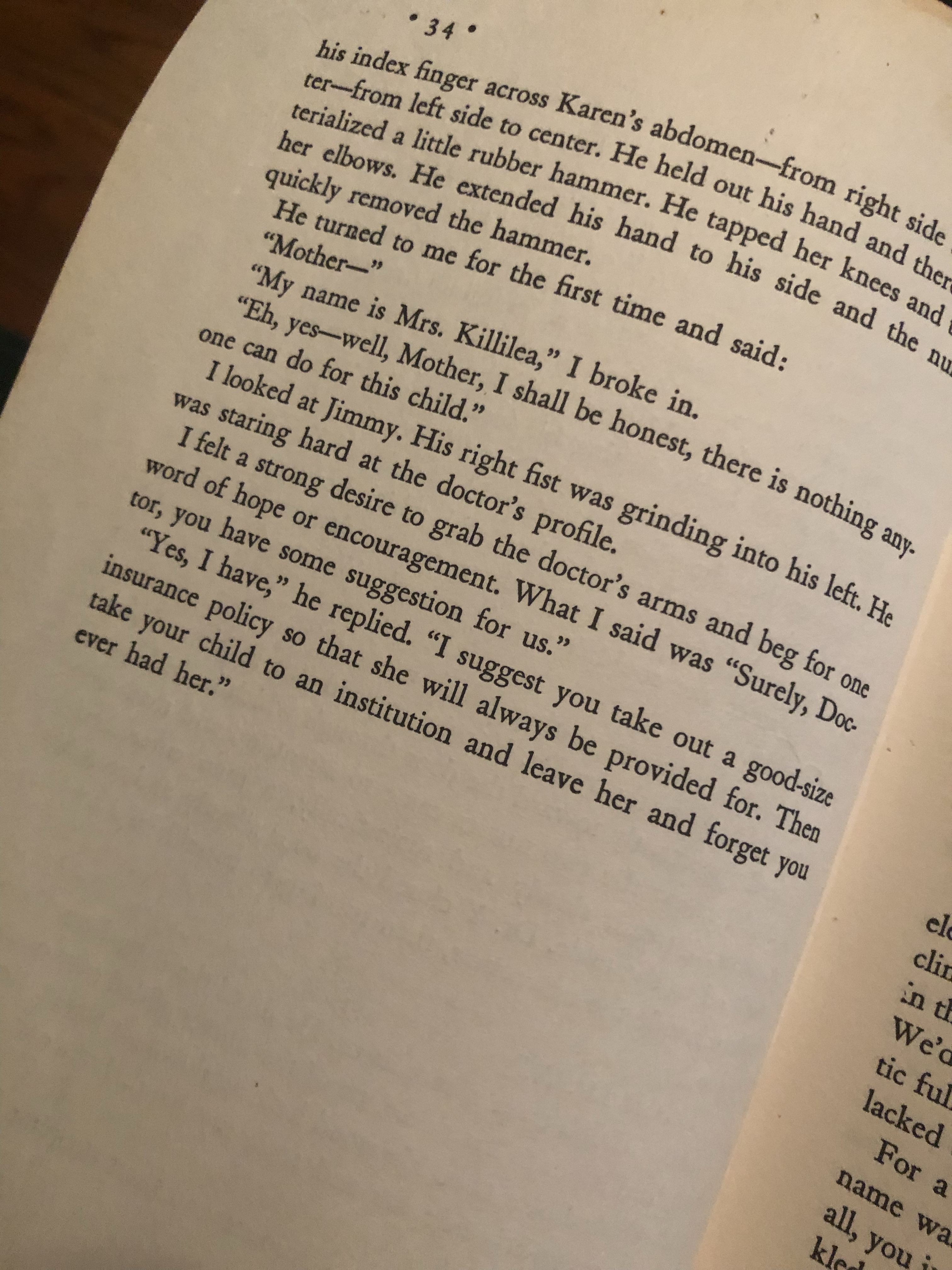
In the passage photographed above, Karen tries to navigate a hill. Mrs. Killilea never quiet explains where she was going— to the house? Away from it? Karen throws her crutches down the hill, rolls, retrieves her crutches, falls several times trying to get up, while her family watches and records it on a neighbor’s home movie camera.
This is one of those moments touted as bastions of independence. But how many times do you want someone fall without at least asking if they want help? And this is solely my opinion and my experience, but I hate seeing myself on video. The camera makes the “wrongness” of the cerebral palsy body more exaggerated and severe. Her parents want to record this moment in their Pride, but, to me, and again this is my opinion, to rewatch such a moment is to buy tickets to the freak show.
This family had inordinate health struggles with all of there children and the work Mrs. Killilea did to benefit cerebral palsy research made the world grow exponentially. And I am grateful.
But as I study the first chapter of Mrs. Killilea’s sequel memoir, With Love From Karen, it leaves me feeling that Karen’s condition has led to a 1952-best-selling book that has eased her family’s burdens, allowing them to buy a big, broken down Victorian house and given them a life line after a decade of medical bills for all their children.
I feel like Karen is exploited. Especially upon hearing that the whole family appeared in Time magazine.
Also I note Mrs. Killilea’s writing style has improved. The sentences flow with more artsy grammar and word choice. The description is more detailed. The verb choice strong.
Does she have an editor working for her now?
Bean, the 50-plus pound mastiff mutt puppy, and I are in the hammock. I hope this book presents Karen as a person, not an accessory.
Yesterday I had hoped to do more editing on the bits and pieces left of the near-final manuscript of Manipulations, the first of three novels by me, coming soon from my little publishing imprint, Parisian Phoenix.
But then my graphic designer partner in crime (and this endeavor) encouraged me to start Karen by Marie Killilea. The book was in its 11th printing by the mid-sixties and I am reading a copy from about 60 years ago.
It’s part of my recent quest to understand my cerebral palsy, which ironically led to me discovering that my anemia has reared its ugly head. So maybe this quest isn’t addressing physical needs as much as emotional ones. And the neurologist’s office did return my call. My appointment is January 13. Yes, in six-and-a-half months.
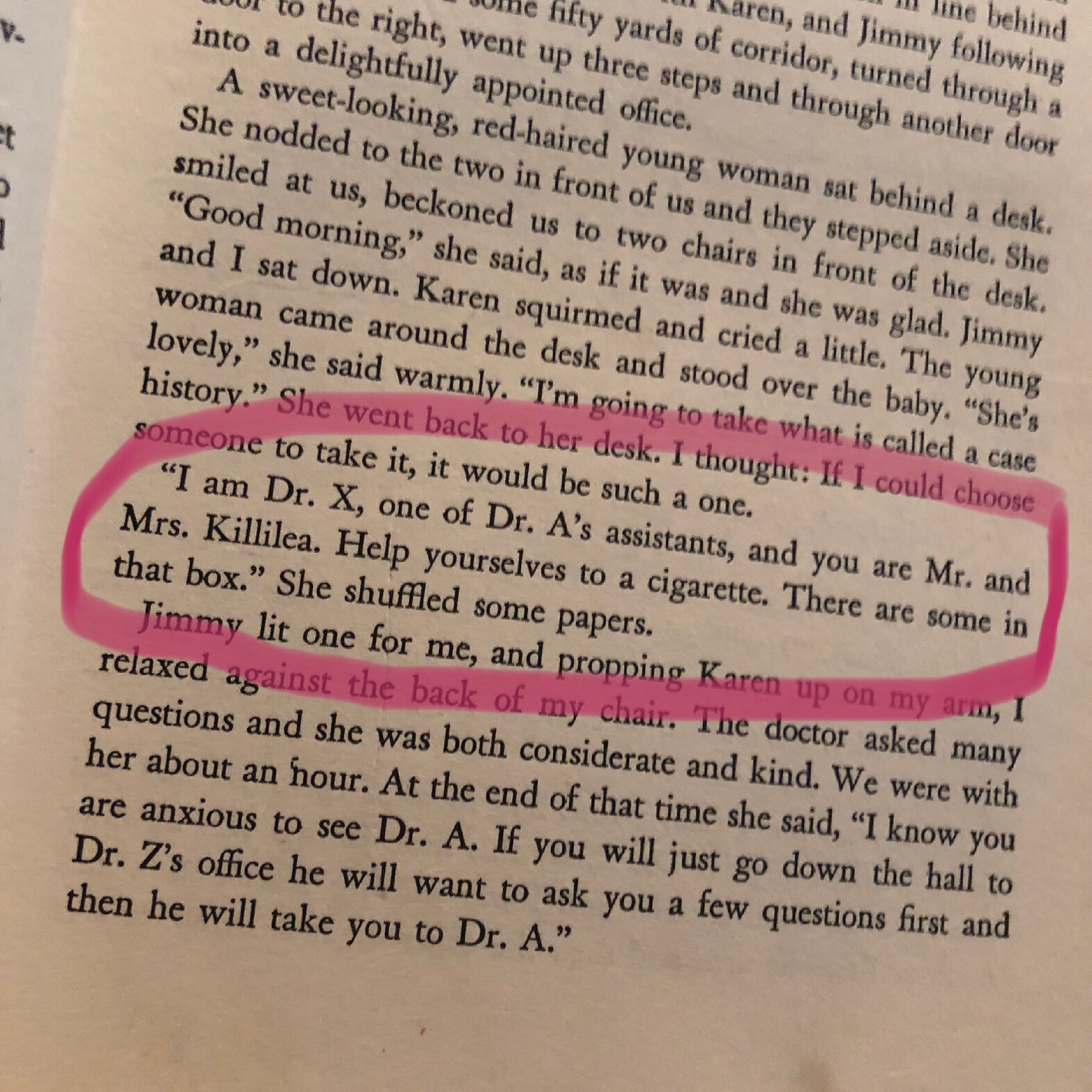
While I certainly understand what these parents must have gone through (Karen was born in 1940 and died in 2020), this certainly was a different era. An era of institutions, a lack of knowledge and families and doctors sitting around smoking cigarettes together.
But so far, and I believe Karen is now 4, Karen is described as beautiful, but presented as a thing in the background. The memoir so far is about the mother and her thoughts and parenting techniques and her interactions with the medical community.
To me, the way Marie describes placing her in the backyard and going in the house to do chores… well, Karen slowly pulls herself by her arms inching toward whatever is of interest. The current chapter describes her playing in a mud puddle. She sounds like a fish caught between land and sea.
Honestly, to me it sounds cruel. I’m sure it fostered independence and strength but damn it sounds grueling for Karen. This is the beginning of the ideology of mainstreaming kids with disabilities— toss them in and let them adjust. And as young people with disabilities, emotions and intellect are still immature. So it is cruel in my opinion to let these children struggle with the physical, too. It’s this weird we get that we are different but we don’t have the life experience to understand why or how and while allowing a child to figure it out raises a fighter and someone not prone to accept help or pity, it would be nice to have some framework other than you can or cannot do something or are or are not like everyone else.
I see a potential multitude of nonfiction book projects in my future. My memoir will need to be three volumes: my childhood, my “squiggly” career (yes there is a term for people with eclectic careers like mine), and this health quest.
Speaking of non-fiction, I would like to publish my honors thesis from Lafayette College and do an anthology where I have select authors/artists to explore what I will refer to as identity politics. I have mentioned it to Nan, my blind friend, and Bill, my horror-loving freak friend, and both love the idea. I encourage you to read Bill’s novels, The Kink Noir series, which blend a dark 1940s detective vibe with kink and erotica while exploring some topics about what it means to be human.
My review of Bill’s most recent book is here: Debauchery
Speaking of Bill, my flower workshop got postponed last night, so Bill, fresh off of jury duty, came down to catch up and have dinner at the always charming Porter’s Pub in Easton, Pa.
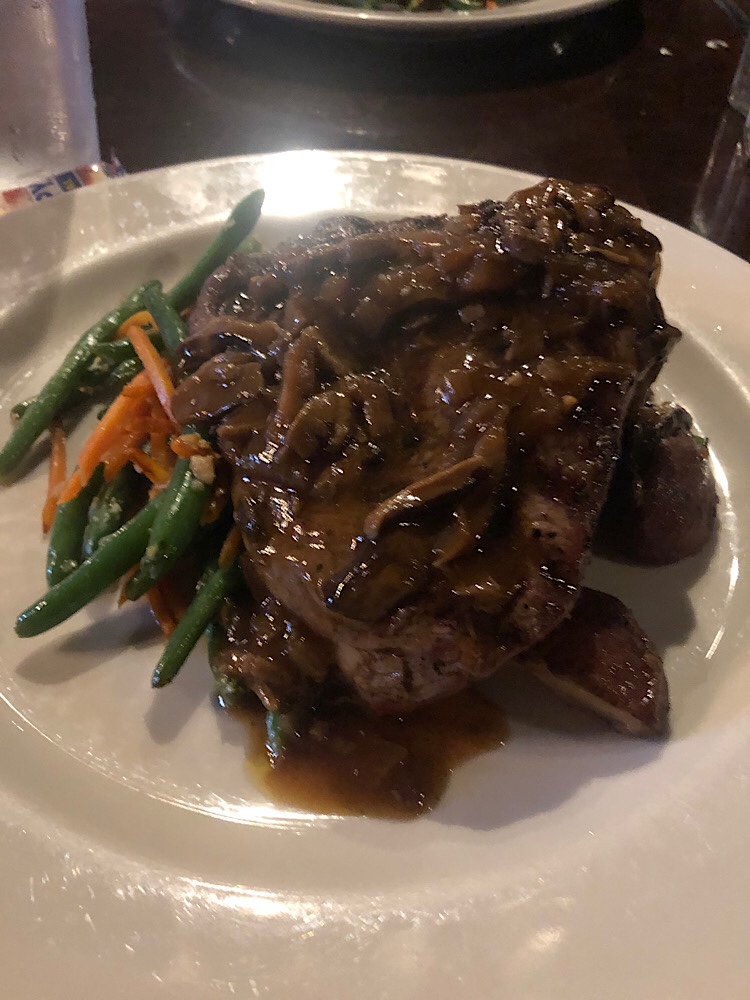
Rib eye with Jameson’s Demi-Glace
Armed with the news that my iron is low, he bought me a steak and a lemony-smooth gin martini.
Upon arriving home, I finished taking out the garbage and recycling including two more 13-gallon trash bags from teenager two’s room. It looks like she’s officially ghosted me, and that makes me sad.
And I let the dog sleep with me. And as my room is the front room, she heard every noise in the neighborhood.
This piece will also include discussion of the mental health app Ginger and a review of a probiotic carbonated beverage.
If you’re new here… I am a 46-year-old single mom who volunteers with a local cat rescue, has a bratty Goffin cockatoo, and is currently trying to learn more about my own cerebral palsy.
The Teenager is on Day 2 with her grandmother in Cape May, a trip the teen has been planning since she starting working as a waitress this winter. I am home alone with her dog, our four cats, my birds and five fosters.
Yesterday after weeding, Extra Crunchy thought my sweaty, outdoorsy smelling body was a wild animal. (He is available for adoption; he’s a miracle kitten who survived distemper. And has the most soulful deep grey eyes.) Video: Extra Crunchy Attacks My Dress
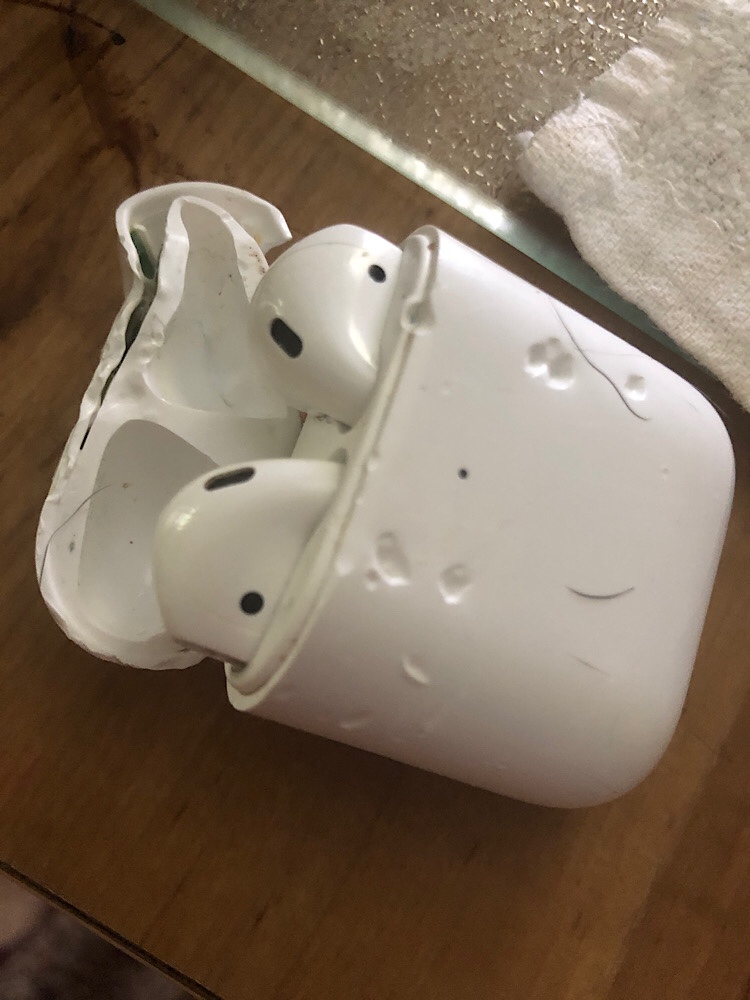
Meanwhile the dog ate the case to my air pods while I was listening to Alex Hooper’s podcast Achilles’ Heel and making vegetable stock.
I had my second Ginger session yesterday with my coach. I still had the feeling many of her answers were stock, and that sometimes she may have been balancing more than one client at a time. We ended up talking a lot about how because of a dip in self-worth can cause discipline related and motivation issues— why should I take care of myself and commit to good habits if I’ll still be the same insecure person no one seems to value?
But I did do triceps and shoulders yesterday despite intense heat here.
An old friend popped by for a text last night and the nostalgia made me cry. Perspective is a beautiful thing, and sometimes we all need to remember behavior viewed as “bitter” can come from hurt or anger. Understanding can make a huge difference in an interaction.
By 10 pm, I couldn’t end the circle of thoughts about regret, hurt and the pain of seeing someone you once cared about experience something you know isn’t good for them.
So I texted an evening Ginger coach. At first the answers seemed stock and that she was copying/pasting and distracted by other clients, but that rapidly changed. And she and I had a good discussion. It was only about 20 minutes but it ended the loop of thoughts in my head.
I definitely think this service will help keep me focused with my therapist and allow me to get help for the more everyday issues as a situation is happening. Being the curious type I am, I want to know more about how the system works for the employees.
Of course, with the teen being gone, the dog is sullen and bereft. Last night she kept checking if the teen had come home yet and it was very difficult to get her to go to bed in her crate in the teen’s bedroom without the teen.
At 5:40 am the poor dog starting crying, so I went to her, got her out and took her to the yard and just let her stay free in the house. There was no way I was getting up with only 5 hours sleep.
I woke to find her in my bed with me and I actually liked knowing where she was. We got up for the day at 9.
As I drank my cup of coffee and starting feeding animals, my primary care physician’s office called. They are concerned about my iron and the doctor wants to schedule an appointment to discuss me going for a GI work up.
Now about a decade ago when I switched to his care, I did so because my doctor at the time to refused to treat my anemia. I had stress-induced super heavy menstrual bleeding that had reduced my stored ferritin to a 4. The nurse in the office at that particular doctor said that the adrenaline in my system from the stress is the only reason I was walking around and not in the hospital.
I had a three-month wait to see this particular new doctor. By the middle of the summer I literally could not get off the floor unless my-then five-year-old made me a pot of coffee and brought me a cup.
I called my OB/GYN and begged his staff to help me. The nurse practitioner saw me a day or two later and I left his office with a bag full of prescription-strength, special absorbing vitamin D and directions to take an iron pill with every meal.
So after two years of stress, and my period is still heavy, and eating mostly junk food for the last year, I don’t think we need a complete GI work up to fix this. When I see the doctor, and his residents, I’m going to ask if we can see if diet and supplements will return my numbers to better levels based on whatever deadline he prefers.
But it has me suddenly thinking— the recent falls, issues with hitting my numbers inconsistently at work (I literally said to a supervisor “somedays I just can’t make my limbs move faster.”) I have been blaming being out-of-shape and lazy and my disability for some recent issues, but compounding that is anemia.
And I honestly can’t remember the last time my iron was checked. The only reason he checked it now was because I reminded him of my history of anemia and that if my vitamin D was low, the two go hand-in-hand. And the highest my vitamin D has been in the last decade was 37. 30 is the lowest vitamin D result that counts as normal.
(By perusing my online medical regards I learned I don’t nor have I had HPV, HIV or Chlamydia.)
And this was all before coffee.
After coffee, I put on my favorite sun dress and ventured into the 90 degree heat (at 10:30 a.m. — that’s insane.) I walked over to Nan’s apartment six blocks away to bring her the Seeing Stars super soft lounge set/pajamas I bought her at the Stitch Fix Bizzy Hizzy. Giving a blind woman things with nice textures is always fun.
I walked home, sat for a minute and left at 11:15 to walk to CVS to pick up the teenager’s prescription toothpaste before they restocked it. I treated myself to a Booch Pop withmy 40% off coupon. It’s a carbonated probiotic drink of only 40 calories that tasted like a zesty ginger beer.
There was also a coupon for free candy so I got a generic assortment of Gold Emblem Swedish fish and a trail mix with pistachios and almonds on sale for $2.99.
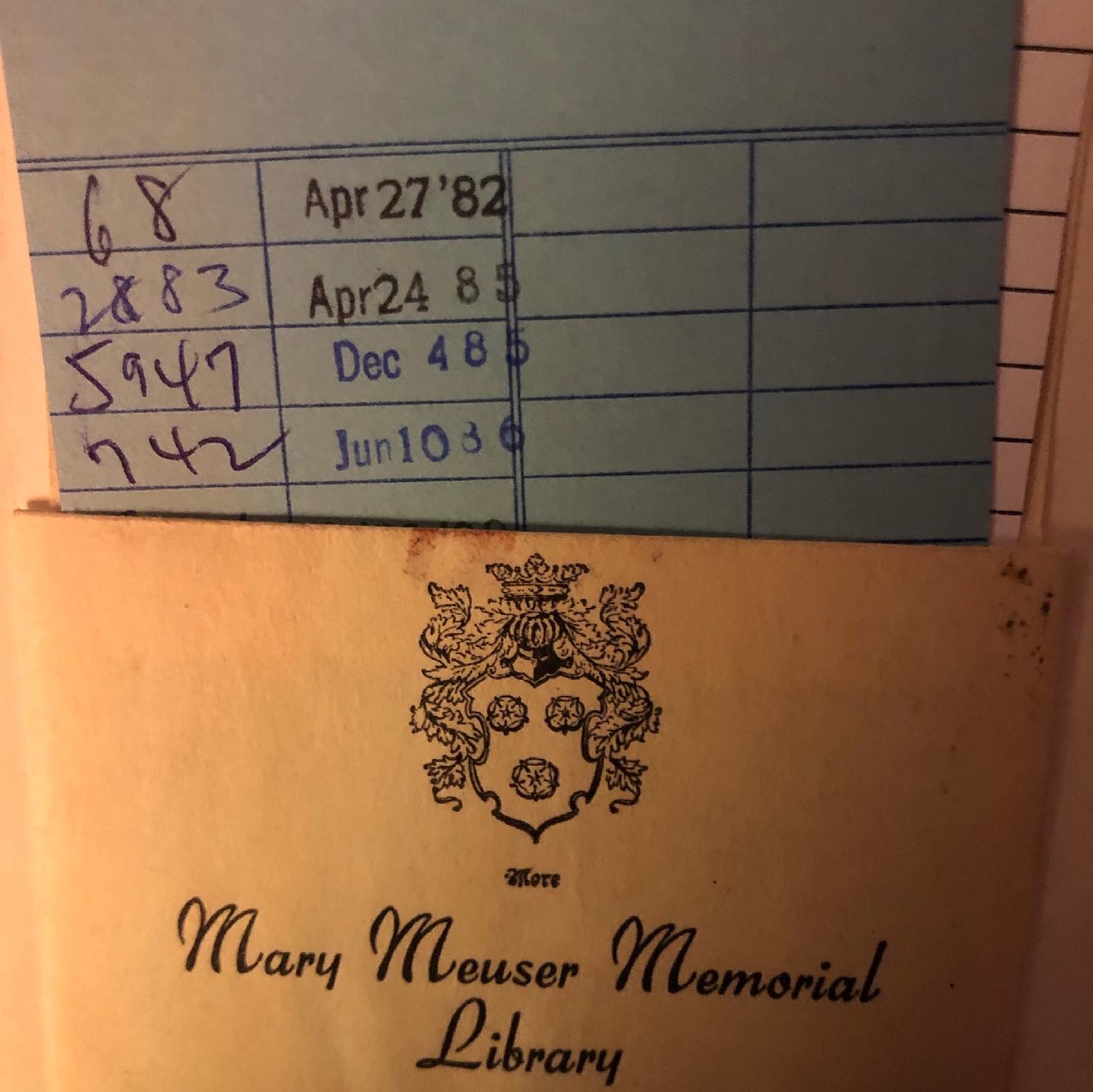
I stopped at our public library. Our library opened in 1962 so in our archive “stacks” as they are called we have the original hardcovers of the “Karen” books which were bestsellers in the mid-sixties. The adult librarian asked me if I would prefer she find a newer edition and I said no. The originals add to the experience.
I came home with 5,000 steps done from errands and made Bean and I breakfast of chicken, eggs and rice. I put some of my fresh vegetable stock on my rice.
I may have said this before, but even if I have it’s a message that can be said again: I am blessed to have a talented and caring medical team. In addition to this team, I have also been harvesting resources for my physical and mental help.
I am recording this week’s journey so others might consider different ways to find their own resources.
On Monday, the teenager resumed therapy with a new therapist who attended Moravian College at the same time I did and is loosely a friend of my traveling companion M.
I asked if she was comfortable treating my daughter, because we have circulated in similar arenas in the past and my 17-year-old daughter struggles to connect with therapists who work with teens and is too young for a therapist who treats adults.
From what I knew of her personality from the few interactions we’ve had over the years and the information on her web site my gut said she would be a good fit for the teen.
And in my teen’s eyes, I was right.
My daughter is far from a troubled teen, but she has two parents with disabilities, a mother with trauma in her background and an extended family history of addiction.
Her strong empathy and witchy powers can make her experience of the world intense. (Speaking of which— I gave her my tarot cards on her birthday and she cried. I knew she would understand the significance of the gesture but I didn’t expect her to get so overwhelmed she cried.)
On Monday and Tuesday, my work performance wouldn’t crack 88%. I was frustrated and in pain and just moving slowly. After mapping my pain patterns for years, I can say that my back pain is worst when I ovulate and when I menstruate.
Wednesday was, as mentioned in other posts, the teenager’s 17th birthday. I had a tele-appointment with my therapist of about 12 years. Coincidentally I discovered his birthday is the same as my daughter’s. That’s just another reason we get along.
It’s fun to have a professional in your life for a long time like this because I get to see his practice grow and develop, sometimes in parallel to my own life.
I recently took the ACE Childhood Trauma test, which gave me a different outlook on some of my experiences. My parents did the best they could, but they had their flaws and their own battles to fight. So between their own struggles and life events they couldn’t control, stuff happened.
I can’t explain why it’s time to face some of this now, but that’s the way things go sometimes. We all come to certain aspects of self awareness in our own time.
On Thursday, I visited my beloved chiropractor, Nicole Jensen at Back in Line, who leveled things out, told me I was stressed and talked with me about different physical therapy stretches I need to do to fight the pain. We both agree that the pattern of pain increases on those certain days in my menstrual cycle.
I came home and ate cake and ice cream for breakfast. Not the best decision as I have been 20 lbs overweight for a year.
I suddenly remembered that Stitch Fix offers employees access to the Ginger Mental Health app. So I made an appointment for an initial consultation for Friday.
My hope was to use Ginger’s coaching to set goals and recreate/spur my discipline and good habits regarding food and exercise. For instance, I haven’t lifted a barbell in a year. I miss strength training. I still think I could be an excellent body builder.
My Ginger coach is Kathryn, who has a master’s degree in social work. Our session, completely done over text, seemed to be two sessions in one.
The first hour, she asked basic questions about me. The second hour we set up a plan of the topics we’d like to address. This week we will start making and implementing goals. It doesn’t always feel like talking to a human, though the occasional grammar or spelling error reassures me that it is a person on the other end.
Some of her thoughts include: “Sounds like a great idea! So in your case, a plan I might suggest would be to start by addressing your feelings of stress, [being] overwhelm[ed], and lack of motivation by incorporating mindfulness into your daily routine, which can help bring some relief from challenging emotions and help you see more clearly how your thoughts and emotions are impacting your behaviors so that you can feel more grounded, intentional, and comfortable being yourself. This can also include exercises centered around relaxation techniques, positive distractions, mindful awareness, developing awareness of triggers (when feeling stressed and/or overwhelmed, taking time to notice what the root cause is and look for a pattern), pattern recognition, scheduling and time management, and identifying and building on your current strengths and resources. We can also discuss accountability/working with providers (i.e. therapist and coach) and explore sleep/exercise/diet as needed.”
A lot of that feels copied and pasted, but it’s okay in my opinion. Sometimes just having someone help you pick a direction or even commit to a new direction can be the change you need.
Also on Friday, our dog F. Bean Barker got spayed at Canyon River Run, a vet we really love.
On Friday night, I learned a new work center at the Stitch Fix Bizzy Hizzy— style carding. My colleagues cheered me on in learning this new role and I very much enjoyed it, even when my computer monitor broke and I had to use a computer on another line and lean way over to grab my boxes.
Basically, the associates who “style card,” grab all the completed fixes that come off the QC line and use the packing slip to print a style card that includes a personal note from the stylist and lists each piece in the fix and offers examples of how it can be worn.
Working with anywhere from 6-8 fixes at a time, the “style carder” folds the packing slip and style card and places them into an envelope before returning them to the box.
A quick check that the box is correctly wrapped and the style carder lines up the boxes and shoots them down the table onto a metal conveyer line operated by sensors. This takes the boxes to “OB1” or the outbound/shipping department which inserts the return envelope, tapes the box shut and prepares the boxes for mail pickup.
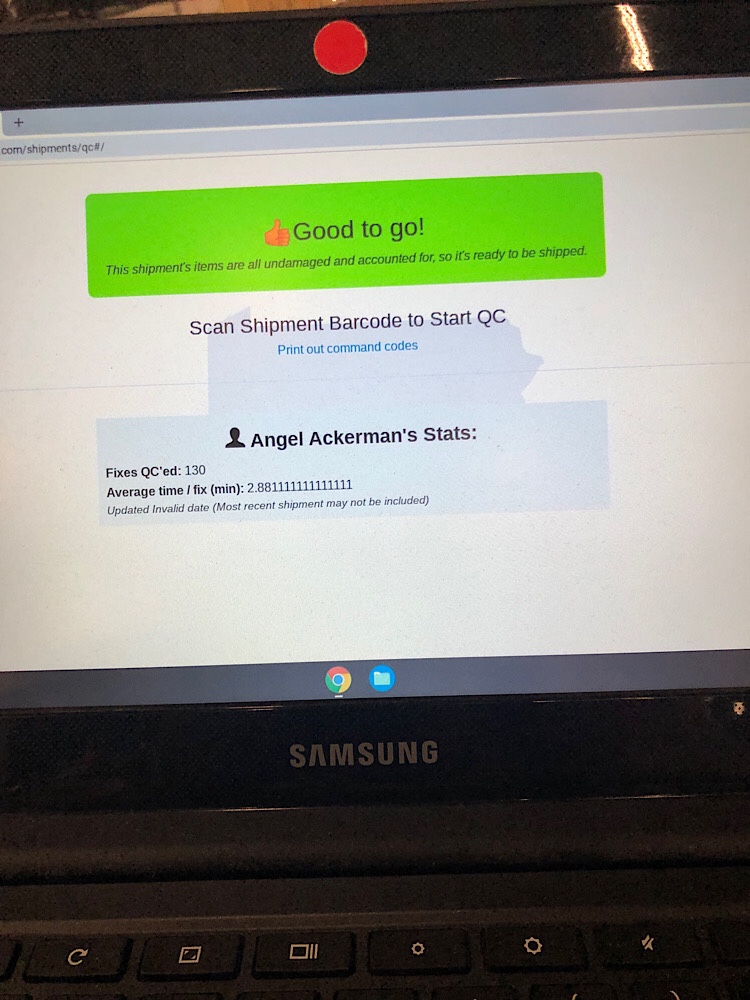
The pickers assemble 920 items a shift, which breaks down to 184 fixes. Each QC associate folds and packages 130 fixes a shift, each style card associate aims for 900 fixes a shift, and the Bizzy Hizzy itself ships about 6,000 fixes a day.
During this time, our tasks are fairly simple, automated and monotonous so we are allowed to listen to podcasts or music. I’ve used the time to explore a lot of topics via podcasts on Spotify.
Spotify is still a new platform for me and it’s slowly gaining exclusive proprietary rights to a lot of the podcasts I listen to. I heard on several news broadcasts that Spotify paid 60 million for Alex Cooper’s “Call her Daddy” where she talks about sex often with an emphasis on blow jobs.
I listen to her because she has some funny stories of the ridiculous escapades she has had: dating a professional athlete, offering blow jobs as a way to sneak into sporting events, etc. But she also sometimes interviews people— like a retired Playboy bunny who left the Mansion and points out the realities of such sexual exploitation. Alex can be really insightful but she also can misuse her vocal range to try and make the podcast more interesting to listen to and that hurts me ears.
In addition to Kristen Bell, Dax Shepherd, Mayim Bialik, and Conan O’Brien (and in addition to the news and fashion), I searched for cerebral palsy podcasts. From TheMighty.com, I learned that the name “cerebral palsy” is an umbrella term for several brain-related disorders. And I don’t really know anything about which CP I have.
I learned CP can interfere with the neurotransmitter GABA which is why our muscles and our brains don’t communicate effectively. I learned that muscles that don’t get used correctly and don’t get the right messages can stiffen and become spastic. This causes pain and lack of control.
The two main classification differences I have heard are hemiplegia and quadriplegia which you may recognize from the words paraplegic and quadriplegic. These terms explain the parts of the brain/body affected. I would assume I have mild hemiplegic CP, as I think it only affects my lower body. But sometimes I think I see it in my hands so I don’t know. And I think I am low spasticity as I seem to have fairly good muscle control for someone with this disorder.
But I don’t know. So I did what I like to do, on Saturday, I called Nan. If you don’t know Nan from this blog, she is often my partner in crime. She has been blind since birth. Like me, we were raised in able-bodied families and never knew life any other way.
Nan is older than I and, despite her disability, has lived independently for most of her life. She attended college. She married. She has a hobby writing career and attends poetry open mics. She was a teenager when NASA put a man on the moon, but despite having never seen the moon, she has been fascinated and following the advances of NASA ever since.
Nan is closer to my aunt’s generation than mine. My aunt has what would now be referred to as developmental delay, but what was called the now insensitive term “mental retardation” in her day. In school, she didn’t learn what the other kids learned. She had basic reading skills and could add and subtract but never learned to multiply or divide. I know because we used to play school, except I really taught her things.
My aunt, then a few years later Nan, and even a few more years later me, we were all part of 20th centuries advances. Medicine had found ways to help us survive, but technology and society had not discovered ways to help us thrive.
None of us have thick medical files that detail the specifics of what is wrong with us. You were thrown into the mainstream to sink or swim. And if you couldn’t swim, you were institutionalized or kept home. Therefore, families didn’t talk about disability as much as they pushed functionality— they urged us to act as normal as possible and pretend the differences about us were not even noticeable.
I mentioned some of this to my primary care physician when I transferred to his practice more than a decade ago (some friends and my therapist recommended him). At that time he guided me to specialists to explain what is wrong with my specific body, but I am realizing now that he might not know that I know nothing about what my disorder is.
So, also on Saturday, I emailed my doctor. I asked him to help me find someone who can talk to me about cerebral palsy. I know children with the disability in today’s world work with a pediatric neurologist.
And it hasn’t all been work and reflection. My daughter and I got mani/pedis for her birthday/upcoming trip to Cape May. It was our last appointment with “Nails by Bethy” at Hyperion Salon. Beth has a new full time career that should offer her more stability and room for advancement.
We met Beth 12 years ago on the same date she ended her nail career. And the teenager and I got to be her final clients.
And yesterday I tried the new strawberry popping bubbles at Dunkin. I had them in an iced matcha latte. I must say, this is the best matcha latte I ever had at Dunkin but the bubbles had such an artificial strawberry flavor it tasted like someone poured chunks of jello in my drink.
If Dunkin’ wants to capitalize on the boba trend they should stick to normal tapioca.
Item one: Mama Periwinkle “Wink” Budgie Bird died probably June 3, in the wee hours of the night. She appears to have died peacefully in her sleep. Teenager #1, with her witchy energy powers, agrees.
Item two: Teenager #2 graduates from high school tomorrow.
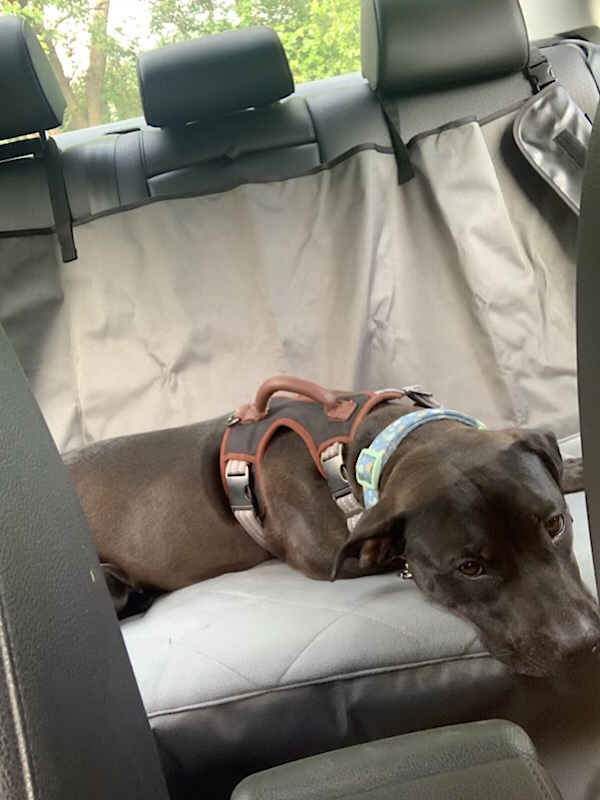
Item three: the overtime at the Stitch Fix Bizzy Hizzy has caught up with my body. Last night, the combination of work and the subsiding hormones of my menstrual cycle made my discomfort so intense my knees were shaking as my body tried to compensate for the pain in my lower back. Which, I survived thanks to fun messages from one of my neighbors and photos like this one of my daughter’s dog:
F. Bean Barker
Item four: My supervisor and the person who hired me surprised me with an observation last night. I told her I wasn’t feeling my best but would gladly see what I could do. I scored 144%. I think we were both astounded. She did the observation early as she was taking the rest of the week off for her birthday.
Item five: and somehow, on her birthday, despite still having pain (but now the kind of pain that follows the chiropractor not my everyday pain), I met my QC metrics for the first time ever. That means I folded clothes and prepared 130 different boxes (fixes) for the Stitch Fix clients.
Goal!
Item six: I think foster cat Louise is part giraffe.
I don’t know what’s the better feeling— taking off your socks and shoes after being on your feet all night or removing your bra.
I’m in pain tonight, numerically probably only a six, but the discomfort is debilitating. That does quite make sense to me. I’ve hurt more but felt less uncomfortable.
It’s almost 1 a.m. My S1 joint has been giving me trouble all night so all of those muscles are on fire. I poured the last of the Pink Whitney vodka as I ponder my other aches and pains—my right knee, a pulsing pain in the ankle I broke six years ago. The angle I am sitting at right now hurts. But Fog is curled up against me and I don’t want to move.
But I did walk the dog. That felt good. Stretching all those sore parts.
The dog— her name is Freja but Teenager #1 wants to change in to Bean. I suggested F. Bean Barker. She’s doing well. Went to the bathroom outside for us today and less accidents in the house.
Speaking of accidents, I packed up the homemade ham broth and kept pouring long after the container was full. That made a mess.
Then I tried to fry some eggs and started a small grease fire. I extinguished it, but not before teen #1 yelled, “Mom? Is everything okay? I just saw flames everywhere.”
But back to the Bizzy Hizzy at Stitch Fix. I had a “talk back” meeting with some of my leaders. Again, explaining that QC hurts. Talk of doing 4 hours in QC and 4 hours in pick when they roll out split work centers.
And they want me to hit 130 QC fixes. That’s 3 minutes per fix. Tonight, between meetings and pain I only did 91. I did 104 last night. That is 3.63 minutes per fix. Tonight I ended around 3.8.
In better news, my MacBook Air came. Tomorrow I hopefully can do my local taxes (state and federal are done and filed) and work on Finding Hooyo, the Romance/War/Medical novel I would like to be the second book published by Parisian Phoenix Publishing. Manipulations, the first novel for our little imprint and the first novel of the paranormal/romance/chick lit Fashion and Fiends series should be in design now.
If you want to see me unbox the new Mac, the video is here: Unboxing













 Angel Ackerman