

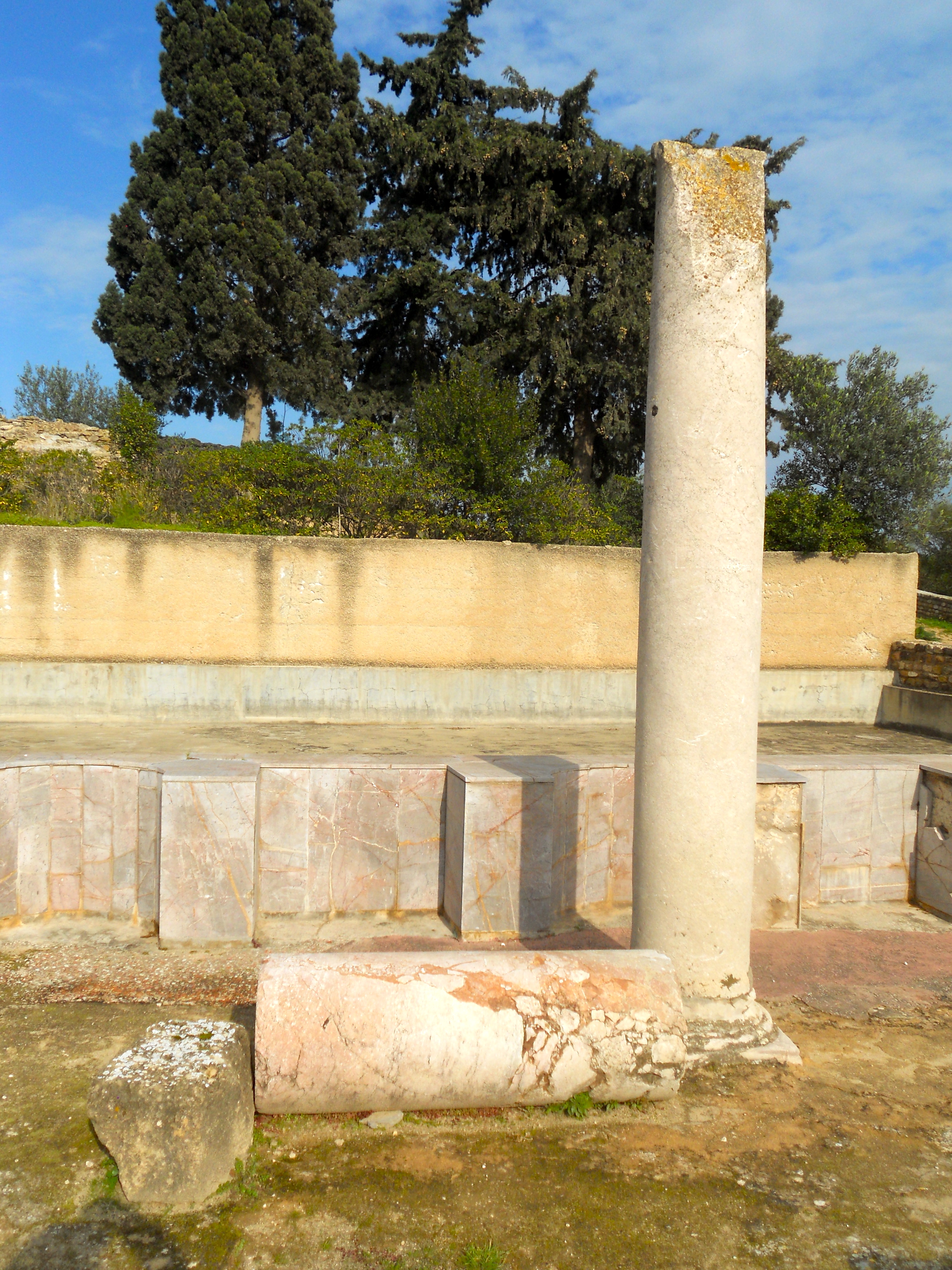
Ruins of Carthage

Ruins of Carthage

Near the edge


Doors
Near the edge

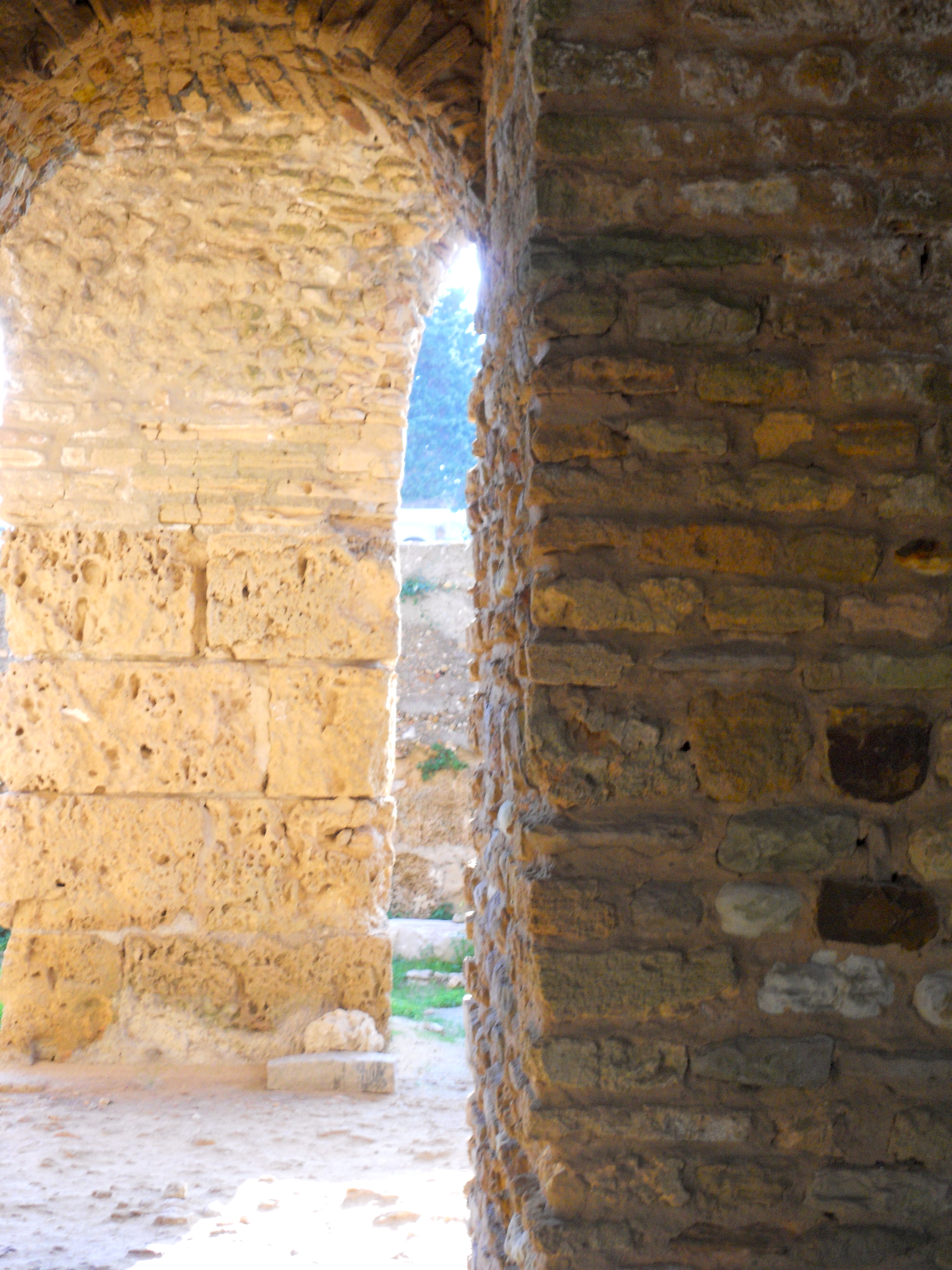
Doorway

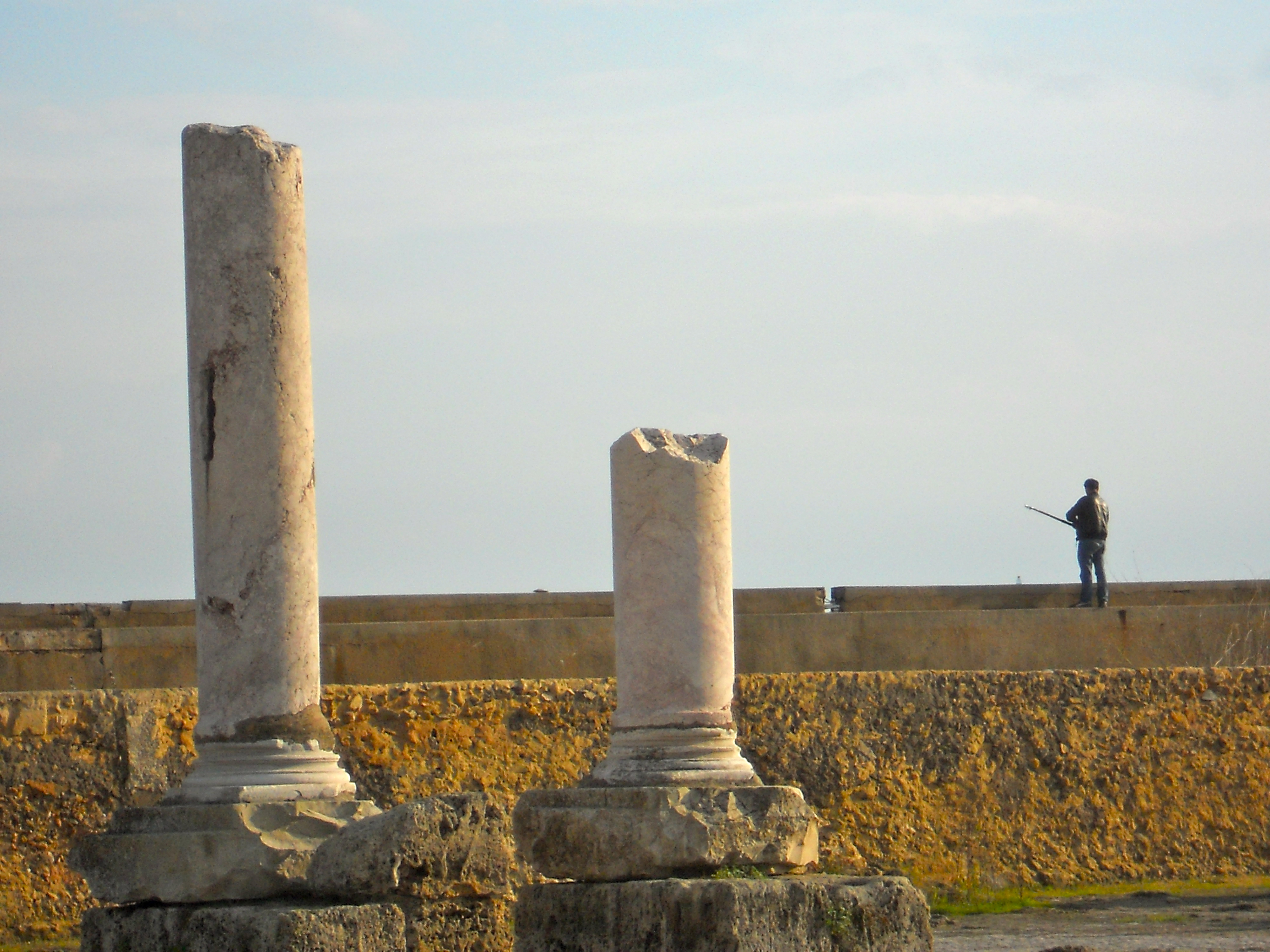
Fisherman in Carthage
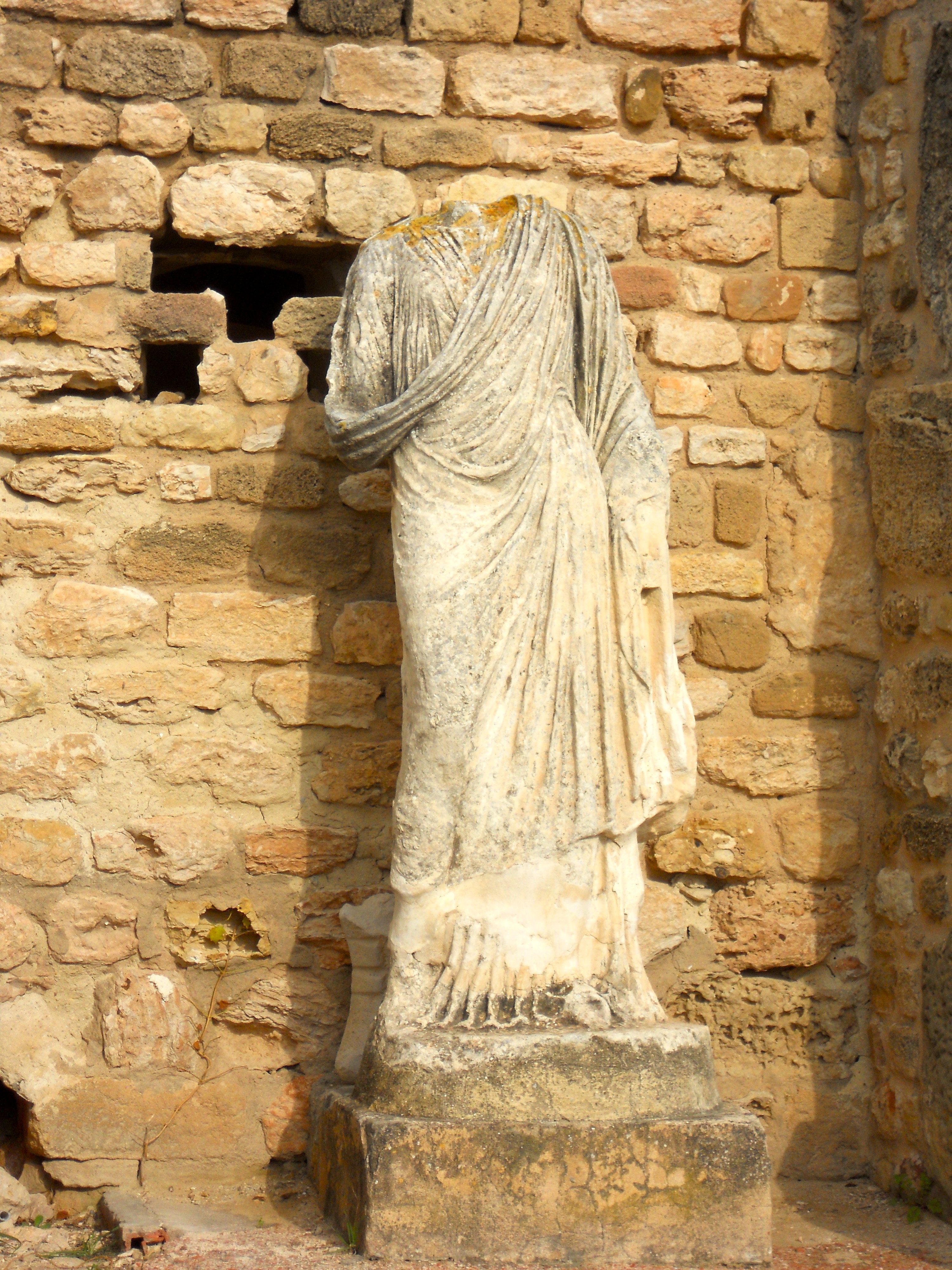
Sculpture in the ruins of sculpture
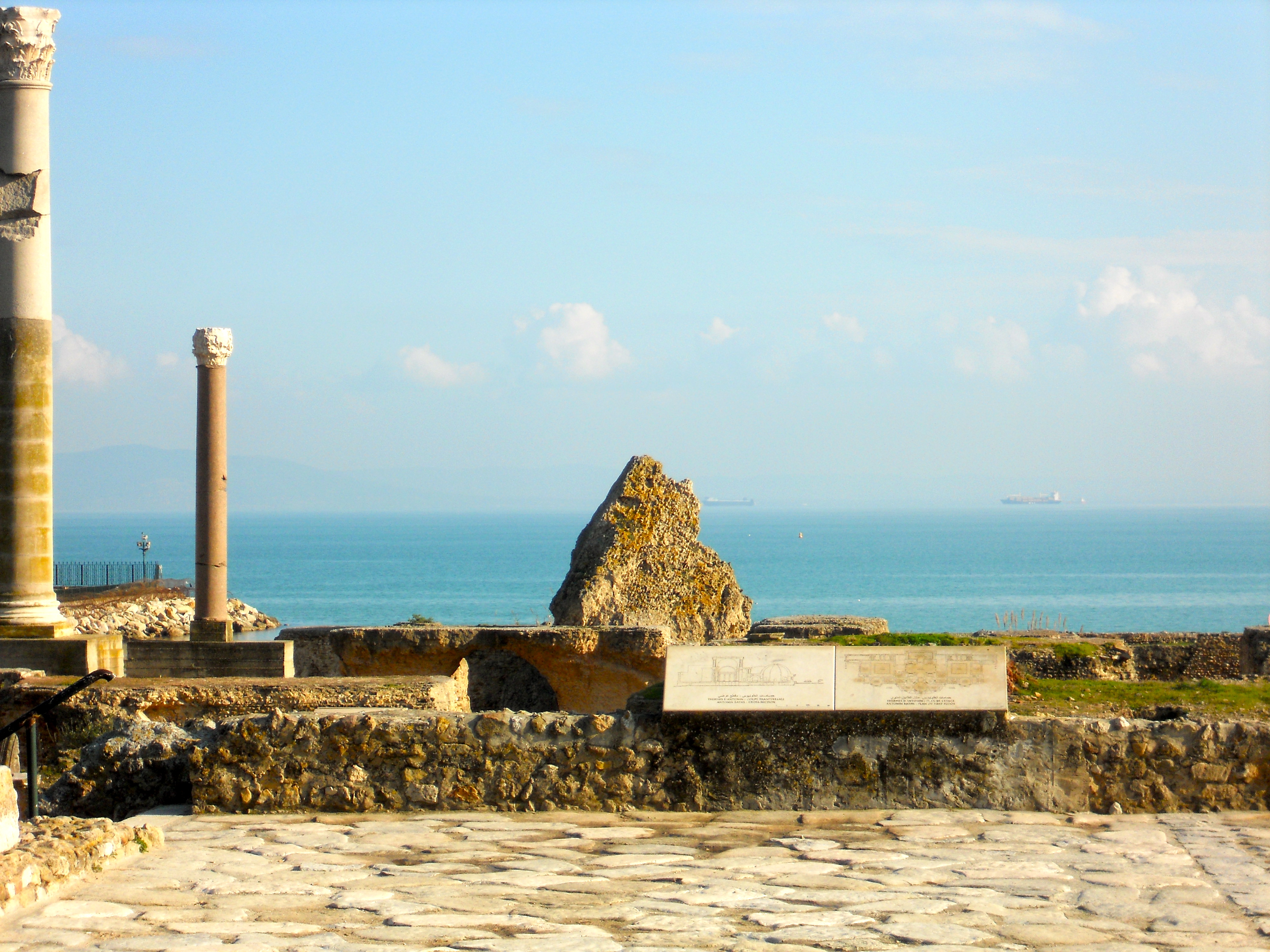
Ship approaching the ruins of Carthage
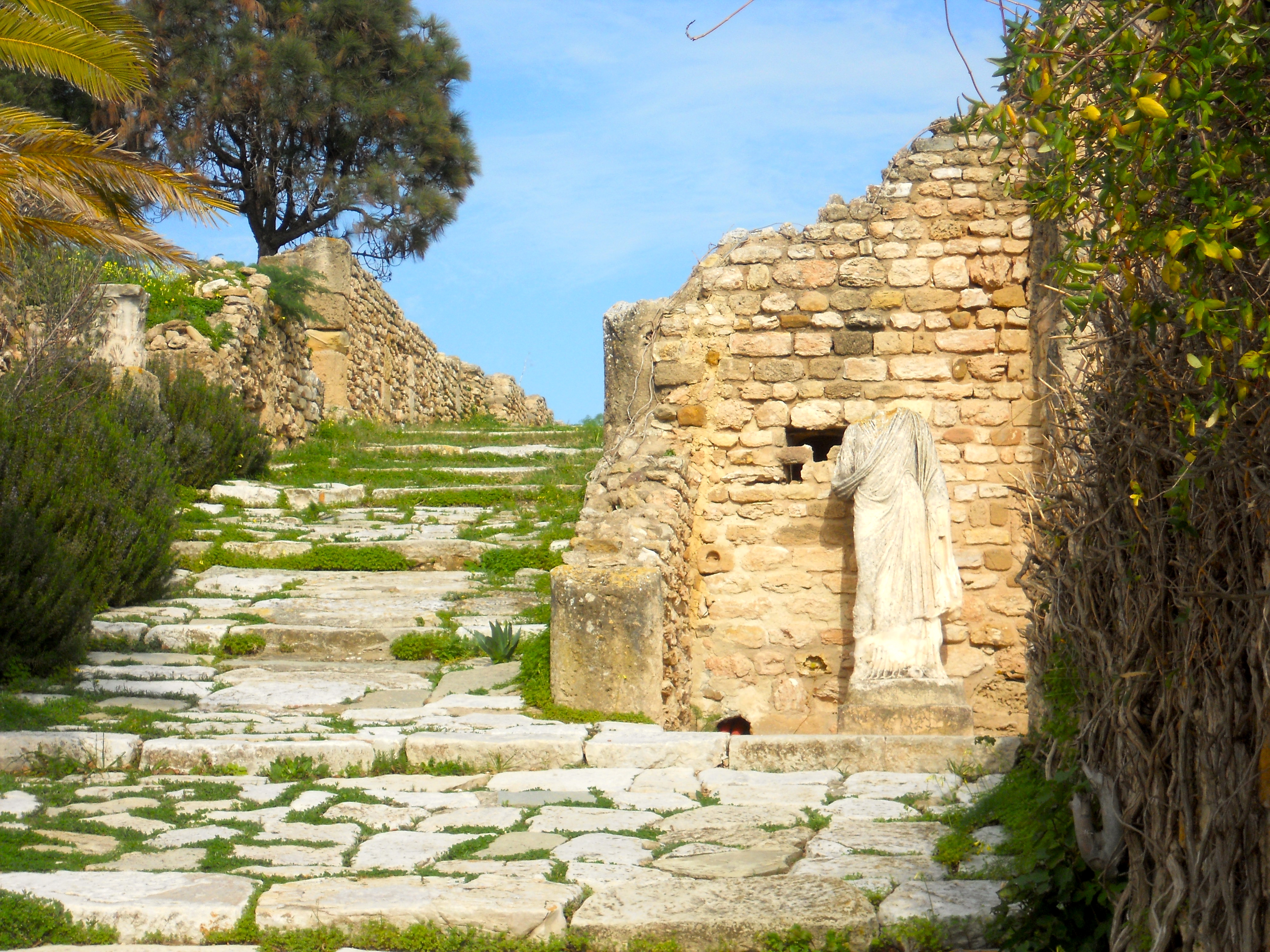
The road into Carthage
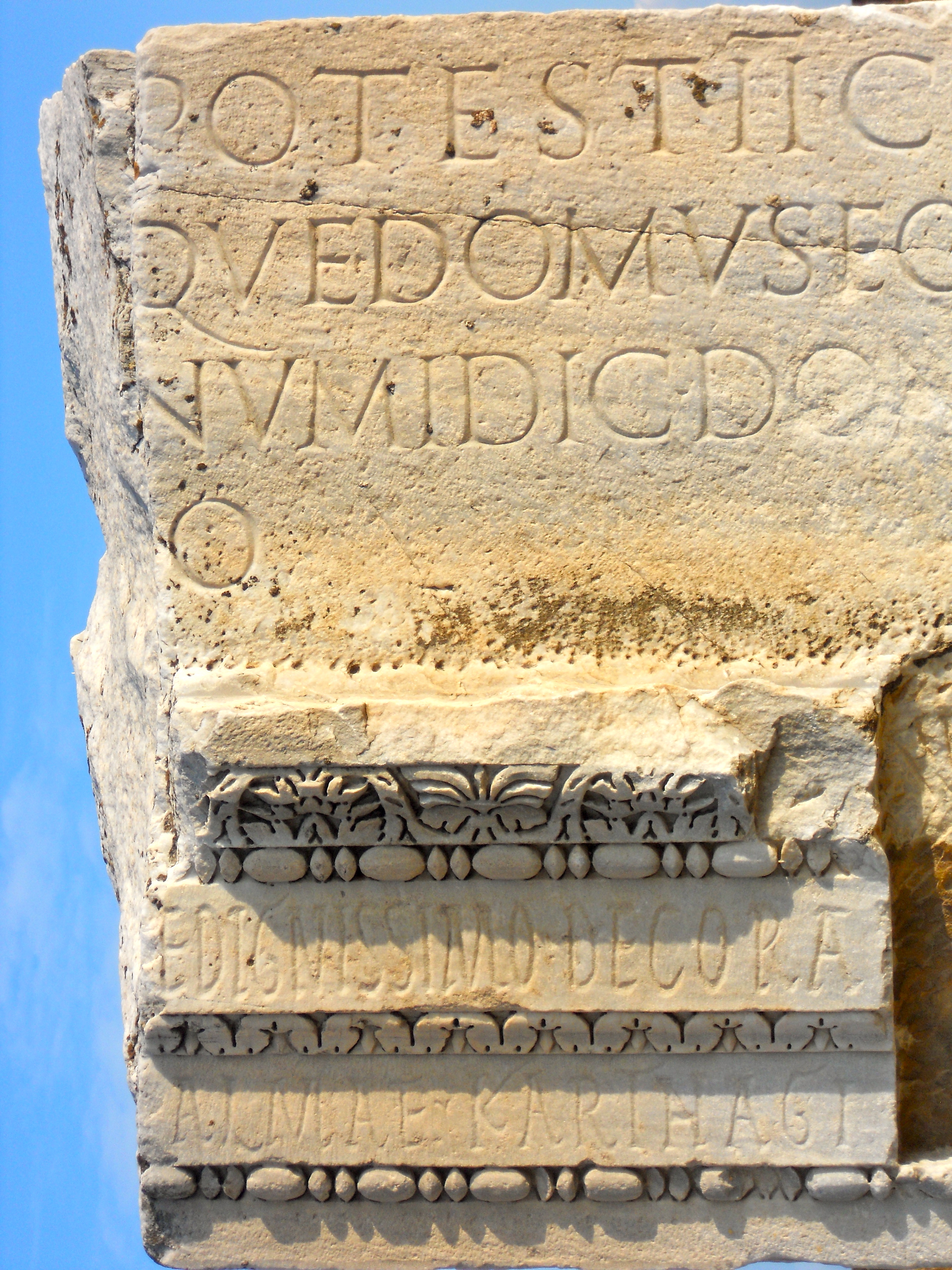
Tablet at Carthage
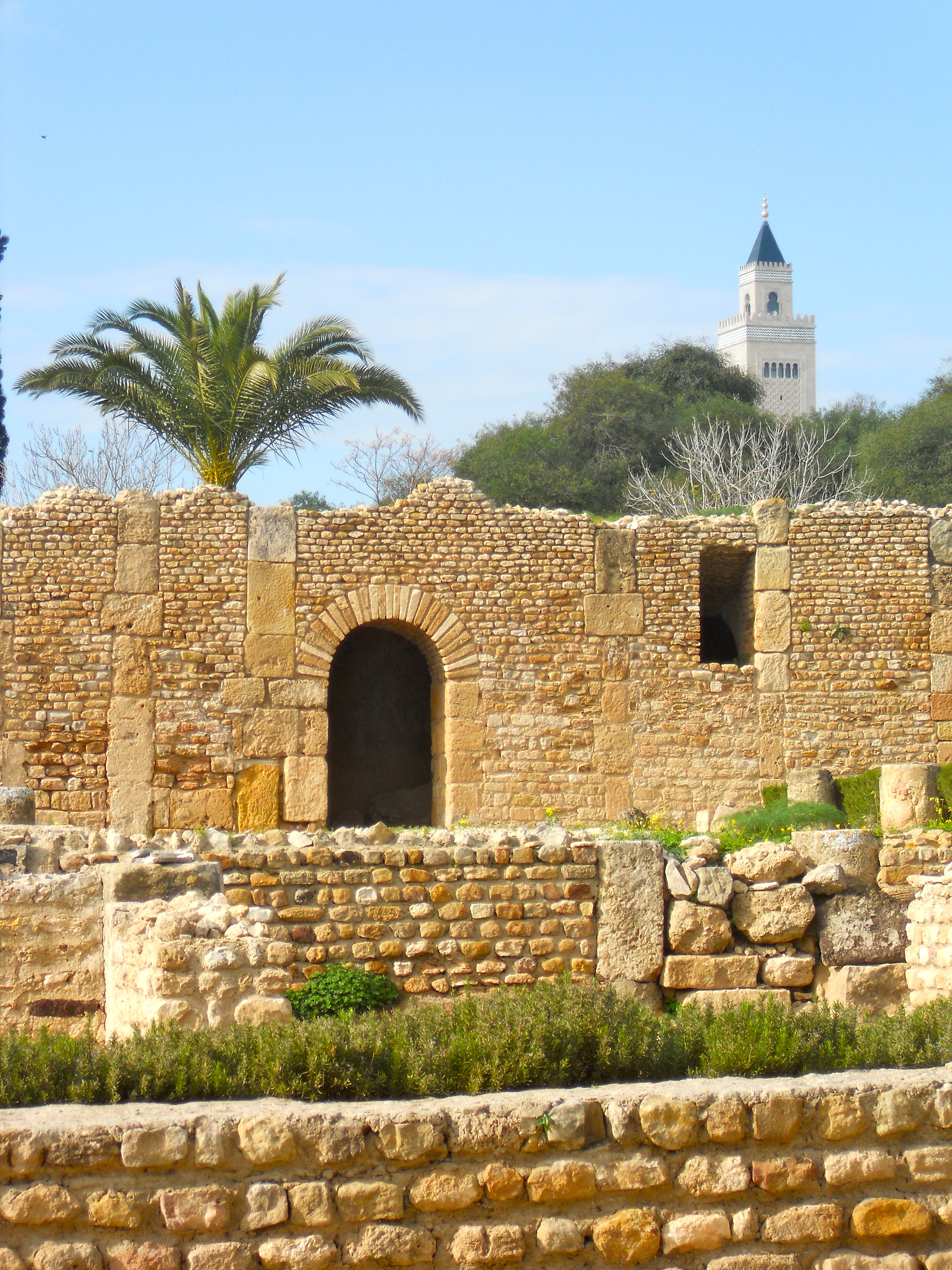
Some ruins at Carthage with a mosque in the background.

Ruins of Carthage, Tunisia
My initial impressions of Tunisia
My traveling companion and I stood close together on an airport shuttle, him with his backpack slung over his shoulder and me with my massive red bag under my arm. More and more people shoved onto the vehicle at Charles de Gaulle, forcing me closer and closer to him.
“Does it feel strange yet?” he asked me quietly in English.
I peered up at him, as M is significantly taller than I am. “No.”
More bodies pressed against us. More green passports with gold Arabic on their covers.
“We’re the only white people here,” M asked. “Does that bother you?”
“No,” I said.
It didn’t bother me. It excited me and made my toes tingle. I wondered if maybe I should be scared, or if maybe I’d totally lost my mind, but I felt big and invincible. This was false confidence on my part, because I get nervous very easily and during a recent stressful patch of life had experienced some mild panic attacks. Yet, right now I was headed to a liberal Muslim country in North Africa. I was an American headed to Tunisia on a whim because of some visa complications.
M, on the other hand, has an American passport with extender pages full of stamps and visas from places that the average person would never go like Algeria, Yemen, Syria, Lebanon, and Djibouti. He jokes about using the Department of State’s travel advisories as a checklist for where he wants to go. If it’s not a good idea, according to the Department of State, he’s interested as long as his research shows there is minimal danger of kidnapping. He blames some of this on his brain tumor.
We had originally planned to spend twelve days in Algeria. I have an interest in post-colonial France, Algeria, and how the two may intersect in contemporary politics regarding Muslims in France. I wanted to see Algeria before I started my research. My visa arrived December 23, and I stalked the mailman three city blocks to claim it. We had plane tickets for January 10. M’s visa never arrived. On Monday morning mere hours before our planes would depart, M still had no visa.
He had so carefully planned our itinerary: Algiers, Constantine, Sétif, and a trek into the Sahara to visit Tlemcen and sleep in the desert. The embassy referred to my visa as a mistake and told M he would be lucky to see results in two more weeks.
So we canceled.
And rescheduled.
M asked me where I wanted to go.
“Somewhere that doesn’t require a visa,” was the only response my broken heart could give.
Later that day, I received an email offering a choice: Istanbul or Tunis?
“Tunis.” The choice came easily. I even had the logic why. “Normal people go to Istanbul. I can go to Istanbul later. The French whore in me has to pick Tunisia. It is a former colony, after all.”
My family and friends liked this choice better than Algeria. I don’t know why. Perhaps it sounds safer, or maybe it’s due to the general lack of geographical knowledge of the average American.
More than one person told me they felt I’d be safer in Tunisia.
“Why?” I would reply, “It’s right next door to Libya.”
My husband decided most people probably thought Tunis was a city in mainland France, especially since our trip would start in Paris (France) and end in Marseille (France). So when I said, “Paris, Tunis, Marseille,” of course they all sounded like perfectly mundane French destinations.
The air route to Tunis went over the Alps, over Corsica, down the Italian coast, across Sardinia, and to Africa. I may have the order of that mixed up. Every time one of the islands would pop out of the Mediterranean Sea, I’d say to M, “That’s land, maybe it’s Africa.”
So by the time I really saw the African coast, I was too confused to trust my judgement. When the plane landed, the window gave me glimpses of pale, nondescript buildings. The airport was small and white. The sky was cloudy and white. The air had a crisp dampness to it. I had hoped for sun and 60 degrees. Instead I wore my coat.
Baggage and a cigarette. That’s always M’s priority list when we disembark. He always has a plan to beeline through customs and then we stand by the baggage carousel, where we retrieve the carryons we checked. Mine has leopard spots, his is a Travelpro he got a deal on.
He always asks if I mind if we go out for a smoke. My answer is always no. Because I don’t. It gives me a chance to breathe, to feel the first few glimpses of a place. Sure, it’s only taxis and travelers but i liken it to dipping my toes in the pool before jumping in.
I remember thinking it looked like rain that afternoon in Tunisia and that the countryside looked empty and the buildings low. That’s partially because the airport is about 20 minutes away from the capital city. I use the phrase “about” because a funny thing happened on our way into town.
The streets were closed. It took more than an hour to get to downtown Tunis. We had arrived in the capital at about 4:30 pm on January 14, 2012, a Tunisian independence day of sorts, the exact one year anniversary of President Ben Ali’s “abdication” to Saudi Arabia.
“Did you do this on purpose?” I asked M.
He assured me he did not, but man, did it end up a serendipitous event.
The taxi ride that followed terrified me. I won’t lie. If I did it again tomorrow, I wouldn’t flinch. But then, I thought something awful would happen. I reminds me of my first roller coaster ride. I rode a small coaster when I was about eight-years-old. My mother rode with me. somehow, on the top of the highest hill, I stood up. I was scared and I wanted to get off. My mother pulled me down, and I avoided coasters until I was big enough to ride them without an adult companion. But, it turns out, I love roller coasters.
I had never been to Africa, or an Arab nation. This pleasant but slightly off his rocker cab driver was “doing a forbidden” and zooming down one way streets the wrong way or commandeering the lanes for oncoming traffic because there was no one there. Pedestrians would swarm the car and our driver would lock the doors and tell us “there might be one bad man.” he had two speeds, fast and dead stop. We had driven down the same one way street twice– both times the wrong way– as our cab driver proclaimed valiantly that he would get to the side street that could connect us to the hotel. A car approached. Honking ensued. Our cab driver left the car and started yelling at the driver of the car which was using the road in the correct fashion.
“And people think French drivers are bad,” I said.
“North African drivers make Europeans look like pussies,” M replied.
Later we discovered his guidebook tells French travelers not to rent a car and try to drive in Tunisia.
We looped around the city again and I watched an Arab young man pee on a wall. Cats darted along the sidewalks. A little girl my daughter’s age smiled at me from a passing car. Pedestrians marched up to cars in the streets and tapped on them as if telling them to get out of the way. In Tunisia, whoever can occupy a space can have it.
I can’t even tell you what M said to me after an hour in the cab, something like “isn’t this great?” I replied I might need a tranquilizer.
M processed this. You can tell when M is processing. As part of his testing for his brain tumor, someone determined he has Aspergers. This makes sense if you know M. It hadn’t occurred to him that driving in circles through a crowded city for an hour might be harrowing. He filed that away for future reference, I’m sure.
The chaos and celebration was great. Little red flags flying everywhere. People cheering, singing, dancing. “The people are happy,” the cab driver tells us. Everyone assumes we are French, especially since M speaks French “like the French,” as Tunisians would say when they tried to guess his nationality. I spoke only when necessary, between my American accent and the fact that I’m a women I thought it’d be best to let it look like M was in charge. He had already warned me not to speak English in public, just in case people here didn’t like Americans.
The hotel, Grand Hôtel de la France, gleamed with white tile, blue trim and lots of mosaic. The clerks took our passports, probably filed a report with local authorities, and kept our documents in a wooden file compartment with our room key and our room number.
“That way no one can steal our identification,” M said.
“That way someone notices if someone steals us,” I replied.
“That too,” he agreed.
The room had a white tile floor, a balcony, two twin beds, and a mantel where perhaps a fireplace used to be. The bathroom had a toilet, with a toilet seat. I soon learned in Tunisia that bathrooms either came with a toilet seat and soap. Seldom both. I experienced one bathroom, at the Antonin Springs in Carthage, that had both and was clean. In the hotel lobby, the ladies room did not have a toilet seat. I discovered this when my traveler’s diarrhea kicked in on our last day in Africa. This did not bother me as I was relieved to see they had soap.
Our room had no soap. M had teased me for “stealing” soap from our Paris hotel room. I took one travel-sized bar, because both he ad I had packed body wash and I thought to myself, we might need a small bar of soap at some point in our travels.
At about this point, as the sun had started to set. Someone had lit fireworks from the balcony a few buildings away. And I don’t mean firecrackers. I mean fireworks.
“Welcome to North Africa,” I said. “if you burn down your neighbor’s house, oh well.”
We headed into the crowds one block away near the Port de France and down the main drag. It was six-ish on a Saturday night and everything was closing. People were packed tightly in every crevice. Chanting, dancing, cheering, drumming. Our cab driver was right, people were happy. One Arab man leaned back and grabbed my ass as I walked by. Graffiti on a nearby wall read, in French, “Long Live Tunisia, free and democratic.” The French embassy and the Tunisian government offices were surrounded in barbed wire. Soldiers and police were everywhere.
We were celebrating the Jasmine Revolution with the Tunisians. The Tunisians had launched the Arab spring. This was history.
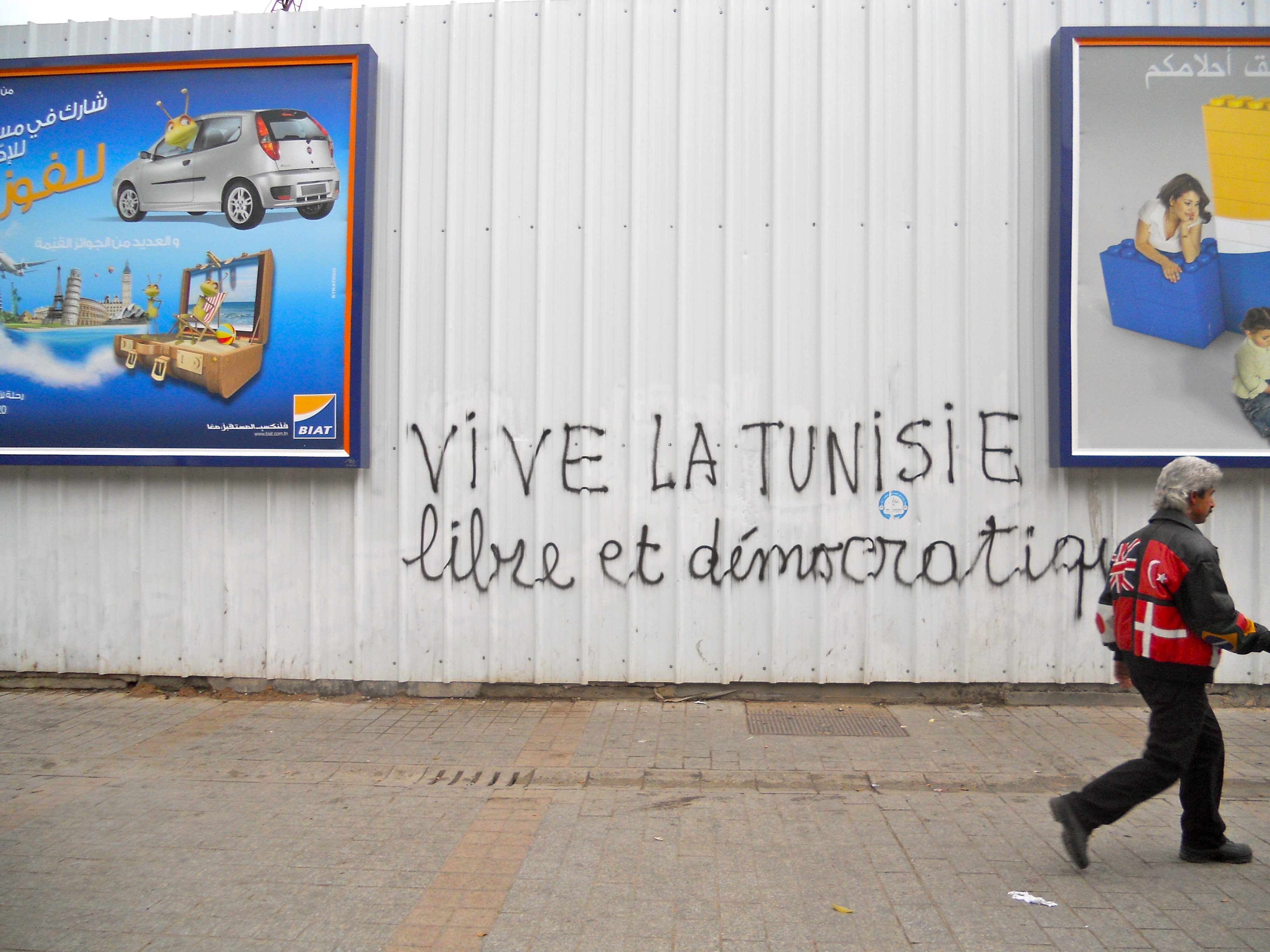
Long live Tunisia: Free and democratic, Rue Mubarak, Tunis

Quartier Gare de Nord
October 2010 (my photo)
Paris Rendez-Vous
(A poem from my 2010 trip to Paris)
In the initial flurry of dark coats and
Clunking baggage wheels, my harsh accent that
Does not sing gets lost on the platform. The
Acclimated crowds ravage my coveted Gauloise
While I hesitate.
Emerging, damp silk and cotton clinging to
My skin, my body threatens to fail as I
Pray for her acceptance. The station
Breathes mechanical three-tone chimes
Delineating each train.
Simplicity of metal, glass and concrete,
The station does not yield to the sway
Of engines and cars. This canopy
Protects me from the elements and her gaze.
My reluctant shove opens the door.
I cascade into a surreal apertif of
Flowers, perspiration and urine,
Cigarette smoke and inexpensive red wine
Skimming her flesh. The olfactory assault awakens me
And mocks my freshness.
Redolent of yeast, her warm body embraces
Me. My mouth lusts for her breads and her
Sweets, grime overshadowed, but my first
Need is revival brought by strong coffee
In tiny cups.
At the hotel, I climb a vivid pink and
Worn brown spiral of 85 stairs to a
Corner chamber where imperfect sheets
Remain suspiciously mussed from the
Bodies preceding us.
I step to the balcony, fingers of wrought iron
Restraining me as I stand with no destination
Sandwiched between opposing stations.
In this space, I taste her earnest
Poignancy on the breeze.
From this narrow ledge, she dances
Mesmerizing me with her softness, her angles;
Her age versus her timelessness.
Her caress reaches me and transforms the American
Tension that defines me.
Transfixed, I freeze. Every murmur against
Neighboring tracks rocks my core, screaming of my
Transience. Every siren from the streets below
Thrills me, a tremor for each pin-pon that pierces
My overconstructed fugue.
The passersby below my balcony continue their
Departure, trajectory focused on a shortcut to the
Train. Their nonchalance boggles me. Her touch
Forces amnesia, the mundane discarded in her kisses.
We descend into her streets of rapture.
She leads me through her neighborhoods
Into her flavors. She is not the girl I once knew
But nor am I the same. I desire more than I did in youth
So I chase her as I will chase her for days
Begging for our merger.
The ideologists mandate her purity, concocting paltry laws
While she feigns aloofness. The natives ignore her
Everyday charms but bristle when she shares
Her ardor with Africans, Muslims, and other dark faces
As readily as white skins.
She absorbs the choppy resonance of the Arabic
Laid at her feet and stares at the strange letters
She cannot read, because language constantly
Mutates. She can only preserve her heart and not what the
Populace layers upon her.
My feet blister keeping pace, just the endorphins
Propel me. My mood turns uneasy as she continues beneath
Me, urging me onward into her pleasures. With fats from
Her table and easy-flowing wine, she satiates, sullies
And corrupts me.
Under the haze of alcohol with a belly full of frog,
Snails and rabbit, she lures me to the river Seine,
Tourist-laden boats driving its currents,
Its banks flooded with the silhouettes
Of lovers entwined.
When exhaustion lands me in my bed, I never
Close the window. The bugs nip my soiled flesh
But I continue to expose myself to her.
How else could I monitor her nocturnal movements?
Never have I felt so dirty and free.
But finally, I return to that station, with more
Song in my voice. I laugh and weep as the
RER dashes into the suburbs. Tunnels ascend
Into daylight, sun falling on graffiti, the message too real,
Disconcerting.
My tears draw attention from a tall
Black man with dreads whose soft French comforts
My sorrow. I can only pray that he will
Care for her, as I do, and stay with her
With a permanence I cannot.
 Angel Ackerman