Chicken pitch a success!

So, much of my recent time has been spent pondering what I want from my life and I keep saying that I want to write more and publish more. (And then I see sentences like that opening one I just wrote for this blog entry and think maybe I need to revisit my grammar skills.)

I keep saying that I’m going to write more and pitch more.

And I don’t.

I say I’m busy. I’m tired. I don’t have time. I work too much.

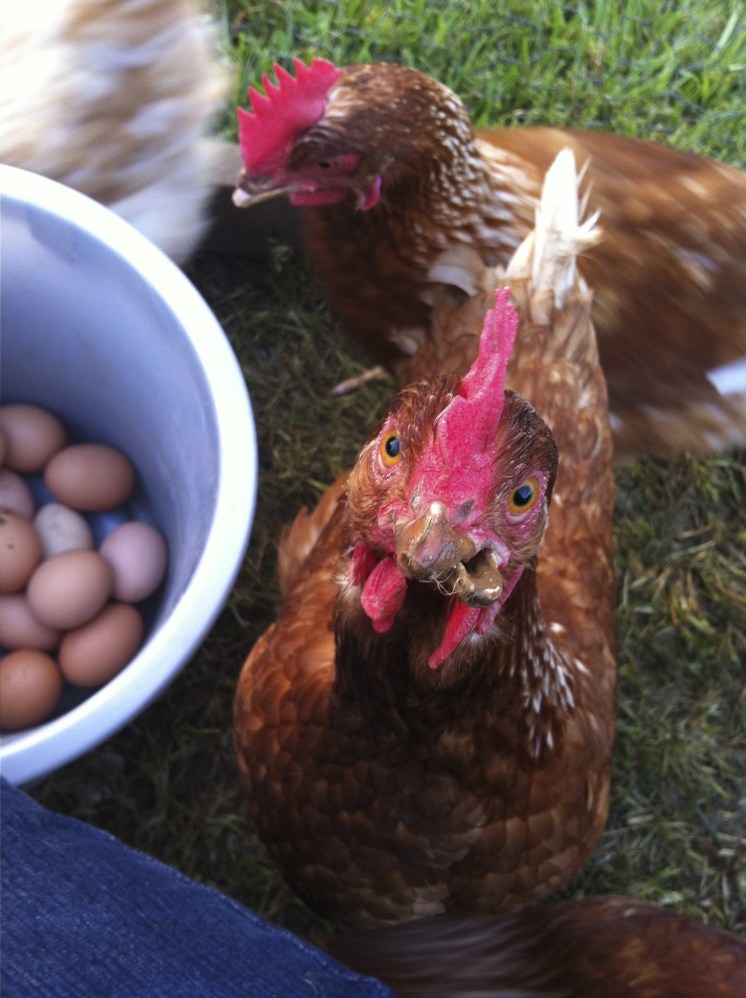
Well, in the fall, I had a success with Step Away Magazine publishing my Paris poem. And in January, I pitched an old essay I wrote about my daughter learning to take care of chickens when a friend of a friend went on vacation. I pitched it to Hobby Farms magazine. The editor there responded promptly that he would keep it on file.

A few minutes ago I received the notification that my piece will appear in the July/August issue of the magazine.

My portfolio grows more eclectic by the day.


IMG_8596

Adieu, my cat Zoot

I rescued my cat Zoot after Christmas 1999. At the time, I babysat my nephew every Tuesday night so my brother and his wife could have date night.

My nephew was preschool age, and for some reason, my brother and his wife decided to adopt two kittens, freshly weened from their mother. Their logic was that they had heard “cats were easy.”

“Cats are easy,” I replied. “But you didn’t get a cat. You got kittens, not even one, but two kittens.”

They clawed the tablecloth. Ripped up house plants. Caused a ruckus all night long.

The one was docile and loving. The other wouldn’t take poop from anybody.

That second one was Zoot.

My nephew liked to carry the kittens with their neck in his elbow. In a spirit of self-preservation, Zoot scratched him. This and other incidents led my brother to chase Zoot around the house, fling her down the basement stairs, and swat her with a broom.

But whenever I visited, and put the kids to bed, she would come out from hiding and curl against my neck using my then-shoulder-length hair as a blanket.

And she’d purr. As if saying, “save me.”

Christmas came and went. My sister-in-law pulled me aside and told me if I didn’t take Zoot she would have to take the cat to the shelter to keep my brother from killing her.

I asked my husband. We had married October 30, 1999. We had a tiny ramshackle apartment. He said, “I guess.”

I could tell countless stories about her. But to summarize, I never cried or napped alone. She liked to watch me wash dishes. When my daughter was born, Zoot always there whenever the baby cried. She loved company.

I taught her to sit and give her paw for a treat. So whenever I had anything she wanted, she would sit down and put her paw on my arm.

She also tended to crawl in bed and spread her body between me and my husband. And she would sit on me if it looked like my husband might be interested in hanky-panky.

  
Today, my husband took her to the vet for her final sleep.

To my surprise, my daughter went and stayed with Zoot the whole time.

  
So, in my weakness, I got to see how strong my daughter is.

Tea Pots

My husband suggested we take down the tea pots.

The idea of taking down the tea pots seemed bold. Exciting. Like taking control.

When we moved into our second apartment, with my in-law’s help, we did a lot of work fixing that place. We refinished the wood floors, hung wallpaper, etc.  My mother-in-law found this lovely blue color to paint the kitchen that I loved so much, I painted the kitchen in our house the same color.

She also found a tea pot border. It really cheered up the kitchen. Then she found the matching clock. All this coordination made me feel really grown up. Married about two years, still in my first real professional job, and now I had a kitchen with a wallpaper border and a matching clock.

I had it together.

Then the teapot brigade started. I’m not sure how… But we started displaying tea pots on top of the kitchen cupboards in the space under the ceiling. 

And soon everyone gave me tea pots. I never wanted to collect tea pots. I never NOT wanted to collect tea pots. But somehow, tea pots came and even made it to the top of our cupboards in our current/own house.

Periodically we wash them.

And put them back.

  
I washed them today. My husband suggested it. And he implied maybe I shouldn’t put them back.

I think maybe he’s right.

You see, we’re no longer 20-something newlyweds and neither one of us really cares about the tea pots.

And I’d like to own less stuff and make some positive changes in my life. So maybe tea pots are a first step.

We’ll see.

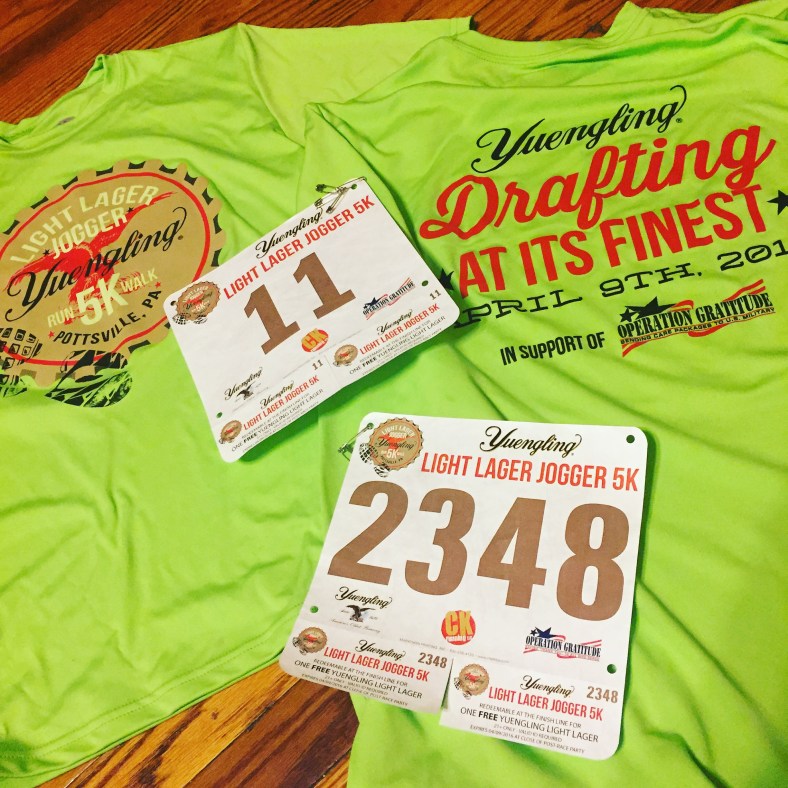
4th Annual Yuengling Lager Jogger

 It’s a bit of a long story but I will condense as best I can.

I never drank beer. Started about two years ago when we found a pub near our house that served an interesting selection of craft beers (how can you not want to try a chocolate peanut butter beer named Sweet Baby Jesus?).

They had Angry Orchard on tap and for beer sissies like me, hard cider was an exciting way to experience ordering a draft. 

And then the bartender recommended mixing it half-and-half with Yuengling. And then I was soon drinking Yuengling. Like a real grown up.

My friend Gayle mentioned that Yuengling has a 5K walk/run. So we did it. Last year. The third annual event. I finished in right around 50 minutes and if you’ve ever seen Pottsville and the race course, the first mile from the brewery is up hill.

The second mile is flat for a while and then up hill. The third mile is down hill.

The beer tent is at the bottom of the hill.

 
I entered a significant decade on my birthday last year, and I have been working really hard to gain more muscle, strengthen my lower body and attain more general endurance and fitness.

I was doing great. My body fat percentage in the fall was 21.8%. (I am scheduled for a follow up visit on Tuesday.)

Then I broke my ankle. So, when I registered my daughter and I in the 4th Annual Lager Jogger my goal was to run it. Now I have cerebral palsy and I broke my ankle… But I thought this was doable.

It was a rough winter. A non-existent Spring. An incredibly stressful Christmas season at work, where I put in practically full-time hours. Equally stressful at home with a pre-teen daughter who is so close to puberty none of us may survive 2016. I started grad school. My cat of 17 years will be put to sleep on Monday.

Training did not happen. Not in earnest. My daughter flat out refused.

And then child got a cold.

And all my commitments made me a little crazy.

And then the weather forecast said it would be 30 degrees and snowing.

And indeed it was.

But I needed to win something this week, even if it was hope of someday running a 5K. So I started to run up that hill. My cold toes hurt as the hit the ground and both ankles protested. I probably only made it a third of a mile but then I walked hard and fast. 

One resident was passing out orange juice. Others had Yuengling on tap from kegs in their front yard, handing out beer to runners as they went by.

Once we reached the top, I resumed running again and the pace kept me warm as the snow increased. I ran until my lungs couldn’t function in the cold air, walked to rest, and then ran again.

I finished in 44:31. 

I’m still no runner but I’m damn proud. 

The Easter basket parenting win

My daughter will turn 12 in June. We have a lot of tween meltdowns. We have difficulty communicating sometimes. 

This morning I stepped outside to write in my journal. I’ve been working a lot of extra hours, making my part-time retail job a full-time one.

So I needed some peace and sun.

My daughter approached me one paragraph later. She wore her mopey face. I asked what was wrong.

For the sake of brevity, I will skip the pleading and cajoling that went into getting her to reveal her complaint.

My friend Gayle had said to her that her mother always said you didn’t buy something until you had the money for it.

“I have a savings account,” she says, “and it has a lot of money in it, but I can’t touch it.”

I explain to her she can touch it, but that money is for big purchases: summer camp, someday when she wants a car or needs a security deposit for her first apartment.

I also ask, “what are you pining for?”

“Well, it’s stupid,” she says, “but I told you months ago that I wanted a new doll and you said you would consider it and you haven’t said anything.”

Months is an exaggeration, for the record. The doll in question is a $10 Draculaura Monster High Doll.

Now I know I bought her that doll and a Frankie Stein doll as the focus of her Easter basket. But she’s in full drama and feeling dejected.

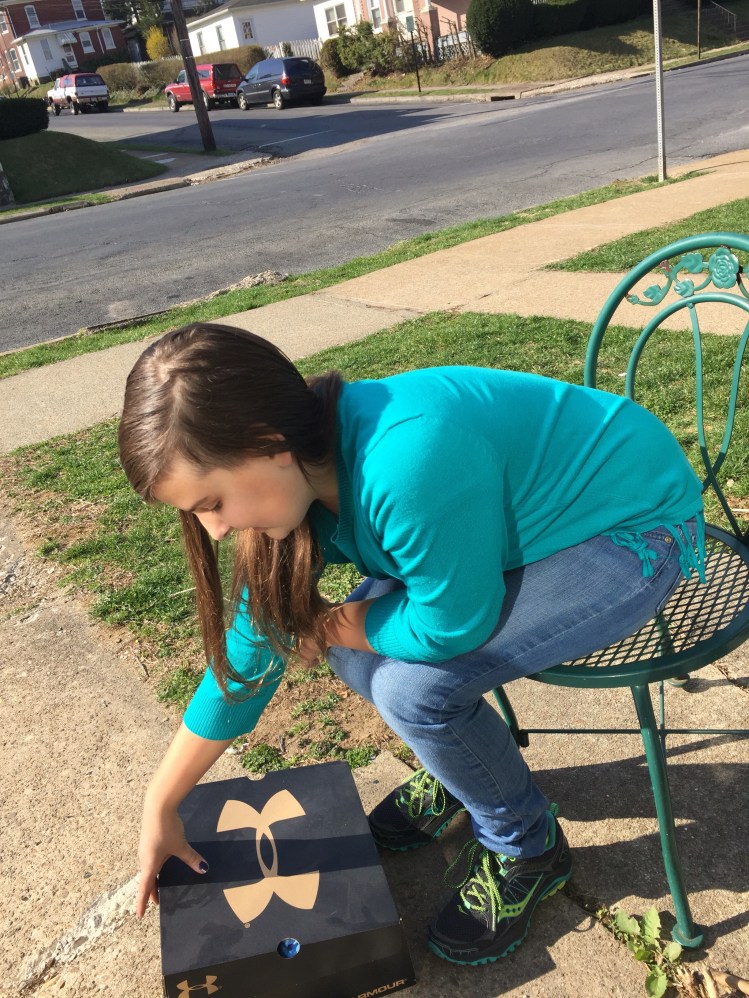
I go in the house and get the shoe box containing her goodies. I haven’t wrapped them or retrieved her literal basket. I hand her the box.

“Should you chose to open that, it’s the contents of your Easter basket. There will be nothing for Sunday. It’s your call.”

She opened it.

 She found the dolls.

  
So I told her, “You need to have faith in us, we are listening. We just don’t always do what you want when you want it.”

Seeking perspective: the story behind my travels

This is the rough draft of a presentation I have been asked to give to a class of my graduate school peers at West Chester University next week. My faculty advisor asked me to give a talk about my recent travels in Somalia. We’re all working on master’s degrees in history or genocide/holocaust studies. 

In my case, I’ve recently discovered I’m not the European History MA candidate I thought I was but apparently I’ll be studying World History, with an emphasis with Africa, followed by minor fields in the Middle East and China. 
My true interest is post colonial Francophone Africa, and how the ramifications of European colonialism have an impact on contemporary issues regarding the overlap of Africa, the Middle East, and terrorism. Islam has become the new communism as the dangerous ideology the West must destroy.

Life circumstances have forced me to move away from a successful 15-year career in local print journalism. But my interest in information, sharing information and researching perspectives on the world has led me toward an eventual Ph.D. 

My career in journalism featured a variety of restructurings and lay-offs. When perpetually faced with a shifting marketplace you are forced to face your fears and your complacency. Every small event in life can lead to an unforeseen path. For me, I turned my focus toward my daughter and part-time professional work. A friend steered me toward hosting a French exchange student which led to me enrolling in an undergraduate French class to see if I still had the language I once majored in rolling around in my head.

I did.

That class opened my eyes to my love of academia. It also exposed me to the “Muslim problem” in France. And I made new friends. 

Although I had a bachelor’s degree in English/French from Moravian College, I enrolled for a second bachelor’s in International Affairs from Lafayette College. It would be the perfect way to see if I could balance life, school, work and child. Plus it would give me academic credentials in fields I knew about from my journalism experience: politics and economics. I just never anticipated that I would develop an affinity for history.

Up until this point, I was a total French whore. I visited France for a month in 1995 and fantasized about a return to Paris. It was 2010.

My part-time professional job imploded. I developed severe anemia that left me lying on the living room floor at three in the afternoon until my five-year-old could make a cup of coffee for Mommy. I got a job in retail, because I didn’t have the strength for professional work. I wanted to punch a time clock and go home.

Around this time an old friend from college the first time reconnected with me via Facebook. He offered to take me to Paris. He felt sorry for the rough patch I had hit in life and he had the ability to make my return-to-Paris dream a reality. We went to Paris for the weekend between my orientation for my new job and my first day of training. There were twelve of us in that group at orientation, and we had to introduce ourselves. We were asked to share something random about ourselves. I remember saying, “I’m Angel and I leave for Paris tomorrow.”

M and I had a great time on that trip. I was in a history seminar on 20th Century French Identity and the Muslim problem and religious history in France was a key component. My travels in Paris had included a visit to public Muslim prayer in the streets. I went to ethnically diverse neighborhoods where the European Paris I remembered did not exist. What I found was a multicultural Paris swimming with Africans, Asians, Indians, gypsies and Arabs. I recently had a poem published in StepAway magazine about this revelation.

My studies kept leading me to Algeria, and I became convinced that the complex issue of religion in France should not be one of the French against Islam, but the French addressing their stereotypes of Muslims created during the colonization of Algeria. The no headscarves in schools law and later the anti-niqab law focused on visible Islam, but the issue was French perpetuation of the 19th century prejudice that Muslims were inferior people. These stereotypes came from the Algerian colonial project. This became my honors project.

I am typically afraid of my own shadow. But it was around this time that M suggested a research trip to Algeria. His visa never came through. Mine did. 
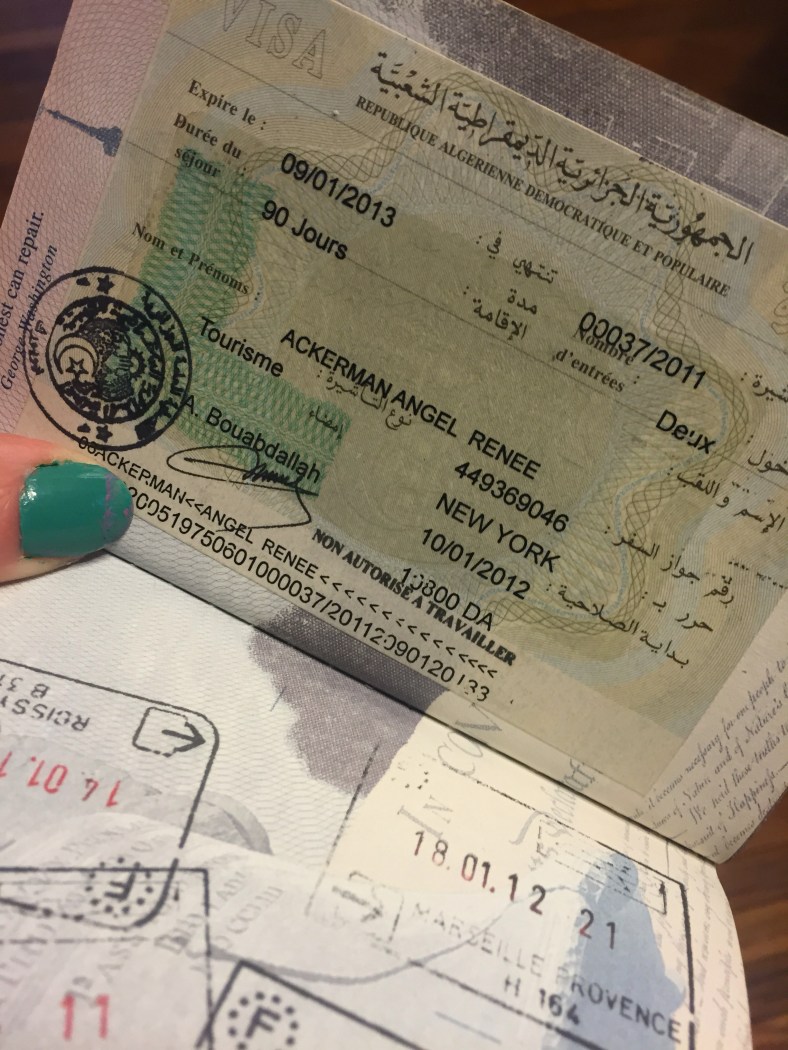
  
So we did an immigrant’s journey instead. We started in Paris, fly to Tunis (visited the ancient ruins of Carthage) and finished the voyage with a few days in Marseille soI could see the Arab influence. It opened my eyes. 

I will always have a soft spot in my heart for France, after all I have read the 1905 law on the separation of church and state and the constitution of the Fifth Republic in the original French. But setting foot in North Africa changed me. There was such a crazy blend of European influence and African beauty. From fresh baguettes covered with flies and soup made of lamb sausage and harissa (known as ojja) to the diversity of the architecture… We had arrived in Tunisia on the one-year-anniversary of the abdication of President Ben Ali and the initiation of the Arab Spring. And we had done that by accident. The streets were teaming with people, citizens shot fireworks off balconies, and a random North African guy grabbed my ass.

I had certainly gone beyond my comfort zone. And I started to realize that sometimes the thing that scares you most is the thing you most need to do.

My next academic interest became Djibouti. After the Algerian War for Independence (which ended in 1952, an abrupt and tragic decolonization that led to the more-or-less overnight displacement of a million French people and caused, in my opinion, the psychological issue that has further exploded into the contemporary “Muslim problem” in France), the French moved their primary military presence in Africa to the horn, to the small colony of Djibouti, a strategic point between Eritrea, Ethiopia and Somalia.

France had a conscript army until 1999. This means that when the French left Algeria, a multitude of the next couple generations of men served their military service in Djibouti. M had visited Djibouti just prior to the original trip to Paris he and I took. I begged him to take me to Djibouti. He did. In April 2014. During the beginning of the hot season. When I had a broken right hand in a brace. For a side trip, we did Yemen. Old Sana’a. Where I discovered they love to climb to roofs.

I loved it. We went to Moscow and Siberia in 2015. The Siberia trip was a one day visit for pizza. (Stories about all these trips can be found on this web site.) I have literally walked through what felt like good-block, bad-block, reminiscent of communist era Russia. And ridden some amazing old subways that are more than 100 years old. 

This year we returned to Djibouti. A war has since broke out in Yemen so while the State Department may frown upon my visit there, I am so glad I saw it when I could. (And for the record, I technically did an internship for the State Department. I worked in communications at USAID.)

Somewhere along the line, I said I would visit Somalia. So we did Mogadishu during our January trip. It’s strange to visit places where you become the one who doesn’t speak the language or have no ability to read. It’s surreal to be escorted everywhere by men with machine guns. But it also teaches you how much of the world lives and why knowing what happens around us— knowing our history— is so important.

The plane on which we traveled between Djibouti and Mogadishu was the same exact plane where a suicide bomber killed himself and blew a hole in the plane. That happened less than two weeks after we left. A week after we left there was a hostage situation at Lido Beach, our first destination when we arrived in Mogadishu. 

But look at what’s happened recently in Paris, Turkey, Brussels. A house caught fire in the middle of my block and took out three neighboring homes. The weekend before I left for Africa, I rescued someone from a heroin overdose in my own house. I broke my ankle in August walking down the street to buy a salad. Safety is an illusion. 

M handles the arrangements for our trips. He’s headed to Syria next week and while he invited me to join him, I declined. Safety is one of the reasons, but not the most important to me. I have faith in his research and contacts. He’s been doing this a long time. You can’t be careless, but “adventure tourism” is a real thing. As historians and academics, we have to remember where our perspective comes from and that we can’t rely on the media for our viewpoints. If you aren’t sure of your sources, sometimes you need to tackle it yourself.

The wonder and brilliance of children

I am far from a perfect parent. I show my daughter my strength and also my weakness. 

I love children. If I had more patience, I would have spent more time with as many of them as possible. 

A little boy occasionally comes into the store where I work in the café. I believe he comes with his grandmother and by the time they reach me, she seems exasperated. And I know why.

They have their shopping bags. They are ready to leave. She offers him a pizza.

He’s about four and he never stops talking. And I try my best not to interrupt him because my manners need to demonstrate how people listen to and engage others. Then the questions start.

It’s Easter week. The store is busy. At this particular moment, I’m momentarily caught up and there’s no one waiting. 

So I answer his questions. These aren’t dumb questions, these are “how things work” questions. What is that light? What’s that sound? I explain everything he asks about, even though his grandparent clearly wants to go. But he’s processing, he’s learning, and maybe someday he’ll be a scientist or an engineer because of this interest in how things work.

But now, my daughter.

I frequently help my friend Nancy with her writing career. Nancy is an essayist and poet. She’s also blind so sending an email, managing submissions and finding writing markets can be challenging with a sighted person at a computer. Her diligence and prolific work habits inspire me so the relationship is mutually beneficial.

My daughter is on spring break so she joined Nancy and I at Dunkin Donuts where I sipped iced coffee flavored with pistachio and Nancy drank her vanilla chai. And we even had donuts!

When we were done working, my daughter piped in.

She thought it would be interesting if we all wrote flash nonfiction about the morning to see the different perspectives. Nancy and I were thrilled. We set word counts and pledged to write and submit this piece.

Daughter and I did ours. We love them. Can’t wait to see what Nancy does.

Made possible because we listened to a child. 

Review: A Rainbow in the Night

  This isn’t going to be an elaborate entry but I wanted to mention that I finished Dominique La Pierre’s A Rainbow in the Night: the Tumultuous Birth of South Africa. 

I found the first 150 pages gripping, but as the 20th Century dawned it seemed like a shift happened in La Pierre’s storytelling. I don’t think that is the case, but that is how my brain perceived it.

La Pierre tells his story by choosing significant figures in South African history and using their story to build a national story. The tale seems to build and reflect on apartheid, whereas the title seems broader than the interior content. 

My knowledge is somewhat limited on South Africa and I thought La Pierre’s easy style would give me a quick basic review of key items in South African history, and it did. I guess it brings up the question of how does an author or scholar deal with a topic that is heavily overshadowed by something distasteful or tragic? 

Now I’m on to a book about war in Somalia, the Sudan and Rwanda so I don’t expect anything uplifting soon…

Fitbit… I love you but I think you’re no good for me

Two years ago I had an unfortunate accident at work. I broke my right hand and spent my winter in a different job which requires less movement and I ate every piece of junk food I could get my hands… Hand… on.

I returned to full duty ten pounds overweight and so weak I couldn’t break apart the soda nozzles at the end of my shift.

I had a visit with my nurse practitioner two weeks before my annual physical and the numbers on the scale were higher than they were on the day I brought my newborn daughter home from the hospital. 

At first I just wanted to lose a couple pounds to show the doctor I had the situation under control. I’m not a big girl, so ten pounds hangs heavy on my frame even though I’m lucky that I gain weight evenly across my whole body.

But then I couldn’t get my thighs in my pants.

I had just turned 38 and I knew I had to shed the weight before I turned 40. 

I started counting calories, going for walks and bike rides and returned to weight training which I had done periodically since college.

I lost 30 pounds in six weeks. Oops. 

I am probably the only person on the planet who bought a Fitbit to make sure I eat enough. I had no idea how active I really was.

I’ve gained about 10-12 pounds back, over the course of two years, but my body has dropped dress sizes as the weight comes back as muscle. 

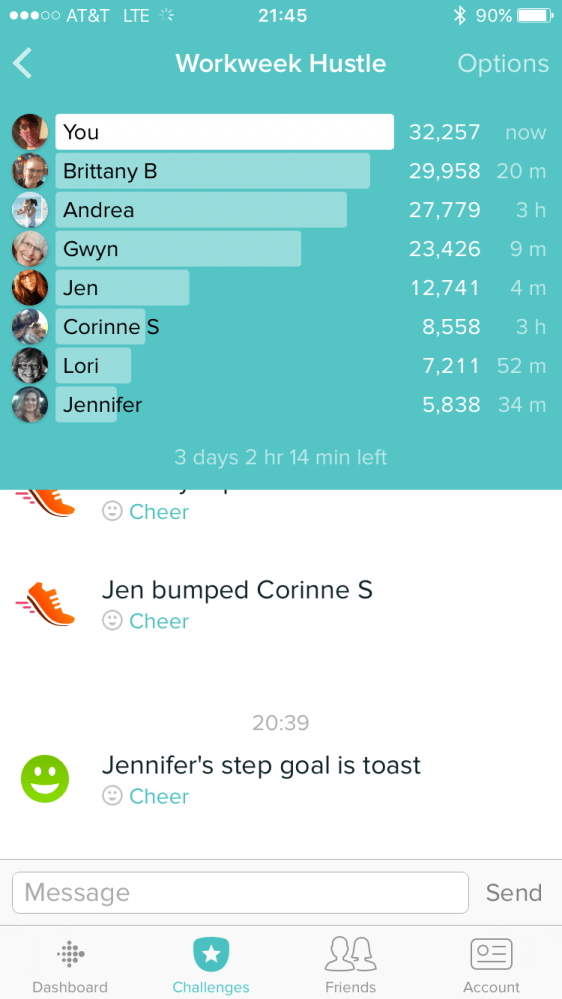
I’ve stopped counting calories. But I still have the Fitbit, and I love it, except for the fact that everyone is constantly challenging me. I work retail so I cover a lot of ground. People I know on Fitbit use me as their challenge but it stresses me out to “have” to keep ahead of them– especially since I know they’re using me as a success benchmark.

My goal is seven miles a day, so if I have a lazy day and only reach four or gasp three miles, I feel guilty.

I even monitored Fitbit when I broke my ankle this fall.

At this point I know my body’s needs and I can estimate how many steps I take on a day. So do I need Fitbit?

It’s nice to be held accountable but sometimes it’s too much of an obsession or strain. 

Lac Abbé

When we returned from Mogadishu, Somalia, we spent one night in our hotel and headed out with out backpacks for a final excursion to Lac Abbé. 

As I mentioned in a previous post, my visit to Somalia had made me more aware of the Somali cultural influence in Djibouti, so heading out to the Afar region excited the history nerd in me. I have a strong interest in this tiny Horn of Africa nation and how the French influence has blended with the crossroads nature of this area to create a country. The Arab presence is strong (especially now with the war in Yemen, fortunately I was able to visit Sana’a on my previous trip to Djibouti). The local culture is predominantly Somali and Afar so it made sense to explore more.

M, my travel companion, and I decided that though the journey is long and we’d already done a lot of travel by plane and car, that we wanted to see Lac Abbé. And we felt it had to be this trip. M also wanted to see the whale sharks, but our guide advised us it was too late in the season. Apparently, the increased activity in the water has forced some of the whale sharks away so when you once could see a dozen, you’re now lucky to see one. And he recommended attempting it in the beginning of the season not the end.

As also mentioned in a previous post, our journey to Lac Abbé involved a stop for coffee, a stop for lunch and a walk through Ali Sabieh. So while the journey took all day, it wasn’t all time in the car.

Traveling in Africa offers a different pace and a different perspective than travel in more Western or industrialized areas of the world. We turned off the main road outside of Ali Sabieh onto what, in the United States, would seem like an area where people play with their jeeps and other four-wheel-drive vehicles. Completely unmarked tracks in the desert.

  
This is one of the reasons they tell you not to attempt a solo trip to exotic locales in Africa. The driving is another reason: the crazy passing, driving on the wrong side of the road, the honking and flashing of headlights, the lack of seatbelts and gas stations. 

And the truck drivers heading back and forth to Ethiopia who are just beginning to face rules about how long they can drive without sleeping. I witnessed at least three truck accidents.