Reflections on Eating in Yemen & Djibouti

20140507-181818.jpg

Borrowed from my cooking blog:
www.angelfoodcooking.blogspot.com

One day soon I shall blog about my culinary adventures in Djibouti and Yemen. I fell in love with freshly made cantaloupe juice, could have survived on bread and butter (in temperatures so hot the butter melted on your plate) and decided maybe I’m not so fond of Ethiopian. The Yemeni cuisine was worth returning for– never have I eaten somewhere where the spices were so effectively used in a dish. I now believe I have never had a true saffron rice, the blend of saffron (which did more than merely turn the rice yellow) and the touch of clove really did tease the palate.

Oh, look at that. I did blog about the food. My true lament is that I did not bring home honey from Yemen. The color was so richly yellow it almost appeared orange. We had a small bowl of yogurt with this honey at our hotel and it was so simple and fulfilling. I miss it. Painfully.

I brought home American sauce as a joke for my family, purchased in the Nougaprix in Djibouti. I thought it was Thousand Island dressing and my husband confirmed it on our burgers tonight. Thousand Island without pickles. That works for my husband as he loves Thousand Island but hates pickles.

My many hijab


Before traveling to Djibouti and Yemen, I researched tying hijab via YouTube and did some practice as I hadn’t worn a hijab since my time in Tunisia two years earlier. On this trip, I wore a lot of different headscarves. I even cut off my hair to make surviving the heat easier (and to make it easier to fashion a hijab in the street if I needed to.) In Djibouti, most women wore colorful robes and scarves all of lightweight fabric. Some women wore Western attire, like the server in our coffeehouse who wore a short sleeved blouse and jeans.

DSCN1510
I didn’t intend on covering in Djibouti, but the heat soon changed my mind. I had packed four scarves: a full-sized pashima, a thin pink small neck scarf, a silk polka dot scarf very narrow and also meant for the neck, and a blue and gold Ethiopian textile. I quickly discovered that venturing outside without a scarf increased how hot I felt. The scarf also protected me from my own perspiration.

So I wrapped a scarf around my head for my own comfort.


Le Look Djibouti

When we prepared for our journey to Yemen, I figured it was time to venture into hijab territory. The weather in Djibouti is so hot that I opted to use my two small scarves to make a hijab (one on the front of my head hiding my hair, tied in the back, and the second across the back, tied in the front.) I draped the pashima scarf over my shoulders just in case I needed more coverage.

The men at the reception desk complimented my look.


Depart for Yemen


The next day in Yemen, I used the pashima more thoroughly with the pink scarf as my base hiding my hair. Our tour guide referred to my attempt as “respectful.” I used the pink scarf as the base to cover my hair. The photo of me with Mohammed on a rooftop in Sana’a was after I had to redrape my hijab after much walking. I don’t have any pins.


In Sana'a with Mohammed


Mohammed presented us with scarves during our visit to the suq. So before we left Yemen, I freshened up my look with my final hijab of my journey.

Of course, we also visited the mosque where I had the opportunity to dress in all black like most of the Yemeni women.


IMG_0350


In the Mosque

An American in Sana’a, Yemen

Almost a week has passed since I arrived home, a marathon of flights, train ride and car voyage. I walk through my ordinary life as if it’s the dream, my travels feeling more real than my everyday routine here in the United States.

Yesterday, I loaded a compact disc of Yemeni music (purchased from the musician at our hotel in Old Sana’a, Arabia Felix) into my car. I opened the windows and the sunroof and played the music loudly, My mind drifted to Yemen, that evening ride into the city from the airport. The music was loud, our host’s English soft and my ears clogged from the plane.

On the road, we found ourselves beside a caravan of vehicles celebrating a wedding. They drove with their four-way flashers, honking and carrying on. Later in our trip, our guide asked us about American weddings. He explained what he had seen in movies and we verified that that was correct. We get a license from the government, say vows in a church if we want a religious wedding and then have a big dinner for family and friends usually with dancing.

These are the conversations I remember from Yemen. They usually happened on rooftops with a spectacular view as the backdrop. We compared our cultures and our countries, even our jobs.

But this piece should delve into the tourism. My companion and I each purchased the guide published by Yemen Tourism, “101 things to see & do in Yemen,” offered by our hotel. Our guide led the way, but the book makes it much easier to remember the names of where we visited. I was recovering from a broken hand so there are few notes on what occurred during this trip.

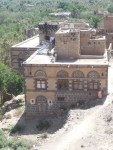
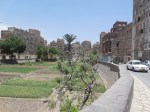
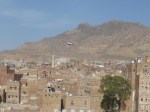
My chronology may not be perfect, though I suppose careful examination of my photos would reveal the proper order. Memory is more fun. We drove through the outskirts of Sana’a, the landscape a sea of greenery and beautiful beige mountains with those distinctive sandcastle buildings. Gingerbread houses made of sand. Like other parts of the developing world, formal garbage collection doesn’t exist and people use as much of their trash as they can. Plastic and food wrappers (often emblazoned with images like Bert and Ernie or Spongebob) form islands of trash along the streets. Yemen had the usual contingent of stray cats and lots of dogs.

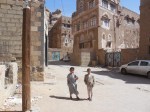
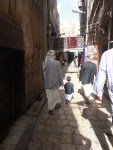
We walked through one village, where our tour guide translated some of the Arabic graffiti. Lots of children, some with shoes, some without, some dressed like mini-adults in robes and tailored jackets. Girls in dresses while their mothers, if out, wore head-to-toe black with only the eyes showing. One pair of boys asked us to take their picture, so we did, and we showed them the results on our screens. They were delighted.

We visited Dar al Hajar (the Rock Palace), an amazing structure atop a breathtaking rock, which once housed the imam and his four wives.. While we imagined life in this tower at various points of time— seeing the bedrooms, the food storage, the grain mill, classic colored glass— from the windows of our perch we could watch the village below. Laundry hanging on one rooftop, a man harvesting khat/qat/ghat, people playing drums and dancing in the courtyard.

We also went to Bayt Baws, an ancient Jewish settlement deserted when the Jews there emigrated to Israel. Amazing to see from a distance, even more breathtaking from the narrow rocky paths within. People, I suppose you’d refer to them as squatters, live there now. While the climate in Yemen is delightfully temperate and not as humid as Djibouti, I found myself struggling through Bayt Baws. I supposed at the time that I was a touch dehydrated, but then my breathing started giving me trouble. My companion pointed out that the asthmatic sensation I was experiencing was probably altitude sickness since we went from the lowest point in Africa to 2200 meters above sea level.

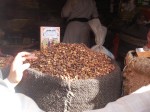
From here, we returned to the old city and the suq. The meandering passageways of this market contained everything from food to clothes, black robes for the women and craftsmen. I saw blacksmiths, silversmiths, carpenters, those who made jewelry, souvenir sellers, coffee and spice dealers… everything.

After freshening up at the hotel, we headed into modern Sana’a for lunch. We ate at a large restaurant where the food was on display and one merely had to select a dish. I think my companion M and I would both say that the food delighted us. He had chicken with a saffron rice unlike any saffron rice I have ever tasted. You could taste the saffron flavor and a note of clove that really made it come alive. Yemen is a hand-eating culture, so it is expected to wash your hands before and after the meal. Luckily, with my right hand (the eating hand) out of commission, my meal came with a plastic spoon. My chicken had an incredible blend of spices, including curry and just tasted so perfect I could not even try to discern the ingredients.

The restaurant spanned several floors. It had an outdoor terrace, some curtained booths for conservative families needing to maintain their privacy and on the top floor a communal eating area with lots of windows. Golden upholstered seats complemented the rich purple striped tablecloth that the staff covered with plastic for easy cleaning.

We had another round of travels through the suq, where our guide lavished us with gifts: a keychain, coffee, and a scarf. I don’t think I’ve removed my scarf since I received it, but that could be due to the difference in temperature between the United States and Djibouti.

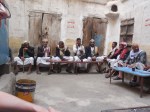
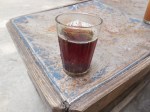
We sat with the men in a coffee house. We were the only white people there and I felt awkward as the only woman, but no one cared. The laughter and discussion continued despite our appearance. We sat together on benches, everyone crowding together as someone else came. Definitely my favorite moment of the day. Sipping piping hot sweetened tea from a small glass.

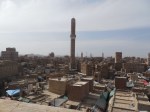
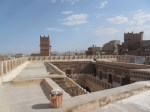
Our final stop took us to a rooftop in Old Sana’a of what our guide referred to as a business hotel. We took the elevator to the eighth floor I believe, removed our shoes and entered a lounge. We climbed out a window and found ourselves on a narrow terrace with only a couple bricks between us and the drop. We chatted out there for quite some time then went to the restaurant. M and I were stuffed from lunch, so we had juice and water while our host had french fries. We watched the sunset over Sana’a while someone smoked hookah beside us and a woman asked what had happened to my hand.

At that point, we returned to the hotel and rested before our return flight to Djibouti.

M wanted to know what I thought at various points during the day and I told him he’d have to wait. I knew between the altitude sickness (and a bloody nose), and I’d stumbled in the suq and scraped an elbow, and a child had kicked a ball into my broken hand, that my initial impressions of Yemen were emotional. But at one point, as I sat in a hotel courtyard waiting for my companion and guide to return from a rooftop, I watched the everyday rhythm around me and couldn’t believe my good fortune.

The men sat in a small room chewing qat and smoking cigarettes, their shoes on a mat outside. The woman of the household stepped out in her long black robe, jeans poking from the hem, and returned later with a shopping bag. A boy appeared in the gate, a man encouraged another boy into the street with a ball, the universal parenting maneuver of “go outside and play.” An older man with a can hobbled to a table, a young child, at the elder’s bidding, retrieved a beverage for him.

Universal.

Tourism is a blend of meeting people, sharing the sameness, and allowing another place to show its beauty and its treasures.

(Our visas and travel arrangements via Arabian Voyages Travel, www.ArabianVoyages.com)
Arriving in Sana’a, Yemen

20140430-093722.jpg

I recently spent the day in Yemen. Not something your average American would contemplate doing these days. It’s not even something simple to do as the embassies here in the United States won’t issue tourism visas. In order to go, you have to find a travel agency to sponsor you and do the paperwork for entry visas and receive your full visas upon arrival at the airport.

We visited Sana’a, Yemen, as a break from our travels in Djibouti. Our host was Arabian Voyages Travel (www.ArabianVoyages.com). We literally spent a day. An unfortunately timed day as an American drone strike had happened about 48 hours before coloring some Yemeni opinions about Americans and our foreign policy.

My friends used words like ‘courageous’ and ‘brave’ when discussing my plans. I wondered if ‘naive’ and ‘stupid’ might be a better fit. The Yemen day trip was completely the brainchild of my traveling companion who thought 1. a week in Djibouti could get monotonous (he was wrong, I think I could stay there forever) and 2. I needed to see old Sana’a, one of the oldest living cities in the world inhabited for about 2500 years (he was right).

Air Yemenia proved to have the smoothest flight out of the multiple plane trips I took that week. I have issues with my ears and the pressurization of aircraft and Air Yemenia caused me the least discomfort. Plus, they provided a light meal service on a flight only 45 minutes long. Those flight attendants really hustled.

Our entry into Yemen went smoothly, and our guide, Mohammed, met us at the airport door. It was about 11 p.m. so I don’t think the reality of culture shock had set in, though the difference in language intimidated me. In Djibouti, one hears French, Arabic, Somali and occasionally English. Yemen was the first place I ever visited where I did not speak the language.

We climbed into a small white taxi, listening to local music as we drove through Sana’a. Mohammed passed us each a bottle of cold water as he and my companion discussed our visit, the recent drone strike and kidnappings. It was during that car ride that it was suggested that if anyone spoke to us, we should claim to be Canadians. Just in case. We were also not to go anywhere alone, as the travel agency would vouch for our whereabouts upon exiting Yemen.

My companion had warned me that Yemeni’s never sleep. Sure enough, even at such a late hour, the shops of the city were lit. Haircuts were in process. Groceries being procured. It was probably more fully alive than Manhattan would be at a similar hour. We drove into old Sana’a and the electricity was out. The old buildings became an unlit maze connected by narrow streets. We entered a gate, walked through a courtyard, and found ourselves at a quaintly lit reception desk.

From there we climbed stone stairs of unequal height to what would be in the United States the fourth floor. The door to our room resembled a cross between something from a castle and a submarine as we and to step up and duck at the same time to get inside. We opened the windows and shutters to get some air. A single fluorescent bulb powered by a generator lit the room. Even with such dim lighting, the room gleamed with high ceilings and stained glass windows. The car headlights from the street below danced on the ceiling in a kaleidoscope pattern.

I collapsed into bed. My traveling companion picked up the English language leaflets on Islam for nighttime reading. He read some of it aloud until finally the light went dead, some unseen figure had declared bedtime.

We could see nothing but darkness and shadow from the window. I finished my water from the car ride and stared at the missing view. The sounds of life out there matched those of any other city and I knew in the morning there would be an amazing view upon waking.

Our first wake-up call came with the early call to prayer. I had grown accustomed to them in Djibouti but here… It sounded like the mosque was right outside our room. My traveling companion closed the windows, as it was not quite dawn, and we went back to sleep.

When the sun bathed our room, we stirred. I again stared out the window. The buildings, so old, stood like sandcastles decorated with icing.

We dressed (I fashioned a hijab) and went down for breakfast in a different courtyard. The meal consisted of local bread (like a cross between a pita and an English muffin), a couple varieties of cheese, butter, jam, tea, and yogurt with the best, richest, most vibrant honey I’d ever eaten. The other patrons of the hotel were European. A family including two children. I’ve forgotten whether they were Slovenian or Armenian or something else.

If I had been nervous about visiting Yemen, it faded.

More about our tourism later…

Finding my rhythm in Djibouti

Yesterday we traveled to Yemen, courtesy of Arabian Voyages Travel. We arrived in the middle of the night Thursday (seeing a variety of shops still open as we breezed through town) and left 24 hours later. I had no idea what to expect of Sana’a. I have never really studied Arab culture except in the context of French colonialism.
We were sponsored for travel by our agency, and we acquired our visas with no difficulty or delay. When we got into the taxi with our guide, he handed us each a bottle of cold water. At that moment, despite the proximity of the American drones and the warnings you hear about traveling in a conservative Muslim country, I felt immediately at ease. I also realized, after several days now in a land where heat is stifling and water limited, that if you offer me a cold bottle of water I will trust you implicitly. More on that later. Now back to Djibouti.

This morning, we went to bed at 2:30 a.m. (midnight flight) after a disappointing attempt to FaceTime with the family. I had hoped to use the hotel internet to contact them, but when planning to get the family together at a certain time, my American sensibilities did not factor that the outside area where M smokes as I play with wi-fi doubles as a bed for one person and the other place where internet is available, the lobby, also serves as a sleeping space for the person working the desk. The man outside slept on two tables pushed together with a flattened cardboard box as a mattress.

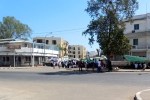
So, M and I woke about 8 a.m. to find the hotel out of coffee and croissant. We sat there with our Lipton tea and bread and the server went to the store for croissant. We then headed to Bunna House for coffee. We had heard yesterday from a cab driver that everyone knows the two white people who’ve been tooling around town. The coffee house (bunna is a green coffee that they roast, as the young woman at the Ethiopian restaurant showed us) was full of a wide range of people. At this point the staff knows us and smiles as we head in every day at some point.

Next came the ATM machine. I had been having issues getting money. It declined my requests. So a local explained to us that you have to use Fast Cash. You cannot enter your own amounts. Today, I used the Djiboutian Franc fast cash button. AND IT WORKED! I felt like I had played in Atlantic city and won (even though I completely understand it was my money the machine spit out).

We did some shopping. That in itself is an experience. For clothing, there is a pile of inventory on the table. If you don’t see what you want, the shopkeeper pulls out this giant plastic bag and starts piling his additional inventory on top of the table. If you still don’t see what you want, you tell him and he will go look for it.

I also needed stamps. The tourist office instructed us to visit the tabac. Weaving our way into a crowded group of coffee drinkers, we came to a high wooden counter where an old African woman, shriveled with gold teeth, sat at a desk with her cash box making change as quickly as her long, bent hands could do it. When we asked for stamps, once the crowd thinned, she crossed to the counter. Opening a big drawer, she rummaged within and pulled out a small plastic bag with Djiboutian francs and two stamps. She carefully unknotted the plastic. She pulled out the stamps, which had been stored decorative side in. She warned us that these were not for letters, only postcards. We paid 100 francs each for the two stamps, face value 70.

Stamps found, we went for juice at Cafeteria Sana’a. We also do this every day. Ginger is my favorite, but since our arrival the first day, there has been no ginger. It’s also a place where they have grown to know us. The juice— I got cantaloupe again— comes in a frosted mug and hits the spot when the humidity has all but melted you into a puddle.

M and I don’t design many plans for our travel, but we always develop certain routines. There’s something about a daily trip to the juice bar or an evening stop for coffee that allows me to watch the city and find a place for myself in its rhythm.

20140426-133821.jpg

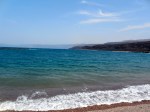
The Beauty of Djibouti

Day Five.

The time passes by so quickly, with each day bringing some sort of adventure. It could be simple, like the juice bar at Cafeteria Sana’a not having the ginger juice tasted on the initial visit and trying first mango, then cantaloupe, and also lemon-mint on each subsequent stop. Some adventures are frustrating, like when several atm machines refuse to give you money and the tourism agency and official money brokers have different ranges of American dollar bills they will accept. Remember when the United States added all those colors to our boring green money? Well, Djiboutians don’t like old money. Some adventures are hysterical, somehow causing the hotel room chair to fail when sitting.

The environment remains fascinating. People are surprised to see American tourists here. Not surprised to see Americans as we have quite the military presence. French workers and military are here, in addition to a Japanese base, though I have seen only a few French families (late in the evening in the classy restaurants) and no Americans nor Japanese.

The heat (90 degrees F) and humidity (85%) have not bothered me, and I feared it would be unbearable. I have consumed 2-3 liters of water a day. The town shuts down from 1-4 every day to keep everyone from melting. So this is our quiet time where we have snacks from the grocery store, drink more water, sit on the patio (fans blazing), M smokes, and then we return to our hotel room to cool.

Breakfast is croissant or other bread with coffee. Mid-morning we typically stop for juice. Yesterday we had lunch, primarily because we did a tour excursion to Lac Assal and the guide handed it to us. For dinner, we tried the pizzeria in the hotel (where the staff works very artfully on the product though they should have cooked it longer). Then we visited an Indian restaurant recommended by another hotel guest. That place had a delightful ambiance from the moment we entered. Le Santal features Indian and Chinese cuisine and pizza, the international food. (We returned there a second time, prompting the owner to chat with us and give us baklava.) Next, we had Ethiopian, another wonderfully decorated place, but neither M nor I really favor Ethiopian cuisine. With the broken right hand, it presents a bit of a hand-eating challenge. That said, tonight we shall delve into Djiboutian.

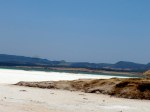
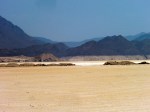
I am positively stunned by the geography, especially after our trip to Lac Assal. We would both like to go to Lac Abbé but are reluctant due to the ten hour drive. Tomorrow we will trek to Ile Moucha. Yesterday we visited a variety of places along the way to Assal. I will hopefully break those down later. I would like to save that for the photos and after I pick up a Djibouti book I saw in the store. Except I needed about 6,000 Djiboutian Francs and I only have 4,000 and the ATM refuses to give me money. By the time we figured that out, the shops had closed for 1 p.m. break. The book will at least provide correct spellings.

The tour guide, driver and company did a fantastic job with our excursion. If you are every in Djibouti, call Daniel Jean at Bambu Service Touristik. What I enjoyed, in addition to breathtaking scenery and warm water pools and the salt lake, was seeing the breakdown of how people live. You can see areas of Djibouti-ville that seem like your average developing (“third world”) city, and then there are areas for industry (I passed the big Coca Cola plant, one of the main employers here) and I’d like to believe we drove by some lovely French villas walled off from the rest of the city. In that respect, colonial ideals may still be in full bloom.

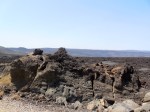
The roads are primarily straight. Road signs point to major cities or even the next country. Nomad villages are everywhere, as people move to find water. In some places, the huts are made of wood and metal, others sticks and tarps, and yet in what I assume are the more stable villages, the nomads take the volcanic rock and build their shelters. Because of the severity of drought here (and even our hotel often has water shortages when you turn on the faucet and nothing comes out), some international aid agencies (I believe Japanese UNICEF is one) have started delivering 50 gallon drums of water to these villages.

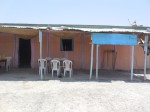
We ate lunch near the Salt Investment Company at Restaurant Randa (though we packed, courtesy of the tour) which was in the middle of, if I remember correctly, an Afar nomad village. Cats dined with us and of course goats meandered by. Goats are a major cattle animal here. No agriculture and minimal greenery. Goats are perfect for meat and milk and as everyone knows, they eat everything. Camels also, and occasionally donkeys, but not among the families near Restaurant Randa. (I also assume that the men work at the salt operation.)

I had the opportunity to use the nomad toilet facility, which while primitive by Western standards, was quite nice and included a bucket of water and water bottle scoop for cleansing. I mention this because I think it’s very important to understand that nomadic people don’t have a lesser existence than we do. Sometimes I fear that Western ideas of international development focus too much on issues like infrastructure and unemployment and not enough on basics like clean water and education.

The Afar nomads may not have jobs, electricity or running water, but why do they need it? They follow the rain and the water to feed and care for their cattle. Disease and malnutrition are of course serious for any society, especially among people with so little modern resources. But I envy one element of their simple existence: they have survival skills that I can’t fathom. If suddenly my bank cards, car, refrigerator and two-story house disappeared, I would have no clue how to build my own shelter out of sticks and stones. I could probably care for a goat, but slaughter it? No clue. Who, in the end, will endure?

20140423-144113.jpg

20140423-144202.jpg

20140423-144235.jpg

The cat photo is from the restaurant, but the black stone structures in the background are homes.

20140423-144015.jpg

And the facilities…

20140423-144545.jpg

20140423-144629.jpg