Day 1 of the Massachusetts adventure: Mystic

Yesterday, I drove my friend Gayle to Massachusetts.

We’re driving up route 287 through New Jersey, 50 miles into the journey, and the tire pressure light goes on. We drive a couple miles and no exits advertise gas stations, so eventually I get off at the next exit. We drive through some beautiful tree-lined streets, no businesses in site, and eventually I see a sign for police. I follow it.

If I need to wait for AAA, a police station nearby is a good thing. And maybe a police station means a town. No such luck.

Eventually, I pull over. I can’t find the tire gauge we used to keep in Eva’s car. She confirms it never made it into my car. Gayle uses her phone and finds the nearest QuickCheck while I walk around the car kicking the tires and listening for hissing sounds that would indicate a nail or something in the tire. With the tires having passed my inspection, we head to the closest QuickChek.

We use the facilities. They have no air machine. So we walk to the Auto Zone next door and buy a cheap tire gauge and a quart of oil. Might as well buy the quart of oil.

It looks like Gayle’s side of the car might be a little low. We drive across the street to the Sunoco. No air. We get back on the highway, and two exits later, we see a sign for Wawa. As we look for Wawa, we see a QuickChek with air. I fill all the tires. The light does not go out. I reset the light. It comes on.

Eventually, we give up and drive with the light on.

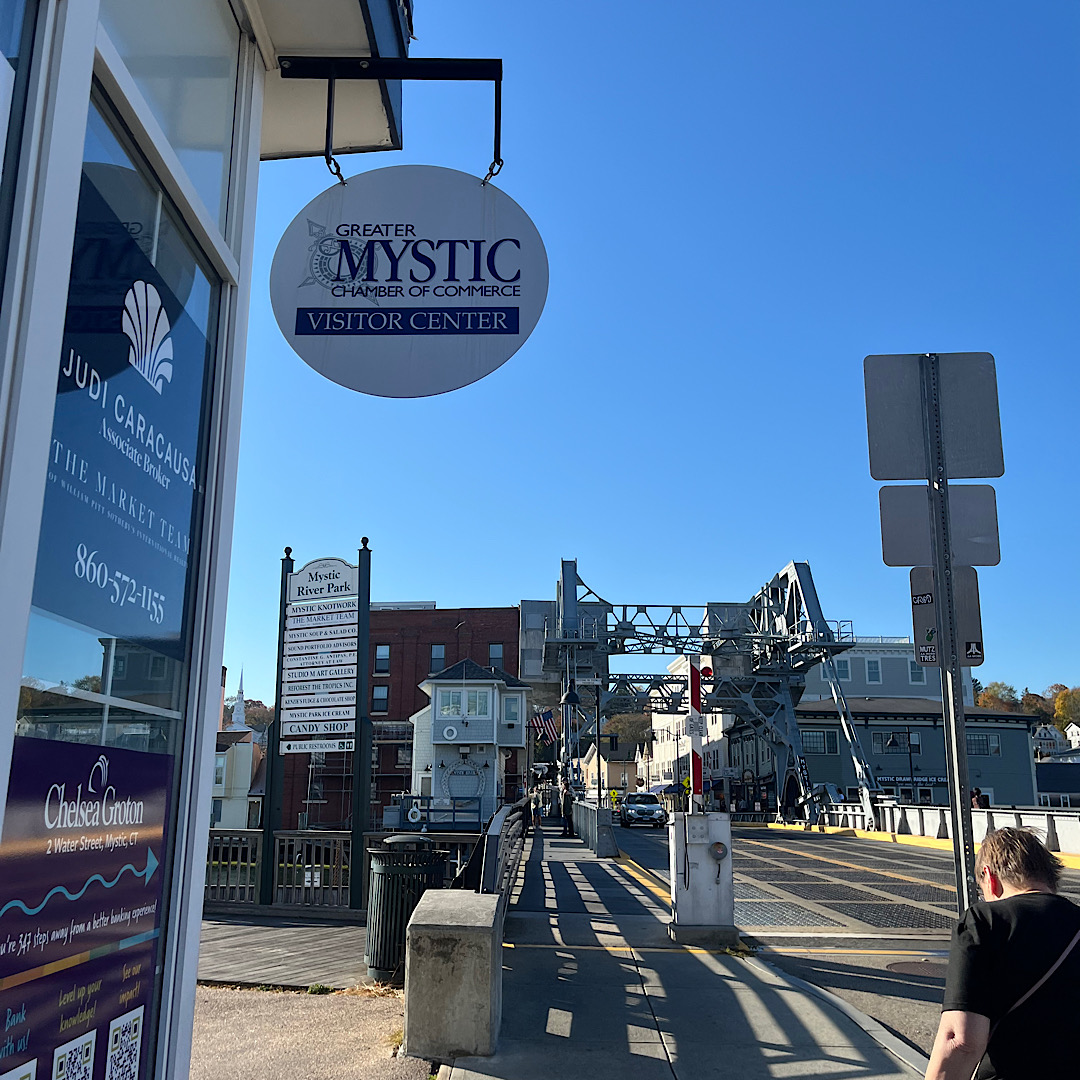
We arrived in Mystic, Connecticut at 12:20 instead of 11:15. But the shopping village near the aquarium where one can find Alice’s Little Haunted Bookshop was very cool. So cool that Gayle was cold and huddled in the corner… Actually, Gayle found some great children’s books but she really was cold and I didn’t notice how miserable she looked because I was preoccupied with the chandelier.

But the true winners at the shopping village were Becca Rose (so much tarot and books, so many spooky hair clips) and Cloak & Wand— a coffee shop that sold wands and cloaks and books.

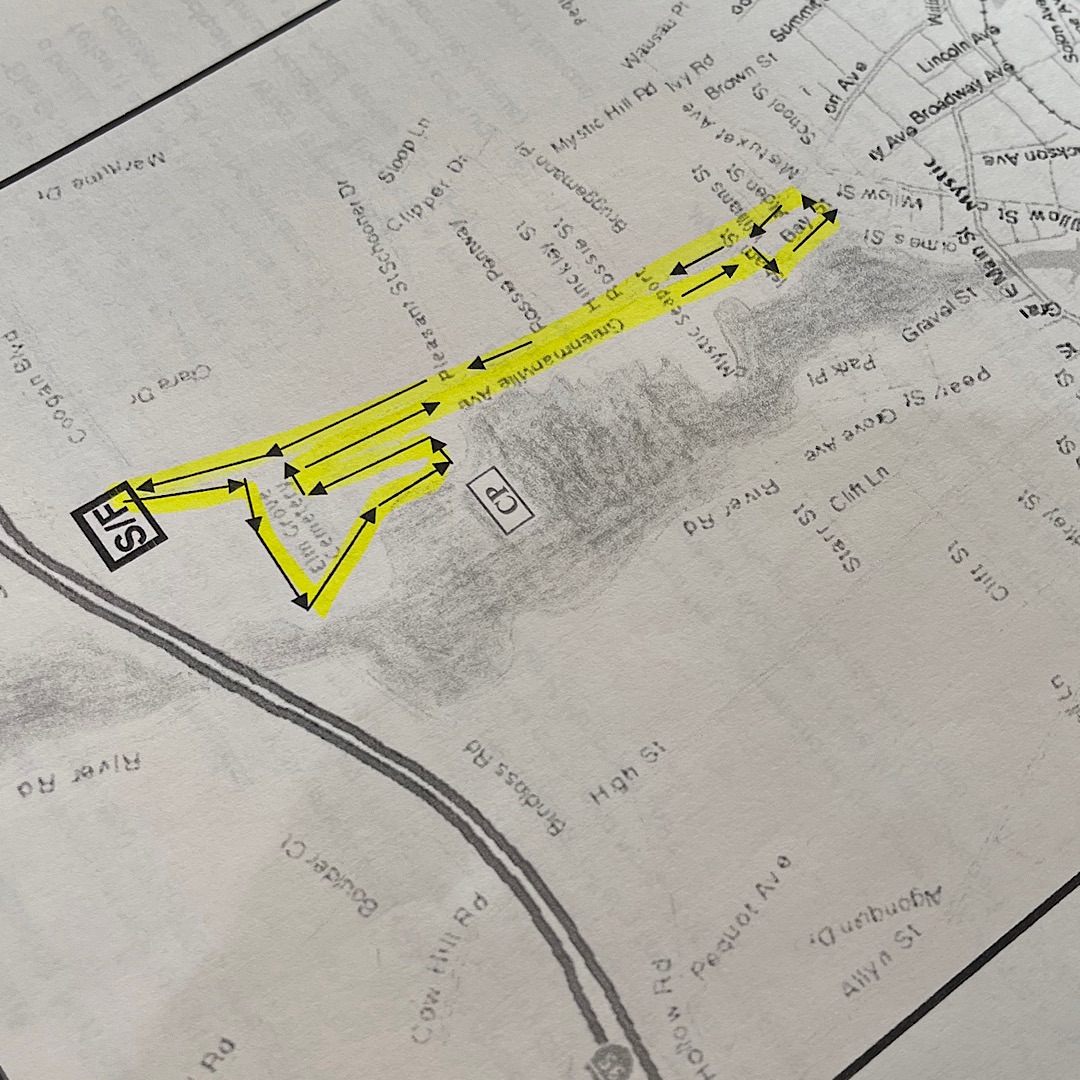
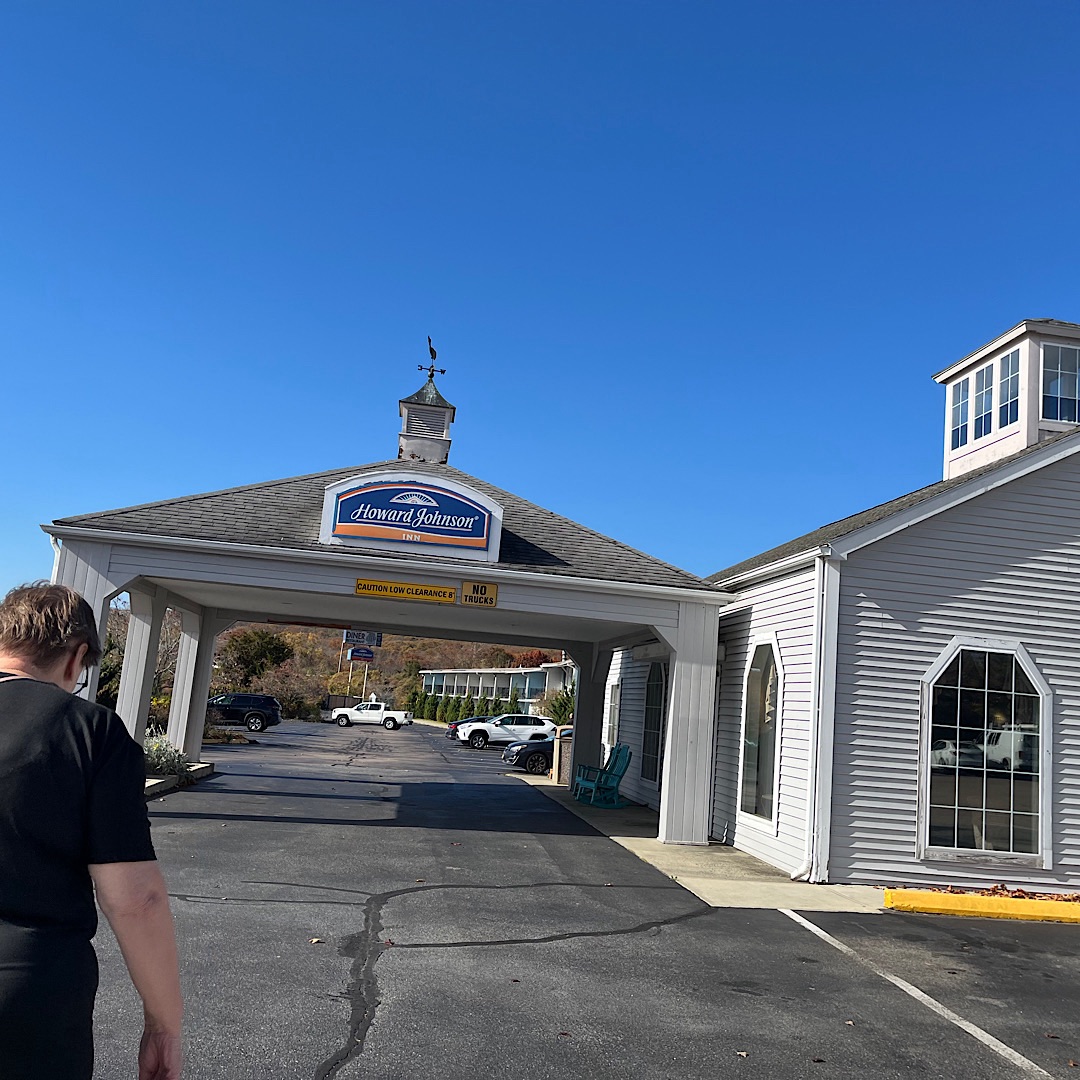
From there, Gayle wanted to check out the walk box for the local Volkssport trail which was at a Howard Johnson’s nearby and we had lunch at Mystic Diner while plotting our next adventure. The hope was a short walk– not the full 5K– and then heading over to Stonington to see the new location of Square Bank Books and visit Lara Ehrlich’s writing studio, Thought Fox Writers Den.

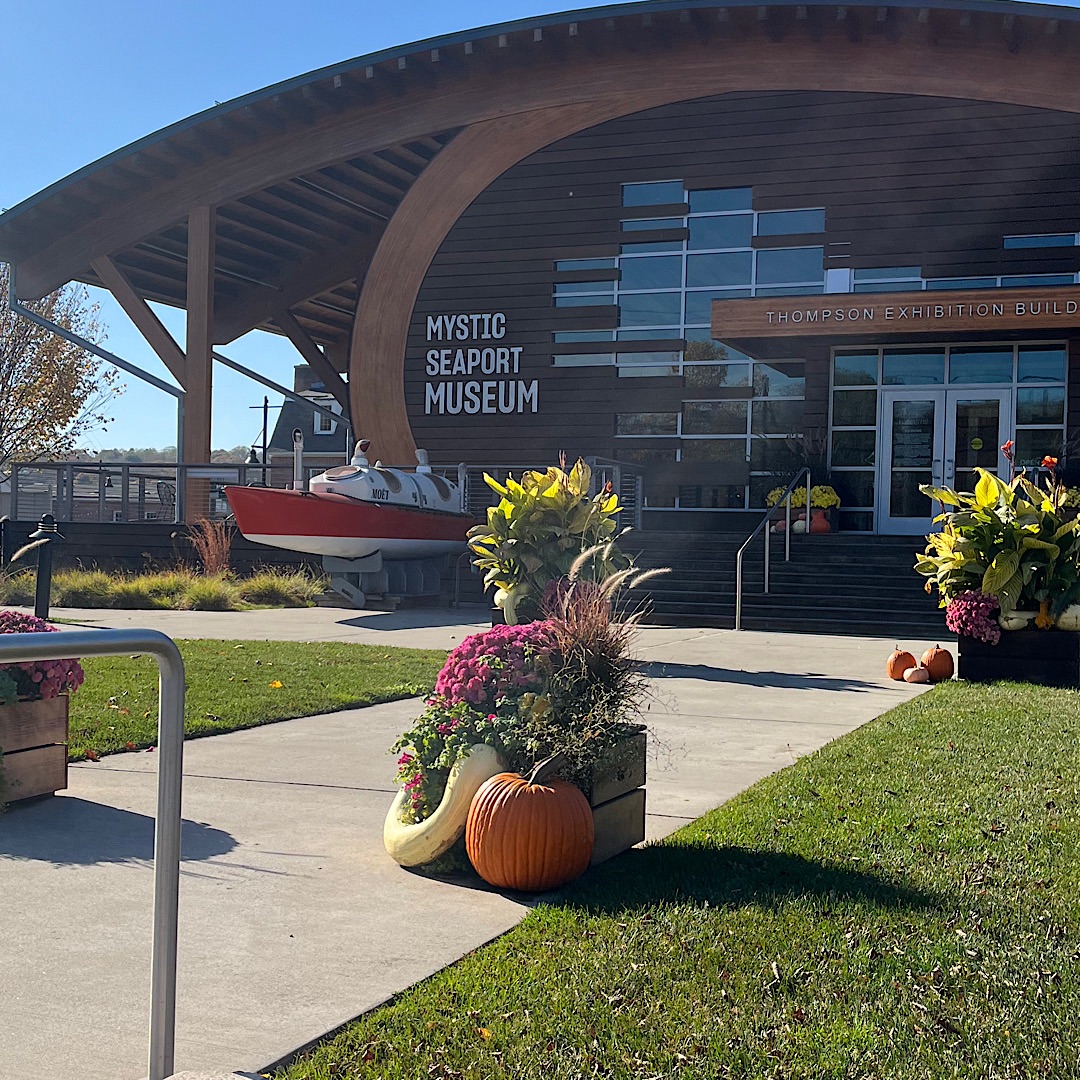
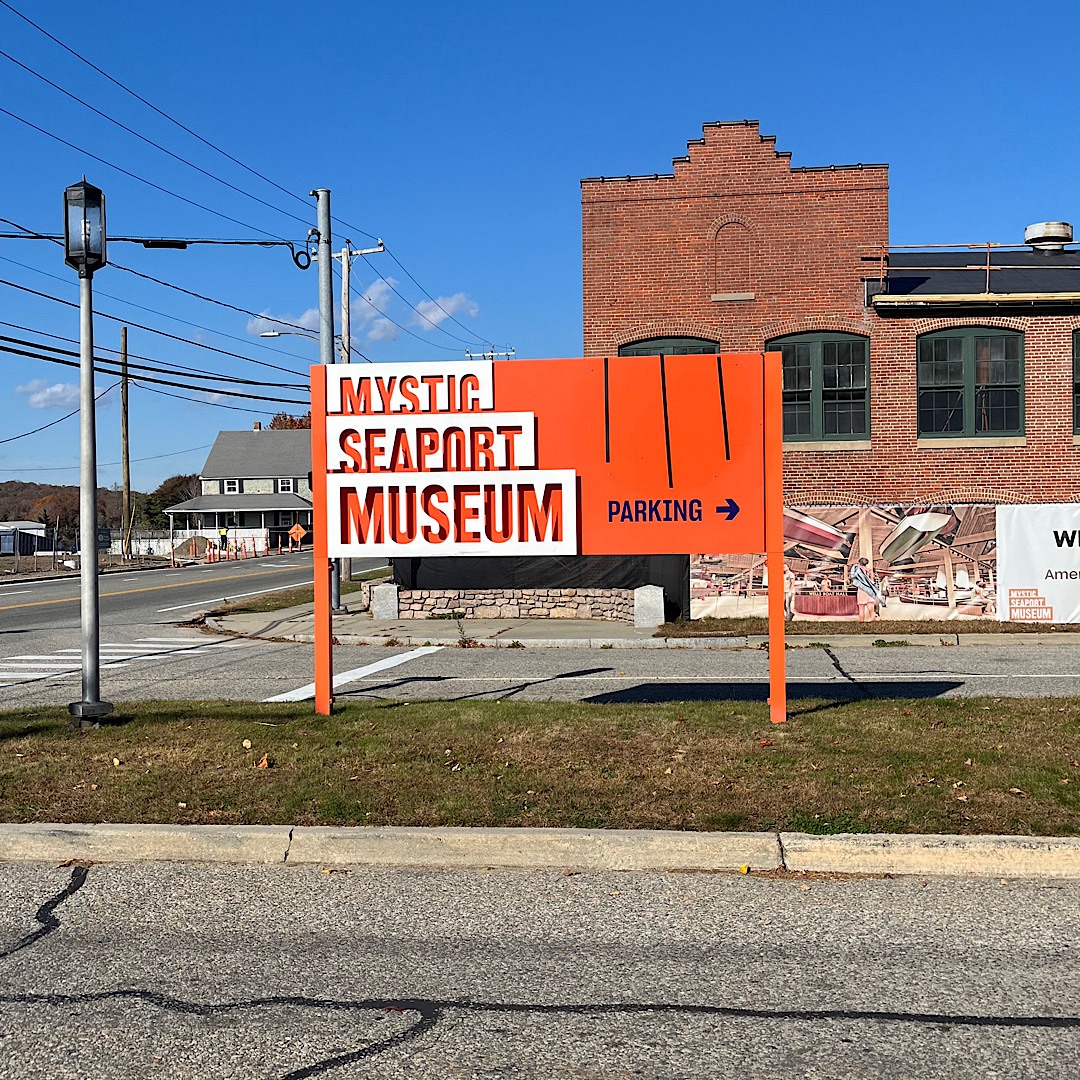
But Mystis had too many interesting twists and turns, and a candy store, and a drawbridge, and we ended up starting the walk at the wrong entrance of the museum and adding more than half a mile…

So while we walked by the former location of the bookstore, we did not make it to the new one. The drive to Massachusetts was uneventful, except for some traffic in Worcester and discussion of my great grandmother’s birthplace in Lowell.

We arrived at Doubletree for our warm cookies around 6:30 and I had dinner and was in the hot tub by 8 p.m. The hotel restaurant where we ate was named Characters— another omen that we ended up in the right place. Speaking of omens we found pennies at just about every stop today.

More on medical dramas: New Amsterdam

I can’t believe it’s been three weeks since I posted anything to this blog– if you’re looking for me I’m using on social media and on ParisianPhoenix.com as more and more my publishing business must support more of my life. It’s hard to believe it’s been 13 months since Stitch Fix closed our warehouse.

So, my personal life isn’t much these days because my professional life has blended so much into my personal life– and I don’t take care of myself with the attentiveness I used to because I have less resources and worse medical insurance.

But a while ago, I went on a tangent about Grey’s Anatomy. (I really cannot believe that it’s still on the air. I cannot stand Meredith herself.) All my Grey’s Anatomy’s posts can be read here.

After I finished all the season’s available of Grey’s Anatomy on streaming and watched Season 20, I turned to The Resident. I had attempted The Resident once before and abandoned it fairly quickly. I started that in early summer and finished it right after my Atlanta trip, a trip where I stayed about a mile from the museum that they used for the exterior of the hospital.

I think Dr. Bell’s transformation on that series– from the hands of death and destruction to an actual nice guy– was rather impressive. The way they handled Emily VanCamp’s (Nurse Nic Nevin) departure from the show was frankly stupid. They had an end-of-season two situation where Nic was stabbed, (one of the quintessential medical drama plots) and the staff saved not only her life but that of her unborn child, only to have her die in a car accident a few months later. As a writer, I would have much preferred to see her leave Dr. Conrad Hawkins and join some international medical NGO than simply die after swerving to avoid hitting a deer.

That show also did a troubling time jump. In the middle of one episode, they fast-forwarded three or four years as a way to get Conrad out of private practice and into the hospital again, since he is the main character. They used trick or treat night, and skipped to a bigger child and a different Halloween costume in mid-episode!

So, while The Resident has some perks, it also aggravated me as most of these shows do. You always have the maniacal surgeon who must have good outcomes at all costs, the doctor with cancer, the doctor hooked on pills. There’s always the natural disaster that threatens the hospital. The generators never work when they should. There is always a field amputation. And there is always a pregnant woman who gets in some horrible accident. And don’t forget the brilliant surgeon who has some catastrophic injury but manages to come back.

I could go on.

I was very skeptical when I started New Amsterdam, but I quickly noticed some nuances about the show. It’s far from perfect– within the first season we hit most of those typical plotlines and stereotypes. But the show grew on me. I’m troubled that they used the dangerous pregnancy plotline, with the caesarean without tools at home scenario, but killed the character off in the same episode with not complications from any of that, but in an ambulance accident.

And the storyline of psychiatrist Iggy Frome infuriates me and endears me to him. In the middle of the show’s run they have a few incidents where he must face the idea that he might be a narcissist, only to drop it without resolution (okay, technically I have about six episodes to go). But his later struggles to define himself and his role in his own relationships is stellar.

They tackle real topics with more than a perfunctory mention. The pill-popping doctor must deal with her sobriety, her addict family members, her sister’s overdose and her own controlling behavior as she realizes she replaces substances with sex and even people. The episode on the overturning of Roe vs. Wade had weight to it, as the medical professionals struggled to find solutions.

Their representation of diversity includes a trans nurse, a doctor with a dwarfism condition that starts as an extra and works his way up to chief of the department (even if that didn’t last), a conservative doctor who fathers a child in a polycule, and a deaf oncology surgeon who participated in one surgery and eventually became a main character– with a whole lot of ASL and other deaf actors/characters.

Now add to all of this that New Amsterdam is based on a 2012 book, Twelve Patients: Life and Death at Bellevue Hospital, and the author really did serve as medical director of Bellevue and survive cancer as the main character of New Amsterdam does… I, of course, had to read the book.

I’m 60 pages in, which is into the third chapter and I’m impressed at how well the book and the television program complement each other.

Cardiology meds

Last spring, I experienced two falls down the stairs in a two-week period that led to bodily injury. That led to a period of A-fib and 24-hours in the hospital.

The cardiologist on call at the hospital put me on beta blockers, metoprolol, and the dosage wiped me out and gave me orthostatic hypotension. I learned through working with a dietician that I am sensitive to salt and I drink enough water that I wash the sodium from my system.

My primary care physician dropped my medication dosage in half, but the orthostatic hypotension and occasional weird bouts of high heart rate did not go away.

I found a new cardiologist and got a second opinion. The new doctor thought the Apple Watch was enough protection against Afib and that I could stop taking the medication. Since I was losing my job a month later, I thought discontinuing a beta blocker would lead to an increase in blood pressure due to stress.

But now it’s a year later– and I’m not sure the pills do anything.

The physician assistant and I had a discussion about eliminating the med, and she wants the doctor’s opinion first. The question remains of what should this medication be doing. If it’s supposed to be helping my heart remain a steady pattern, then I need something extended release or a different class of medications. If it is really just an insurance policy against Afib, I suppose it is enough.

The physician assistant asked if I would be willing to wear a Zio heart monitor to make sure this was a smart move. Last time I wore a Zio, it showed some stuff, but not Afib. That cost me $600, and that was when I had “good” insurance and Medicaid. I have a high deductible plan right now with high coinsurance and no HSA, so I mentioned that I was saving my budget for more important tests– like the MRI I am paying for out of pocket. That bill was more than $2,000.

I haven’t heard back yet, but my point in mentioning this is that the pertinent question of the day was to ask what my medication is supposed to do, and if it is doing its job. It’s easy for a doctor to tell us that we should or need to take something without question its exact function.

Obesity

Last week, I went to the doctor for my annual physical. The following day I went to the gynecologist for the same.

Between the two appointments, one of the medical professionals listed me as two inches shorter than my average. That led to my status as overweight being upgraded to class one obesity.

I have been struggling for months to resume exercise and return to healthy eating. I go back and forth with losing the same five pounds, based on what I choose to eat.

A lot of my issues with mobility and my heart stem from my extra weight. No doctor has said that to me, but I know based on how I feel and how my body reacts. I need to lose thirty or forty pounds.

About the same time my primary care physician quietly labeled me as obese, murmurings happened on the internet that suggested that the BMI was an imprecise and outdated model of determining health. The suggested replacement is a roundness index, which looks at how much weight people carry around their middles.

If I felt good, I wouldn’t care what they labeled me. But I don’t have the stamina I once did. And that has an impact on my activity which causes more issues.

I think as a society we should promote different body types and multiple standards of beauty, but if I know my weight causes a decrease in my quality of life, it is nothing more than denial to say that weight doesn’t matter.

Resources and their impact on disability memoir

I don’t know about you, but as I grow older, routines become more and more important to me– because otherwise I simply don’t squeeze all the tasks and items into my day that I think I should. That’s how things I enjoy, like updating this blog, get neglected.

For instance, I never wrote an entry about my single-shot marathon drive from Atlanta home.

But I was working with Nancy yesterday (and she managed to submit something like four poems and an essay while I was with her) and she nudged me in that subtle way. I mentioned that I had gone to the cardiologist the day prior, and that led to a discussion of the fact that most of my current writing time has been dedicated to my medical advocacy/ disability memoir.

“Good,” Nancy said. “I think that’s an important one. Because unlike so many people that write disability books, you’re a normal person.”

I had to pause for a moment and I almost laughed.

“Because so many books by disabled authors come from people with resources?”

While that statement is not 100% true– I know several disabled authors who use the Amazon platform to promote and distribute their fiction– it says something about disability-themed literature and memoir of past generations (I am Generation X and Nan is a Boomer.)

Spending some time in the Barnes & Noble database

For fun, I just searched DISABILITY on the Barnes & Noble website. The search yielded only academic titles. I searched DISABILITY FICTION and got only 22 results, mostly academic books, and one book only available in ebook, published by Draft2Digital, and clicking on the author’s link led me to believe he is an independent author who has published at least twelve titles only in ebook format. The author is also a horror filmmaker, nearing 60-years-old and appears to be white and able-bodied.

When I search DISABILITY MEMOIR, I find twenty results– many of them self-published, several by Boomers (on topics like polio, at least three of those, hey GenZ have you heard of polio? Another on surviving Tuberculosis and living in sanitariums), many on parenting, and many on learning disabilities.

MEDICAL MEMOIRS yielded more results (50 instead of 20) and the boldest words that popped from thumbnails were cancer and survival and the occasional miracle. When I entered my own condition, CEREBRAL PALSY, the search returned more than 130 results– most either children’s picture books or academic books.

Now, I know some of you are thinking, “Why is she looking at Barnes & Noble– everyone knows there are more books on Amazon.”

Barnes & Noble, as the remaining giant big-box book retailer, offers a standard on what can be considered mainstream and the minimum threshold of “wide” versus Amazon-only distribution. And Barnes & Noble has started doing some more gatekeeping as to what self-published or print-on-demand titles can appear on their web site.

Resource #1: Time

Anyone who publishes– even if self-publishing– has a certain amount of financial or support-system resources at their disposal. It might be as simple as the self-published author who solely uses Amazon has a live-in caretaker, which could be a family member or a paid staff person, which allows them the extra time to sit at their computer and write. As a person with a disability, whether that be a mobility issue, a congenital limb difference or vision and other sensory impairment or something else, it takes a lot longer to do basic tasks alone. Ever try to button a shirt alone with a broken arm? It takes longer to bathe, to cook, to eat, to use the toilet. The whole day just takes longer and takes more energy.

And that’s without considering what it takes to monitor and take medications, how often one needs to attend physical therapy appointments or doctor visits, and potential nuisances like arranging accessible transportation, buying supplies like incontinence supplies or feeding tubes, and monitoring one’s health.

Resource #2: Knowledge/connections

There is a profoundly different experience for disabled people based on socio-economic status. There is also a gap between experiences for those people who qualify for public services, those who have private resources and those who fall in the middle.

During the pandemic, I qualified for Medicaid for the first time in my life pretty much because I lost my job at the height of Covid and did not receive any unemployment because only workers displaced by Covid made it into the system. I did eventually receive unemployment, but it literally hit my bank account two days after I started my job at Stitch Fix. Because I had zero income, I qualified for food stamps and Medicaid. My Medicaid kicked in November 1, 2020 and my job at Stitch Fix started one week later and they provided health insurance on day one.

I submitted all my paperwork. My food stamps ended, but Medicaid did not, because of the pandemic. Despite me periodically sending updates reinforcing that I had private insurance, my Medicaid remained. Do you know when they canceled it? When Stitch Fix laid me off. I submitted my application to renew my Medicaid and they denied me because their system hadn’t uploaded my daughter’s prove of being a college student and I didn’t notice. The system didn’t send me a notice that said, “Hey, this item is missing.” Just denied the whole application. So, I have spent the last year as a disabled entrepreneur with a high deductible medical plan which means I recently paid $2,000 out of pocket for an MRI. It also means I am not seeing my specialists as often as I should.

Meanwhile, I know someone who recently not only qualified for Medicaid but also receives government disability payments, also an entrepreneur, who probably makes more money than I do. I have an Office of Vocational Rehab Counselor who has listed me in her highest category of disability, but in the last six months, I have received nothing actionable as support.

Access to social workers, whether professionally in a hospital or even through friends or non-profits can help make sense of what is possible, but without guidance it’s really hard. Another barrier is technology. That one might make a reader bristle, but not all technology makes life easier. Sometimes technology requires practical or financial resources to be useful. Nancy, as a blind person, has struggled with internet access. She has never owned a computer, and she has tried various ways to use the world wide web. Her Fire tablet worked well until the charger failed way too quickly. She has a Blindshell cell phone she uses on wi-fi to check her gmail account, and an Alexa device to handle music, time and reminders.

But recently, NASA discontinued its TV station, guiding viewers to use the NASA Plus app instead. Alexa does not have a skill for NASA Plus. Her Blindshell can’t open links from NASA Plus. And she can occasionally stumble upon a usable link for NASA’s videos on YouTube, but not reliably. She’s now considering a Fire Stick, but she’s considered she won’t be able to easily scroll the thumbnails to find the launches that interest her.

I mention this because the resource of knowledge and connections, many of which we consider technology-dependent, will change the disability experience. The people who will produce memoirs will have more access to knowledge and technology. Even in able-bodied households, not everyone has access to these items.

Resource #3: Money

A lot of the memoirs I have read come from households with financial resources. It could be as simple as having a stay-at-home mom who could be a caretaker. It could be as complex as a disabled person having access to expensive custom schools or having enough savings to take time off work for long treatments or training opportunities. These advantages lead to better education, better adaptability in the world and also empower the person who had these opportunities stories they can share with the world.

Not to mention many disabled authors work with specialty editors or vanity publishers to create their work and that requires cold, hard cash.

Resource #4: Support

Similar to the time resource, support covers the system that helps a person on a day-to-day or as-needed basis. The support of family, friends and caretakers contributes to a person’s time, their skill and their self-worth to lead them to write a book. That could also include a teacher or mentor. Some disabled people might need a typist, or an outside researcher, to help them with their tasks.

For disabled people who use most of their time and energy on survival items, writing a book might not be a possibility. This also covers the emotional support– I would guess that most disabled published authors are people who have been told they have a message worth sharing.

Resource #5: Past Experience

Finally, I consider past experience a resource. This may pertain more to medical memoirs versus disability memoirs, but that is my gut feeling and not fact. Most people want to read “hopeful” stories with happy endings. And therefore I wonder if memoirs that feature “miracles” or “cures” might be more appealing and accepted than chronic illness/lifelong disability books.

If an able-bodied person experiences an illness or an accident and writes a book, he or she will write with their previous experience in mine. The journey present in the story will be “before,” “accident/diagnosis,” “after,” and “end,” whether than end is death, healing, or acceptance. Stories with this framework will inadvertently compare the disability or medical part of the story to the unhindered before time, and the goal will always be to regain what was lost.

For most disabled people, the reality is learning to live with the condition and doing what is needed to prevent a decline in quality of life.

Regardless of what resources or goals a writer has when dealing with their own disability or medical situation, it’s important to remember when we read memoir that everyone’s lives have different challenges and their are many ways to deal with any situation.

The final leg of bookstores and driving

If you’ve been following my journey, you know that yesterday morning I left Greenville, SC, for Atlanta. It was about a three hour drive, technically less, but I stopped at bookstores and other places to entertain myself along the way.

As a small business owner, I am doing everything I can to make this trip inexpensive and fun.

I have a massive crate of snacks (which M said was very me) that are my emergency food rations and I’ve been gathering more items along the way– the “breakfast” at my previous hotel was grab-and-go so I now have two muffins. I stopped at a rest stop in Anderson County, South Carolina (my mother’s maiden name, plus near Clemson where my stepmom attended school) and saw that vending machine benefited the South Carolina some-organization-for-the-blind. I bought two snacks, because I saw something one doesn’t normally see in vending machine: snacks with protein! Individual packs of tuna salad and chicken salad. My collection now has one of each. And at the conference, I snagged a bag of raisinets. Fruit, right?

Of my snacks, I have eaten two KIND breakfast bars and a bag of harvest cheddar snap peas. I had forgotten how delicious those are.

My breakfast stop yesterday was Panera. They offered me a $1 bagel again. I considered Waffle House for my “main meal” stop of the day, but the timing didn’t work out because I stopped at a TA “travel center” to pee and grabbed a banana while selecting a magnet for Eva.

I have been buying Eva magnets from different places because they are usually cheap, easy to transport and they are easy to store at home. Magnets don’t take up space. They sit on the fridge or on a filing cabinet. I texted her from the truck stop to ask, “Are you to old for a magnet?” and I got the response, “never.”

Three Bookstores of the Day

  • Walls Of Books: A chain of used bookstores, I visited the one in Commerce, Ga. Bought three old paperbacks. Really wanted a book on found on Hebrew and English and the Old Testament but it was almost $20 and I can’t read Hebrew.
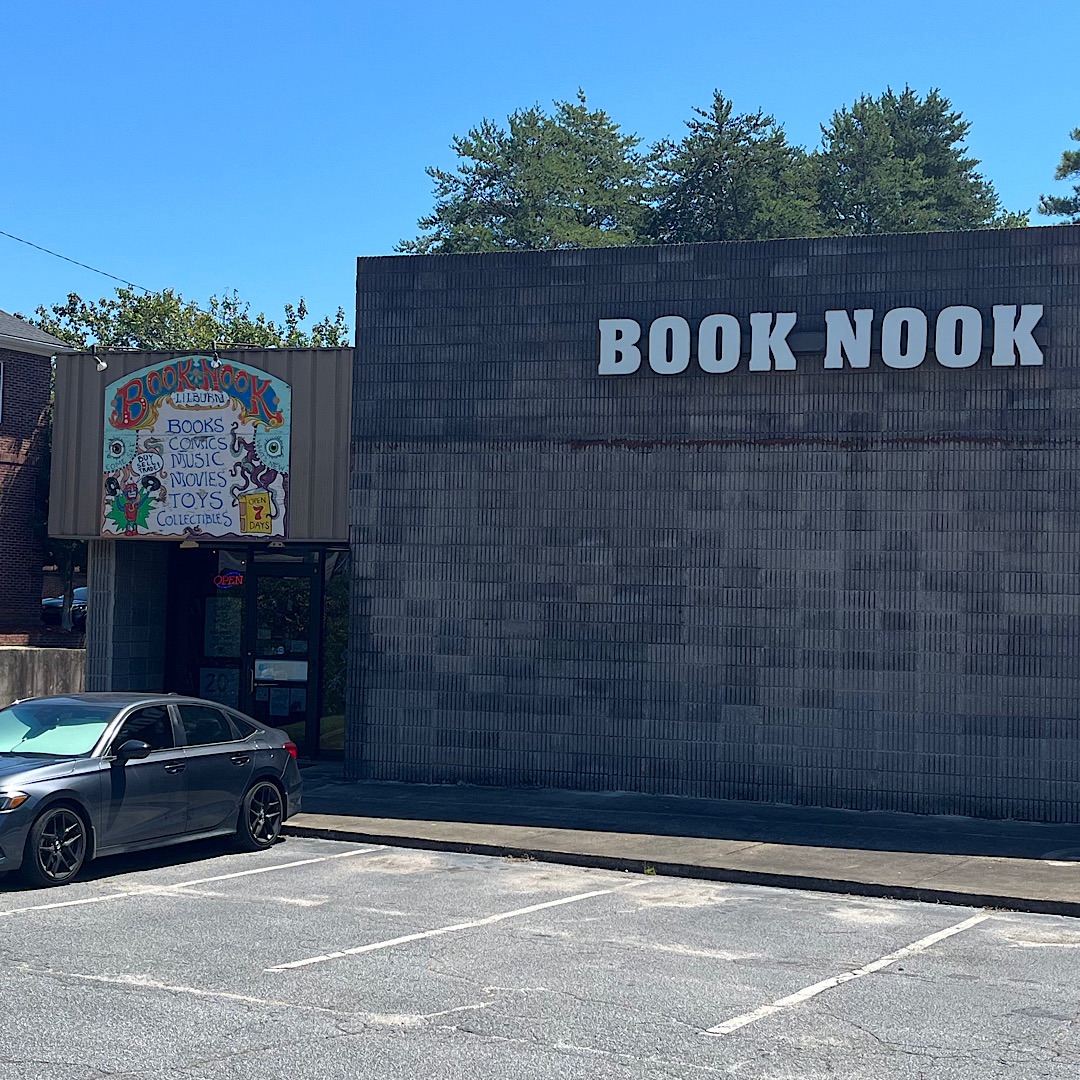
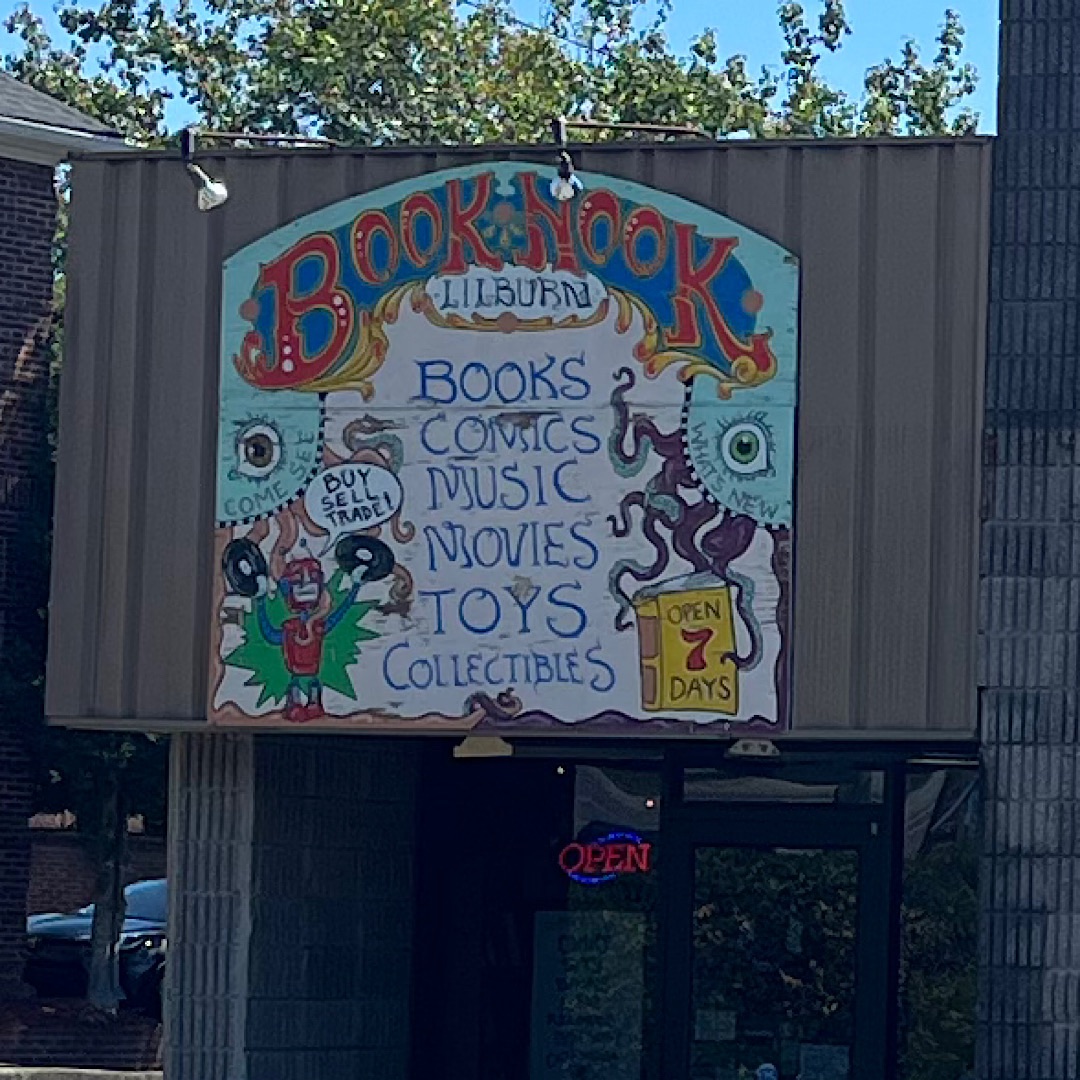
  • The Book Nook: A strange used everything store in Lilburn, Ga. This was the only place I didn’t talk to anyone because the people and the customers were all really old. And it was the only place I walked into where nobody talked to me. They had everything from records to comics to books and DVDs. And a cat-themed ladies room.
  • Phoenix & Dragon: A spiritual bookstore on the outskirts of Atlanta. I had to go and find a witchy present for Eva. And the name! They had three cats who live in the store. Best collection of tarot cards I gave ever seen in one place.

Upon reaching Greenville South Carolina

Yesterday I drove from Washington DC to Greenville, South Carolina. 500+ miles.

I left at 7:15 a.m. and had a lovely morning commute through Rock Creek Park and down to the Potomac. I was fascinated by the highways that had central blocks of three lanes that they flipped one direction for the other at peak volume times.

I saw a new Krispy Kreme doughnut store beside a vintage one, complete with all the 1950s style neon. And of course, the old one was being prepped for demolition.
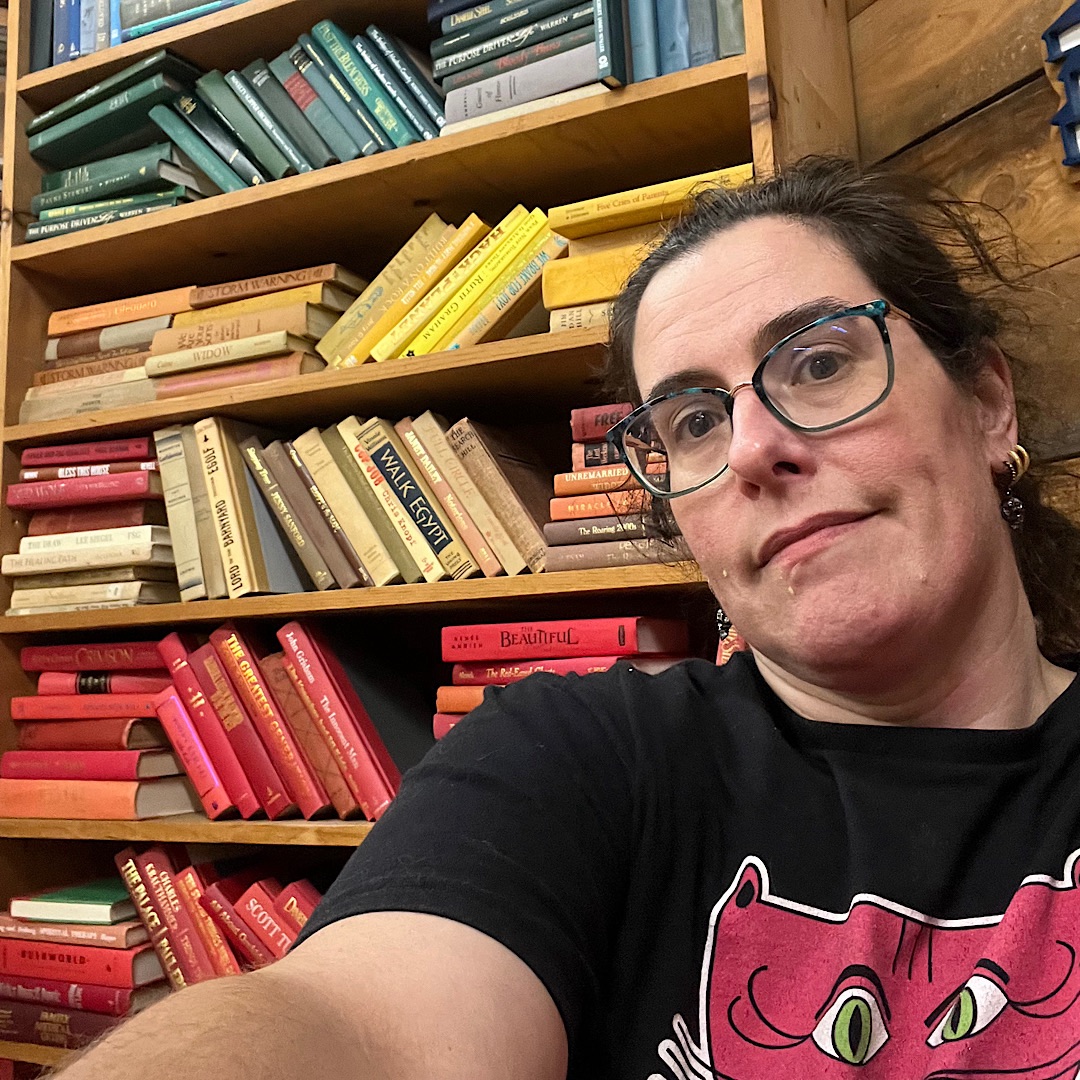
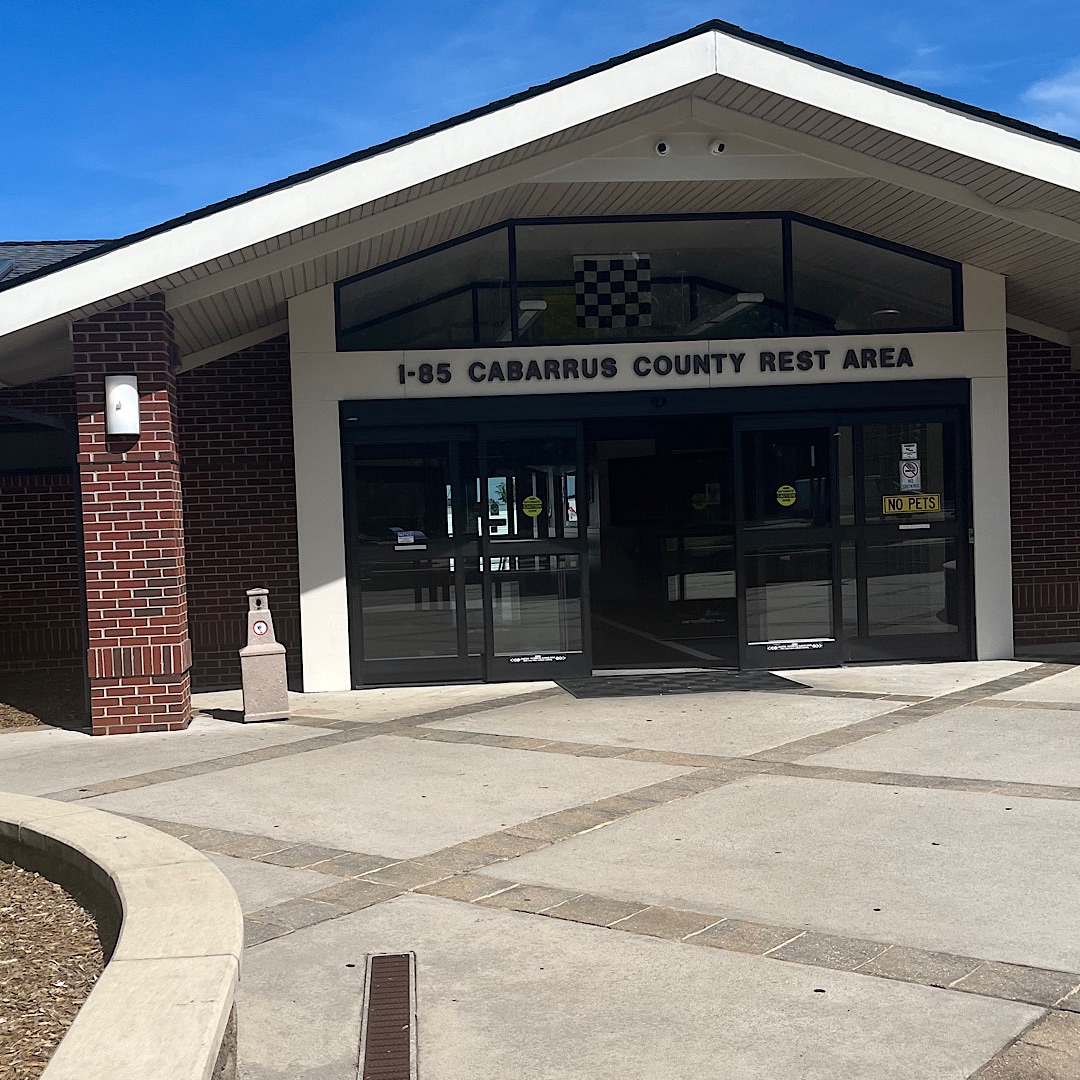
In North Carolina, at the rest areas, they arrange the flowers into N & C shapes in the garden which from a distance in the car looks like a floral “NO.” And they also gave out lots of maps! And the attendants talked a while… I lost 15 minutes of driving time.

South of Charlotte around 4:30 p.m., I hit my first slowing of the day, but beside me in the traffic was a vivid blue McLaren which you don’t see every day.

I ate cheesy grits and a Spam crunch biscuit at Biscuitville.

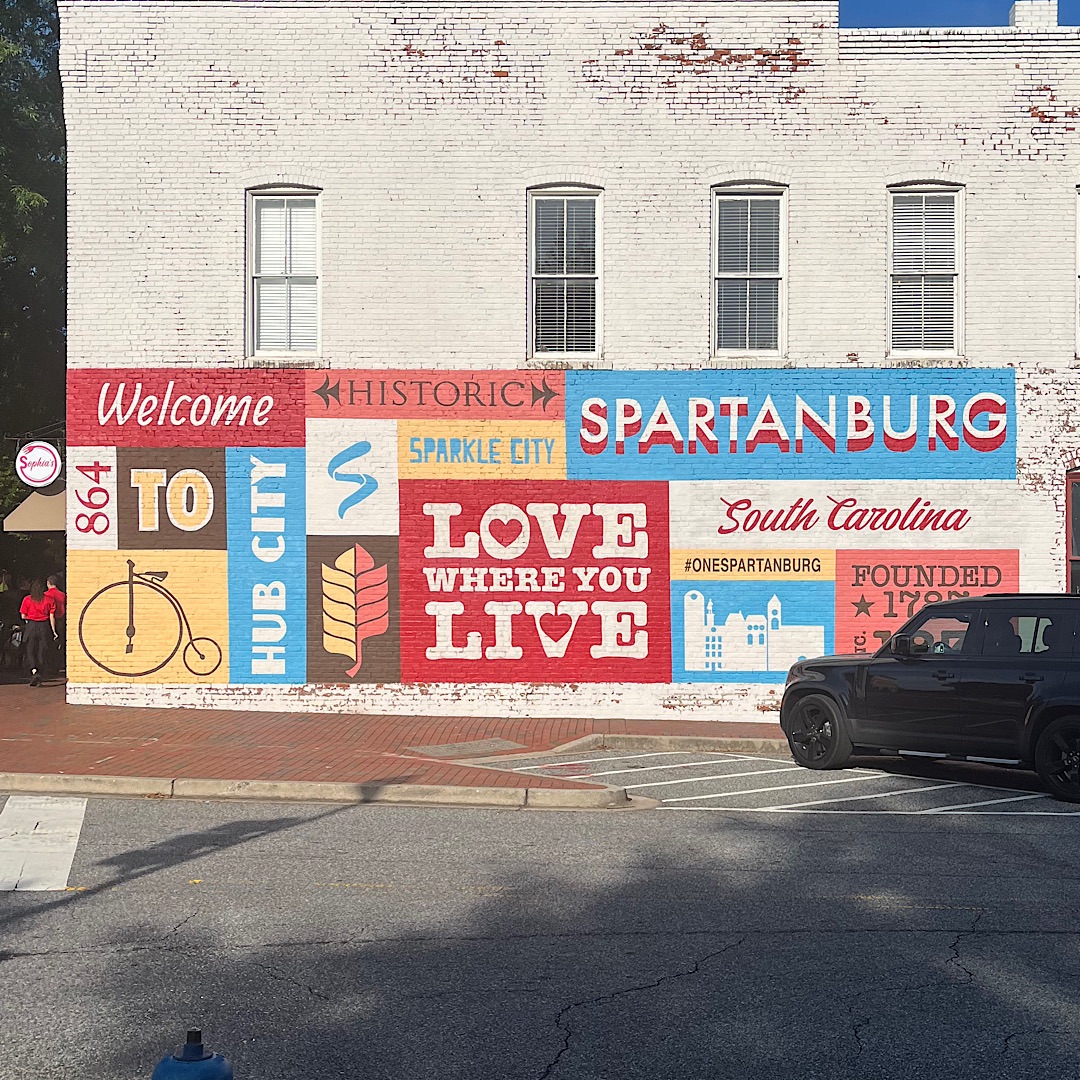
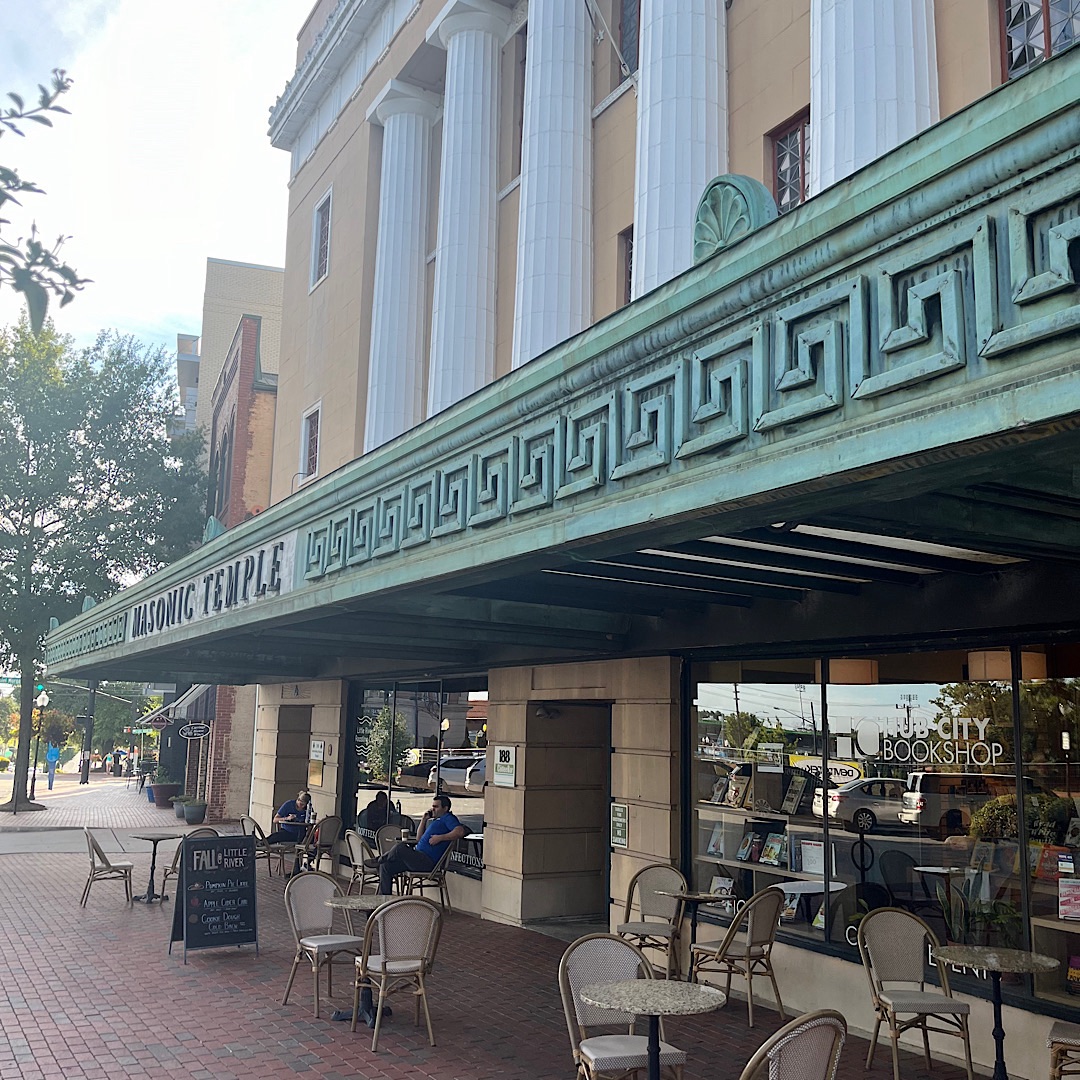
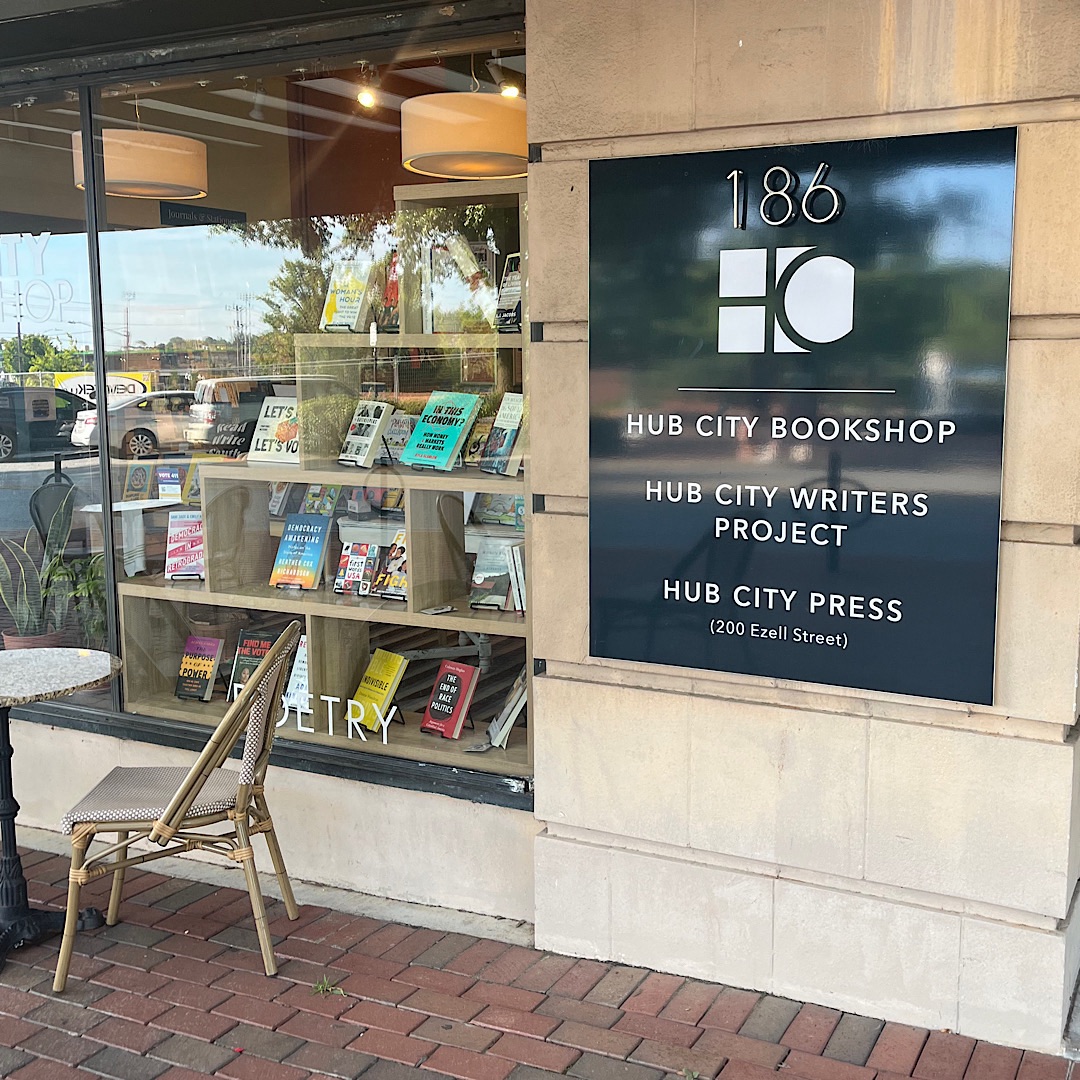
I visited two independent book stores: Persnickety Books and Hub City Bookshop & Press.

For more info on that, see my newsletter. Read my official newsletter here (and subscribe while you are at it!)

I used HotelTonight to book a room at 6 p.m. I considered staying in Spartanburg but that would have cost me $100+. I came to the ExtendedStay America right off 85 and I’m glad I did because it was only $70. I slept great and there’s a Panera outside! (If you look at the photo– it’s kinda between the two main trees.) There’s a pizza place, a liquor store and TWO grocery stores (one of which is a Walmart).

Road Trip Leg One: Lehigh Valley to Washington DC

Today marked the first day of my week-plus trip to present an erotic writing workshop at SexDownSouth: Atlanta, promoting Parisian Phoenix’s Juicy Bits. I left home at about 7:50 a.m. and headed to the bank to deposit some checks at the a.t.m. Then, after much thought, I headed to Panera and picked up an iced tea and already had to pee.

At 8:15 a.m., I left Panera with a toasted asiago bagel and my tea. (They offered me a bagel for $1 today.) Sixty-five miles later I had to pee again! So I stopped in Grimes, Pa., Exit 13, at our “favorite Sheetz.” This Sheetz has an entire row of smoothie machines and frozen icee flavors.

I made it to Route 83 and Harrisburg by 9:50, despite all my stops. By 10:30 a.m., I had eaten my gummy worms and needed to pee yet again. So I stopped in Shrewsbury, Pa., near the border of Maryland, in an area where they had massive shopping plazas with every eatery known to man. Even a Panera. I used the restroom and grabbed a coffee, even though I hadn’t finished my tea.
I left Shrewsbury at 10:45 and arrived in DC at M’s house at 12:07 p.m.

M, my traveling companion through all my crazy adventures on several continents, and I hung around the house and chit-chatted for hours and spent some time watching the black squirrel that hangs around their house, Climber Meta.

We went to Siam House DC for a lovely thai dinner, where I had mango curry with tofu. So delicious!

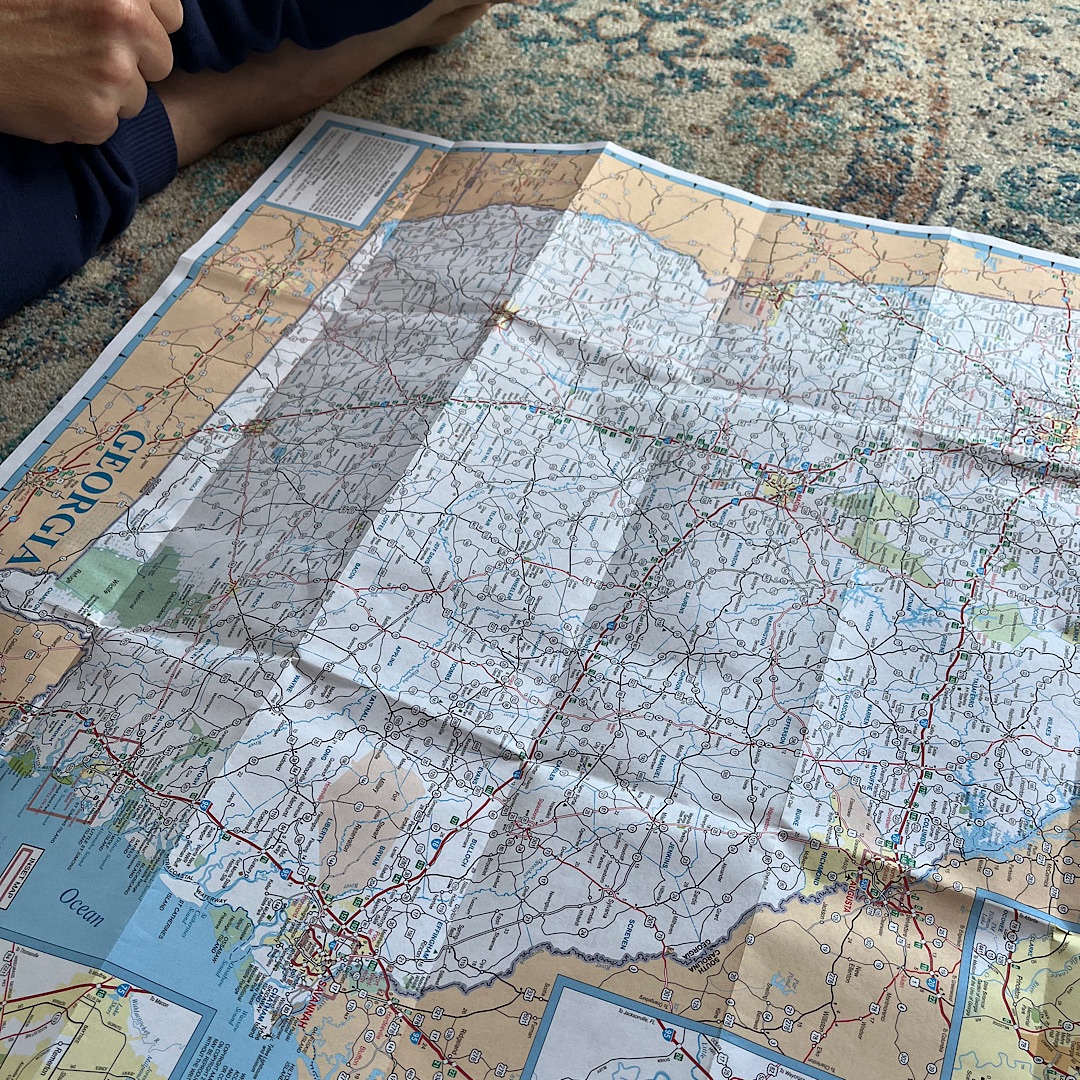
My hosts are currently having a great day exploring all my maps from AAA.

A pre-road trip stop at The Dollar Tree

Today, Eva and I stopped at The Dollar Tree because I wanted to start stocking up on survival snacks for my Atlanta road trip.

I will have a small food budget, but I have several days driving to do and several nights in Atlanta to consider. I’m getting nervous because it looks like the hotel charges $35/night parking, $12 a day for internet, and has no free breakfast. I have to remind myself to breath and trust it will all work out.

But since Eva lost her job yesterday, it’s hard not to stress.

So I spent $16.25 at the Dollar Tree:

I bought two small cans of generic Spam and this small bag of coconut flour for the pantry.

Eva loves Spam, so I thought these cans would be useful for when she’s cooking for herself when I’m gone.

And the flour– I have trouble passing up good deals on specialty floor.

The Road Trip Snacks:

  • Four bags of snak club tajin gummies. Sweet and spicy to help keep me awake if I get tired driving.
  • Two bags of Harvest Snaps, the protein from the snap peas will help hold off hunger.
  • Two bags of peanut butter filled pretzels, same logic as the snap peas.
  • And the two boxes of fiber bars? That’s 6 little birthday cake bars that really do taste like dessert.