
Not looking for a mental health diagnosis, I’m seeking understanding and relief.

In many common injuries, and with certain illnesses and diseases, clear trajectories and treatments exist/are followed. I think in reality, nothing is ever that simple due to all the quirks that make us all the people we are.

Last year, I asked every practitioner on my care team how they felt about Valium.

Even on my beta blockers and other blood pressure medication, my heart would have these periods of elevated heart rate, even as my blood pressure was under control. And when physical circumstances coincided with these events, such as muscle pain and discomfort from too many hours at the restaurant, I would find myself taking triple my normal recommended dose of baclofen. And it didn’t relieve any of it.

So, I wondered if a low dose of valium could be a breakthrough med to relax my muscles and my heart rate. But no one on my team was comfortable with an experiment like that. I got on a list to speak to a psychiatrist. A year later I am still on that list.

A recent experiment with a dose of Adderall showed that I may respond to stimulants and/or that I have a touch of ADHD. I set up appointments with my therapist and my doctor to discuss. I got a referral to a new in-office case manager who can work with patients and report to the psychiatrist so family medicine can prescribe medication.

Earlier this week, the case manager who works for my primary care p behavioral health matters called me. She said she would talk to the psychiatrist whom she works with on my behalf, but already in that initial conversation, some of my complexities popped up.

She called me back Wednesday morning and asked if I could come in that same day or Thursday as she had time scheduled with the psychiatrist Friday. The psychiatrist recommended some screenings to give us some more information and a letter from my current therapist — whom I have been with for the last 15 years.

That in itself is hard to believe.

So God Bless him, he wrote me a letter and emailed it to me. With minimal notice.

I walked into my primary care physician’s office and, because this case manager is a new addition to the staff, they have her tucked in this odd, closet-like room in the back corner of the practice. Which had no windows. And she lit with a tiny desk lamp. Which might make some people feel cozy, but I kept thinking, “We are in a closet. In the dark.”

I screened higher than I would on the depression screening. (Which today I would do significantly better on because my good mood and hope is back– so of course that led to a mood disorder screening, which suggested I might exhibit some bipolar symptoms.) I scored “high” on the anxiety screening. And I do show symptoms of ADHD but not enough for formal diagnosis and no clear childhood presentation.

Remember– I didn’t receive medical treatment between ages 5 and 21. Except for physicals and immunizations required by law for public school and those were administered by a semi-retired doctor around the corner who only accepted cash. And this was in the 1980s: things were different.

“Did your teachers or counselors notice anything?”

Ummm… schools for GenX did not have counselors. Remember all those memes that circulate around January 28: They put a teacher on the space shuttle, shot her toward the moon, and every school age child in America watched her blow up LIVE on television. Then, they shuffled us back to our classrooms (because at my school we watched it as a group in the multi-purpose room like an assembly) and pretended it didn’t happen. I was in fifth-grade. I was almost 11-years-old.

I think every GenX (and Boomer child) understood that we were expected to sit still, do our work, get good grades, and if we didn’t the school and/or our parents would punish us– and the school could even hit us if necessary. My parents never hit me, but my mother was/is the queen of silent disappointment and perpetually pointing out individual flaws. My mother dropped out of high school, but she never hesitated to make her first statement about my report card to be about the lowest grade.

“Why did you get a B+?”

A B+.

Couple that with the childhood trauma I lived with at home– slight food insecurity, sporadic but frequent domestic violence events or risky behavior from my parents, alcohol abuse, etc.– school was my safe place. My teachers nurtured me, educated me, (sometimes even fed me and protected me) and listened to me. I would have done anything to make sure my teachers would not be disappointed in me.

So I was the perfect student. But I talked. And I often spoke inappropriately. And despite my good grades, I struggled with studying. Repetition and lots of notes are still the only way I can learn new things.

And the organization issue? Developing systems not to forget or overlook things? I had a very unpredictable household. I had to keep myself together. And my mother loves everything clean and in its place– if I left something out of place in the common areas of the house, my mother would pile it on the stairs for me to take to my room. And if I didn’t take it up, she would nag me. And if I still didn’t take it up, she would. And when she did it, she would often clean and reorganize my room while I was in school.

And if we’re looking at my borderline results for ADHD and comparing them to other brain issues, we have to consider how symptoms of depression and anxiety overlap with ADHD. And how especially adult women get treated for a mental health condition when the issue stems from neurodivergence. So am I manic– or am I hyperactive/hyperfocused? Am I depressed– or am I in a burn-out phase? (And I would add how do these correspond with hormonal cycles. When I was traditionally ‘fertile,’ I had great mood and energy, when I am approaching menstruation, I crash.)

And fatigue is also a symptom of everything. I have a history of anemia, which causes fatigue. I have a chaotic sleep schedule, which interrupts my routines and causes fatigue. I eat primarily vegetarian vegan and my B12 is on the low side of normal, is that causing fatigue? I perpetually overschedule myself. This causes fatigue. I think if depression were causing my fatigue, I would be more prone to not get out of bed. I always drag myself out of bed on time.

So, in the end, it sounds like this case manager wants a mental health history of my biological father to be the determining factor on the ADHD issue. Problem is he’s been dead for like twenty years. His ex-wife whom I knew for all of the time I knew him, also dead. My biological half-brother, I’ve never spoken with them. The few people who friended me on Facebook who share his last name and said we are family– I’m not even sure who they are.

And then there’s the issue of trauma.

I have experienced a lot of different types of trauma from the unstable environment of my childhood, a period sexual abuse by my grandfather that could have escalated had I not made the decision to avoid him, and multiple experiences in hostile work environments. (One boss who randomly fired me after recuiting me for the job to hire a friend, One boss who threw things at me. Another who made me constantly fix her personal failings. And the final one: she was an all-out tyrant.)

I even mentioned to the case manager that I had spoken with my therapist on one point about why I ended up in so many of this situations: Was it me? And the case manager rephrased some stuff I have probably heard before, but didn’t really make sense until now: You will be more prone to ignore or not notice red flags. And that made total sense. That‘s how people end up repeating cycles. You can’t recognize the subtle signs and once you are knee-deep, you rationalize, as in “the devil you know.” Or, in the case of some family cycles, the child of a drug addict might think some overconsumption of alcohol and behavior related to that is okay, because it’s “just beer.”

Note that none of this addressed the fact that I also live with a mobility disability. And my medical issues– which I am considered prediabetic now and had gestational diabetes. I have always had a strong reaction to sugar and less reaction to caffeine and alcohol. And I also react to certain chemical flavors. (I would love to find out if I react to Red 40.)

As a woman with a mobility disability, I will be extremely hesitant about any SSRI that list side effects as weight gain– I have worked really hard to lose 12 pounds and need to lose at least 20 more. This is not due to vanity. This is due to risk of Type II diabetes AND the fact that more weight will put more stress on my body that already struggles to move.

Anyway, the case manager is meeting with the psychiatrist today to discuss my case notes. If I had to guess what they will suggest, I would say they will probably try to treat my anxiety with an SSRI and refer me to a trauma therapist to explore PTSD. And I suspect they may hint at depression, or even bipolar, expecting to treat it with whatever SSRI they pick.
But I think the constant interplay of some behaviors being driven by rumination or compulsion (“I must do the dishes if the bin is full”) and my avoidance of minor, personal tasks (I struggle to put my laundry away, every time, and I’ve never developed a system) and so many other things like:

  • focusing on projects I like to the extent that I won’t stop until I’m done
  • struggling to start projects I don’t like and giving in to every distraction
  • doing several things at a time and sometimes leaving some half-finished (moving into my office)
  • lacking proper mood regulation
  • obsessing over procedure, routine, documentation and details on items I deem important
  • missing details or skipping steps on things I cannot get emotionally invested in
  • writing down tasks in 5-6 different formats while doing them as to not forget and to not worry about forgetting
  • sharing and writing down important or “pretty” numbers
  • food issues: aversion to textures, difficulty motivating myself to eat or eating too much
  • inability to recalibrate when faced with unexpected change
  • must redo entire household financial plan 30 to 60 days out every time a purchase more than $100 is made or if receiving income in that range
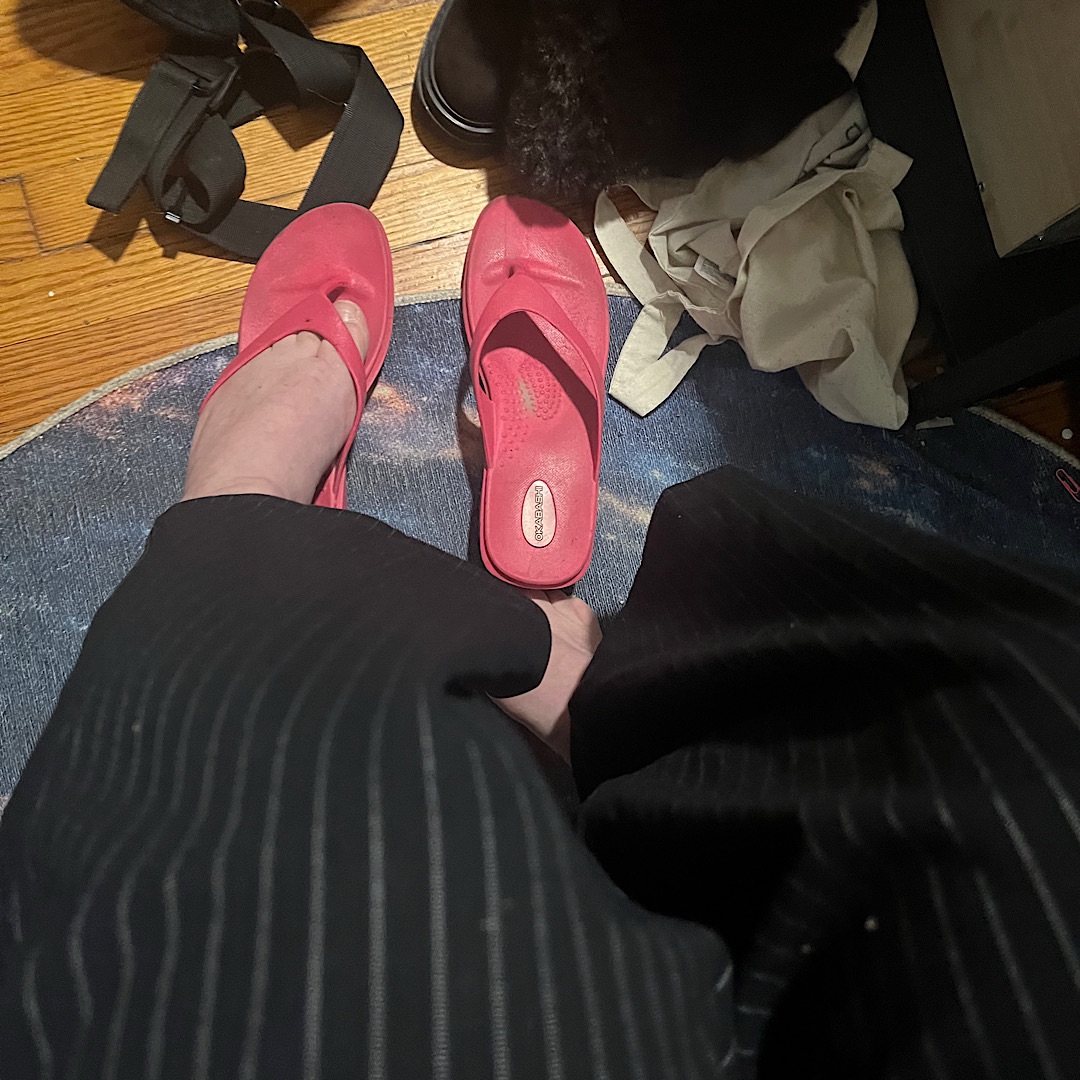
  • pausing in the middle of simple tasks to complete a more appealing task (I picked up my phone today while putting on flip flops and left my foot half-inserted into the shoe. A flip flop!)
  • monitoring medical information more than necessary (Blood pressure: sometimes once a week, sometimes three-times a day; Weight: at least twice a day.)
  • unable to ask for help and will instead take on large projects and complete them alone
  • feeling worthless when I do not meet my goals, no matter how big or small
  • high level of rejection sensitivity
  • always making decisions based on my “gut.”

These make life/diagnosis complicated.

I have spent about two hours on this post. It is 12:30 p.m. I have not eaten yet today. I need to pee. Because of the SEVEN medical appointments I had in the last two weeks, I am behind on some projects due Oct. 10.

And tomorrow I have a business road trip.

And Sunday, I am meeting new friends for tea.

So I need to get shit done…
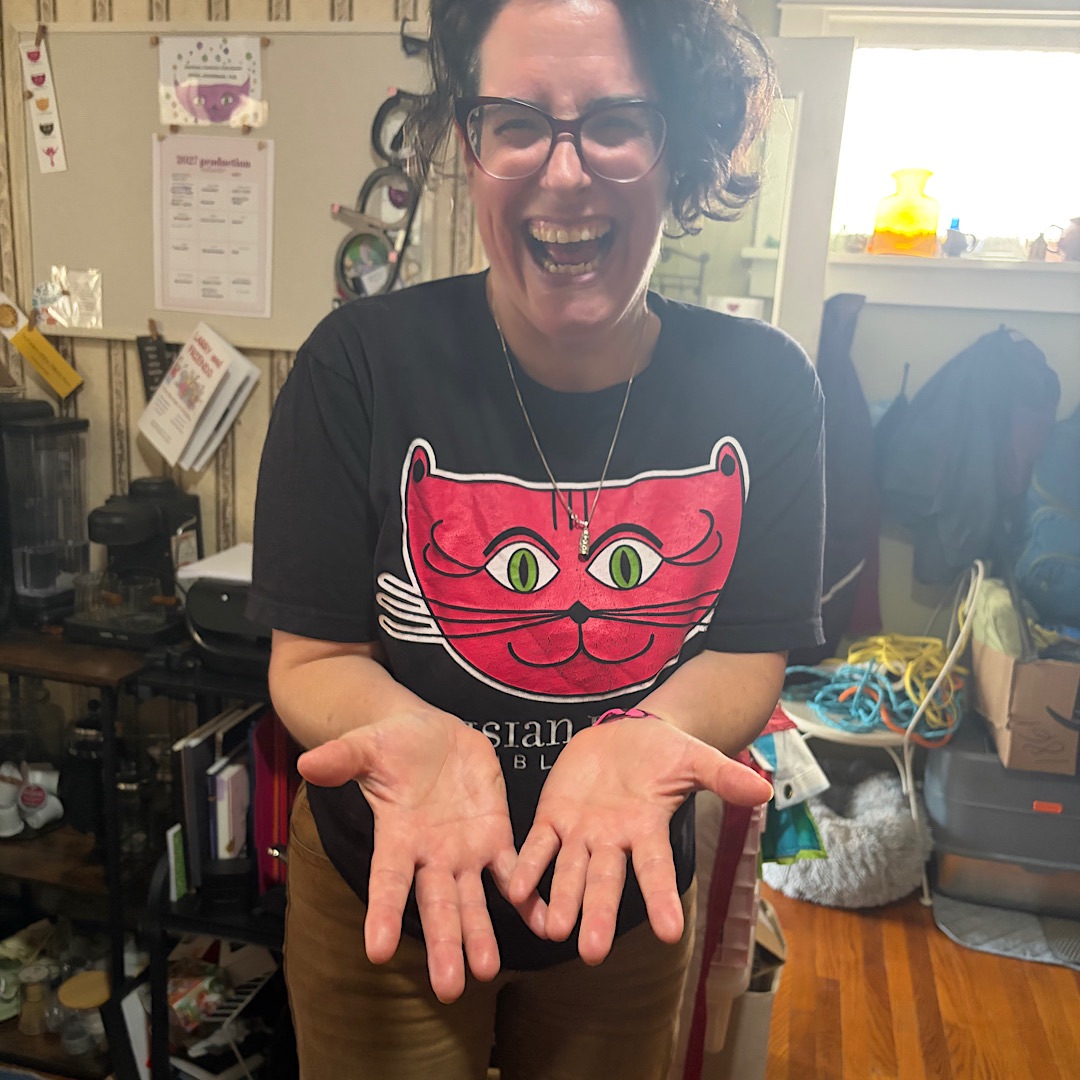
Am I Alice? The White Rabbit? Or the Mad Hatter? Or the Queen of Hearts?

Who doesn’t love a good mystery?

Anyone who deals with serious medical issues has experienced a sense of Wonderland. Is your regular life Wonderland? Or is the medical system Wonderland? Who is Alice? Who is the White Rabbit leading Alice down the rabbit hole?

We all have a lifetime of experiences. Some good, some bad. Some of us got “good” bodies, some of us have bodies we hate. Some of us have learned to accept our bodies. Some of us work really hard to change our bodies.

Some of us want to understand. Some of us want only to survive.

All of those things are okay.

We all have Alice in Wonderland moments.

It’s been a couple of weeks since my daughter, who has ADHD, floated the idea that she inherited the ADHD from me. It’s been one week, almost to the minute, since I took 10 mg of extended-release Adderall to test her theory, at least to give us data on if the drug brought me up or down. And the answer was down, pointing toward something not neurotypical.

And as you will see later in this entry, one of the stumbling blocks to determining what exactly my brain needs– whether that is treatment for ADHD, anxiety, depression or nothing– is, as my daughter would put it, I mask so hard even I don’t see the problems.

I have always been extremely organized, and I forgot nothing. And yesterday, at my second doctor appointment of the day, the clinician got out the standard short ADHD screening and asked the questions related to inattention. I don’t have a problem there. But I am realizing more and more, I write everything down multiple times. I write in my journal, on my paper calendar, on post-it notes, on my electronic calendar, in this blog. I write down when I take my medicine. My blood pressure.

And this morning– I went to blow my nose. Allergies are hitting in full force and Eva has an ear infection. In the middle of blowing my nose, I put the tissue down so I could take a Zyrtec before I forgot. I do not remember if I took the Zyrtec. I did not log it in my phone. The cap is off my water bottle, but did I take the pill?

Could my “obsessive” habits, like checking my bank balance several times a day, be not a form of soothing my own anxiety but something I do to prevent myself from missing something?

And even right now, as I write this, Eva has interrupted me and the entire train of thought for what I was writing completely disappeared. I had to reread the whole paragraph and reconstruct what I was trying to say. Is that normal? I’m honestly asking. So before I get too much more ahead of myself, let’s talk about yesterday.

Yesterday, I met with my longtime mental health therapist. I wrote a quick entry yesterday about that visit, posted it, somehow managed with a same day appointment with the practice who handles my everyday care, realized that the post was worse than I thought it was, and so I took it down with the intent to do a better job with new information.

And here we are.

Some observations from that appointment with the therapist who started treating me for anxiety more than 15 years ago. (That seems crazy. It can’t be that long. It just can’t.)

  • My individual complexity may prevent a simple diagnosis/solution. My history of childhood trauma and neglect, my family history of addiction, substance abuse and domestic violence. My physical disability (to which he adds “never discussed nor treated). So my brain could be doing anything for any reason. I believe this is why I’ve developed many of the habits I have that are masking how I feel on the inside. Whether we attribute this to ADHD or anxiety, that is part of the mystery.
  • Even looking back, with my history of doing and achieving all the things and doing them pretty well, it would be difficult for a clinician to trace this back to my childhood. Childhood presentation is one of the required elements for an ADHD diagnosis. (But, again, I was dealing with a lot of things, things I didn’t understand… from my body and my environment.)
  • My therapist theorized that if I have ADHD, I may have inherited it from my biological father. And that was a lightbulb moment for me. The first time I met him, I was

(I picked up my phone while typing this. I have no idea why. Got lost scrolling Instagram. Put the phone down. Realized I was in the middle of the sentence. And don’t remember what I was saying. So I distracted myself?)

  • … impressed by the breadth of his creativity and the projects he undertook. But I also remember that he had decided to remodel the bathroom and had never finished the one wall. It was still primarily the framing. Functional. But no real wall on the inside of the room. And when he and my mother split up, he went with his dog and lived in a cave in the woods until it got cold. Then it built a shelter. And when he and his wife split up, he left in his pickup truck, with his dog and a duffel bag and moved to the midwest. Where he got a job at Russell Stover chocolates.
  • My therapist can provide a letter of support to my primary care provider, and he reminded me that it didn’t matter the diagnosis if we could find a treatment that could bring relief. (And my therapist and doctor know each other so that helps.)

Now, I know “euphoria” is one reason people who don’t have ADHD take Adderall. And I’ve taken other types of medication: Lexapro for work stress and then depression (which helped in that “take the edge off” kind of way); beta blockers to control my heart rate (which failed); and Ativan for panic attacks (great, as long as I just wanted to come down and not do anything for the rest of the day). When I took Adderall, it wasn’t euphoria– it was the sensation of being able to let go of the adrenaline, the sense of doom and the constant muscle tension and being able to effectively regulate my emotions because normally my emotions also stress me out because I can’t do anything to work through them. I could on Adderall. If anything, that is what I want. I want that.

I asked my therapist: What would you recommend as my next steps? Since I have not been able to get past the waitlist for a psychiatrist, should I make an appointment with my family doctor?

I went home and called the office.

(Right now I am sitting here, forcing myself to finish this because it’s important. I need to pee. I’m very hungry. It’s 9:22 a.m. and my daughter and I are leaving for Susaquehanna Service Dogs which is sooooo exciting and stressful and… but if I don’t do this now I will not do as good of a job if I do it later and I don’t want to forget a single detail because the details can mean the difference between finding answers and getting the run-around from the medical establishment. This is how my brain works.)

I was offered an appointment with my regular provider October 13 or I could see another doctor in a couple hours. I took the appointment in a couple hours. I knew nothing would get resolved quickly, but wanted to position myself “in the system” to get the process working. That’s the hardest part of the medical system. Positioning yourself to get access to physicians and presenting the case with evidence, not anecdotal experiences.

That was why I started with my therapist. While he’s the most expensive provider on my list of medical professionals, he was the most qualified to give an opinion. Offering his opinion, based on our experience of 15 years, will hopefully show this is a legitimate possibility and not just a drug-seeking behavior. I specifically work with this therapist because he is a Ph.D. psychologist– I wanted someone who could help me grow as a person, not just medicate my brain. I have done a lot of worth in those 15 years, but recent years have shown me how much I fight myself and that I could have a chance at actually slowing down and enjoying more of my life, not just frantically surviving it and celebrating sporadic moments. Because in my brain, nothing is ever safe, or enough, or helps me overcome the doubt and doom.

(Okay, I need to get up and pee now. I’ve had 10 ounces of coffee and like 24 ounces of water… Be right back.)

(Hi, me again, I stopped to look in my protein bar basket. I should eat something. My belly hurts I’m so hungry. I have these blueberry breakfast biscuits that taste nice but don’t have any real protein. I also have a cookie dough protein energy bar from Aldi that is high in protein but full of chemicals, sugar and preservatives… I can’t decide. I have them both on my desk. I really want a piece of toast, but then I need to find and decide on bread, wait for it to toast. I should make an egg sandwich, but that is a whole undertaking of cooking. I guess I’ll open the breakfast biscuits… The taste bad. They usually don’t taste bad. And they smell weird. Are they spoiled. “Best if used by August 2025.” Did I mention I tend not to eat food I like because I might want it more another day? And then I panic that it’s not the best day to eat it? And now I’m sad that I let them spoil. Like really said. But honestly– they were Dollar Tree biscuits. So now I feel bad that I feel bad. I don’t need to beat myself up that much.

Now, do I eat the protein bar? Because I do not want to eat now. I threw out the biscuits. But I put them in my office garbage can. And the dog often gets in that can. Maybe I should empty it. Yes, let me do that quick. BRB. Again.)

So the doctor. She’s a great doctor. I mention that my daughter, and I both use the practice and my daughter does have ADHD. I tell her that I know we won’t have answers today, and I don’t expect that but I would like to start investigating this. She listens attentively and we explore the classic short ADHD. I have the anxiety-laden portion of hyperactivity impulsivity but not much else– and I ask her– I probably do fidget, but I have a spastic muscle disorder that means my legs cannot move. So how do we know? And I have similar I don’t know answers to some of the other questions. The test is inconclusive. She mentions other SSRIs. And that Wellbrutin has shown to improve symptoms of ADHD that coexist with symptoms of depression but it makes anxiety worse. And then she adds, “so that would be a bad idea for you.” And she wonders if I should try other SSRIs.

Her plan becomes three-fold:

  1. Get the letter from my therapist.
  2. Book an appointment with my regular doctor ASAP because he’s a busy guy. (Did not expect that.)
  3. She gave me a referral for a behavioral health case manager. This professional should be reaching out to me to prepare my case for review by a psychiatrist. It sounds like she does the evaluation, makes notes and gives them to the doctor so I can get medication through primary care… or through that psychiatrist. It’s a program designed for people like me who don’t have dangerous behaviors or immediate needs. And reduces the waitlist problem. That people never get off the list.

(I don’t want to write this anymore. I am forcing myself to do it. Just so you know.)

I leave the office. Hear from Eva that she got antibiotics for her ear infection. I email my therapist but then decide a phone call is more expedient and professional, so I call. He leaves me a voicemail a little later that we will get the letter together. And then the funny part– my actual primary care doctor comes to the restaurant, drives up to me in the drive-through, and chuckles when I ask what name to put on his order. He knows nothing of what I have gone through this week, or maybe he does, but I don’t think the other doctor finished her notes yet.

And that’s where all that stands.

Now if you’ll excuse me, it’s cold this morning and I am debating making a can of Spaghetti-O’s for breakfast.

The ADHD rabbit hole

My daughter, now in her senior year at Lafayette College as a psychology major, has been armchair diagnosing our friends and family since her early high school days when she would read the DSM-V for fun. It’s fascinating for me as a parent to hear my child talk academically about topics and use language outside my understanding. And I do enjoy it.

If you know me, or you’ve read this blog for any significant time, you may know that I have struggled with my mental health. I exhibit symptoms of anxiety and depression from time to time, love routine yet challenge rules, obsess over numbers and patterns, overschedule myself and never relax. And the funniest part of that– I have gotten better about these things.

Through casual observations, it seems obvious that ADHD runs in my husband’s family.

But my daughter continued to study people– and me– and one by one she made her diagnoses. “Your dad had a type,” she said to me once. “His wives were all narcissists.” Or she’d suggest a medication to a friend looking for relief. And I have never seen her be wrong.

She has recently declared that her father is “autistic as all shit,” (which my mental health therapist had suggested might be the case more than a decade ago) and that she thought that she “inherited her ADHD” from me.

I protested. “My executive function is fine.”

“Is it, Mom?”

Her words make me recall a conversation I had with a friend of mine before I left for Ireland in the spring. I don’t even remember details of what we said, but it was a business call, and I remember listening to this woman I respect and adore the creative work of, a woman who had ADHD, and thinking “that sounds a lot like me.”

At Eva’s urging, and her constant reminder that traditional medical research applies to 40-year-old white men, I looked at the symptoms. And when I google information, I always evaluate the source. I look for articles from medical centers, government agencies, professional organizations and publications like Psychology Today. (It may reduce everything to layman’s terms but it does have a responsibility to be accurate.)

These are symptoms of hyperactive impulsive ADHD in adult women that spoke to me:

  • racing thoughts
  • subtle fidgeting
  • excessive talking
  • overcommitting
  • burnout
  • rejection sensitivity
  • hiding internal struggles to appear calm and organized
  • burn out
  • signs of anxiety
  • signs of depression

Let those last couple sink in. Women with ADHD are commonly misdiagnosed and treated for anxiety and depression.

I wonder if I would be more restless and move more if I didn’t have spastic cerebral palsy that prevents my legs from doing things. The more I pay attention, the more I see how my daughter’s ADHD habits totally mimic my own. And I never noticed.

And I know people with ADHD often self-medicate with caffeine and sugar. I never experienced a cup of coffee calming my thoughts, but I do know I can drink a lot of caffeine with minimal reaction but I get a sugar high really easily.

I am also prone to hyperfixation. And taking on hobbies with gusto and then suddenly never doing them again. It’s like one of my existing hobbies will suddenly explode and become all I do and then, one day, I never wanted to do it again. When Eva was born, I made something like 18 scrapbooks in her first three years of life. Since she turned 4, I did not have a photograph printed. (I blame the iPhone. Not my brain.)

As a well-behaved patient should, I called my mental health therapist/psychologist to see if we can explore this idea. He will see me Thursday. And it might be wishful thinking, but he sounded like the concept might have triggered a “lightbulb” moment for him– because I know he has grappled to find “what I need.” His formal diagnosis has stated that I exhibit occasional symptons of generalized depression and anxiety.

Any good theory deserves an experiment. So, after a few online surveys, I took a trial dose of Adderall. I was terrified to do so. I have issues with high heart rate. I was fairly confident I would be very uncomfortable.

And then, in a conversation with my daughter about 20-30 minutes in, my brain felt soft. And then about 40 minutes in, my hands started tingling. All my fingertips felt weird.

“Mom?” my daughter said. “Is something happening? How do you feel?”

“My brain feels like goo,” I told her. “And something’s wrong with my hands.”

She took my hands and looked at them. “What’s wrong?”

“They’re tingly.”

“Mom,” she said. “They’re warm. That’s all. You have circulation. Your hands are not cold.”

My hands and feet are never warm. My body temperature is usually around 96 degrees. I had first-wave COVID, and my “fever” was a body temp of 99 degrees. And even on the hottest summer day, my hands are usually chilly when other people touch them.

And in that moment, I knew I had slowed down. It was like someone just took the energy that was “me” and turned down the flame a couple notches. I read my tarot cards; they felt it. I went to the grocery store and casually looked at the options and didn’t run from one aisle to the next. I wrote a Substack newsletter. Because I wanted a record to see if my writing had changed. (You can read that here.)

All the stuff I normally worried about and used all my energy to “do,” it didn’t feel urgent. I laughed easier. Moved slower.

I remember the day my daughter first took her ADHD medication. She was standing at the table in her grandparents’ kitchen, animatedly telling a story. As I listened, I realized that she had stopped vibrating.

I had stopped vibrating.

“It’s like your aura has changed,” my daughter said.

“I’m calm,” I replied.

“I never understood what you meant when you said that I ‘stopped vibrating,'” she said. “I get it now.”

I had stopped vibrating.

The thought that I really could stop vibrating made me want to cry– from relief, because of the new understanding, in fear that I would never feel this way again, hope that I could.

I slept like a baby that night. And the next few days I went back to being me. The me I know. My heart rate and blood pressure hadn’t been impacted.

We opted to do the next trial dose yesterday. I was meeting a good friend and wanted to see if she saw a difference. I was scheduled at the restaurant. I wanted to see how it felt in a different environment.

I took the medicine. Went to Panera for my writing date. I drank herbal tea to be safe. At 9 a.m. I caved. I had 12 ounces of coffee. And then about 6 more. It did not disrupt my zen. I did my writing. I was less talkative.

I came home, did more work on my personal project because I wanted to, and I didn’t fret about all the things I “should” do. I knew I would do the things I should, but I didn’t stress over doing them right now. Then, I watched TV for a while. And I didn’t feel guilty about it. My daughter came home from school and her 3:30 dog walk canceled so we didn’t have to rush out the door. I sat on the couch and chatted. I didn’t try to do more.

Now, the medicine should have worn off by the time I went to work at the restaurant. But I don’t think it did. I sat in the lobby watching everyone. It made me happy to sit and watch them. I thought they were moving slowly. That maybe the restaurant wasn’t the busy place I thought it was. I am often stressed by the fact that the kids I work with don’t think anything is urgent. Maybe they are right. My heart was not racing in anticipation of my shift.

I was not thinking about all the stressful things that could happen.

But as the medicine started to wear off, the restaurant got busier. But even as my heartrate and workload increased, I didn’t feel the “panic” I would normally feel. I didn’t feel the need to analyse and make a plan every two seconds. And then I thought of the perfect way to phrase it– because I got moved to a work center that stresses me out– even though the medicine was wearing off and I could feel the stress in my body, my brain and my behavior were not motivated by a sense of impending doom and disaster. I know that sounds dramatic, but every piece of stress I feel it my body feels like if I don’t keep up with the moment/the environment/the task, I will face a disaster.

Remember the television show LOST? There was a button on the island that someone had to push. I believe it was every twenty minutes. No one knew what the button did, but they all believed that if they didn’t push the button, something terrible would happen.

My brain is pushing that button all the time.

But on the show, I believe something bad did happen when they did not push the button.

And I feel like even when I did not have the full effect of the medication in play, my sense of doom dissipated. And that was amazing.

When I took this medication, I felt like I could relax. I have been wishing for decades that I could find a way to relax. I thought I needed a hobby, not amphetamines.

And today my daughter tells me that cerebral palsy is also lumped into the neurodivergant classification… More to think about.

**I cannot find much information on this, but my anecdotal experience on medication suggests that although it should not, my mobility and spasticity improves when I take Adderall. My experience feels like I no longer hold as much stress and tension in mu muscles. Which is why I wanted the small dose of Valium. Maybe I need the opposite?