Things that frazzle the mind in my forties

**this post may contain strong language… no, this post will contain strong language. I plan to drop an “f-bomb” in the first paragraph. But I promise it will be lighthearted and humorous not vulgar and full of rage.

Sometimes I wonder if the process of losing your mother-fucking mind which seems to descend upon a person once your children enter their teens isn’t the cause of dementia. Will the brain fog that accompanies keeping life together as the offspring prepare to leave the nest clear as they depart? Or is it permanent?

I think when you reach the latter half of the forty-somethings, the time you might have spent on hobbies, movies or parties in your youth is replaced by the tedium of home ownership, career, family, parents and medical care (your own, your family, probably even friends). And maybe you just don’t have the patience you used to.

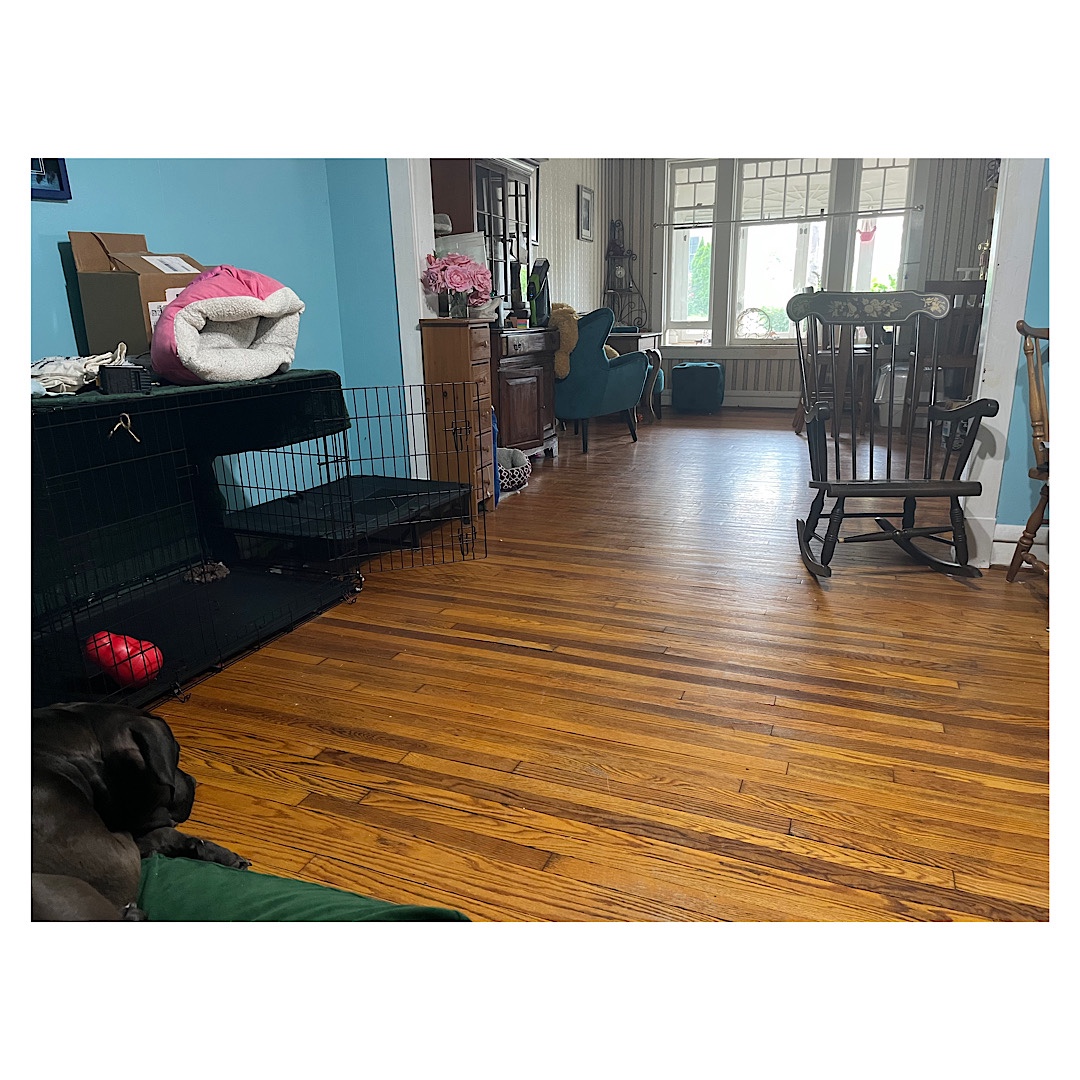
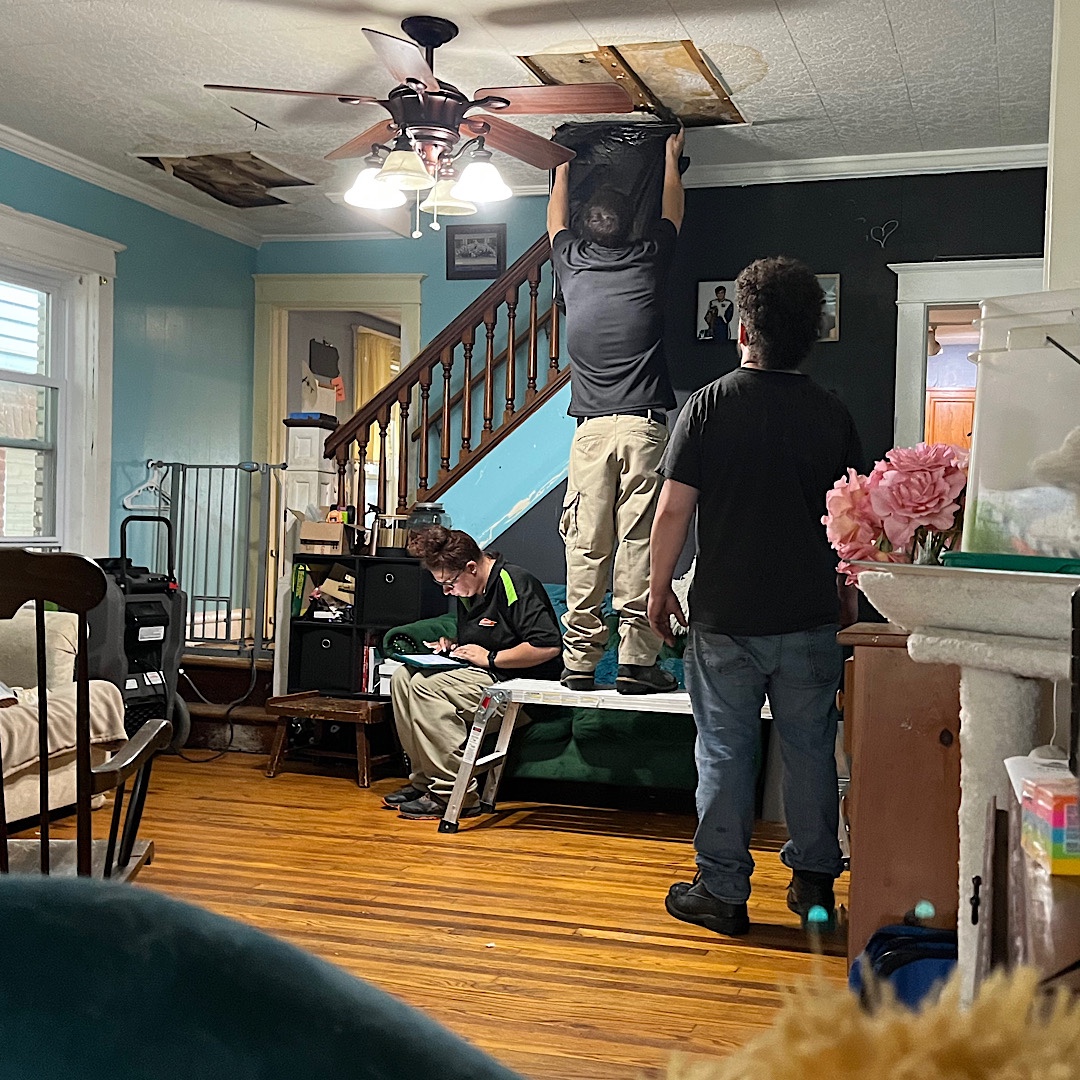
I am currently waiting for the remediation team. If you skip back to Tuesday’s blog, you’ll recall that my 50- or 60-year-old toilet exploded and damaged my dining room ceiling. The plumber came Tuesday and installed a new toilet, and the teenager gave me shit. Not only does she not like the new toilet (as the plumber warned me) but she also had beef with the plumber for taking her old toilet.

I asked the teenager, “what on earth would you do with an old broken toilet?”

And, of course, the teenager told me. She wanted to take the ancient pink ceramic toilet and use it as a planter in our front yard next to our pink rose bush.

“It would look so cool,” she said.

And it probably would. But I did not go to college and embark on all the adventures I have to place a broken toilet in my front yard.

The scheduler for the insurance adjuster called Wednesday morning, about 29 hours after the incident, and scheduled the adjuster for Wednesday June 1. I asked the teenager if she could handle letting him into the house. She agreed. The scheduler called again and moved it to Tuesday. Teenager agreed again. Scheduler called a third time to ask if we had had a remediation company come to check if we had any or were in danger of collecting any mold. I said no. She said to call one.

So Wednesday on my lunch break (my first day back after a month of medical leave), I emailed ServePro because I didn’t have the time or the quiet to talk on the phone. They called, and after about three difficult phone calls with them, (the person on the other end couldn’t hear me well. I was wearing a mask, using one AirPod and working in a noisy warehouse.) they said they would confirm an appointment for Thursday or Friday by the end of the day.

[note: this is a pause in the blog post as the remediation team arrived.]

The remediation scheduler called about 4:30 p.m. Thursday, which was about 60 hours after I turned the water off to the toilet and started mopping up the damage. My appointment was for 1 p.m. Friday, about 80 hours after the original accident.

But at least I made myself a nice dinner of fig & ricotta ravioli from Lidl with Alfredo sauce from Hungryroot and vegetables (baby broccoli, red pepper, and peas) cooked in the Cuisinart air fryer toaster oven.

Last night, when the teenager got home from her dad’s, I think I was emptying the dishwasher and I went on a psychotic rant about silverware. You see, when her father and I got married, we registered for Oneida’s Easton flatware in the satin finish. I have always loved that silverware. It was $100 a place setting, and that was in 1999. That’s $20 per utensil. But it’s beautiful, and my husband and I both agreed on it without compromise, and it’s heavy, and we lived in an apartment in downtown Easton, Pennsylvania.

Oneida flatware pattern: Easton (Satin)

And sometime between when teenager two lived with us and now, many pieces of that silverware have disappeared. And it’s melodramatic, but the loss is like a gaping wound. No other silverware feels right in my hand. So I snapped, for the umpteenth time, and shouted at the teenager about my missing silverware.

In that moment, I realized that for some reason, that silverware really means something to me. Eating with it brings me joy. And that silverware looks as new as the day we bought it. Our marriage lasted 20 years, and the silverware may last generations.

“I don’t have the money to replace it,” I screamed.

And then I realized…

I launched a publishing company. I buy myself iced coffee about once a week. I spend almost as much on animal food as I do on people food. So, why can’t I figure out how to pay for new silverware? Especially since I know Replacements.com has just about every silverware and china pattern ever made (used) at a discount. I think I found my dream pattern. I ordered a few pieces of my silverware, based on cost and what I actually need.

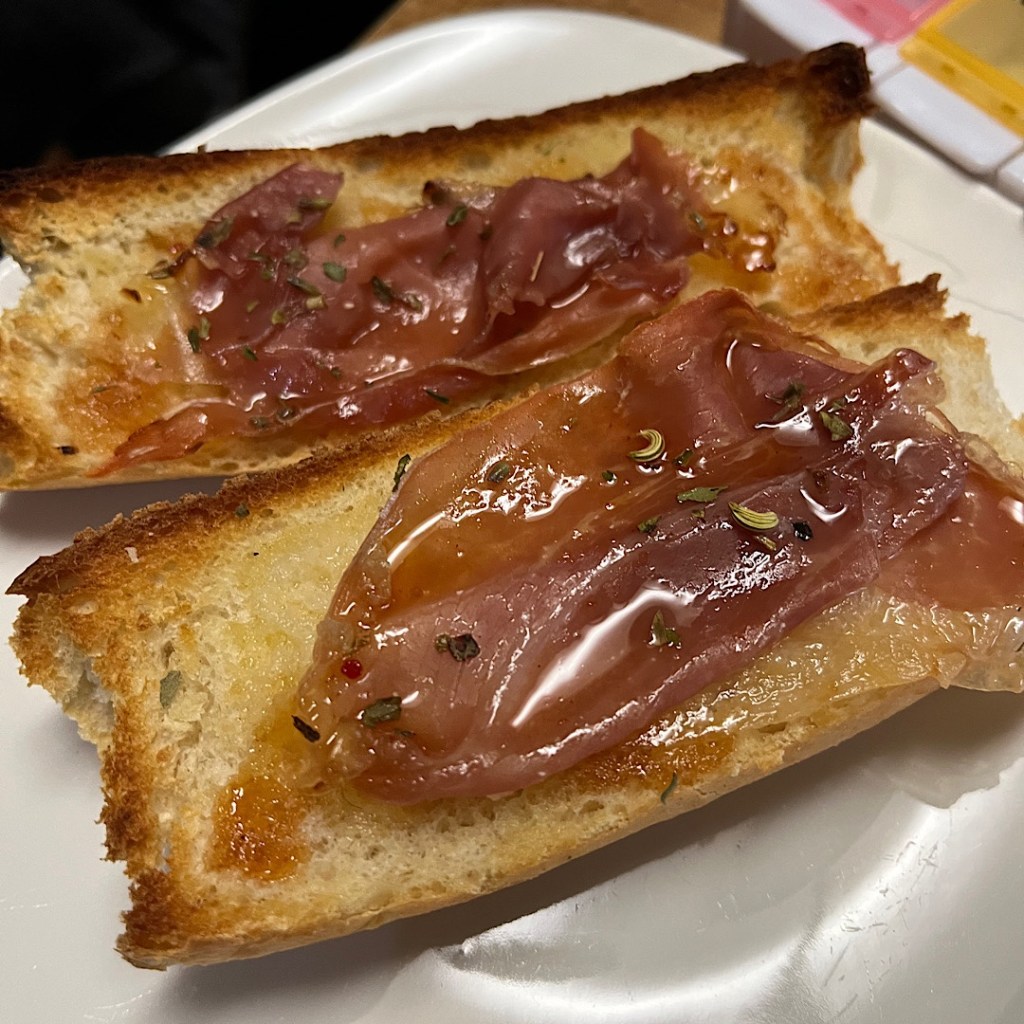
This morning started with a cup of coffee, some cuddly cats, a trip to the chiropractor and a whole lot of cleaning before the remediation team arrived. I made the teenager and I a breakfast of fresh baguette from Lidl, toasted in the Cuisinart oven, buttered, covered a slice of proscuitto and toasted more, and then drizzled with hot honey and sprinkled with herbs de provence. It was as amazing as it sounds.

The teenager had her last high school final exam, the only one she had to take this year, and returned home to find me aflutter with the broom and a mop. I asked her to do something for me. It might have been to move a multipack of paper towels to another room, when she stopped and opened the sunporch window.

“What are you doing?” I asked.

And I thought to myself, she’s not smelling the roses.

And she replied, “I’m smelling the roses.”

“Seriously?” I said. “I ask you to do something and instead you literally stop to smell the roses!”

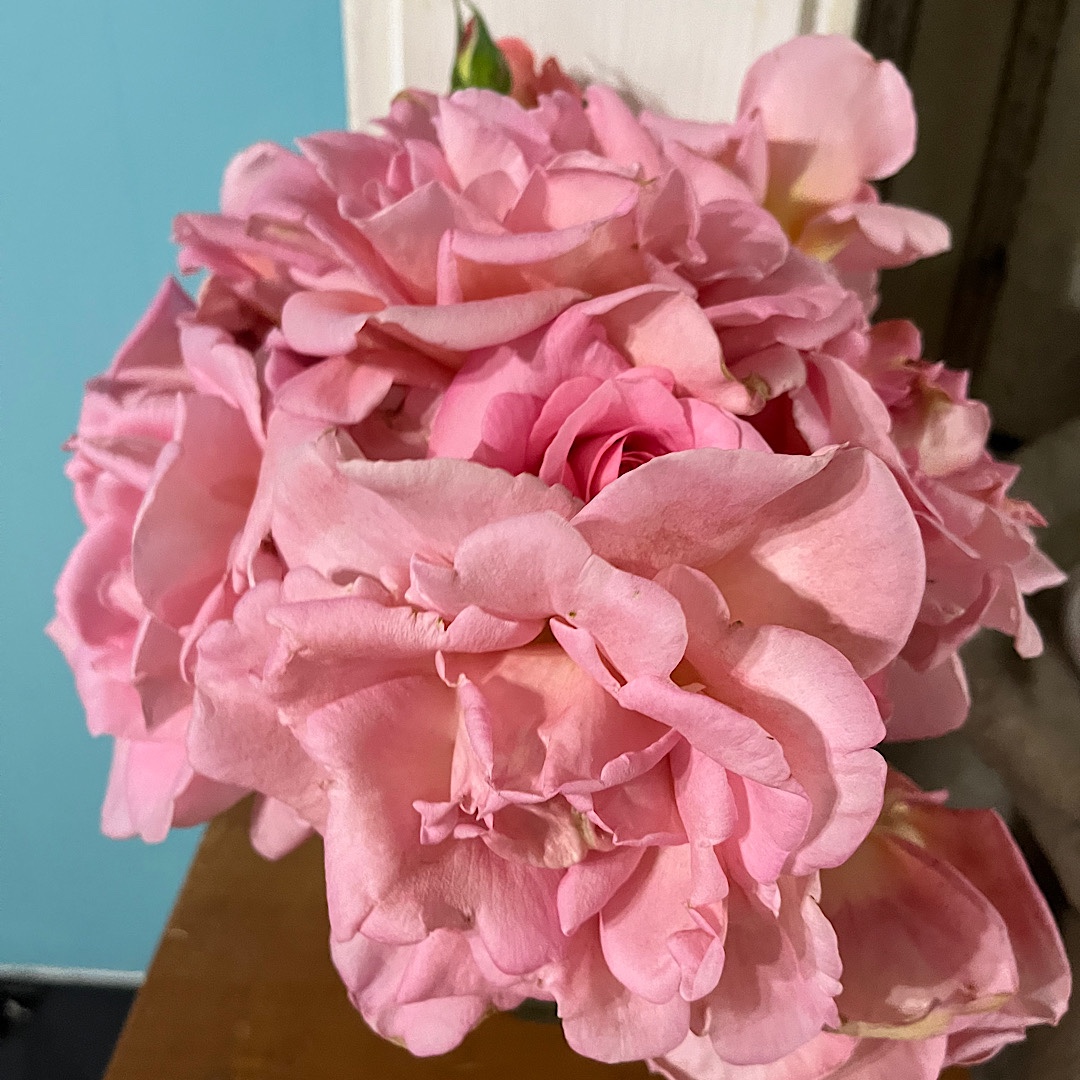
She then picked a bouquet for the main room downstairs. Eventually, she moved the paper towels.

Once the house was cleaned and the teenager shuffled off to work, I finished Natasha Sizlo’s memoir, All Signs Point to Paris. I received a copy via NetGalley and reviewed it on Goodreads and mentioned it in my Parisian Phoenix blog post that will go live tomorrow. I tried to start P.N. Dedeaux’s Algiers Tomorrow but it offended me beyond rebuke within the first two chapters.

I understand that the book was published in 1993. I also understand that erotica by its nature breaks rules and can feature taboos. But in the first two chapters, we join two bratty rich sixteen year olds nicknamed “Boobs” and “Butt” through a vacation in France. By the end of the chapters, I want them to get murdered. I was hoping for some cheesy references to Algerians with which I could have some Mystery Science Theater 3000-type fun.

chicken vodka pizza

I ordered a chicken pizza with vodka sauce from Nicolosi’s Pizza in Forks Township. It was a custom pizza and I told them to “put whatever on it to make it pizza-y.” They added fresh basil. It smelled amazing. The teenager was picking it up at 2:45 p.m after work.

And don’t you know it, the remediation team was late… They called at 2:55 p.m. and arrived at 3:05 p.m. I had one bite of my scrumptious, piping hot custom pizza. And it was time to find out if my house was wet.

Unfortunately, it is.

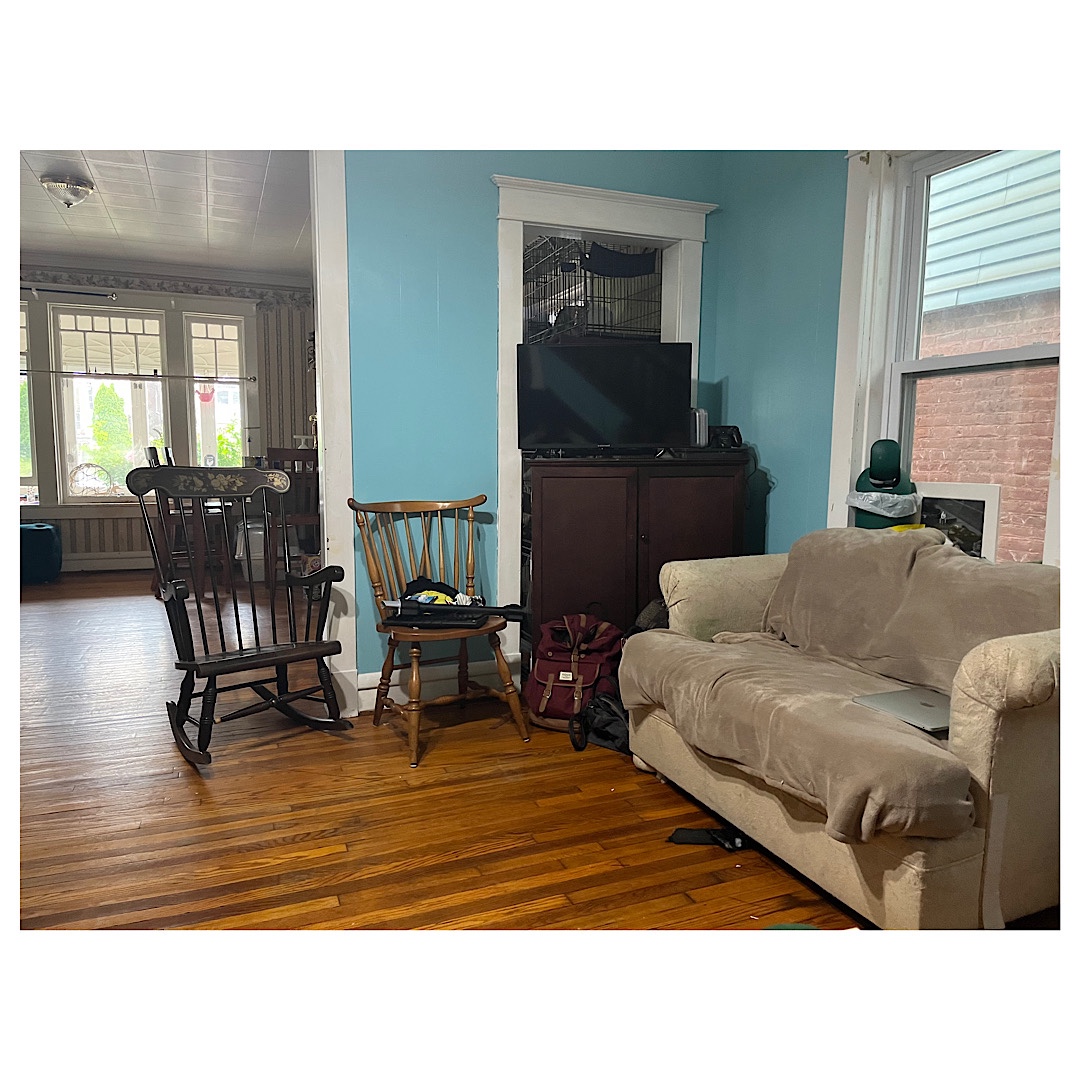
We could lose our bathroom subfloor. Our hardwood floors and walls are damp. We have five industrial air movers in the living area and a massive dehumidifier. And upstairs we have three more air movers in the bathroom and another dehumidifier.

But we’re safe, and sometimes you just have to have faith it will work out.

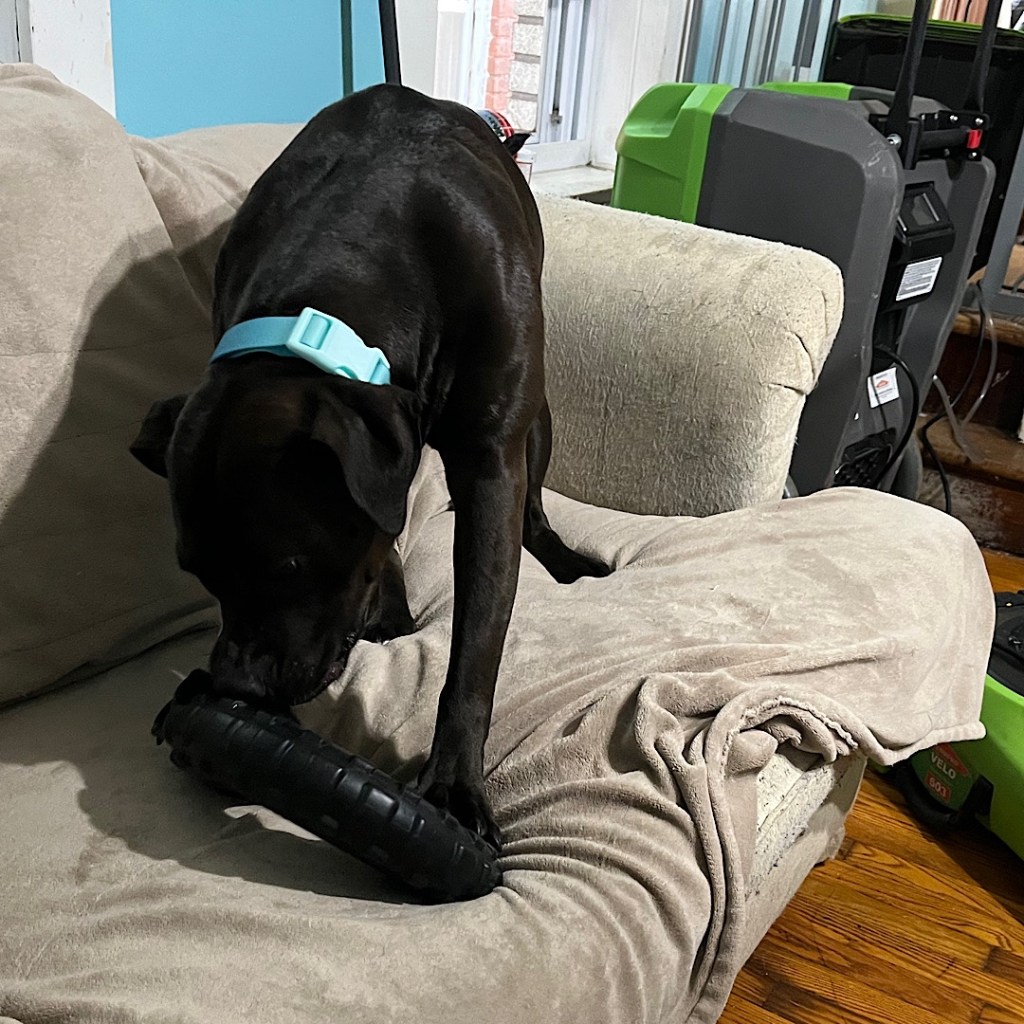
At the end of the day, Bean Dog got new toys.

Cupcakes at Midnight: A discussion of future plans for Parisian Phoenix Publishing

Yesterday was the launch day for my novel. At midnight, the teenager and I were celebrating with cocktails and cupcakes.

I have so much hope for Parisian Phoenix Publishing.

It’s too early for me to know how many copies have sold, I don’t expect large numbers as I haven’t really implemented my marketing plan. Our small boutique publisher is a partnership— myself and graphic designer Gayle Hendricks— so the work that needs to be done, we do as we can or we ask for help.

We have lots of ideas, so this first novel may be mine, but part of that stems from my philosophy that before I publish anyone else’s book, I want to learn and grow from lessons made bringing my manuscript into the limelight.

Our Fiction

This novel— Manipulations, the first volume of the Fashion and Fiends series—means a lot to me. I believe it breeds chick lit to horror fiction (think what might have happened if Stephen King wrote The Devil Wears Prada) and uses contemporary literature (and the mythic supernatural) to examine social issues.

Manipulations, at its core, is a book about building healthy relationships. And the proverbial lesson of “things are not always what they appear.” And I hope my readers will understand that magic, in this context, allows us to explore domestic violence.

To order Manipulations:

The next volume, Courting Apparitions, (due out in late November) uses a ghost story to examine grief and depression.

And the next, Recovery, (slated for first quarter 2022) tackles disability, motherhood and women’s rights. But don’t worry, magic is still afoot.

Meanwhile, the fourth, Road Trip, is a coming of age novel. With werewolves. I’d like to release that one on June 23, 2022. The day my baby turns 18. But first I have to finish writing it.

The fifth volume, Absolution, looks at the intersection of sacrifice and love.

And the sixth volume, at least half written at this point, is Finding Hooyo— a hybrid romance novel, medical drama and war story. Hopefully that should tie up the original story line but certainly not the Fashion and Fiends universe.

Our nonfiction

Currently our team of authors and interesting people have several projects in the works.

Sometime in 2022, I hope to revisit a book I wrote as part of my research at Lafayette College. I looked at the anti-Muslim laws in France and traced their roots to 19th century colonial stereotypes and considered the thesis that these laws perpetuate stereotypes that started in Algeria.

My love, as a critical theorist, of post-colonial Francophone Africa stems from my view that French imperialism during the colonial era serves as an amazing parallel to contemporary American imperialism and attitudes towards Muslims.

And now, with identity politics very en vogue, I feel like these lessons in stereotypes and prejudice are very relevant.

Speaking of critical theorists and identity politics, I have assembled a group of authors to discuss various identity issues in a special anthology, currently called: Not an Able-Bodied White Man with Money: Expressions of Alternative Perspectives Influenced by Experiences in Lehigh Valley, Pennsylvania.

Committed so far is Darrell Parry, poet and writer, and my estranged husband; Eva Parry, otherwise known as “the teenager”; William Prystauk of Crash Palace Productions and the Kink Noir series; Maryann Riker, multimedia artist; Nancy Scott, blind author of essays and poems; Rachel Thompson, science fiction and alternative history writer; Joan Zachary, photographer and writer… and hopefully more.

Racing with them toward the finish line is a cat anthology to use as a fundraising book for Feline Urban Rescue and Rehab which will feature cat stories, photos, memoirs of FURR volunteers and academic research on animal welfare, poverty and empowering low-income and diverse neighborhoods to know what resources are available for themselves and their animals.

And with the new “Texas law,” Parisian Phoenix hopes to work with people on the team who have experience in women’s issues and chronicle stories as a fundraiser and historical record for groups in this sector.

Our poetry

Sometime in late fall, Parisian Phoenix hopes to release a full-length poetry manuscript, the poems for which have been assembled and the layout is in process.

I can guarantee this book will be as funny as it is thought provoking.

Our erotica and romance

It’s not quite clear when our erotica and romance will hit the market, but we have authors working to provide stories with real characters facing real life.

In the romance department, we have a manuscript, Trapped, that combines middle-aged love that sparks because of the skunk infestation with the joy of reinventing oneself.

There are hints of a Fashion and Fiends erotic prequel that extends the arousing feel of the horror fiction universe with more sex and no monsters.

And our goal is to offer kink/BDSM erotica, quality stories with empathetic characters who participate in safe, informed and consensual play. We have authors working on those tales, too.


Find Angel Ackerman on WordPress, LinkedIn, Twitter, Instagram and YouTube.

Follow Parisian Phoenix Publishing on LinkedIn, Instagram and Facebook.

Rainbow Mac and Cheese and my thoughts on privilege and racism

I am saddened that in the 21st century this nation has not made more progress into equality and basic needs for all people.

Having visited different countries in the industrialized and in the developing world, having studied the history of colonialism and prejudice in Francophone Africa, the basic reality that as humans we continue to judge each other and care for ourselves and our own whole ignoring the pain of our neighbors pains me.

I have studied France’s relationship with its colonial history and its institutionalized prejudice against Muslims as a critical theory model for what I see with American imperialism and what I see with our own world legacy of hatred.

Race always enters into these studies because the African American experience shares a lot of commonalities with the French of Muslim Descent community; neither population asked to be enslaved by an empire. Yet, both populations are now belittled and mistrusted by their historical populations.

And both populations are judged and denied opportunities based on their appearance, on something genetic.

It’s so sad.

It’s 2020, America. We have outdated social classes, corrupted government systems, unsustainable consumption, unattainable educational opportunities, a capitalistic drive that values the work over the person, and a healthcare system that threatens our financial wellbeing more than it helps.

So it’s hard.

And I am fortunate to be white. But I am a woman, and I am a woman with a disability, so I understand the lens of judgment. I live every day wondering if I will be judged inferior or incapable because I walk a little funny.

But at least I don’t have to live every day in fear that I may be perceived as dangerous, or manipulated into a situation where I am suddenly an enemy merely because of the color of my skin. I won’t be killed for being dark skinned and being in the wrong place at the wrong time.

Or near the wrong people.

It’s so sad that some of the best, most helpful people I know have to live in this reality.

That Black men have to swallow their fear.

That Black parents have to hope their sons come home.

That people with power

  • whether the power of law (the criminal justice system which favors the white),
  • the power of occupation and authority (police officers, prison guards),
  • the power of messaging (advertising, media, even entertainment)
  • or the power of mass control (our government and the systems perpetuated by it)

can continue this nonsense of us against them is a classic battle of the “haves” and the “have nots.” It’s really time you listened to your mama and started to share.

Anyway, on a much lighter note, I made macaroni and cheese for the teenager.

I used rigatoni and made a sauce of mostly cheddar and 1% milk, with a chunk of Monterey Jack and a chunk of dill havarti.

I put the rest of my fresh spinach in there, put some smoked paprika, purple peppercorns, and smoked provolone on top and it was amazing.

I called it rainbow macaroni and cheese which got me thinking of the larger racial and prejudice issues.

And that made me sad.

But I did have a very heartening conversation with the teenager today. She’s cleaning her room because, as she told me, she needs to get her act together to be able to help me more.

Seeking perspective: the story behind my travels

This is the rough draft of a presentation I have been asked to give to a class of my graduate school peers at West Chester University next week. My faculty advisor asked me to give a talk about my recent travels in Somalia. We’re all working on master’s degrees in history or genocide/holocaust studies. 

In my case, I’ve recently discovered I’m not the European History MA candidate I thought I was but apparently I’ll be studying World History, with an emphasis with Africa, followed by minor fields in the Middle East and China. 
My true interest is post colonial Francophone Africa, and how the ramifications of European colonialism have an impact on contemporary issues regarding the overlap of Africa, the Middle East, and terrorism. Islam has become the new communism as the dangerous ideology the West must destroy.

Life circumstances have forced me to move away from a successful 15-year career in local print journalism. But my interest in information, sharing information and researching perspectives on the world has led me toward an eventual Ph.D. 

My career in journalism featured a variety of restructurings and lay-offs. When perpetually faced with a shifting marketplace you are forced to face your fears and your complacency. Every small event in life can lead to an unforeseen path. For me, I turned my focus toward my daughter and part-time professional work. A friend steered me toward hosting a French exchange student which led to me enrolling in an undergraduate French class to see if I still had the language I once majored in rolling around in my head.

I did.

That class opened my eyes to my love of academia. It also exposed me to the “Muslim problem” in France. And I made new friends. 

Although I had a bachelor’s degree in English/French from Moravian College, I enrolled for a second bachelor’s in International Affairs from Lafayette College. It would be the perfect way to see if I could balance life, school, work and child. Plus it would give me academic credentials in fields I knew about from my journalism experience: politics and economics. I just never anticipated that I would develop an affinity for history.

Up until this point, I was a total French whore. I visited France for a month in 1995 and fantasized about a return to Paris. It was 2010.

My part-time professional job imploded. I developed severe anemia that left me lying on the living room floor at three in the afternoon until my five-year-old could make a cup of coffee for Mommy. I got a job in retail, because I didn’t have the strength for professional work. I wanted to punch a time clock and go home.

Around this time an old friend from college the first time reconnected with me via Facebook. He offered to take me to Paris. He felt sorry for the rough patch I had hit in life and he had the ability to make my return-to-Paris dream a reality. We went to Paris for the weekend between my orientation for my new job and my first day of training. There were twelve of us in that group at orientation, and we had to introduce ourselves. We were asked to share something random about ourselves. I remember saying, “I’m Angel and I leave for Paris tomorrow.”

M and I had a great time on that trip. I was in a history seminar on 20th Century French Identity and the Muslim problem and religious history in France was a key component. My travels in Paris had included a visit to public Muslim prayer in the streets. I went to ethnically diverse neighborhoods where the European Paris I remembered did not exist. What I found was a multicultural Paris swimming with Africans, Asians, Indians, gypsies and Arabs. I recently had a poem published in StepAway magazine about this revelation.

My studies kept leading me to Algeria, and I became convinced that the complex issue of religion in France should not be one of the French against Islam, but the French addressing their stereotypes of Muslims created during the colonization of Algeria. The no headscarves in schools law and later the anti-niqab law focused on visible Islam, but the issue was French perpetuation of the 19th century prejudice that Muslims were inferior people. These stereotypes came from the Algerian colonial project. This became my honors project.

I am typically afraid of my own shadow. But it was around this time that M suggested a research trip to Algeria. His visa never came through. Mine did. 

  
So we did an immigrant’s journey instead. We started in Paris, fly to Tunis (visited the ancient ruins of Carthage) and finished the voyage with a few days in Marseille soI could see the Arab influence. It opened my eyes. 

I will always have a soft spot in my heart for France, after all I have read the 1905 law on the separation of church and state and the constitution of the Fifth Republic in the original French. But setting foot in North Africa changed me. There was such a crazy blend of European influence and African beauty. From fresh baguettes covered with flies and soup made of lamb sausage and harissa (known as ojja) to the diversity of the architecture… We had arrived in Tunisia on the one-year-anniversary of the abdication of President Ben Ali and the initiation of the Arab Spring. And we had done that by accident. The streets were teaming with people, citizens shot fireworks off balconies, and a random North African guy grabbed my ass.

I had certainly gone beyond my comfort zone. And I started to realize that sometimes the thing that scares you most is the thing you most need to do.

My next academic interest became Djibouti. After the Algerian War for Independence (which ended in 1952, an abrupt and tragic decolonization that led to the more-or-less overnight displacement of a million French people and caused, in my opinion, the psychological issue that has further exploded into the contemporary “Muslim problem” in France), the French moved their primary military presence in Africa to the horn, to the small colony of Djibouti, a strategic point between Eritrea, Ethiopia and Somalia.

France had a conscript army until 1999. This means that when the French left Algeria, a multitude of the next couple generations of men served their military service in Djibouti. M had visited Djibouti just prior to the original trip to Paris he and I took. I begged him to take me to Djibouti. He did. In April 2014. During the beginning of the hot season. When I had a broken right hand in a brace. For a side trip, we did Yemen. Old Sana’a. Where I discovered they love to climb to roofs.

I loved it. We went to Moscow and Siberia in 2015. The Siberia trip was a one day visit for pizza. (Stories about all these trips can be found on this web site.) I have literally walked through what felt like good-block, bad-block, reminiscent of communist era Russia. And ridden some amazing old subways that are more than 100 years old. 

This year we returned to Djibouti. A war has since broke out in Yemen so while the State Department may frown upon my visit there, I am so glad I saw it when I could. (And for the record, I technically did an internship for the State Department. I worked in communications at USAID.)

Somewhere along the line, I said I would visit Somalia. So we did Mogadishu during our January trip. It’s strange to visit places where you become the one who doesn’t speak the language or have no ability to read. It’s surreal to be escorted everywhere by men with machine guns. But it also teaches you how much of the world lives and why knowing what happens around us— knowing our history— is so important.

The plane on which we traveled between Djibouti and Mogadishu was the same exact plane where a suicide bomber killed himself and blew a hole in the plane. That happened less than two weeks after we left. A week after we left there was a hostage situation at Lido Beach, our first destination when we arrived in Mogadishu. 

But look at what’s happened recently in Paris, Turkey, Brussels. A house caught fire in the middle of my block and took out three neighboring homes. The weekend before I left for Africa, I rescued someone from a heroin overdose in my own house. I broke my ankle in August walking down the street to buy a salad. Safety is an illusion. 

M handles the arrangements for our trips. He’s headed to Syria next week and while he invited me to join him, I declined. Safety is one of the reasons, but not the most important to me. I have faith in his research and contacts. He’s been doing this a long time. You can’t be careless, but “adventure tourism” is a real thing. As historians and academics, we have to remember where our perspective comes from and that we can’t rely on the media for our viewpoints. If you aren’t sure of your sources, sometimes you need to tackle it yourself.

Reviving an old abstract…

I noticed that the link to my abstract on the NCUR 2013 web site no longer worked so I went on a search…

I found the abstract on the NCUR web site and opted to copy it so it survives.

I presented at NCUR my final year at Lafayette. The introduction to my thesis is listed under academic writing on this site.

The Abstract:

CIVILIZING MUSLIMS: HOW THE FRENCH PERPETUATE ALGERIAN COLONIALISM IN THEIR FIGHT AGAINST THE VEIL
Angel Ackerman, (Angelika von Wahl) International Affairs, Lafayette College, Easton, PA

France today struggles with the presence of a highly visible and growing Muslim population in a society that considers public secularism a founding institution. Many Muslims in France today have roots in colonial Algeria. Without the rise of Algerian nationalism and the subsequent war that led to Algerian decolonization in 1962, the Fifth Republic would not exist as it does today.

Many scholars have criticized and studied whether or not France should integrate Islam into its society better, but fewer people have studied how French colonial-based stereotypes proclaiming the inferiority of Muslim Arabs linger in the treatment of Muslims in France today. The treatment of colonial Algerians, particularly the denial of equal citizenship because of their religion, provides an interesting case study that can be compared to a contemporary case, the attempt to strip Muslim women of their right to wear the veil.

French efforts to legislate whether or not women can wear traditional Muslim veils serve as a continuation of the “civilizing mission” undertaken in the Algerian colony. Using a variety of French language and English language primary and secondary sources, this project looks at the intersection of citizenship and religion from the 18th through 21st centuries.

Chapter One establishes the roots of laicite and the persecution of the Catholic Church after the 1789 revolution. Chapter two explores the role of religion in the colonization of Algeria, the creation of stereotypes of the inferior Arab, and how religion led to the denial of citizenship to the indigenous Muslims. Chapter three chronicles the rise of Algerian nationalism, the war of “liberation” and how the various French populations interacted with the Algerians. The fourth chapter takes the stereotypes of the colonial era and shows how Fifth Republic France has perpetuated these ideas of the Arab Muslim as an inferior that still needs to be civilized. The final chapter offers political theory covers what it means to wear the veil in France.

Excerpt: Orphans and French Masculinity in the Interwar Era

This is an excerpt/introduction from a paper written for a seminar at Lafayette College, taught by Joshua Sanborn, inspired by a class taken at Moravian College, taught by Jean-Pierre Lalande.

EXAMINING FRENCH MASCULINITY & THE GREAT WAR:
DID LES PETITS POUSSINS OF THE INTERWAR PERIOD BECOME
LES COQS GAULOIS?

Angel Ackerman
History 353 Gender and Sexuality in Modern Europe
May 12, 2009

When researching French masculinity, it quickly becomes apparent that on some level every stereotype—the seducer, the adulterer, the drinker, the connoisseur, the philosopher, the artist, the swordsman, the braggart—bears truth.  (1) In fact, various scholars have agreed that Cyrano de Bergerac, “…swashbuckler, poet, unsophisticated lover and universal character; the most accomplished expression of gallantry for Frenchwomen,” serves as an icon of nineteenth century
French maleness on the cusp of modern martial masculinity. (2)

But manhood, and many social institutions, would undergo great change throughout Europe as science—beacon of hope at the end of the 1800s, a great force to improve the quality of life— created weapons that would decimate many parts of France and inflict upon all European nations a brutal loss of life previously unimaginable.  The devastation permanently altered the social, political and economic landscape in Europe.  The battles of World War I slaughtered nine million
men, with one-third of them leaving a widow and average of two children.  In France, the Great War robbed 700,000 children of their fathers and more than a million “wards of the state,” a term that could mean either orphan, child without father or child of a permanently disabled man.  With about 1.5 million men dead, an entire generation in France grew up without a father (3)(which would make them orphans as the French orphelin means simply “child without father” unlike its
English equivalent).

In the midst of this fatherless phenomenon, French masculinity shifted shying farther from traditional martial masculinity even as the country sought to restore its former paternalistic glory. Literary themes of the early twentieth century and interwar era discuss the societal struggles caused by absent father figures, floundering government and the threat posed by neighboring Germany, but how does the generation of fatherless boys contribute to France’s changing expectations for men?  Did French war orphans fit the traditional male gender roles or did they become “a pampered bunch of wimps” from single-parent households led by women? (4)

With this in mind, one potential answer to whether or not single mothers reared a generation of wimps is this:  It was neither the absence of paternal role models nor the actions of French mothers that created a generation of men who would not subscribe to martial masculinity of the previous age.  A societal backlash against the sufferings of the Great War caused this shift, potentially exaggerated in war orphans because of their familial loss.  The orphan’s experience
served as an allegory for France as a whole as it dealt with altered masculine roles; fatherless orphans did not cause the change.

To examine this idea, one must establish a selection of men who lost their fathers in World War I.  This seems simple enough.  Search some prominent historical figures and politicians, seeking those born between 1905 to 1910.  I skimmed hundreds of biographies in encyclopedias, academic databases and even, in quasi-desperation, Wikipédia (French Wikipedia).  Articles in French yielded the best results, as could be expected, especially when searching terms like
“pupilles de la nation” (wards of the state) and “mères de deuil” (mothers in mourning).  But, with a limited time frame for this particular project, I could only locate two orphans to use as my case studies:  author Albert Camus and playwright/ actor Jean-Louis Barrault.

For Camus and Barrault, their status as orphans altered their interior attitudes regarding masculinity, not the behaviors that would define them.  War orphans cannot be blamed for the wimpish state of French manhood after the Great War, because the war had changed French maleness for the entire nation.  War orphans were one voice among many reacting to the loss of traditional masculine honor codes.  Barrault and Camus, like their artistic peers, lamented this
lack of masculine definition.

Of course, the experiences of two men do not lead to firm conclusions.  But these two men, thanks to their creative sensibilities, have contemplated these questions of what it means to have a father and what makes someone a man.  Raised in different family environments on different continents, these two men came to many of the same conclusions.  If coupled with the observations of significant playwrights of the Interwar era, the experiences of Camus and Barrault verify the cultural context of the 1920s and 1930s.  Orphans articulated the dilemma of shifting masculinity which continued into World War II with the French surrender.

ENDNOTES
(1) My title plays tribute to one of the World War I postcards featured in Marie-Monique Huss’ book, Histoires de Famille 1914-1918. (Paris: Noesis, 2000) Le petit poussin is the little chick on one postcard expressing his hope that he will one day become a great rooster of Gaul. (213)  Why the rooster?  According to the French president’s official web site (www.elysee.fr) The rooster is one of the symbols of the French republic because of its appearance on the coins of the Gauls. It is often used by foreigners today to represent the French in sporting events.  “Le coq apparaît dès l’Antiquité sur des monnaies gauloises…Il est surtout utilisé à l’étranger pour évoquer la France, notamment comme emblème sportif.”

(2) The quotes comes from Edmond Rostand, Cyrano de Bergerac (Paris: Bookking International, 1993). This quote comes from the back cover of an edition purchased in Paris in 1995: “Cyrano de Bergerac, héros au grand nez et coeur d’enfant, bretteur et poète, amoureux ingénu, est un personnage universel; c’est l’expression la plus accomplie du panache à la française.” Scholars who have cited him include Robert A. Nye, Masculinity and Male Codes of Honor in Modern France (Oxford: Oxford University Press, 1993) labeling Cyrano de Bergerac as an example of French panache, modesty, and swordsmanship (226) and Huss in Histoires de Famille calls him moral, elegant and displaying the appropriate war scars to be a proper French male (117).

(3) Olivier Faron, Les enfants du deuil: orphelins et pupilles de la nation de la Première Guerre mondiale, 1914-1941 (Paris: Éditions la Découverte, 2001), 13.

(4) The idea for this paper came from Jean-Pierre Lalande’s Twentieth Century French Theatre class at Moravian College in fall 2008. From my notes on Jean Anouilh’s Antigone, 22 October 2008: “Hémon- represente les hommes pragmatiques… ‘je ne vive pas sans elle [sic]’ ‘that’s totally stupid.’ stereotype of a spoiled young man. a né [sic] après la première guerre. 1920- pampered bunch of wimps- Hémon. No 45-year-olds in 1942. lost generation, les jeunes ne sont pas capable.”

Thesis: Civilizing Muslims

In spring 2013, I completed a second bachelor’s degree in International Affairs from Lafayette College. As part of that degree, I opted to write an honors thesis on prejudice in colonial Algeria and how it continues in contemporary French-Muslim relations. As part of a contingent sponsored by Lafayette, I attended the National Conference on Undergraduate Research and gave a 15-minute presentation on my work.

Silly self portrait the morning of my NCUR presentation

Silly self portrait the morning of my NCUR presentation

My abstract can be read online here:

http://ncurdb.cur.org/ncur/msearch/Display_NCUR.aspx?id=70469

INTRODUCTION

The Anti-Veil Laws Continue the “Civilizing Mission”

(from a 200-page thesis,

CIVILIZING MUSLIMS: HOW THE FRENCH PERPETUATE 

ALGERIAN COLONIAL PREJUDICE TODAY

 by Angel Ackerman)

Islam has never been welcome in Europe.

                                        — Edward Said (1)

In 1827, a dispute arose between the dey of Algiers, a governing official from the Ottoman empire, and a French envoy sent to deal with a trade incident. Marseille port authorities confiscated two shipments of wheat from Algiers and never paid for them. The dey’s pirates had blocked the Mediterranean in retaliation. Three years later, the French military invaded and conquered Algiers, planting the first seeds of not only what would become Algeria but also the beginnings of a large-scale colonial empire.

The subjects in the colonies that formed the Second Empire never asked to be French. As work began on the Suez Canal in 1859 (as conceived by Napoleon Bonaparte more than 50 years earlier during the First Empire), Emperor Napoleon III conceived a French Arab empire from the Middle East throughout North Africa and drafted France’s first official colonial policy. This became the mission civilisatrice, the institutionalized nationalistic ideology where French leaders believed they could improve the lives of people in less developed countries by indoctrinating them with republican values. After all, the French had organized the concept of civilization and invented a word for it. (2)

The French believed civilization was the opposite of “barbarism,” the common way to think of non-Christians during the eighteenth century and that the universalism of French culture could assimilate these non-Christian populations. (3)

The French embarked on this mission to civilize, first in Africa, then in the Americas and Asia. The French marched into foreign lands, settled colons (French people who would live in the colony) in others, and redistributed property and resources primarily as forms of political reward and punishment. French officials perfected this process in Algeria.

Colonialism only works if the colonizer can label the colonized subject as inferior. In Algeria, the French settlers and officials used Islam as a primary reason why most of the indigenous Arab people could not be treated as equal and worthy of citizenship. For more than 100 years, the French reinforced stereotypes of Arab Muslims as an inferior race. Despite the loss of many French colonies in the mid-twentieth century, and the traumatic effects of the Algerian War for Independence in the 1950s, the imperialistic “civilizing mission” continues to perpetuate those same stereotypes in the twenty-first century, now applying them to Muslims (and “immigrants” who are actually the French born descendants of former colonial subjects) instead of indigenous Arab Algerians.

This project will expose the uneasy relationship between contemporary political reality and the Enlightenment-era values of the Fifth Republic by examining the intersecting points of religion and citizenship. The story begins with the French Revolution and the development of the Republican ideals of liberty, equality and brotherhood and how they influenced the deconstruction of religious influence in French society. It continues looking at citizenship and religion in Algerian colonialism to the present to show how the current socio-religious cleavage in French society has heightened because of the Algerian War. In different terms, I’m asking whether French political institutions are using religion as an excuse to continue the civilizing mission, but this time within the hexagonal borders of the mainland. In this work, I show how politicians have extended the “civilizing mission” because of a failure to reconcile French losses in the Algerian War for Independence. This failure of reconciliation with the Algerian colonial past expresses itself in a desire for control over the Muslim veil, in addition to other prejudice against contemporary French citizens with roots in the former colonies.

To highlight the relationship between French citizenship and religion, I use a variety of sources to establish how the French elite viewed the Algerians. As colonial masters, the French establishment maintained visions of the inferior racial Arab throughout the colonial experience and into contemporary times. These stereotypes violated the republican values that French political documents claim as the keystone of society. What could be referred to as the French dichotomy of religion and citizenship, that a person cannot be true to the State and to God, plays a central part of my argument. From the dawn of the Enlightenment which strove to end the political influence of the Catholic Church and the subsequent development of laïcité, to the denial of native Muslim Arabs in the Algerian colony and the second class citizenship of Muslims in France today, French institutions have reinforced the belief that one cannot have strong religious values and be a good citizen.

In this project, I begin with ideas from a variety of leading scholars and researchers. Eugen Weber and Robert Nye have shown how the French institutions of the nineteenth century build proper Frenchman through the schools and the conscript army. Both the conscript army and the school system influence the Algerian experience and modern Muslim relations in France. Herman Lebovics and Todd Shepard tackle the relationship between decolonization and French national identity. Tyler Stovall discusses the colonial paradox within the French system, looking at how a nation dedicated to human rights and personal freedoms can colonize and subdue a native people as inferior. Alec Hargreaves and Paul Silverstein study the statistics, attitudes and conditions of multi-ethnic France in the twentieth century. Lawyer Jeremy Gunn has labeled French laïcité (secularism, or absence of religion in the public sphere) nothing more than a national myth with a violent history and uses his training to examine the laws. His interpretation of the French constitution(s) and the 1905 law coincide nicely with my previous work on the constitutionality of the anti-Muslim laws. Harry Judge looks at France’s history of universalism and assimilation with “the headscarf affair” as it affects the educational system.

Anti-colonial writers Aimé Césaire, Frantz Fanon, Jean-Paul Sartre and Albert Memmi provide my work a framework of how colonialism changed societies. While the writings of these men emphasize the evils of colonialism and might be seen as minimizing the colonizer’s contribution to infrastructure, education and health in North Africa, I feel that while their depictions can be graphic and severe, they are good reminders of the weight of oppression under colonialism and therefore a representation of how the colonized viewed their colonial masters. Albert Camus, Ted Morgan and Jean-Jacques Servan-Schreiber provide first-person accounts of the French experience in the Algerian colony. The latter two are journalists conscripted into the French army during the Algerian conflict.

While my training in feminist scholarships and women’s and gender studies is somewhat limited, I have relied on social scientists like Caitlin Killian, associate professor of sociology at Drew University interested in gender and immigration;  Marnia Lazreg, a French-Algerian sociologist currently teaching at Hunter College; Tricia Danielle Keaton, associate professor of African American and Diaspora Studies at Vanderbuilt who specializes in questions of race identity; Emma Tarlo, anthropologist and fashion theorist; Lila Abu-Lughod, an anthropologist and the Joseph L. Buttenwieser Professor of Social Science at Columbia who specializes in the dynamics of gender and women’s rights in the Middle East; and Linda M. Scott, feminist scholar, to provide a framework for looking at the politics of dress and the veil.

The two laws in question that spur my interest are the 2004 law against conspicuous religious emblems in school and the 2010 law prohibiting facial covering in public. While each law sounds universal in its breadth, in reality, the incidents behind the laws stem from the relationships between Muslims and French society at large. Each law was sponsored by the center right political party, the UMP (Union pour un Mouvement Populaire), and passed during a time when the UMP had a seated president, Jacques Chirac in the case of the former and Nicolas Sarkozy in the latter. To connect these laws to their roots in stereotypes against Arab Muslims forged during Algerian colonization, I believe one has to understand the multiple meanings of the veil, the development of French secularism, and the history of the Algerian colony to see how these three very different elements intersect in the Fifth Republic today.

The 2004 law prohibits conspicuous religious symbols or clothing in public schools, which theoretically covers everything from Jewish skull caps to Sikh headwear as well as the hijab (commonly a headscarf). The law traces itself to a 1989 incident to the suburb of Creil, north of Paris, where three girls of Moroccan heritage, ages 13-14, were asked to remove their headscarves in school and refused. The more recent law (2010) prohibiting facial covering, also applies to everyone but stems from a proposal for a ban suggested in April 2009 by André Gérin, the communist mayor of Vénissieux—a suburb of 60,000 near Lyon where half the residents are “non-French citizens or their French-born children.”

Anti-veil laws receive popular support from French voters. According to an April 2011 report on France24 television news, all the Muslims want is no longer to be stigmatized or used as an instrument of France’s political parties. (4)

The unidentified reporter who prepared interviews with many suburban Muslims noted, “between the fierce defenders of secularism and the political fights, the Muslims wish to live in full measure within the French Republic.” (5)

Many already do, by “adopt[ing] French cultural norms; they enthusiastically endorse republican values, including laïcité.” (6)

The 2004 law received 496 passing votes to 36 “no” votes in the National Assembly and by 276 to 20 votes in the Senate. The National Assembly passed the 2010 facial covering law passed 335 to 1 with the Socialists abstaining about 100 votes. The Senate passed the law in September, 246 to 1, with 46 Socialists voting for and the remaining 70 members also abstaining because of the perceived unconstitutionality of the ban. The lone “no” vote in the senate came from Louis Giscard-d’Estaing, the rightwing offspring of former president (and leader of the now defunct center political party, the UDF) Valéry Giscard d’Estaing. (7)

Louis Giscard-d’Estaing has since retired from politics.

At the heart of the UMP’s strategy for the future of Islam in France is the idea of transitioning the debate from one of “Islam in France” to the “Islam of France” within the boundaries of secularism. (8)

During the presidency of Nicolas Sarkozy, the UMP presented its plan to deepen the codification of secularism in society, which would give the laws regarding Muslims appropriate legal background. The rival of the UMP on the center-right, the MoDéms, has hosted public lectures on topics like Islam, democracy, pluralism, and the future of the Fifth Republic. MoDém founder François Bayrou, formerly (like the UMPs’s François Fillon) an educational minister during the time of the headscarf affair, had pushed the legislative and judicial powers to support the headscarf ban.

On the far right, Marine Le Pen of the Front National attacks the sincerity of the government and of the UMP in their defense of laïcité igniting “a big hogwash over nothing.” (9)

Le Pen believes that the government needs to outlaw public prayer and forbid the construction of mosques, which she claims are illegally funded, while also implementing a strict application of the 1905 law. (10)

On the left, the socialists refer to the UMP as making a “pseudo debate” that aims to continue the stigma against Islam. (11) Political parties recognize the importance of the Muslim issue and its cleavage within society, but a question remains of whether they wish to resolve it or maintain the status quo.

Before anyone can attempt to answer that large political question, it’s important to understand the veil itself and its origins. In chapter one of my project, I blend the ideas of Edward Said and Sadakat Kadri, whose 2012 book chronicled the history of shar’ia law from Islam’s origins to the present, to create a context of what the veil means in Islam. With this as a starting point, I move into the twenty-first century research of Killian, Lazreg, and Keaton for some context on what the veil means in France and North Africa. The interviews from these women with Muslims in France, and in Lazreg’s book also Algeria, balances the rhetoric of the politicians involved in the anti-veil laws.

The veil provides a case study of how the French are using one visible element of religion to perpetuate their colonial era stereotype that Muslims belong to an inferior race that must be civilized before attaining full citizenship or belong in society. Many women claim their veil as a religious act, but by wearing a veil in a Christian-influenced, secular society that has outlawed it, the Muslim woman in a veil has committed a political act, whether intentional or not. Jean-François Copé presents the argument of his political party, the center-right UMP, on how the veil prevents participation in French society. Popular “immigrant” musician Diam’s (half-French, raised in France by her French mother but born in Cyprus) highlights the discontent of immigrants and provides commentary on the immigrant view of current French politicians. These attitudes contribute to the disenfranchisement of immigrants and the colonially-descended population, separating them from mainstream society and driving them to a Muslim identity.

Contemporary French Muslim citizens form an ostracized population because they don’t fit within the French universalist ideals. Under the ideology of assimilation, a key strategy of the colonial empire, French universalist ideals demand that every citizen is the same. Having a visibly Muslim population clearly demonstrates that some citizens are different from the homogeneous majority. The attitudes in France today regarding Islam have deep connections with what happened in North Africa, but they also stem from the French mistrust of their own religion that developed in the eighteenth century. The embracing of the concepts of progress, logic, and freedom during the Enlightenment era ushered Europe into an era where men (and women) could challenge their leaders whether political or religious.

In chapter two, I chronicle the laws against the Catholic Church, examining Jean-Jacques Rousseau’s ideas about religion and the common good. I study the 1789 Declaration of the Rights of Man and the 1905 Law on the Separation of Church and State (including Aristride Briande’s introduction) to understand the French institution of laïcité as a weapon against the Catholic Church. This chronology highlights the Enlightenment-inspired origin of the ideology that one cannot be a faithful religious follower and a proper citizen. The French government, in taking power from the Church, wanted to produce citizens that would be more loyal to the nation than to the Pope or clergy.

This religious history of France is important to understanding the French institution of laïcité, or secularism, and how it rules the public sphere. The term laïcité literally translates from French to English as non-religious or secular, but the French also have the word séculier that means secular. Laïc could be more similar to ecumenical.

I use laïc and secular interchangeably because of the appearance of the word “secular” in the official English translation of the 1958 constitution provided on the web site of the French National Assembly. I understand laïc to mean “non-religious” and I use “secular” and “secularism” to mean the absence of influence of religious institutions on the State and the absence of the influence of the State on the religious practices and beliefs of its citizens. Since the twentieth century and contemporary politicians in France cite secularism as part of the reason the veil must be regulated, understanding the roots of laïcité is the first step of showing why that is not the only ideological force at work in the argument against the public appearance of Islam.

With the historical background of secularism established, I look at the role of religion in the construction of the Algerian colony since the French believed they had a duty to civilize the inferior Muslims and replace the Arab’s communal, tribal society with a capitalist Christian one. In chapter three, I study the translated-by-the-French Arab Muslim oral tradition that attributed the success of the French conquest to punishment from God (Allah) for being bad Muslims in a decadent Ottoman Empire. One criticism the French had of their Arab Muslim subjects was that the Arab mind had a fatalistic acceptance of God’s will. Yet, to claim what is now modern Algerian required more than 40 years of fighting to come under French control. Starting in 1830 with the conquest of Algiers, the French stripped the natives of their rights, steal their land, and reinforce the notion that the Arab Muslims were inferior people. As the indigenous population received less to live on (less land, less resources, less food, less education), their deeper descent into poverty provided more evidence that they needed the French to civilize them. The “civilizing mission” could only be possible with the creation of certain stereotypes and prejudice.

The complex interplay of race and religion in the French colonial system created hierarchies of who was superior to whom even among various colonial subjects. This occurred across colonial borders, certain Africans were better than others, and across continents, the Asian immigrants of today are often seen as less trouble than their North African counterparts. In Algeria, the number of different ethnic groups and tribes within the colony created a hierarchy within that one colony.

The Kabyles were seen as most easily assimilated, because they did not lead a nomadic lifestyle. They built farms and served as artisans constructing the day-to-day goods that everyone needed. De Tocqueville supports this in his 1837 writings on Algeria, calling the Kabyles superior to the Arab because the Kabyles “are always sedentary; they cultivate the soil, build houses” and produce weapons and fabric.

Because of this perception that Kabyles could be more easily assimilated, most schools, especially in the early Jesuit-led efforts, were concentrated on Kabyle villages. In 1892, the Kabyle district of Tizi-Ouzou had about nine percent of the total Algerian population and almost 25 percent of all French-directed classes.

The French army also perpetuated a racial hierarchy. Known for his criticism of the French colonial system, Frantz Fanon, as a West Indian, experienced it first-hand: “The French army he joined was ‘structured around an ethnic hierarchy, with white Europeans at the top… North Africans at the bottom… Black colonial troops… superior to Arabs, and the position of West Indians… ambiguous in the extreme.’”

Algerian troops were segregated from European troops. Algerians were denied promotion to the rank of officers.

Even in the twentieth century, he colons, maintained a racist ideology that the Arab Muslim was simply not capable: “The Arab was not a Cartesian; he could not think rationally. His laziness and immorality were inbred. How could citizenship be granted to men who kept their women in bondage and had no notion of land ownership?”

Islam gave a basic structure for Arab society in what is now Algeria, providing law and guides of how to live, rules that governed marriage, dress, food and economics.

So while the French undertook the civilizing mission as part of their commitment to Enlightenment era values that everyone is the same, their actions in remained in juxtaposition to the post-1789 political policies that “avoided putting racial classifications into law” as part of their commitment to “‘sameness’ and universality.”

Instead of racial classification, the French focused on religion as the key to why the Arab needed to be civilized and why they could not have the same citizenship rights as the French colon, the Spaniard or the Jew. Religion became a racial classification. According to Dana Hale, French officials in the Third Republic classified the Algerian Muslim as an inferior breed of Caucasian.

In chapter four, I focus on post-World War II, the failure of the Fourth Republic and the creation of the Fifth Republic. At this time, the rise of Algerian nationalism had planted the initial seeds of the upcoming war for independence, and the French experimented with new policies that appeared to offer the Arab Muslims equality in society but still reinforced the same colonial era prejudice. My main political documents of this era are the preamble to the 1946 constitution of the Fourth Republic, the 1958 constitution of the Fifth Republic, memoirs (from French soldiers in Algeria and Albert Camus for the European colon experience) and anti-colonial writings of the time period (both colonial évolués like Aimé Césaire from Martinique, Frantz Fanon from Martinique but transplanted to Algeria, and Albert Memmi from Tunisia and Frenchmen like Jean-Paul Sartre). The violence that transpired during the Algerian War for Independence fueled the fear of Islam that continues in today’s France.

My fifth chapter ventures into the Fifth Republic, looking at scholarship about modern Islam in France, the anti-Muslim laws and other legislation, speeches from politicians and newspaper articles about current events. I use these English and French language materials and concepts to compare present-day French-Algerian relations to the interplay between colonists, Algerians and the mainland in the colonial era to suggest that there is minimal difference between how the French treated the indigenous population of the Algerian colony and the treatment of the Muslims in France today. In other terms, the “civilizing mission” is alive and well in the Fifth Republic.

French government institutions reinforce the idea that one cannot be Muslim and French, just as the legislation against the Catholic Church two hundred plus years ago claimed that one could not be Catholic and French. The majority of French citizens are not practicing Catholics, yet they are still steeped in Catholicism. Does the Muslim population have a similar situation? Many French Muslims identify as ethnically Muslim but not religious or necessarily practicing.

I have an interest in the former French colonies and France’s interaction with them, especially how former colonies have reclaimed or developed their own culture to include or renounce certain elements of French influence. In a world where the term globalization is frequently used to describe internal relations and cross-cultural economic influence, the experience of the French and their colonies might provide lessons on what happens to various political players as countries lose and gain status as “world powers” or in the case of the colonies, their independence. Since the French lost control of the colonial empire, they have struggled to maintain a stronghold over what they refer to as a Francophone African Union. This French involvement in former colonies and the French loss of influence as a large world power offers some warnings for the United States as American foreign policy pursues action in the Middle East. Neither country has found a way to extract itself from nor cooperate with these nations, that in some cases are Arab and Muslim, in some cases involved with groups labelled as terrorists, and yet in other cases, these are post-colonial holdings carved into artificial countries.

I approach this topic as a post-colonial critical theorist, hoping to examine the stereotypes and social mistreatments of Algerians in the past and in contemporary times and, with a constructivist bent, explore the attitudes of the French elite behind some of this anti-Muslim prejudice. The development of religious-based stereotypes in the colony of Algeria and their impact on the contemporary French population descended from the colonies provides a fascinating study of the intersection of racism with the history of religious persecution in France.

After the 1789 revolution, legislation crushed the Catholic Church by limiting its power, land ownership, the role of clergy and the place of religion in greater society. If French secular society stems from the post-revolutionary period and wanting to end the influence of the Catholic Church over the mechanics of running the Nation-State, then using the institution of laïcité in legislation targeting Muslims might imply that Islam has gained a foothold in the French political system today. That is not the case. In 2006, one percent of parliamentarians in France were Muslim when Muslims comprise about 8.25% of the general population.

Despite this use of the great French tenet of secularism, which appears in the constitutions of 1946 and 1958, this is not a simple debate about religion.

It’s about citizenship. It’s about national identity and reconciling a colonial past. The rules regarding citizenship and how those rules changed during and after colonialism offer no alternative to the monocultural, universalist vision of what it means to be French. Mainstream French society is unwilling to include their former colonial subjects as legally and culturally French. The Algerians (and other Maghreb-descended populations) challenge the stereotypical white (“European”), secular French identity. The North African descended residents of France are Arab and Muslim. The French government targets Muslims in an effort to legislate away their difference. While one part of the issue certainly revolves around what it means to be French, there remains a question of how religion can exist in Fifth Republic France.

The French have claimed that one cannot be a true believer and serve the Nation-State. Jean-Jacques Rousseau would say this causes a conflict between what God wants and what society requires. Can you be a good citizen and be true to your religion? Perhaps an answer to this lies in more questions. What role does religion play for Muslims in France? Is religion for Muslim citizens in France about a connection to a higher power and morality code or is it about a connection to a familial history? In the case of veiling, are these women searching for belonging? Racism and discrimination against Arabs are common in France, so has French society pushed second- and third-generation “immigrants” (children or grandchildren of colonial subjects who came to the mainland) so far away that they turn to another set of roots and cultural definitions? Since they are referred to as immigrants, have they taken the message to heart and developed their own community, a community that is French and Muslim?

Religious persecution in France began with reactions to Christianity, as early as the 13th Century with the fight against the Cathars, then the huguenots and the revocation of the Edict of Nantes in 1685, and later with the French Revolution and the Catholic Church. Politicians of the twentieth century and today want the French people to believe that Muslims threaten traditional national identity and that religious dress will destroy the secular approach to everyday life in France. One way to look at the issue suggests that how French politicians focus their battle against Islam in a manner reminiscent of what happened to the Catholic Church in the eighteenth century and nineteenth century. This cannot be the whole explanation behind why France must legislate against the presence of the Muslim veil in the public sphere. The fight against the Catholic Church was aimed at the institution. Today’s focus is on the individual practitioner.

Politicians defend the need to legislate the veil with discussions of protecting secularism and the public good. Women who wear the veil threaten secularism and the public good, or so the story goes. Secularism and the public good cannot adequately justify these laws. In order to fully understand the French discomfort with the Muslim veil, one needs to look at the development of the Algerian colony, the stereotypes developed there because of religion, and the violence that occurred during decolonization. While secularism and public good are the institutional ideologies behind the effort to legislate the veil, these are merely symptoms of the French lack of reconciliation with the Algerian colonial past. Immigrants, their descendants and now Muslims in France today still face the same attitudes from the civilizing mission.

Me at my thesis defense in May. Photo by Joan Zachary.

Me at my thesis defense in May. Photo by Joan Zachary.

NOTES

1 Covering Islam: How the Media and the Experts Determine How We See the Rest of the World (Vintage: New York, 1997). Updated version, first published in 1981

2 Alice L. Conklin, A Mission to Civilize: the Republican Idea of empire in France and West Africa, 1895-1930 (Stanford: Stanford University Press, 1997), 1

3 Vanessa R. Schwartz, Modern France: A Very Short Introduction (Oxford: Oxford University Press, 2011), 40

4 “Actuellement, ce que veulent les musulmans, c’est ne plus être stigmatisés. Ne plus être instrumentalisés par les partis politiques” from France24, “Politique : la laïcité, l’Islam et la France” April 15, 2011. http://www.france24.com/fr/20110414-2011-debat-France-Islam-laicite

5 “Entre les défenseurs acharnés de la laïcité et les combats politiques, les musulmans souhaitent vivre pleinement dans la République Française.” France24, “Politique : la laïcité, l’Islam et la France” April 15, 2011.

6 Stéphanie Giry, “France and its Muslims,” Foreign Affairs (Vol 85, No 5 2006) 88

7 UDF stands for Union pour la Démocratie Française. The party later became François Bayrou’s party, the MoDems, Mouvement Democrate

8 “Notre famille politique a, depuis longtemps, œuvré pour la promotion de la laïcité et pour favoriser le passage d’un « islam en France » à un « islam de France » :” Union pour une Mouvement Populaire, “Laïcité : 26 Propositions Pour Mieux Vivre Ensemble” 3

9Un grand blabla pour rien, une grande entourloupe, preuve de l’absence totale de sincérité de l’UMP comme du gouvernement,” “Communiqué de Presse de Marine LE PEN, Présidente du Front National :” http://www.frontnational.com/

10Elle demande le respect intégral et immédiat de la loi républicaine : interdiction sans attendre des prières dans la rue, et application stricte de la loi de 1905 sur la laïcité, à tous les niveaux.” “Communiqué de Presse de Marine LE PEN, Présidente du Front National :” http://www.frontnational.com/

11un pseudo débat présenté comme portant sur la laïcité, mais dont le seul objet était et reste de stigmatiser l’Islam en jetant insidieusement l’opprobre sur des millions de Français, croyants ou non, issus de cette tradition,” http://www.parti-socialiste.fr/communiques/l-ump-n-organise-pas-un-debat-sur-la-laicite-mais-pour-stigmatiser-l-islam

12 From Le Petit Larousse (1994): laïque, laïc: … “Indépendant des organisations religieuses…”

séculier, séculière: … “se dit d’un prêtre qui n’appartient à aucun ordre ou institut religieux (par opp. à régulier)”

13 Alexis de Tocquevulle “First Letter on Algeria (23 June 1837)” in Writings on Empire and Slavery. (Baltimore: Johns Hopkins University Press, 2000) 6

14 Neil MacMaster Colonial Migrants and Racism: Algerians in France, 1900-62 (New York: Saint Martins Press, 1997) 44

15 Dennis McEnnerney. “Frantz Fanon, the Resistance, and the Emergence of Identity Politics” in The Color of Liberty: Histories of Race in France. (Durham: Duke University Press, 2003) 262

16 Ted Morgan. My Battle of Algiers (New York: Smithsonian Books/HarperCollins, 2005) 13

17 Todd Shepard. The Invention of Decolonization: The Algerian War and the Remaking of France (Ithaca: Cornell University Press, 2006) 12-13

18 Dana Hale “French Images of Race on Product Trademarks during the Third Republic” in The Color of Liberty 132

19 Abdulkader H. Sinno, Muslims in Western Politics (Bloomington: Indiana University Press, 2009), 76-77