Fitness strike out

I had my intake for the Thrive medical fitness program at St. Luke’s Hospital. I did not finish all of the required testing because my heart rate and blood pressure were too high.

But let’s back up. Perhaps things aren’t as “all or nothing” as I feel right now– I feel like in many areas of my life I am “failing” or “losing” and the reality is that life is more complex than that.

I was soooo excited to join the Thrive Medical Fitness program, and I still am. The staff seems pleasant and supportive.

And I wanted to do stuff.

No doing stuff yet.

I had a 5:30 appointment for the intake, and I was 100% honest on the form about my habits and my medical conditions. After all, it’s a hospital-sponsored program so they have access to at least my medical history anyway. So I told the staff member about my fall history, about my bout of afib, about my orthostatic hypotension, my anemia, and my increase in spasticity.

And I quickly learned that due to all of these conditions, I will not be allowed to workout independently at the facility. I will have to make an appointment and work out with one of their trainers for every workout.

Now, to start, I can see this being prudent, and I hope I will prove I am not a danger to myself and be allowed to drop by and workout. But, if not, my new home gym is almost ready.

So, I accept this. I even try to see the nice staff person’s small gestures to my elbow as I step on and off the fancy scale as kindness. She does not know me, so she has to be cautious. But it would be a delicious story if I fell off a scale. And hurt myself. At the hospital.

Which reminds me of the time I fell down the stairs at the hospital, but that’s another story. You can read that story here.

Then, they took my heart rate and my blood pressure. Both were really high and would not come down.

Part of that might have been because I did not know they were in the basement, and even when I made it to the basement, they were tucked in a corner that had me walking around the whole building for a while. Then I got myself worked up when my anxiety was already doing overtime– I’m thinking a lot about how I’m going to heat the house this winter, what my next strategy will be for maintaining the publishing company’s income, and facing the holidays, a time of year when I typically feel the absence of my family.

So today I started taking my beta blocker again as I initiated my Clever Fox fitness journal. I filled out all the spaces regarding measurements, goals and trackers. Maybe it will force me to be introspective and keep track of my own behavior.

And meanwhile, I have taken Bean Dog for several walks this week. Our first was on last week, and it lasted less than five minutes. We walked halfway up our block and back, just to see how she behaved for me and if she would walk with me and leave Eva behind. The second walk was straight down our street almost 1.5 blocks and straight back, for a total of nine minutes.

Yesterday we walked around the whole block, which took 12 minutes, but about 8 minutes in, Bean spotted our neighbor’s pitty jumping at the fence literally within view of our house and I was afraid to try to get her home. In trying to grab her heel-level handle, I scraped my knuckles on the asphalt and decided to just sit there and wait for Eva to rescue us or for the dog to calm herself.

Today we walked two full blocks (15 minutes) after Eva trained me to use a hands-free leash with a bungee-style lead to absorb some of the force. Eva hooked it to the traditional leash so if she started to react badly I could brace my body weight and use more of my power to balance the dog, and then regain my control by taking the traditional leash back.

We have not had to do that, but it’s good practice and good exercise for both of us.

PS– I return to the medical fitness center tomorrow to resume my intake testing.

Energized

I’m energized in a way I haven’t been for a long time. And hopeful.

And once again I find myself greater for a strong, smart medical team that genuinely listens and cares.

It’s been a while since I had a medical update, and part of the reason for that is because of my high deductible medical plan that makes it more expensive to receive care. I am a big proponent of high deductible plans– because with an HSA they can save a lot of money, but I do not have an HSA. My current plan has out-of-pocket costs that are twice that of my previous plan. I’ll be paying $120 a month for the next two years to pay off my MRI from earlier this year.

And you haven’t seen any fitness entries because I haven’t worked out in a very long time. My coach at Apex Training took a hiatus for a family emergency and has not returned, and I no longer have the money. I have a feeling the guys at my gym would offer me some sort of deal– they have always been reasonable people, but life is so uncertain I just didn’t have it in me.

And food has also been an issue. As my food budget is also highly restricted.

These realities, especially for someone proud and stubborn like myself, are a constant reminder that it is not easy to be poor and take care of yourself, even without factoring in a disability. I believe having a mobility disability, which in my case is diplegia spastic cerebral palsy, makes me more away of how important diet and exercise are.

We all hear it all the time– that all of the body’s systems work together and that food, rest, and exercise provide the foundation and potential to fix a lot of problems. And in my case it’s easy to see the impact. It’s been about six months since I stopped working out, and my spasticity has reached a new level of inconvenience. I have spent much of my life in jobs that did not involve sitting behind a desk, and that, coupled with the lack of gym routine, has taught my muscles that we sit. And when my muscles learned something, they remember.

I need to start healthier routines. Eva is remodeling our garage and will move all of our weights, resistance bands and other equipment out there. And I am walking more. I get what I consider reasonable step counts about three times a week. I might even start walking the dog.

But about two weeks ago, I had my second episode of crippling muscle spasms after a day of walking. And I walked with a cane for a day. That also drove the reality home. I have never used a cane before.

In the midst of all of this, once I realized how out-of-shape and out-of-breath I was, I scheduled an appointment with my neurologist/physiatrist. This was a couple months ago and she couldn’t see me until Dec. 31 at 4 p.m. But they put me on a cancellation list and moved me to November 6.

My doctor arrived and immediately called me stylish, not knowing I picked my clothes to keep my weight the lightest possible and when she noticed my red boots, I had to let her know that they were on the floor next to my desk and I didn’t have it in me to look for other shoes. (But later in the visit, she acknowledged how my choice of boots also makes walking easier and the ankle height of the boot gives me more support. All part of why I love boots!)

She also commented about how long my hair has gotten, at which point I had to remind her that we hadn’t seen each other in more than a year. “Really?!?” she said. I nodded. (We set up another appointment for April so that doesn’t happen again.)

She gave me an exam and noted all my muscle tightness and had me walk around the office for her. And we talked about my hopes to improve my habits– because I know my role in my situation accounts for most of my everyday problems.

(And my cardiologist never got back to me about going off my beta blocker, but I did stop taking it. I have seen more incidents of high heart rate, but nothing significant or repeated, and most of it can be explained by diet or exercise. Eat a Little Caesars pizza? End up with a racing heartbeat. Do short stints of rapid walking? Also high heart rate.)

She suggested I resume taking my baclofen regularly and to up the dose to 10 mg if needed, up to 3 times per day. I took it regularly while working in the warehouse and have been taking it now when I feel I “need” to.

As she made a written note of all my lower body muscle issues, she asked if I might be interested in an ambulatory referral to a medical fitness exercise specialist at St. Luke’s Anderson Fitness & Sports Performance Center. “Sure,” I said.

They called me while I was driving home.

And when I learned it was $99 for the three-month fitness program and that insurance might even pay it, I really was glad I decided to go see my doctor. I made an appointment for intake evaluation on Monday and maybe soon I’ll be using my Clever Fox Fitness journal.

This is what the website says:

Medically-based exercise programs for those with a chronic disease and / or disability. Designed to increase exercise tolerance and enhance functional capacity. For all ages.
Join us and get ready to THRIVE!
$99 three-month fitness memberships are available to all patients and clients referred from St. Luke’s Weight Management, Physical Therapy at St. Luke’s, St. Luke’s Cardiopulmonary Rehabilitation, St. Luke’s Physicians and St. Luke’s Oncology.

https://www.slhn.org/fitness/fitness

More on medical dramas: New Amsterdam

I can’t believe it’s been three weeks since I posted anything to this blog– if you’re looking for me I’m using on social media and on ParisianPhoenix.com as more and more my publishing business must support more of my life. It’s hard to believe it’s been 13 months since Stitch Fix closed our warehouse.

So, my personal life isn’t much these days because my professional life has blended so much into my personal life– and I don’t take care of myself with the attentiveness I used to because I have less resources and worse medical insurance.

But a while ago, I went on a tangent about Grey’s Anatomy. (I really cannot believe that it’s still on the air. I cannot stand Meredith herself.) All my Grey’s Anatomy’s posts can be read here.

After I finished all the season’s available of Grey’s Anatomy on streaming and watched Season 20, I turned to The Resident. I had attempted The Resident once before and abandoned it fairly quickly. I started that in early summer and finished it right after my Atlanta trip, a trip where I stayed about a mile from the museum that they used for the exterior of the hospital.

I think Dr. Bell’s transformation on that series– from the hands of death and destruction to an actual nice guy– was rather impressive. The way they handled Emily VanCamp’s (Nurse Nic Nevin) departure from the show was frankly stupid. They had an end-of-season two situation where Nic was stabbed, (one of the quintessential medical drama plots) and the staff saved not only her life but that of her unborn child, only to have her die in a car accident a few months later. As a writer, I would have much preferred to see her leave Dr. Conrad Hawkins and join some international medical NGO than simply die after swerving to avoid hitting a deer.

That show also did a troubling time jump. In the middle of one episode, they fast-forwarded three or four years as a way to get Conrad out of private practice and into the hospital again, since he is the main character. They used trick or treat night, and skipped to a bigger child and a different Halloween costume in mid-episode!

So, while The Resident has some perks, it also aggravated me as most of these shows do. You always have the maniacal surgeon who must have good outcomes at all costs, the doctor with cancer, the doctor hooked on pills. There’s always the natural disaster that threatens the hospital. The generators never work when they should. There is always a field amputation. And there is always a pregnant woman who gets in some horrible accident. And don’t forget the brilliant surgeon who has some catastrophic injury but manages to come back.

I could go on.

I was very skeptical when I started New Amsterdam, but I quickly noticed some nuances about the show. It’s far from perfect– within the first season we hit most of those typical plotlines and stereotypes. But the show grew on me. I’m troubled that they used the dangerous pregnancy plotline, with the caesarean without tools at home scenario, but killed the character off in the same episode with not complications from any of that, but in an ambulance accident.

And the storyline of psychiatrist Iggy Frome infuriates me and endears me to him. In the middle of the show’s run they have a few incidents where he must face the idea that he might be a narcissist, only to drop it without resolution (okay, technically I have about six episodes to go). But his later struggles to define himself and his role in his own relationships is stellar.

They tackle real topics with more than a perfunctory mention. The pill-popping doctor must deal with her sobriety, her addict family members, her sister’s overdose and her own controlling behavior as she realizes she replaces substances with sex and even people. The episode on the overturning of Roe vs. Wade had weight to it, as the medical professionals struggled to find solutions.

Their representation of diversity includes a trans nurse, a doctor with a dwarfism condition that starts as an extra and works his way up to chief of the department (even if that didn’t last), a conservative doctor who fathers a child in a polycule, and a deaf oncology surgeon who participated in one surgery and eventually became a main character– with a whole lot of ASL and other deaf actors/characters.

Now add to all of this that New Amsterdam is based on a 2012 book, Twelve Patients: Life and Death at Bellevue Hospital, and the author really did serve as medical director of Bellevue and survive cancer as the main character of New Amsterdam does… I, of course, had to read the book.

I’m 60 pages in, which is into the third chapter and I’m impressed at how well the book and the television program complement each other.

Obesity

Last week, I went to the doctor for my annual physical. The following day I went to the gynecologist for the same.

Between the two appointments, one of the medical professionals listed me as two inches shorter than my average. That led to my status as overweight being upgraded to class one obesity.

I have been struggling for months to resume exercise and return to healthy eating. I go back and forth with losing the same five pounds, based on what I choose to eat.

A lot of my issues with mobility and my heart stem from my extra weight. No doctor has said that to me, but I know based on how I feel and how my body reacts. I need to lose thirty or forty pounds.

About the same time my primary care physician quietly labeled me as obese, murmurings happened on the internet that suggested that the BMI was an imprecise and outdated model of determining health. The suggested replacement is a roundness index, which looks at how much weight people carry around their middles.

If I felt good, I wouldn’t care what they labeled me. But I don’t have the stamina I once did. And that has an impact on my activity which causes more issues.

I think as a society we should promote different body types and multiple standards of beauty, but if I know my weight causes a decrease in my quality of life, it is nothing more than denial to say that weight doesn’t matter.

Resources and their impact on disability memoir

I don’t know about you, but as I grow older, routines become more and more important to me– because otherwise I simply don’t squeeze all the tasks and items into my day that I think I should. That’s how things I enjoy, like updating this blog, get neglected.

For instance, I never wrote an entry about my single-shot marathon drive from Atlanta home.

But I was working with Nancy yesterday (and she managed to submit something like four poems and an essay while I was with her) and she nudged me in that subtle way. I mentioned that I had gone to the cardiologist the day prior, and that led to a discussion of the fact that most of my current writing time has been dedicated to my medical advocacy/ disability memoir.

“Good,” Nancy said. “I think that’s an important one. Because unlike so many people that write disability books, you’re a normal person.”

I had to pause for a moment and I almost laughed.

“Because so many books by disabled authors come from people with resources?”

While that statement is not 100% true– I know several disabled authors who use the Amazon platform to promote and distribute their fiction– it says something about disability-themed literature and memoir of past generations (I am Generation X and Nan is a Boomer.)

Spending some time in the Barnes & Noble database

For fun, I just searched DISABILITY on the Barnes & Noble website. The search yielded only academic titles. I searched DISABILITY FICTION and got only 22 results, mostly academic books, and one book only available in ebook, published by Draft2Digital, and clicking on the author’s link led me to believe he is an independent author who has published at least twelve titles only in ebook format. The author is also a horror filmmaker, nearing 60-years-old and appears to be white and able-bodied.

When I search DISABILITY MEMOIR, I find twenty results– many of them self-published, several by Boomers (on topics like polio, at least three of those, hey GenZ have you heard of polio? Another on surviving Tuberculosis and living in sanitariums), many on parenting, and many on learning disabilities.

MEDICAL MEMOIRS yielded more results (50 instead of 20) and the boldest words that popped from thumbnails were cancer and survival and the occasional miracle. When I entered my own condition, CEREBRAL PALSY, the search returned more than 130 results– most either children’s picture books or academic books.

Now, I know some of you are thinking, “Why is she looking at Barnes & Noble– everyone knows there are more books on Amazon.”

Barnes & Noble, as the remaining giant big-box book retailer, offers a standard on what can be considered mainstream and the minimum threshold of “wide” versus Amazon-only distribution. And Barnes & Noble has started doing some more gatekeeping as to what self-published or print-on-demand titles can appear on their web site.

Resource #1: Time

Anyone who publishes– even if self-publishing– has a certain amount of financial or support-system resources at their disposal. It might be as simple as the self-published author who solely uses Amazon has a live-in caretaker, which could be a family member or a paid staff person, which allows them the extra time to sit at their computer and write. As a person with a disability, whether that be a mobility issue, a congenital limb difference or vision and other sensory impairment or something else, it takes a lot longer to do basic tasks alone. Ever try to button a shirt alone with a broken arm? It takes longer to bathe, to cook, to eat, to use the toilet. The whole day just takes longer and takes more energy.

And that’s without considering what it takes to monitor and take medications, how often one needs to attend physical therapy appointments or doctor visits, and potential nuisances like arranging accessible transportation, buying supplies like incontinence supplies or feeding tubes, and monitoring one’s health.

Resource #2: Knowledge/connections

There is a profoundly different experience for disabled people based on socio-economic status. There is also a gap between experiences for those people who qualify for public services, those who have private resources and those who fall in the middle.

During the pandemic, I qualified for Medicaid for the first time in my life pretty much because I lost my job at the height of Covid and did not receive any unemployment because only workers displaced by Covid made it into the system. I did eventually receive unemployment, but it literally hit my bank account two days after I started my job at Stitch Fix. Because I had zero income, I qualified for food stamps and Medicaid. My Medicaid kicked in November 1, 2020 and my job at Stitch Fix started one week later and they provided health insurance on day one.

I submitted all my paperwork. My food stamps ended, but Medicaid did not, because of the pandemic. Despite me periodically sending updates reinforcing that I had private insurance, my Medicaid remained. Do you know when they canceled it? When Stitch Fix laid me off. I submitted my application to renew my Medicaid and they denied me because their system hadn’t uploaded my daughter’s prove of being a college student and I didn’t notice. The system didn’t send me a notice that said, “Hey, this item is missing.” Just denied the whole application. So, I have spent the last year as a disabled entrepreneur with a high deductible medical plan which means I recently paid $2,000 out of pocket for an MRI. It also means I am not seeing my specialists as often as I should.

Meanwhile, I know someone who recently not only qualified for Medicaid but also receives government disability payments, also an entrepreneur, who probably makes more money than I do. I have an Office of Vocational Rehab Counselor who has listed me in her highest category of disability, but in the last six months, I have received nothing actionable as support.

Access to social workers, whether professionally in a hospital or even through friends or non-profits can help make sense of what is possible, but without guidance it’s really hard. Another barrier is technology. That one might make a reader bristle, but not all technology makes life easier. Sometimes technology requires practical or financial resources to be useful. Nancy, as a blind person, has struggled with internet access. She has never owned a computer, and she has tried various ways to use the world wide web. Her Fire tablet worked well until the charger failed way too quickly. She has a Blindshell cell phone she uses on wi-fi to check her gmail account, and an Alexa device to handle music, time and reminders.

But recently, NASA discontinued its TV station, guiding viewers to use the NASA Plus app instead. Alexa does not have a skill for NASA Plus. Her Blindshell can’t open links from NASA Plus. And she can occasionally stumble upon a usable link for NASA’s videos on YouTube, but not reliably. She’s now considering a Fire Stick, but she’s considered she won’t be able to easily scroll the thumbnails to find the launches that interest her.

I mention this because the resource of knowledge and connections, many of which we consider technology-dependent, will change the disability experience. The people who will produce memoirs will have more access to knowledge and technology. Even in able-bodied households, not everyone has access to these items.

Resource #3: Money

A lot of the memoirs I have read come from households with financial resources. It could be as simple as having a stay-at-home mom who could be a caretaker. It could be as complex as a disabled person having access to expensive custom schools or having enough savings to take time off work for long treatments or training opportunities. These advantages lead to better education, better adaptability in the world and also empower the person who had these opportunities stories they can share with the world.

Not to mention many disabled authors work with specialty editors or vanity publishers to create their work and that requires cold, hard cash.

Resource #4: Support

Similar to the time resource, support covers the system that helps a person on a day-to-day or as-needed basis. The support of family, friends and caretakers contributes to a person’s time, their skill and their self-worth to lead them to write a book. That could also include a teacher or mentor. Some disabled people might need a typist, or an outside researcher, to help them with their tasks.

For disabled people who use most of their time and energy on survival items, writing a book might not be a possibility. This also covers the emotional support– I would guess that most disabled published authors are people who have been told they have a message worth sharing.

Resource #5: Past Experience

Finally, I consider past experience a resource. This may pertain more to medical memoirs versus disability memoirs, but that is my gut feeling and not fact. Most people want to read “hopeful” stories with happy endings. And therefore I wonder if memoirs that feature “miracles” or “cures” might be more appealing and accepted than chronic illness/lifelong disability books.

If an able-bodied person experiences an illness or an accident and writes a book, he or she will write with their previous experience in mine. The journey present in the story will be “before,” “accident/diagnosis,” “after,” and “end,” whether than end is death, healing, or acceptance. Stories with this framework will inadvertently compare the disability or medical part of the story to the unhindered before time, and the goal will always be to regain what was lost.

For most disabled people, the reality is learning to live with the condition and doing what is needed to prevent a decline in quality of life.

Regardless of what resources or goals a writer has when dealing with their own disability or medical situation, it’s important to remember when we read memoir that everyone’s lives have different challenges and their are many ways to deal with any situation.

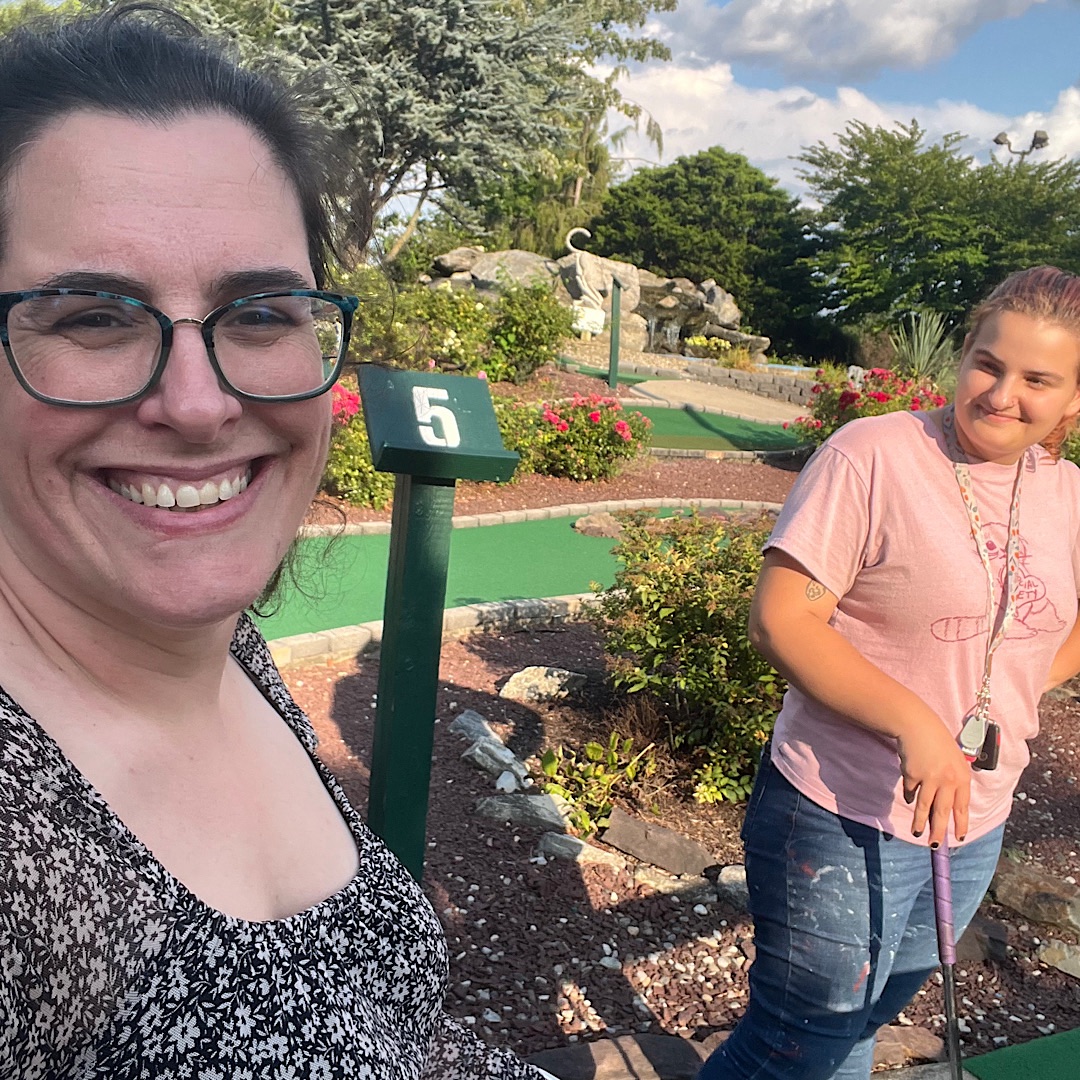
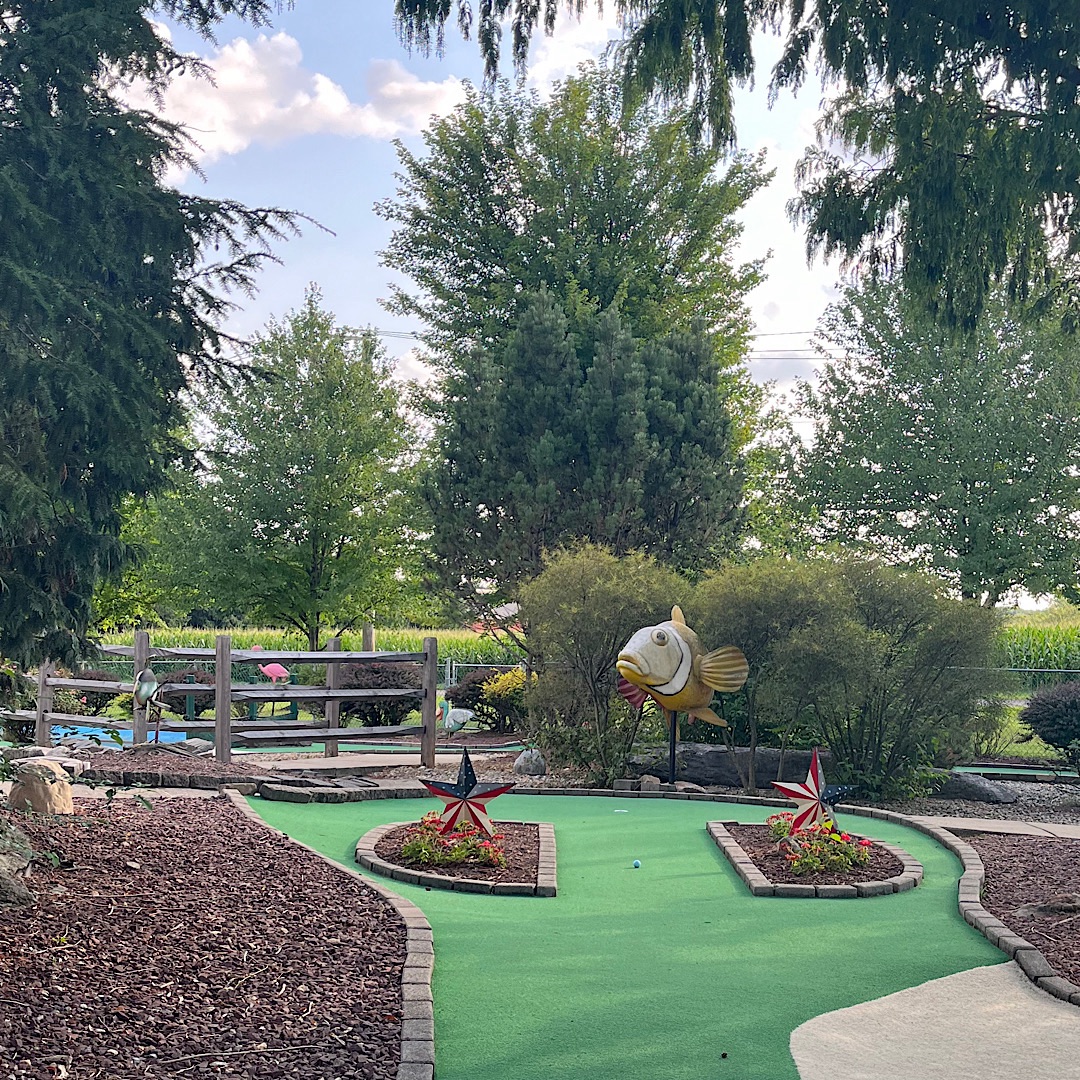
Tying for gold at Lucky Strokes Mini Golf

Earlier this week, I got a text message from Mr. Accordion.

Mr. Accordion and I were roommates during my tenure at a certain nonprofit that suffered from toxic management. It’s funny though how life leads a person on a meandering path, and we end up gaining things from experiences that hurt us at the time. I have current clients who connected with me because of that job. I ended up at Stitch Fix because of that job. And I published my novel as a distraction when I lost that job. So many of the circumstances that led to the success of Parisian Phoenix Publishing launched from a very stressful and agonizing work environment, where I shared an office with Mr. Accordion.

Mr. Accordion retired, and he has spent the last four years at various part-time jobs and spending time with his family. I have only known him about five years, but in that time he has always had a joke to share, leads on good food, and a genuine care for other people.

And the other day he invited Eva-the-no-longer-a-teenager and I for pizza and mini-golf. And who am I to say no to pizza and mini-golf? The venue in question was Lucky Strokes mini golf and driving range and Isabella’s Pizza.

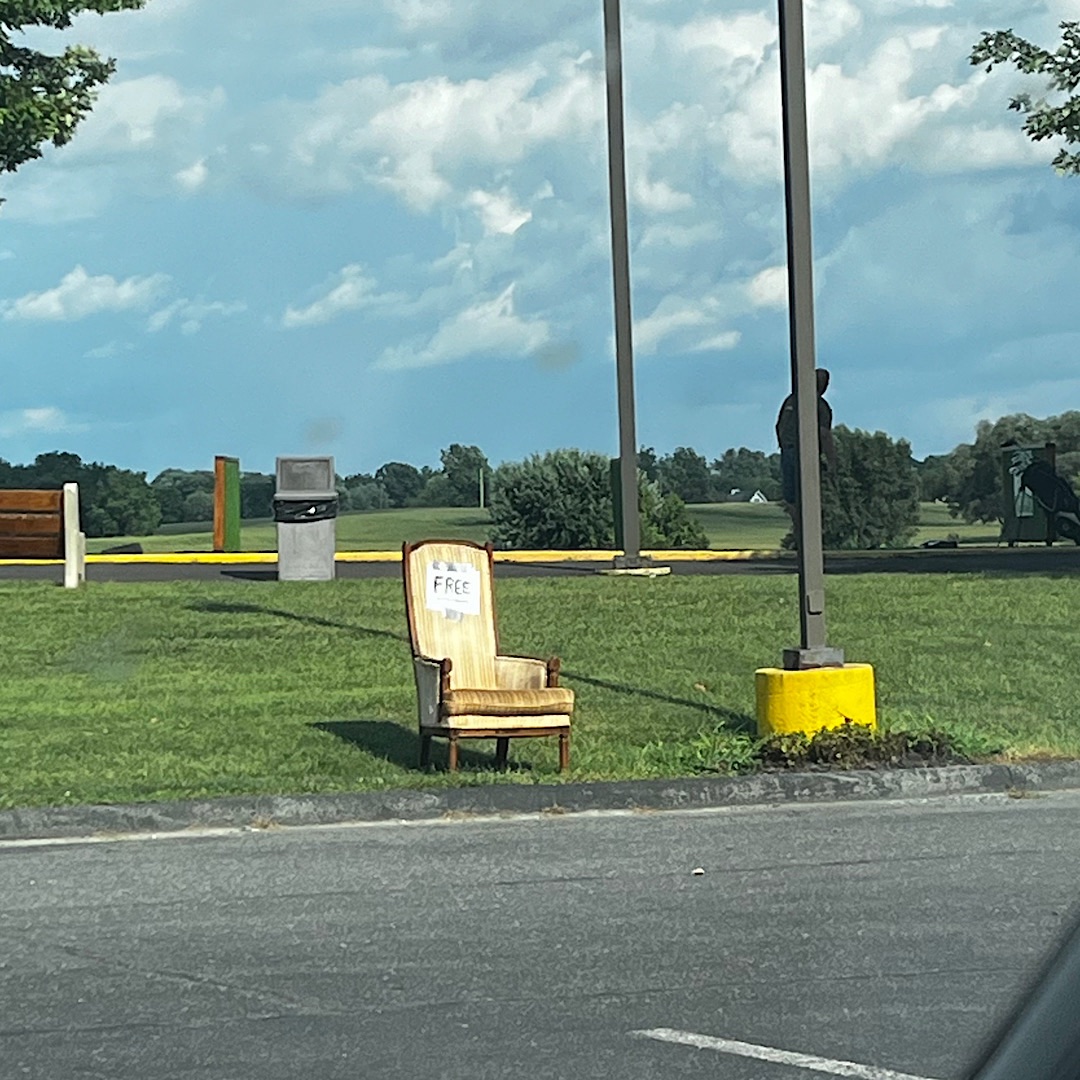
They had a strange, vintage upholstered chair in the parking lot with a “free” sign and a school bus with a giant target painted on it in the back of the driving range, if I saw correctly at 175 yards.

The no-longer-a-teenager and I arrived and ordered a medium pizza with capicola and artichokes.

And after some conversation with Mr. Accordion, Eva and I hit the golf range. Now, I did set my Apple Watch to “golf” (and Omada gave me credit for “sports”). It took us 37 minutes to play all 18 holes. (In part because the people ahead of us where having some intense discussion about his marriage and how his wife wasn’t taking the couples counseling seriously. At least, that’s what Eva heard. How she heard that without her hearing aids, I don’t know.

It looked to me like the worst first date ever. She looked disinterested with her back turned, sipping her soda. He would not shut up about himself or his wife. And every time you looked at them, he was standing over to the side with his putter over his shoulder and his ball on the other side of the green.

Immediately, Eva noticed two things:

  1. I don’t even remotely line up the putter correctly.
  2. I was swarmed by small harmless bee creatures.

And then while following my little pink ball around I fell up an incline and ended up crawling around the artificial turf on my hands and knees. Speaking of my knees, my knees and legs refused enough to let me get the ball out of the hole at each green.

Instead of keeping traditional score, we kept score of who landed each hole first, and who won each hole. We ended up trying, 8 holes each with two ties. None of which would have been possible without Eva’s golfing lessons. And her tendency to sometimes hit the ball so hard I feared she might have landed it on the next green.

And I think I had a hole in one, but now I don’t remember.

On the way home we stopped at The Spot for ice cream. I haven’t been to The Spot since my Stitch Fix days.

I had a dusty road sundae.

Day 5 of Omada: Wondering if it’s a scam

I feel like I have said a lot of this a lot of times so bear with me as I say it again.

The background

About 10 years ago, I decided to try to lose five-to-ten pounds. Approaching my 40th birthday, I needed to shed some weight before my annual physical. I worked at Target at the time where I walked 14,000 to 17,000 steps a day. I started weight training again, primarily because I had broken my right hand at work and could not untwist the soda fountain nozzles at night. No hand strength left. I worked primarily closing shift and I would get up, do my weights and walk 2-4 miles around my neighborhood. Every day. I counted calories and perfected my macronutrients and I felt invincible.

I lost 30 pounds in less than six weeks– while weight training. I dropped too much too fast and I had to buy a fitbit to make sure I was eating enough.

I worked really hard to regain weight and muscle.

But now, I’m approaching fifty. I have reached an all-time high with my weight– weighing the same thing I did on the day my daughter was induced 20 years ago. I have gained a little more than 30 pounds in the four years since the pandemic and a lot of other personal events.

And as someone with a mobility disability, that weight impacts everything even more than it does for the average person. I went to the gym religiously for three years, but I didn’t have the willpower or the finances to stick with good habits. Because it’s cheaper to eat the $1 McChicken and $1 diet Coke than it is to make your own chicken sandwiches.

The present decision: Omada

I know what to do. I understand nutrition and everything I do wrong. But I need someone to hold me accountable because my personal discipline is gone. Today is my sixth day participating in Omada– a free-to-me program through my medical insurance company– and I went on a small binge last night.

Perhaps my opinions will change, but I think Omada is a scam. And I think the bulk of the program is driven by AI.

But let me summarize the philosophy of the program.

There is no calorie counting. No exercise tracking but steps. So if you want your weight-training to count you have to convert it to steps, which makes no sense. I understand the idea behind tracking meal choices and not calories or macros. The program wants you to study your choices and habits to make meaningful change.

I’m using the Omada app AND MyFitnessPal and I’m still not making good choices or creating positive change. I’ve participated in my group’s discussions. And I’ve sent a long introductory message to my coach. And I reported a tech issue regarding my scale the day I received it.

I remedied the problem with the scale, so I thought they saw that I was using it and that’s why they didn’t get in touch. Turns out, it just took a week.

So I told my coach my history, and after the first day of tracking she mentioned she saw evidence of stress eating in my day’s choices. I thought to myself, “Really?”

Now to me, stress eating is eating a family size bag of Cool Ranch Doritos. I reviewed my first day’s food. For lunch I had one leftover slice of pizza because I came home from a meeting extremely hungry, and in the evening I had a small individual bag of vegan gummy bears. My calorie count for the day ended around 1400.

Did she think I ate a whole pizza?

I replied, “It was just a busy day. I had a lot of meetings, but I think I made good choices.”

She asked, “Would you like some strategies for eating on the go?”

And I responded, “I have my strategies, but many of them include food I can’t afford right now like my KIND oatmeal breakfast bars that have 8 grams of protein perfect to tide me, and I don’t eat out because my grocery budget is around $100/month.”

Which if you ever read my posts on grocery shopping, you’ll know that’s true.

She responded with tips like eating slower and putting my utensils down (which my message to her pointed out that I did not eat before the meeting, came home very hungry and then took the easy way out, which has nothing to do with eating too much at meals) and how to be smarter about eating out (when I said I don’t have the money to eat out). I believe this list of suggestions came from a chat bot who recognized the phrase “meetings” “busy” and “on the go.”)

No mention of the fact that my grocery budget is below poverty level. A person might want to address that first.

The research

My reporter’s instincts kicked in at this point.

I was already perturbed that it gave me a step goal of 7500 a day without any consideration of my health, my current activity level or my goals.

As a person who works at home at my desk for nine to twelve hours a day I get about 4000 steps on an average day. If I walk to do my errands or take a leisurely stroll around the mall, I get 6500 steps. The last time I hit 10,000 steps I spent the next day in painful muscle spasms. My point is– you need to gradually increase your activity level, especially if you have preexisting conditions.

To qualify for Omada, you need to have a weight problem, a heart condition or diabetes (or prediabetes). I am overweight, ended up in the hospital with Afib last year and had gestational diabetes which puts me at risk for prediabetes. AND I have cerebral palsy.

For people with heart conditions or obesity, is it safe to suddenly walk 7500 steps a day?

I looked online. How does Omada get paid?

Insurance companies pay Omada based on how much patients interact with their devices.

So, Omada gets paid every time I step on the scale.

This is bullshit.

And last night, after a day of decent eating, I added on an extra 500 calories of a peanut chew-style candy, gin and juice and freeze-dried fruit that I didn’t put on the app.

Initial reactions to Omada (and Papa Johns almost made my heart explode)

I am not a patient person. As I type this, I am listening to an Omada lesson– because of my weight and my health issues, my insurance company has enrolled me in Omada’s weight management system. At least, I think that’s what it is. I’m already annoyed by the ASMR style voice of the narrator for the lesson. And the lesson is audio-based, which is not the best way to get my attention.

Papa Johns Cheeseburger Pizza

They sent me a scale, and the scale automatically sends my weight to my account (including to my coach). Last night, I ordered Papa John’s pizza, and ate more than a should have even past when I was not only full but comfortable. This unnecessary gluttony reinforced what I already know; salt has a huge effect on my health and my heart.

Ten minutes after eating the pizza (that summer special cheeseburger pizza is covered with pickled and tastes like a Big Mac), my heartrate soared to 120 beats per minute resting, for about 20 minutes, until I finally went into the house and took my regularly scheduled beta blocker.

If I don’t eat enough salt, I get orthostatic hypotension, which means I get dizzy and become more at risk to fall when I stand. Which is great as someone who already has a mobility disability.

Omada has set my step goal for 7,500 a day. A good day for me is 6K. An average day is 4K. I know this is part of the problem. My overall goal for this week– according to the app– is to meal track to build awareness. As if I don’t know what I put in my mouth… Their app does not include calories on their meal tracking system, instead it makes you click little stars to rate if it was healthy, or home prepared, and rate how full you feel.

They want you to create habits (and habits are exactly what I need) and awareness. (I am aware I either eat like a vegan health nut or a fast food addict.)

So we’ll see how it goes.

The little weird lucky things

Yesterday ended up being a strange day. Strange in happy ways, I guess, and I’m afraid I don’t have any photos to accompany this post. But you will see some familiar characters.

I went to visit Nan in the morning. She’s been having some technology failures and is trying to rescue her remaining files from her Braille N Speak. Her current model is dying. So we did some dictation to save some items.

Then, I stopped at CVS. I thought I had $5, $3 and $2 in Extra Bucks with one of them expiring that day, but my phone only showed $3, $2 and $0.04. I went back to the pharmacy window and to pick up my allergy medicine. This spring has been awful for me.

The tech who served me, I had never seen her before, and she saw my $35 tab and suggested I try GoodRX. She found it for $17.24 (which happened to be my house number growing up, see previous post. I like numbers). So she saved me twenty bucks!

I meandered through the store looking for snacks, as my cupboard is bare. I noticed notebooks on clearance for 90 percent off. I texted The Teenager to ask if she could use them or if I brought them home would she just hoard them… She said she would hoard them until the start of next semester.

I got her return text as I was standing near the Nature Valley Granola bars. CVS had a couple varieties on sale for $1.99 a box. I grabbed two boxes of peanut butter biscuits. That and some notebooks (five) at 45 cents each came out to $1.17 after my $3, $2, and $0.04. But at the register, I noticed my $5 off coupon that I couldn’t see on my phone. So I paid, and went back into the store and found my favorite KIND breakfast bars for $2 off. After my $5, that came out to $0.99.

In the afternoon, I visited my neurosurgeon to follow up on my aneurysm. And read the results of my MRA in early May. I got a parking spot right outside the door! At the hospital complex! THAT never happens!

I arrived early, hoping to read more of my nonfiction marketing book that is getting on my nerves. They took me back early. And the doctor showed up early! I was out of the office start to finish in less than 30 minutes, which was only 15 minutes past my original appointment time. And good news– what looked like an aneurysm behind my left eye according to the CT scan did not show up on the MRA.

Then I met Southern Candy at a local park and in the evening, The Teenager, the neighbor and I took Little Dog for ice cream after a dental and having some teeth pulled.

The Rocket Ship Construction Zone

I had an MRI this morning.

It was my first MRI, to monitor an aneurysm in my brain discovered last year during my random heart issues. Last year they did a CT scan with contrast as I did not know if tooth implants would count as metal. (It does not. They are non-ferrous. I learned this as a more-or-less universal fact from the radiology tech. And to think I made my poor dentist research the screw in my mouth.)

When I called to schedule a few weeks ago, they asked where I wanted to receive an MRI and I chose the hospital that is 600 steps away from my front door. They offered me an appointment at 7:15 a.m. on a Sunday. I agreed.

Roll out of bed, wander to the hospital, get an MRI, and be home while it’s still early for a cup of coffee.

And that is indeed how it played out, and I had my coffee in my hand before 8 a.m.

On the walk over, I noticed this Subura station wagon from Vermont with roses on the hood. Now, between the apartment building across the street and the hospital itself, one finds a lot of out-of-state cars and doctors-in-training. And while I did not linger long enough to read what was written on the windshield, it said something like “you and me forever” and someone had laid a wrapped bouquet of roses on the hood. A marriage proposal? A stalker? A farewell from a lover returning to a place far away as a promise to come back?

I surely hope they aren’t roses, because leaving roses on the hood of a car in the middle of the city in the rain, especially if it’s a marriage proposal is certainly both romantic and stupid.

I arrived at the hospital around 6:50, in part because I know they ask you to register at the front desk and then meander through the facility to reach the waiting room of your particular appointment where you start the registering process again. There are usually insurance card checks, and headshots taken to prevent fraud.

I walk in the front doors and there’s one person, in a hospital t-shirt, sitting right inside. Before I even have a chance to pause or plot a course, she greets me with, “Are you hear for an MRI?”

I say yes, and then she follows with, “Is your name Angel?”

I again say yes.

Now, I know this particular hospital doesn’t do much hospital-ing. They literally only have one floor of inpatient services, and I experienced that last year. I must say the renovations are looking gorgeous, again, nothing like the room I stayed in last year straight out of mid-twentieth-century Americana. At this early hour on Sunday morning, there is no one in the hospital but me and this employee, Rose. No one.

“As soon as I clock in, I’ll take you back,” Rose says. “But we have a few minutes. So have a seat.”

I sit behind Rose in the waiting area in front of the not-even-staffed-yet registration desk.

“That’s fine,” I say. “I’ll read my book.”

I have a lovely conversation about Rose, her retirement from one of the larger hospitals in the network, and how she has really enjoyed reading again since her retirement. She clocks in and escorts me upstairs and down the hall to the MRI suite where I sit in another waiting room and Rose greets the staff who are arriving with us for their shift.

I sit and read my book, and the techs come for me. For the first time ever, I am given hospital pants. I peel off my civilian layers and tie on my gown and pants.

Much to my relief they have a metal detector as the final phase of the pre-MRI adventure. I am pleased to report I am not magnetic.

So many of these tests come with so much hype, and I have to say, I think I prefer the MRI to the CT with contrast, because an MRI doesn’t make me feel like I’m about to or in the middle of urinating in my pants.

And they tell you to stay as still as you can– which always makes me super aware of every twitch in my body.

They warn you that the machine is loud and they give you ear protection. If I had to describe the experience I would say space rocket meets construction site. And so many different types of squealing, clanging and banging.