
This one brings to mind memories of my mother’s flower gardens during my childhood— her lovingly tending her petunias, impatiens, zinnias and marigolds. I begged for straw flowers, snap dragons and “blue angels.” I thought of my mother’s gifted green thumb while frolicking in these fields.


Last week, knowing my teenager had left me home with no car, my sweet friend Joan had invited me to a pick-your-own-bouquet workshop at Terra Fauna Farm. Joan is a member of their CSA.
For those who don’t know, like the teenager, let me explain the concept of CSA or “Community Supported Agriculture.”
First, some history. Our area (the Lehigh Valley/Slate Belt of Pennsylvania) is traditionally primarily rural, with a few small cities scattered here and there and one of the largest cities in Pennsylvania on the one side (Allentown) and the Poconos on the other. New Jersey lies to the east and more rural areas to the West.
I once served as an advisory board member for the Penn State University Cooperative Extension. I completed six years, many of those as Secretary. I never realized how passionate I was about the area’s agricultural heritage until I had this opportunity. I took it for granted.
I grew up in the rural Slate Belt in the 1980s where most of my neighbors were dairy farmers. One literal neighbor had a green house business. And our school bus route cut through a pig farm. Pig farms smell bad, by the way.
Corn fields. Horses. 4-H. Farm Shows. Future Farmers of America. Horticulture and Agriculture as high school science electives. I took horticulture one and it was an amazing exposure to organic gardening (in 1990 before it became trendy), flower arrangement, and gardening. You haven’t lived until you’ve washed a greenhouse of poinsettias with lye soap to kill the white flies.
At that time your parents were either farmers or blue collar workers. My dad was a diesel mechanic.
During the last two decades, farm land has given way to suburban developments and warehousing.
And to compete with large commercial farm and maintain some smaller farms as viable, farmers have embraced the CSA model.
In a CSA arrangement, when selecting his crops and ordering his seeds, the farmer also contacts those who have expressed interest in supporting the farm. These supporters then purchase a share of the season’s crops by sending money in advance. There’s usually a “full share” customarily enough for a family of four and a “half share” for those who don’t have a family or are timid about how much produce they can use.
The farm typically shares what crops they want to plant and the supporter can usually cater their share to their likes and dislikes.
The farmer uses that money to buy his supplies and pay his bills until the crop is ready. And has a guaranteed market for some of his crop.
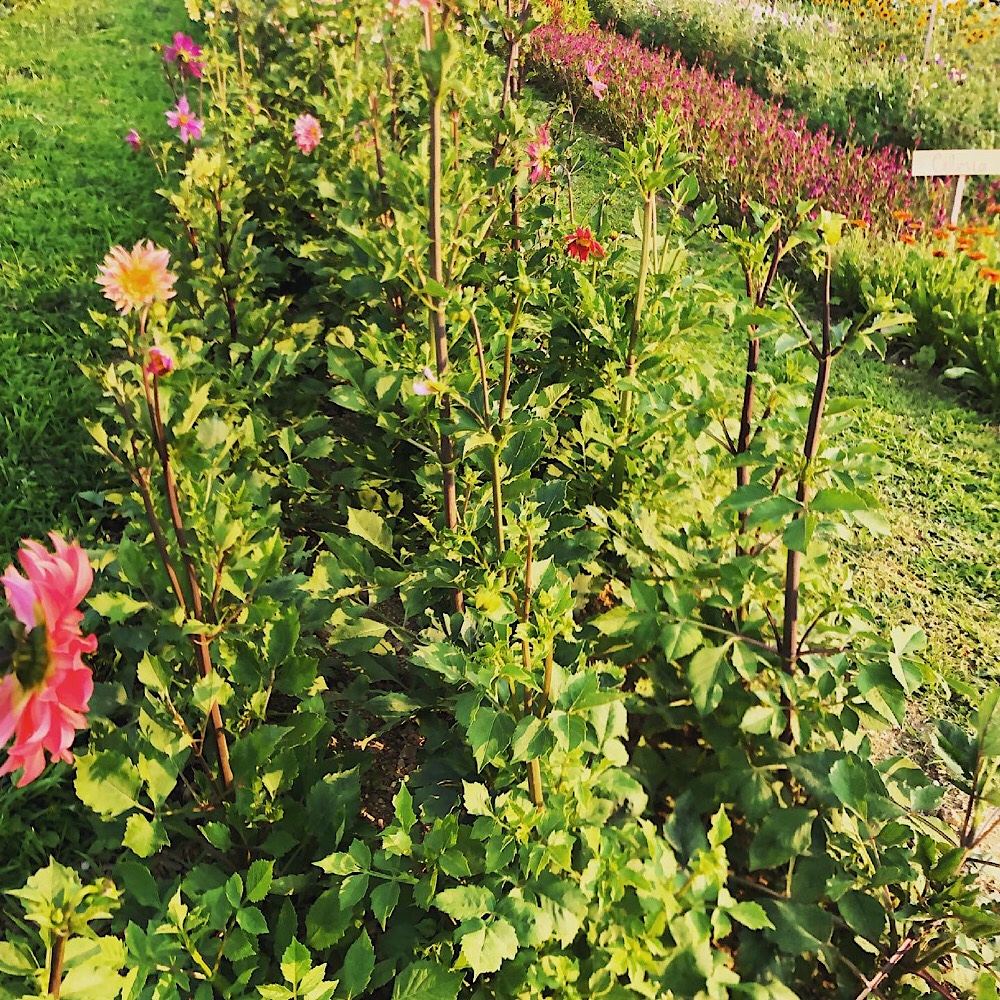
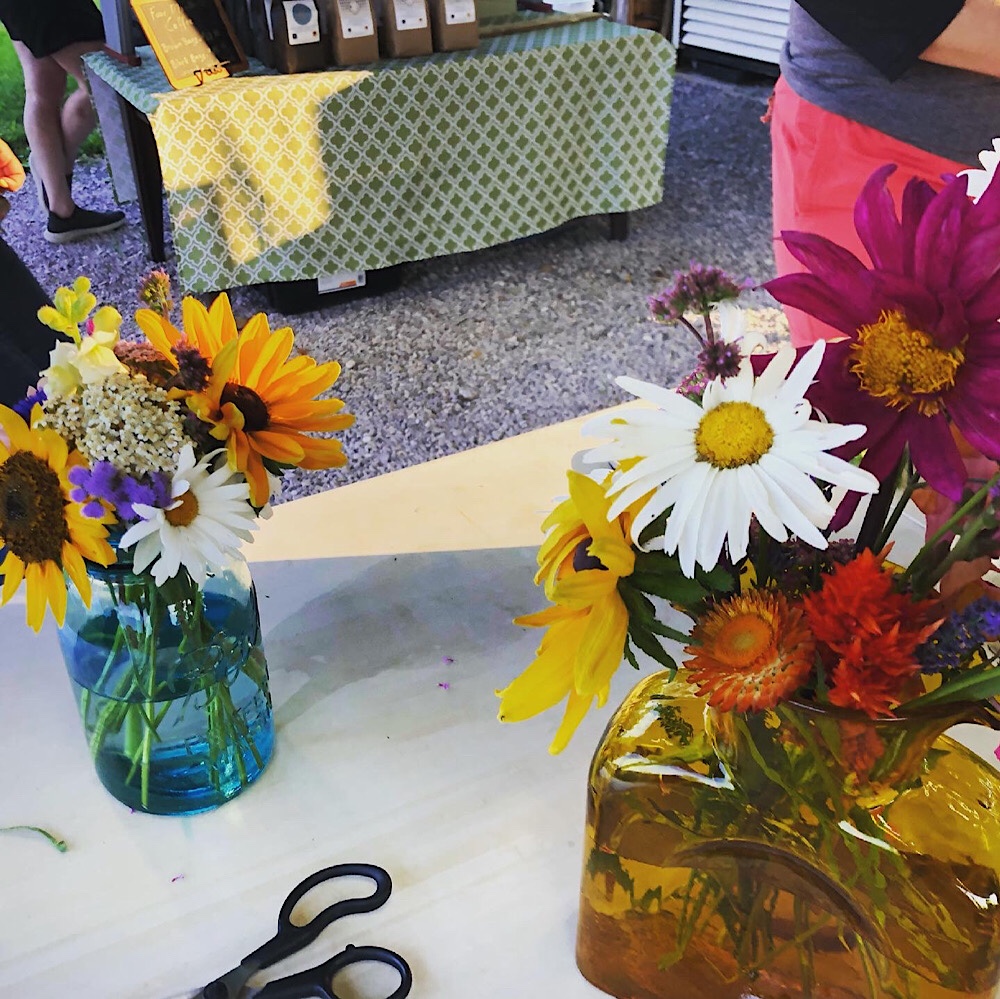
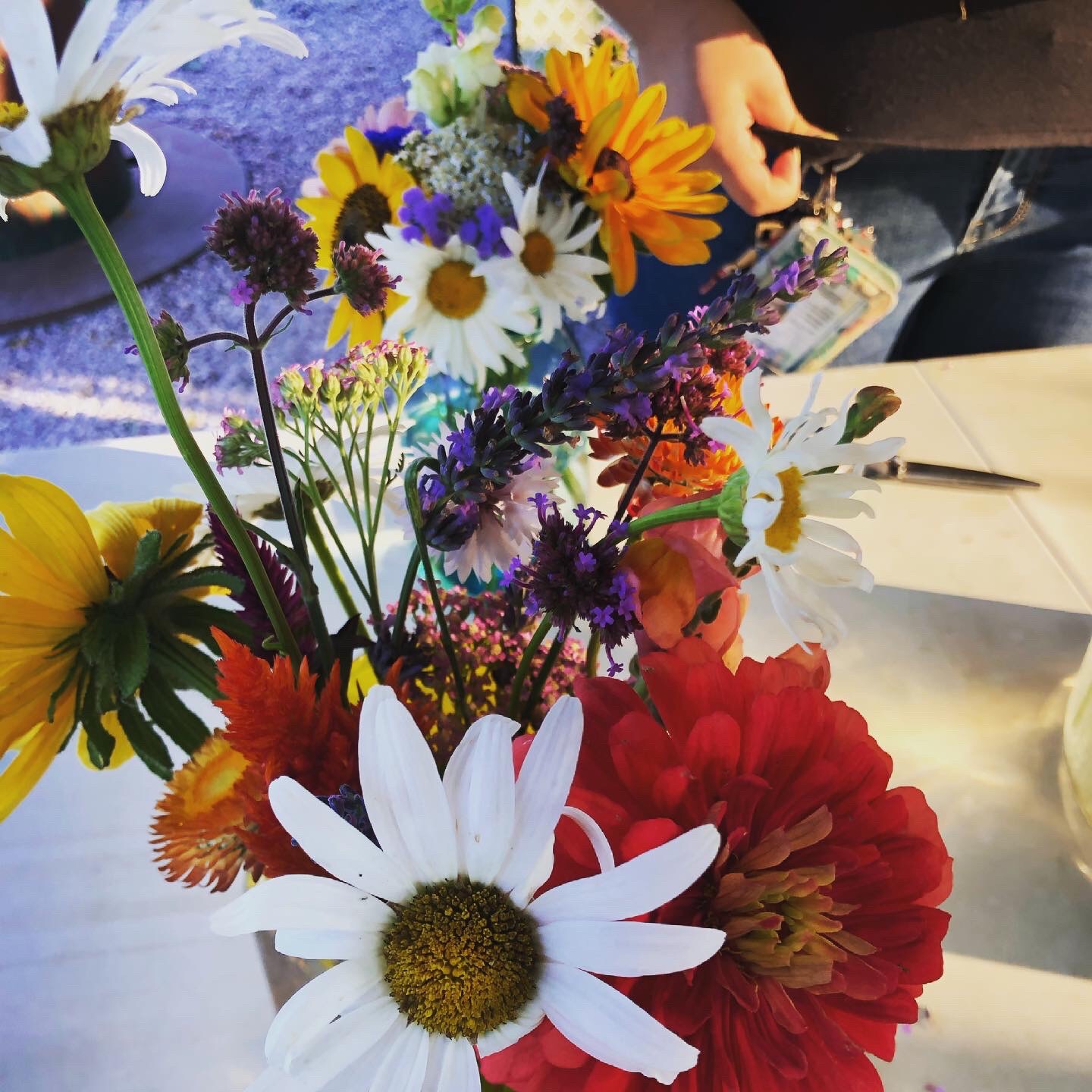
Terra Fauna (located in Northampton, Pa.) planted a flower and herb garden on what I believe they said used to be their cow pasture. For $5, you can pick a bouquet.
As I mentioned, they had planned a workshop for last week but the heat and the threat of thunderstorms made them postpone until July 5.
Joan took photos and the teenager and I indulged our witchy senses and gathered blooms and herbs from the rows.
We spent $26.50 on extras— a farm fresh cucumber, two zucchini, a quart of new potatoes, a pound of local honey harvested this past Saturday, some garden herb cheese spread and a coffee flavored yogurt smoothie which I think tasted like a milkshake.
The teenager came home and spread her cheese spread on some crisp fresh cucumber and for the sandwich effect added “chicken in a biskit” crackers I bought over the weekend. The juxtaposition of ultra-processed and farm fresh was not lost on her.
Perhaps before the end of the summer, Joan and I can “do lunch” at the farm on one of her weekly CSA pick up days. Which, as a country girl, let me tell you this one truth:
The only way to eat sweet corn is fresh off the farm. If you’re buying sweet corn at a local big box grocery store, I’m sad for you.
 Angel Ackerman