The Medical Refund I Didn’t Ask For

I keep promising myself that I won’t let this blog anguish and fade into nothing, and then I fail. If you miss me, check out Parisian Phoenix Publishing on the web or social media or sign up for my weekly-ish Substack newsletter. (Which you can do here.)

While I keep intending to do more jovial hometown adventures and life updates about the cats, the bird or the dog, it doesn’t happen. (We have TWO dogs this week as we have a jovial mutt with us as a boarding client. He’s a joy to be around, and he’s such a confident and stereotypical dog compared to our depression-prone backyard-bred pit mix.)

Eva’s dog has received a custom muzzle as a safeguard against her fear-based reactivity. And the difference it makes in our ability to trust her with new dogs and people and her comfort while wearing it is amazing. If you have a dog with issues, a custom muzzle is a game-changer.

But today I want to talk about what happened when I returned from Ireland regarding my emergency room visit two months prior. And I might sound like a conspiracy theorist, but it is what it is.

I have a high-deductible, employer-sponspored health plan through my husband, but as we are separated, I do not ask him to use his HSA. The HSA absorbs a lot of those out-of-pocket expenses. And my husband’s employer gives him money for the HSA as an incentive to take the high-deductible plan.

I have done the math. As a family, we have had the high-deductible PPO plan for 20 years. It sounds scary at first, but the monthly premiums are way cheaper than the other plans and the PPO allows us to see any doctor we want when we want, and when you have chronic issues, that’s important. I briefly had an HMO in the late 1990s when I had never had any health insurance before and no real medical treatment post age five, and my primary care doctor sent me to a podiatrist who specialized in ankles for my gait issues because he was pretty much the only provider in network. He told me there was nothing anyone could do without finding a provider in a major city.

And by the way, he was wrong.

If you don’t know, a high-deductible plan means that the insurance company pays nothing of any of your expenses until the deductible is met. In my case, that’s $3,500. BUT, my out-of-pocket maximum is $5,000 a year.

The ER Bills

As you may recall, (if not here it is: the original post and the ortho follow-up) in early January I had a fall and I debated between going to the ER or the urgent care because of my history with afib after bodily trauma… I was not in afib, but I did break my thumb, which has not fully recovered.

That fall led to about $800 in out-of-pocket orthopedic specialist bills and about $3,000 for the emergency room. Now, I use AblePay which allowed me to schedule payments for these services and gain a cash discount. For the ER bill, I opted to pay more than $2,000 in one lump sum of my American Express because it allowed me the largest discount. I then used the AmEx PlanIt feature to schedule that into monthly payments for a fee instead of accruing interest. In the end, I didn’t save money but it allowed me to space the payments.

But then… randomly, a full month after I paid 100% of the ER bill in a lump sum of on my credit card, my insurance company (Capital Blue Cross) decided to renegotiate the bill– which remember, they did not pay. I did.

I did not know this was happening. I was less than $200 away from my out-of-pocket maximum for the year so I scheduled regular chiropractor appointments and a mental health check-in with my therapist. The chiropractor appointments help me not twist my body into weird contortions that further cause complications from my irregular gait, and since my chiropractor Nicole was originally a physical therapist, she helps me stretch and monitors my gait to make sure my feet “do feet things.”

So, while I have debt from the ER visit, I can now have chiropractor appointments every other week for a small coinsurance amount ($40). And that is a huge help to my mobility.

On a Friday afternoon, I get an email from AblePay and a notification from AmEx that I had a $1700 refund on my recent medical bill. Which sounds great, right?

I logged onto Capital Blue to see what was going on, and indeed they had renegotiated my bill, which rolled back my previously met deductible and out-of-pocket maximum. And I had two chiropractor appointments and two therapist appointments that I was now responsible for. That’s about $700.

And I know what you are thinking, that still leaves me $1,000 ahead. But oh no it does not. Because remember, I had only paid one payment of my planned credit card charge. So the whole refund went to the charge, and I still needed to pay the remaining several hundred.

I negotiated a payment plan with my therapist and canceled all my upcoming chiropractor appointments.

I wish I could tell you that was where the story ends.

Present Day Repercussions

When I was in Ireland, I walked a lot more than usual. A lot more. As it was a relatively last-minute trip, I didn’t have a chance to try and get myself in shape. So I attributed the discomfort to my out-of-shape-ed-ness and called it a day.

But I am experiencing problems again. For the last week, I have been experiencing increased muscle pain in both my legs. My left leg usually does not hurt. My right leg always hurts. Like every day, I experience at least a pain level one but typically two or three. It’s like there is a braid of muscle that splits the back of my thigh muscle and presents with a constant pulsing, ache. But increasingly, my calves are experiencing extreme, painful muscle stiffness, in both legs, and my knees hurt.

My flexibility is better than usual, and I have no problems with my back, but if I touch the floor, it kills me to straighten my legs.

And this morning, after a week or so of this, and several days of feeling like my legs aren’t attached to my body when I walk, I started to cry. I caught myself, but I still started to cry. I took an extra dose of my baclofen– at double strength, and that made the calf pain go away. But I’m struggling to use my legs. And I’m getting damn tired of it.
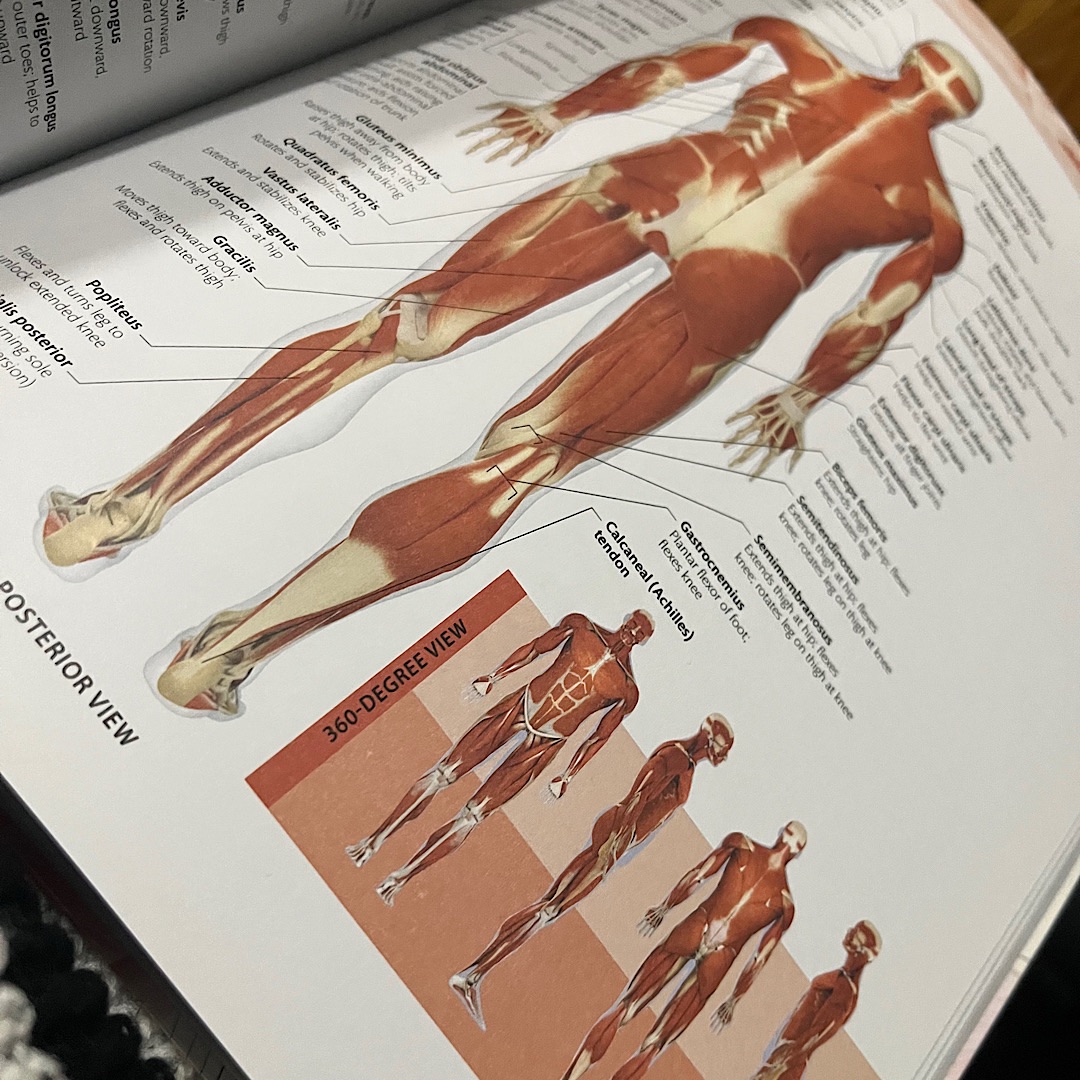
I have tried to find and label what muscle hurts, but I can’t.

I suspect I need physical therapy. I have tried to take short but regular walks, making sure that I hit at least 5,000 steps daily, but I think it’s too little too late, and my muscles have forgotten how motion works. This winter was hard, long and cold; and with my part-time fast food job laying me off, I don’t stand and walk as much as I have during the last year.

But that leg pain I refer to as a braid? That started shortly after Stitch Fix closed. I think because I went from a job where I stood eight hours a day to a sedentary job. That’s almost three years of the same pain. That has now intensified.

So, why don’t I call the neurologist?

Because she costs $220.

And if she wants tests, I can’t afford those.

And If she agrees that I need physical therapy to stretch out and retrain muscles, that’s thousands of dollars. It sounds ridiculous. That a six-week physical therapy session would rack of thousands of dollars, but when I broke my ankle, which was TEN years ago, that cost me $5,500. That deductible and co-insurance adds up.

This is when I miss my Medicaid.

Becuase I work hard, everyday, and I just can’t afford the treatment and maintenance that would improve my quality of life.

And it sucks.

To make a choice everyday to deny yourself care you need.

Because of money.

And I believe– and maybe I’m wrong– that Capital One renegotiated my ER bill because I hit that out-of-pocket maximum and they didn’t want to pay my upcoming bills.

Our health care system, specifically for-profit, employer-sponsored health insurance, sucks.

It’s broken.

Cardiology meds

Last spring, I experienced two falls down the stairs in a two-week period that led to bodily injury. That led to a period of A-fib and 24-hours in the hospital.

The cardiologist on call at the hospital put me on beta blockers, metoprolol, and the dosage wiped me out and gave me orthostatic hypotension. I learned through working with a dietician that I am sensitive to salt and I drink enough water that I wash the sodium from my system.

My primary care physician dropped my medication dosage in half, but the orthostatic hypotension and occasional weird bouts of high heart rate did not go away.

I found a new cardiologist and got a second opinion. The new doctor thought the Apple Watch was enough protection against Afib and that I could stop taking the medication. Since I was losing my job a month later, I thought discontinuing a beta blocker would lead to an increase in blood pressure due to stress.

But now it’s a year later– and I’m not sure the pills do anything.

The physician assistant and I had a discussion about eliminating the med, and she wants the doctor’s opinion first. The question remains of what should this medication be doing. If it’s supposed to be helping my heart remain a steady pattern, then I need something extended release or a different class of medications. If it is really just an insurance policy against Afib, I suppose it is enough.

The physician assistant asked if I would be willing to wear a Zio heart monitor to make sure this was a smart move. Last time I wore a Zio, it showed some stuff, but not Afib. That cost me $600, and that was when I had “good” insurance and Medicaid. I have a high deductible plan right now with high coinsurance and no HSA, so I mentioned that I was saving my budget for more important tests– like the MRI I am paying for out of pocket. That bill was more than $2,000.

I haven’t heard back yet, but my point in mentioning this is that the pertinent question of the day was to ask what my medication is supposed to do, and if it is doing its job. It’s easy for a doctor to tell us that we should or need to take something without question its exact function.

Everything Wrong with America

I miss my more carefree days– which didn’t seem carefree, until now, when I have several appointments after each 8-hour workday in the warehouse, health issues to sort, a job hunt and debt to pay. Life is never simple or easy for most of us, but 2023 has, for me, felt like eternal optimism and hope while being bludgeoned. I get my proverbial sh*t together, and something outside of my control decides to parachute into my life.

When Stitch Fix announced closing the Bizzy Hizzy, they scheduled all sorts of guests and workshops for us as displaced employees. My separation date is September 15, so I have four more weeks, or two more paychecks, depending how you look at it. One of the workshops Stitch Fix hosted, and paid us to attend, was a visit from the state “Rapid Response” team to explain how unemployment and career services from the state work. They handed us a booklet that told us how to survive our layoff. (Surviving a Layoff: Your Guide to a Soft Landing and a Smooth Re-entry by Harry Dahlstrom. Mr. Dahlstrom, I’m sure you’re a very intelligent and likable person, but your advice is written for middle class Americans with two cars and their own house.)

“Remember that emergency fund with three-months pay stashed away…” Oh, Mr. Dahlstrom. Do you not have a child going to college this fall? Or medical debt? Or a used car that needs constant repairs? Or a teenager whose car insurance costs $500/month because of an accident? That’s just me. Others might have a disabled or unemployed spouse, student loans, bad credit that led to predatory loans for everyday items… or maybe they just recently got this job and had been using their credit cards to survive.

“Reduce your thermostat to 68 degrees.” Oh, Mr. Dahlstrom, mine has been at 64 for two decades.

“Trim your entertainment.” I don’t have cable. I don’t have any streaming services (though the Teenager has Spotify, which she pays for, and she also bought HBO Max and made for the year upfront.) I don’t even have home internet, relying on my phone’s hotspot and public connections. I think the last time I went to a movie was two years ago.

“Prepare a weekly menu” and “put back 10 percent of the things in your [grocery] basket.” Oh, Mr. Dahlstrom. I spend $250 on groceries for myself each month, that does not include the Teenager as she buys her own groceries. And I do get coffee or a donut out, which adds up to about $25 a month, which I consider reasonable as, as you mention, I search for discounts.

Other advice includes: “collect old debts,” “turn unwanted things into cash,” “change your lifestyle,” and “bring in the paying customers” using a talent or skill. Because my half-a-double home that I pay about $900/month for is full of useful items? I haven’t even had a vacation in about five years. And my talent? It brings in about $150/month on a good month.

“Unload the family jewels.” Mr. Dahlstrom, I’m so frugal I wouldn’t even let my husband buy me a diamond for my engagement ring. When we got married, we used Irish claddaghs so all I had to do was switch it to the other hand. I don’t own a single piece of jewelry or any item worth anything. My car is a 2015, my computer is a mid-range model, even my Brooks Brothers suit is 15 years old at this point.

But this is what’s wrong with our country. As a society, we assume everyone “poor” or experiencing financial trouble or unemployment is in that situation because they are irresponsible, stupid or did something wrong. And sometimes that poverty or situational bad luck is due to society’s expectations.

For example, starting with my generation (the GenXers) we insisted that our kids go to college and saddled them with loans to do it. Then, we flooded the market with bachelor’s degrees, which rendered them meaningless, and started pumping up the value of master’s degrees. For those of us associated with the arts or wishing to pursue an academic trajectory, a Ph.D. is now required and some perfectly talented individuals with MFAs are now trapped in a life of eternal adjunct status.

And the poor Millennials also fell victim to this higher education fiasco except the cost has skyrocketed and these poor kids are starting their lives with student loan payments that rival my mortgage and they can’t land a job with a living wage so they work in warehouses with the same people who skipped the education in the first place.

Now, add to that the way the medical system works. In my opinion, and this is just my opinion, more people than ever need some sort of medical support in their life. Whether it be disability, illness, mental health struggles or maintenance medication, it seems like more people than ever spend a ridiculous amount of their income on healthcare.

I have been extremely fortunate that my mathematical brain allowed me to calculate costs and I determined that the free to me high deductible health plan, when you included the employer contribution to my health savings account and a $50 contribution from me to that same HSA each paycheck, paid for most of my medical costs this year (except for my mental health therapist, who for some reason, the medical insurance company likes to pretend doesn’t exist. They just won’t communicate with him or pay him).

Now, before I continue on this rant, I don’t understand why healthcare in this country is primarily connected to employers and employment. Why is it an employer’s responsibility to provide access to healthcare? Eliminating this ridiculous practice might be a good first step to getting healthcare under control. If you meet certain criteria, you can qualify for government-sponsored insurance, which also dictates the level of care you receive, and the open marketplace for healthcare is expensive.

I just don’t understand why everyone isn’t pushed to the open marketplace OR why everyone can’t qualify for government insurance. If everyone went to the open marketplace and insurance companies had to compete for individuals instead of corporations perhaps the access to care would change. In other words– even a company like Stitch Fix– has thousands of employees. If insurance company had to court those individuals and families, they would have to work a lot harder to court them versus convincing one corporation to allow them to insure a large group of individuals.

I missed a month of wages after my hospitalization, which due to the one week waiting period, even with my employer-sponsored short term disability insurance, only provided three weeks of wages at less than 67% of my normal wage, and on top of that the company administering those payments misplaced my paperwork which meant I had to repeating submit paperwork and did not get the last week of those wages until one full month after I returned to work. And my doctor had to submit three sets of paperwork. Which, technically, costs $25 a form for the doctor to submit.

And because I have a congenital and permanent mobility disability, I always need physical therapy. But physical therapy sessions cost hundreds of dollars and insurance companies limit access to them. So I hired a personal trainer and pay him $25 a session (which bless him, he has now reduced his rate to contribute toward my fund to pay for my service dog which is another $5,000) and I bet Mr. Dahlstrom would say I should eliminate that from my budget as an extraneous expense.

But Mr. Dahlstrom, I imagine, does not live with a disability and has probably never experience what it’s like to have a leg that just suddenly stops working or a hip that feels like it’s waving to people from my butt. And since my muscles and my brain literally cannot communicate, I have to physically show them what to do so that movement is reduced to muscle memory and does not have to include the brain.

In closing, I’m going to end this long and winding blog post with a celebration that also highlights everything wrong with America. My friend Southern Candy from Stitch Fix turned 65 yesterday and she asked to go to Shady Maple Smorgasbord. That place was SO BIG, I think my whole d*mn town could have dined together. They had so much food and so many cooking stations I think we could have fed a village from a developing nation for a week.

The staff was amazing. The food was quite good. The gift shop was enormous. And in general, it looked like people were only taking what they could eat. But we all ate too much. I had three dinners and two desserts and spend several hours thinking I might vomit. The cajun catfish and the carrot souffle were my favorite. And I really wanted to punch an old man in the face because as I was reaching for the last piece of coconut custard pie, he snatched it away from me.

And the reality of how much food, how many steaks, how many excess calories we were all consuming filled me with such guilt and shame. Our culture, and you can disagree with me, is so centered on gluttony and selfishness. So while I was happy to spend time with my friend, and take a road trip with her, and laugh with her– I have to ask: how can such a place exist? I’m sure the intent, because Shady Maple started decades ago, was to provide a place where people could dine and have a wide variety of choice and not have to chose, or for families to dine together while pleasing difficult eaters. But this was insane.

Cute animal photos and mallet finger impact

It’s the end of April and it was 35 degrees last night. The price of oil continues to skyrocket and I’m still heating my house halfway through spring.

The cold does not help the poor circulation in my hands which has intensified in my left hand because my mallet finger restricts my movement.

My hands are painfully cold, except when Andrew is making me curse him in my head at Apex Training. Today was leg day, and I was so tired that when I came home and let the dog out I turned around and lost my balance and slammed right into the brick wall between my mud room and my kitchen.

Nala, my six-year-old Goffin’s cockatoo, started shaking and plucking her feathers today. Nothing in her environment has changed except the neighbor’s dog has been barking nonstop all day. The teenager believes his distress causes her anxiety.

Speaking of the teenager, she made this thick chocolate chip cookie/blondie dessert that I topped with ice cream that Sobaka’s mom brought home from Penn State when we dog sat last weekend.

Before the teenager brought home our dog, I would never criticize a dog owner, but now that I see the difference between different dog care styles, I feel back for dogs that aren’t spoiled like Sobaka and Bean.

And I don’t know how Sobaka’s mom does it— that dog is a bed hog.

But now an update on my mallet finger:

  • Stitch Fix has been amazing. Because my specialist at OAA took a week to return my paperwork and then didn’t properly fill it out, the onus was on me to find jobs I could do to not hurt myself. It turned out I can QC just fine— I hit 92% just fine.
  • But here’s the thing… my specialist knows hands, he doesn’t know me. I don’t think he heard me when I said I have cerebral palsy and that I work 10 hours a day in a warehouse. I’m just not sure that environment is safe for me right now,
  • Why do I say this? Because this week drove home to me how much I rely on my left side for stability. By forcing me to work 90% on the right, I am struggling to keep my right hip in place.
  • I am so stiff by the end of the work day. I also end up pinching and slamming my right fingertips and by the end of the day my left fingers I can use are swollen and sore.
  • And I fold 750 clothing items a day, handle 150 boxes and rip open probably 500 plastic bags. That’s a lot of fingers moving.
  • Once I consider the risk of accidentally losing my cast and bending my finger (which would extend my healing time) and adding the increased fall risk of mine because I am aggravating known issues with my balance and mobility, I just don’t feel safe.
  • This is a horribly stressful feeling.
  • I’m going to talk with my family doctor about it. I already mentioned it to my therapist, because I wanted to confirm my thoughts were rational and not whiny or emotional.

Today’s vegan lunch: curry carrots, lentils, quinoa, my own roasted chick peas, toasted sesame seeds, green olives and a touch of Thai peanut sauce topped with pumpkin seeds

And last but not least, cats. Misty caught a mouse! Video here.