
More on medical dramas: New Amsterdam

I can’t believe it’s been three weeks since I posted anything to this blog– if you’re looking for me I’m using on social media and on ParisianPhoenix.com as more and more my publishing business must support more of my life. It’s hard to believe it’s been 13 months since Stitch Fix closed our warehouse.

So, my personal life isn’t much these days because my professional life has blended so much into my personal life– and I don’t take care of myself with the attentiveness I used to because I have less resources and worse medical insurance.

But a while ago, I went on a tangent about Grey’s Anatomy. (I really cannot believe that it’s still on the air. I cannot stand Meredith herself.) All my Grey’s Anatomy’s posts can be read here.

After I finished all the season’s available of Grey’s Anatomy on streaming and watched Season 20, I turned to The Resident. I had attempted The Resident once before and abandoned it fairly quickly. I started that in early summer and finished it right after my Atlanta trip, a trip where I stayed about a mile from the museum that they used for the exterior of the hospital.

I think Dr. Bell’s transformation on that series– from the hands of death and destruction to an actual nice guy– was rather impressive. The way they handled Emily VanCamp’s (Nurse Nic Nevin) departure from the show was frankly stupid. They had an end-of-season two situation where Nic was stabbed, (one of the quintessential medical drama plots) and the staff saved not only her life but that of her unborn child, only to have her die in a car accident a few months later. As a writer, I would have much preferred to see her leave Dr. Conrad Hawkins and join some international medical NGO than simply die after swerving to avoid hitting a deer.

That show also did a troubling time jump. In the middle of one episode, they fast-forwarded three or four years as a way to get Conrad out of private practice and into the hospital again, since he is the main character. They used trick or treat night, and skipped to a bigger child and a different Halloween costume in mid-episode!

So, while The Resident has some perks, it also aggravated me as most of these shows do. You always have the maniacal surgeon who must have good outcomes at all costs, the doctor with cancer, the doctor hooked on pills. There’s always the natural disaster that threatens the hospital. The generators never work when they should. There is always a field amputation. And there is always a pregnant woman who gets in some horrible accident. And don’t forget the brilliant surgeon who has some catastrophic injury but manages to come back.

I could go on.

I was very skeptical when I started New Amsterdam, but I quickly noticed some nuances about the show. It’s far from perfect– within the first season we hit most of those typical plotlines and stereotypes. But the show grew on me. I’m troubled that they used the dangerous pregnancy plotline, with the caesarean without tools at home scenario, but killed the character off in the same episode with not complications from any of that, but in an ambulance accident.

And the storyline of psychiatrist Iggy Frome infuriates me and endears me to him. In the middle of the show’s run they have a few incidents where he must face the idea that he might be a narcissist, only to drop it without resolution (okay, technically I have about six episodes to go). But his later struggles to define himself and his role in his own relationships is stellar.

They tackle real topics with more than a perfunctory mention. The pill-popping doctor must deal with her sobriety, her addict family members, her sister’s overdose and her own controlling behavior as she realizes she replaces substances with sex and even people. The episode on the overturning of Roe vs. Wade had weight to it, as the medical professionals struggled to find solutions.

Their representation of diversity includes a trans nurse, a doctor with a dwarfism condition that starts as an extra and works his way up to chief of the department (even if that didn’t last), a conservative doctor who fathers a child in a polycule, and a deaf oncology surgeon who participated in one surgery and eventually became a main character– with a whole lot of ASL and other deaf actors/characters.

Now add to all of this that New Amsterdam is based on a 2012 book, Twelve Patients: Life and Death at Bellevue Hospital, and the author really did serve as medical director of Bellevue and survive cancer as the main character of New Amsterdam does… I, of course, had to read the book.

I’m 60 pages in, which is into the third chapter and I’m impressed at how well the book and the television program complement each other.
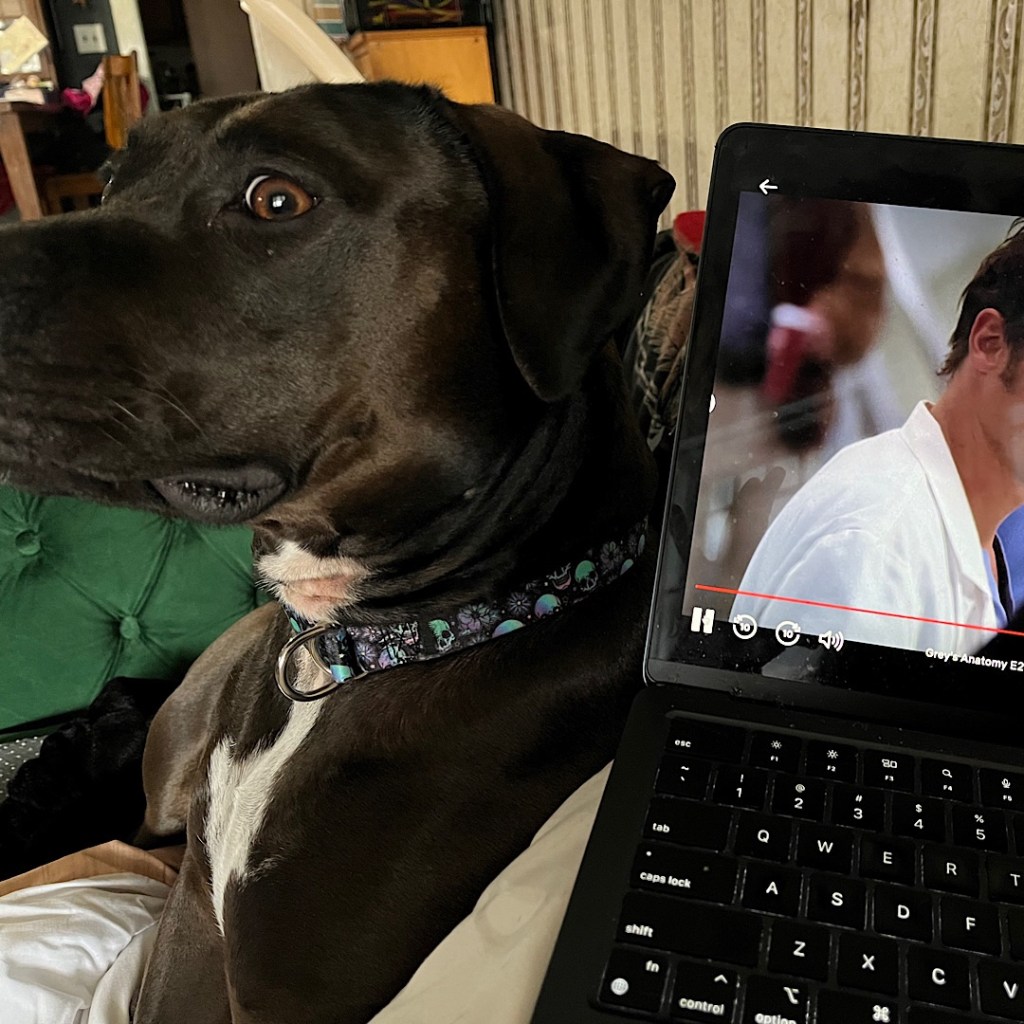
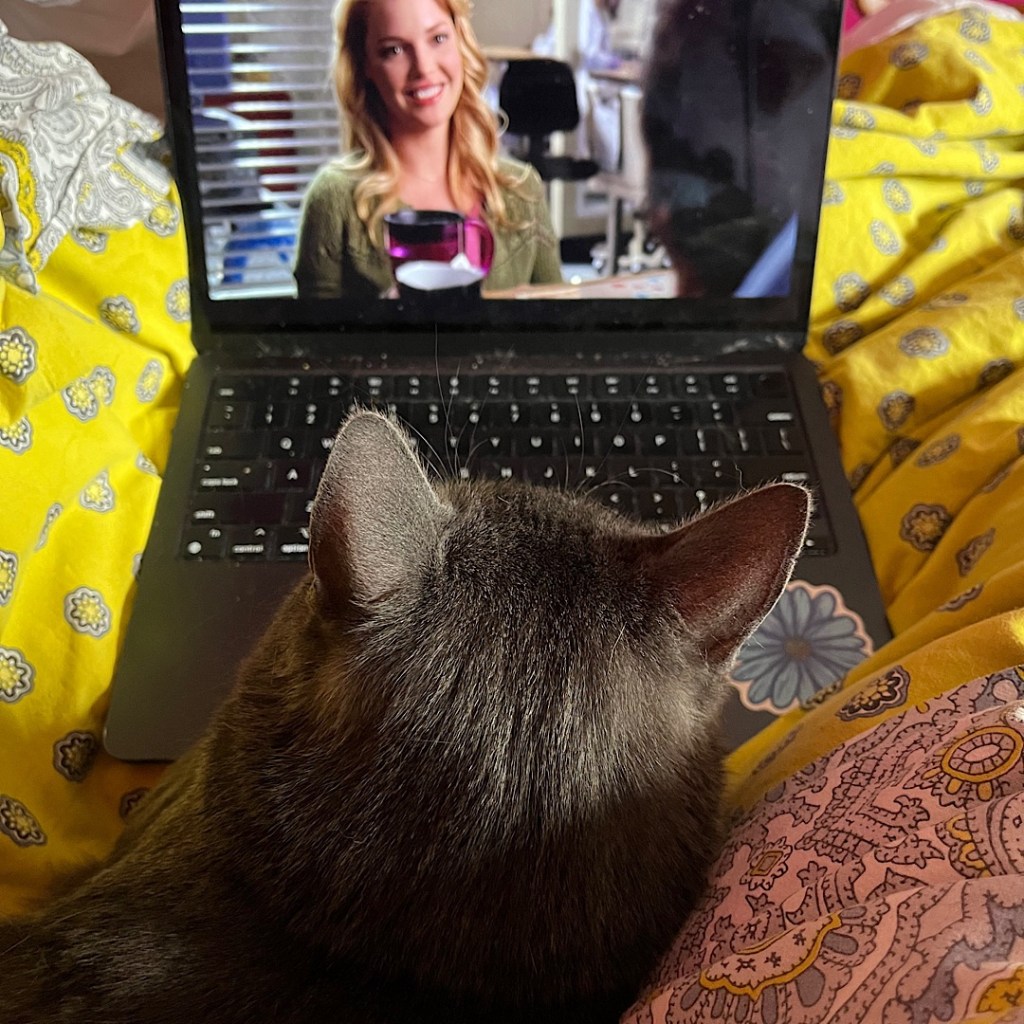
Life lessons according to Grey’s Anatomy

Periodically, I select a random television series and watch the whole thing, as much as I can get my hands on. Some of the shows come as recommendations from friends or family. Some are pop culture references that I feel the need to know.

With the variety of streaming services, I watch these shows when dining alone or when doing the dishes or folding wash. And I think I like seeing the various storytelling styles and the various characters built over the arcs of these long-running shows.

But no matter what– I just don’t like Meredith Grey as a person.

So with no further ado.

10 Life Lessons from Grey’s Anatomy

1. The people you love will die in car accidents at a young age. Or have catastrophic accidents and have miraculous recoveries. There are a lot of car accidents in the show, and some of them are downright crazy. Some people shouldn’t survive, and some should. Or some people get hit by a bus and die, others fly out a windshield and manage to bounce back from the most dramatic surgeries ever and don’t even have a scar. Drowning is also an issue.

2. Marriage is temporary. Just go with it. People get married quickly and divorce just as quickly. The average marriage on Grey’s lasts six months. And if it does last, people die in car accidents. People marry for love, for lust, for medical benefits.

3. 1 in 4 surgeons get brain tumors. At least. At least THREE of the main characters have specifically brain tumors and then in an unusual moment, one surgeon gets a spinal tumor in season 15. And brain. surgery, even with inoperable or cancerous tumors, is really easy to come back from in the Grey’s universerse.

4. Even if you spent a decade in school and have a lucrative career, feel free to start over in a new path on a whim. Doctors change specialties, or turn down impressive fellowships, or leave the country on a moments notice. And sometimes they become firemen.

5. You can easily change your name, leave the state and go to med school without anyone questioning it. OR if you run into immigration issues, the hospital can ship you off to Switzerland overnight so you don’t get deported.

6. Real friends cover up each other’s crimes and improprieties. I sometimes think this show should be named after the MORALLY GREY aspects of their lives. It doesn’t matter if you sabotage a clinical trial or beat the life out of someone, you can still be a doctor.

7. Most women doctors are lesbians or bisexual. A strange number of the female leads sleep with each other, but it takes until season 15 to have male characters in a gay relationship.

8. Doctors have no child care issues ever, even as a single parent with three kids. These doctors have the most convenient 24-hour day care that allows them to drop off their kids even if they are not scheduled to work.

9. Planes and helicopters crash A LOT. Not only do several characters die in a plane crash– but another character jokes about his plane crash. And those helicopters have a lot of mishaps.

10. Doctors have sex all over the hospital.

Revisit and review of Grey’s Anatomy

When Grey’s Anatomy was new, I did the old school, pre-streaming thing and bought a few seasons on DVD, probably on deep sale at FYE.

I never really liked them— only liked some of the characters. One of the ones I liked least — Meredith Grey. And the medicine portrayed didn’t interest me either.

But for some reason I started watching Grey’s on Netflix and have re-watched the first two seasons.

And for some unknown reason— I decided to go straight from season 2 to season 19. I’m about to 15 minutes in, and I already know I still hate Meredith Grey. I mean, that’s harsh, but they are imaginary people so I can say that right?

But I got to see Dr. Webber, who seems completely ancient now. And Dr. Bailey looks gorgeous but doesn’t appear to be working to the hospital.

And there’s a new Dr. Shepherd but I have no clue who she is.

But this poor Dr. Griffith with her amazing hair seems to have a lot of potential.

So it will an interesting adventure to see where these characters have gone in the last 17 years.

Random Review of the Day: ABC’s The Good Doctor

Saturday (December 3, 2022) was International Day of Persons with Disabilities.

Coincidentally, today I am watching Hulu and catching up on ABC’s The Good Doctor. I started losing interest in the show when the characters starting experiencing once-in-a-lifetime traumatic events every season. The show seems to have become surgeons trying to save each others’ lives instead of the patients.

The main premise of the show is that Dr. Sean Murphy is on the autism spectrum and uses some special effects to show the audience how his mind works (which reminds me of the early seasons of House MD when they relied on special effects to show what was happening inside the patient, but more bookish).

Sean leads what I think everyone would agree is a normal life. And his journey to fit in and live that normal life is central to the program. Did the creators/writers make him a doctor so that people’s lives rely on him? Or is it to show that this is an amazing use of his unique mind?

SMALL SPOILER AHEAD

Regardless, the writers place his social struggles amid these high stakes events that really don’t depict ordinary life. In the current season, Sean’s supervisor Audrey Lim finds herself lucky to be alive but in a wheelchair. The initial quandary about this is Sean’s role in the surgery that left her paralyzed.

The first couple episode of the season address Lim’s adjustments to life in a chair, and this includes her trying everything she can think of to return to her life as a stellar surgeon at the hospital. And she does. And even while achieving these milestones, she is angry and dealing with disability grief. I would also venture to say that at some points she almost says she’d rather be dead than living this disabled life.

Now I’m on episode 4 or 5 of season 3, and now the team thinks they can find another surgery to cure Lim.

Why does Lim have to be fixed?

Once again, the mainstream media is showing us that disability must be fixed. I was so impressed with Lim’s balance of frustration and determination to regain her prestige as a surgeon. I don’t want to see her fixed.

I guess we’ll see where it goes.

But I also wonder what young people who rely on wheelchairs and other mobility devices would feel if Lim walks again. If a gifted medical professional can’t feel whole and productive without her legs, what does that say about the value of disabled lives? What young person needs to see representation of someone accepting their new abilities?

Opinion: Representation of Aspergers in Season Two of Chicago Med

When Grey’s Anatomy first came out, I gave it a chance— but the amount of gratuitous sex made it realize very quickly it was a medical soap opera. I’ve watched a couple seasons, but the characters always seemed immature and the medical side of the show seemed superfluous to the plot.

I loved ER, but only made it through season 11 or 12. This was before the Netflix days. But still my favorite medical drama was House MD because of the quirky central character and the difficulties the rest of the ensemble cast had dealing with him.

One of these days I should make a list of the medical dramas I have watched over the years and revisit some of them to share what I like about them.

But my current show of choice is Chicago Med, but I am losing patience with it as I fear the writers are “jumping the shark” more with every season.

The first season did a great job of establishing a wide range of characters from a wide variety of backgrounds.

And in season two, the writers introduced a new heart surgeon— a Black and (Orthodox) Jewish gentleman by the name of Dr. Latham.

As soon as the regular cast began to interact with him, I suspected he had Aspergers. He portrayed a certain type of rationality and difficulty with emotions and reading others. His approach to surgery was very routine based.

I liked the character— a lot. And he discovered his Aspergers with the help of the psychiatric staff at the hospital (which as a doctor I think he would have realized it before) but to see him digest this news was very rewarding.

But then he wanted treatments. And that upset me. Aspergers made him a great surgeon and a unique character. But because he lacked empathy with distraught patients and the nurses said he “creeped out” families, he wanted to, pardon my use of the expression, see how the other half lives.

And the treatments started to work. And I hated it. I hated the notion that a doctor was perpetuating the idea that people who are non-mainstream need to be fixed.

Fuck that.

I’m not going to say anything more, because spoilers, but let’s just say by season 3 Dr. Latham’s Aspergers was forgotten and he contributes a valuable perspective to the show. And PS— in a mass casualty event, he rocks it with triage.

The show in Season 3 had a compelling storyline with Dr. Reese’s estranged father, which started as a really good dip into psychiatric issues, but then went over the top in not one but at least two ways. I hated the outcome.

And now in Season 4, I am seeing two storyline develop that feel more crime drama than medical and that’s not what I signed up to watch.

So now it’s a question of do I finish the show or abandon it?

Moving Forward on Fashion and Fiends

So last night I finished reading the final polished manuscript of my Fashion and Fiends series of horror novels.

There are probably at least six books in the series, though I totally believe the possibilities of the universe I have created are endless.

Recovery is the third novel in the Fashion and Fiends series. My friend Gayle and I are publishing the series as part of our little boutique “press,” Parisian Phoenix Publishing.

I copyrighted all three novels that are print ready tonight. It’s been… oh… 25 years since I copyrighted last. I was surprised to see it’s now $45 versus the $20 it was in the 1990s. And you can upload everything electronically now.

But interestingly enough, the Library of Congress website doesn’t appear to have changed at all since those days since the interface looks like this:

So to recap:

  • The name Fashion and Fiends refers to the mix of the high fashion world and the supernatural.
  • The first book, Manipulations, follows a 400-year-old witch as he tries to absorb a supermodel’s water magick in hopes of becoming an immortal being. The story mimics the realities of domestic violence, and the fantastically successful supermodel actually fights her own insecurities and body image issues.
  • The second book, Courting Apparitions, is a ghost story. The subtext explores grief, depression and impotence and their effects on human relationships.
  • The third book, Recovery, blends some supernatural craziness with sex and romance, while also diving deep into medicine, the military, and the African landscape. The subtext here looks at the ramifications of French colonialism and explores the complexities of how to blend Islam, multiculturalism and race in the modern environment. And a certain character comes face to face with the monster of Ghoubet.

But when I finished the third manuscript, I was shocked to see some of the rather dramatic things I thought happened in the novel Absolution happening in Recovery. One of my favorite characters was left in serious trouble. So, I had that special author distress where you know you need to save him.

But here lies the kicker— the next manuscript in the series no longer exists except for two large sections of the final two chapters.

So now I have to sit down and write.

Wish me luck.

PS— Tomorrow is Étienne d’Amille’s birthday. He is the fashion magnate in the series. He will be 62. Where does the time go?