The Republic of Djibouti: 35 Years of Nation-Building Yields International Pseudo-Colony
A nation the physical size of Massachusetts on the horn of East Africa, the Republic of Djibouti gained its independence from France on June 27, 1977. Its history and ethnic roots suggest that without European colonial conquest, Djibouti might be a part of Somalia or Ethiopia. In the thirty-five years since independence, Djibouti has struggled with political hegemony, civil war and lack of basic infrastructure or civic institutions— a poor educational system, little agriculture or readily available water, practically nonexistent healthcare and no sustainable economy.
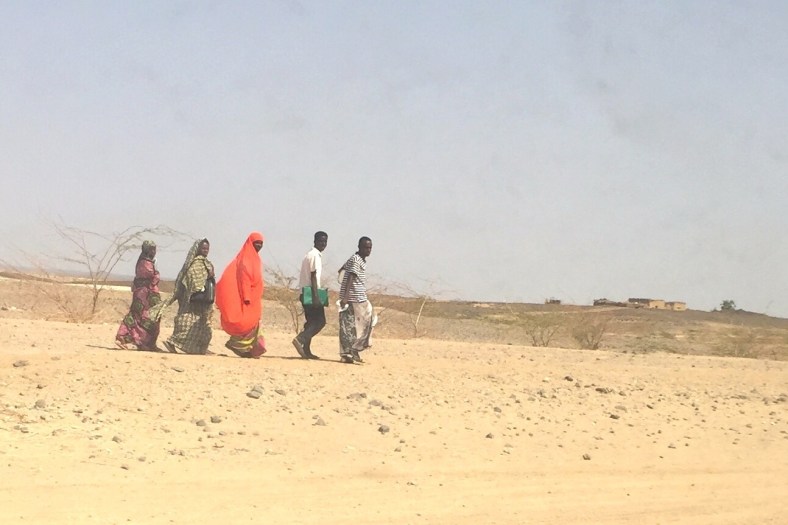
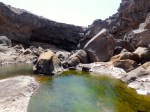
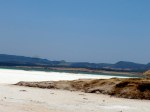
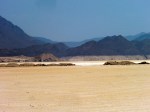
Yet the Republic of Djibouti has one significant advantage, its geography. Although it’s barely visible on a world map, the country rests along the Bab el Mandeb, which translates from the Arabic as “the Gate of Grief,” between the Gulf of Aden and the Red Sea. Its only other potential resource is salt, primarily from Lake Assal, but salt exports are limited because of low iodine content. (1) The barren land is a brutal desert, often referred to as Hell on Earth (2), with average temperatures between 85 and 107 degrees Fahrenheit. In the Hanle plain, temperatures exceed 130 degrees, making it one of the of the hottest inhabited areas of the planet. (3)
Under French colonial control in the late 1800s, what is now the Republic of Djibouti became “French Somaliland” and offered a place to restock provisions for ships headed to far off locales like Réunion, New Caledonia or Polynesia. This is also the time of the Industrial Revolution, creating a need for Middle Eastern oil which drove the French to guard these pivotal waterways. By the dawn of the millennium, Djibouti’s location would attract not only the French, but also Americans, Germans, Japanese and European Union. Counterterrorism operations monitor the entire region from this spot—Sudan, Eritrea, Ethiopia, Djibouti, Somaliland, Somali, and Kenya.
This is possible in part because the Republic of Djibouti has displayed much political stability since its independence. Despite this, the protests that affected Tunisia, Libya, Egypt, and Syria also hit the Republic of Djibouti where citizens called their government a puppet regime of the French and Americans. The government quickly broke up the movement and arrested opposition leaders and not much reached the American or European media. I stumbled upon short news articles about these protests and it made me question: how has the presence of American and French military forces influenced nation-building in Djibouti? In reading about people who have traveled there, studying the infrastructure and institutions, and following the political situation via the media, election results and foreign policy from the French and Americans, I conclude that this developing nation-state has not changed since 1977.
At the time of Independence, citizens of Djibouti recognized potential in their nation, expressed by Djiboutian treasury functionnaire Luc Aden:
“Think of our country as a baby born with a big head– the city of Djibouti–on a frail body…we must cure this. Then the baby takes its first steps, sometimes grabbing a hand to hold. But the child will walk on its own one day.” (4)
So far, those hopes have not materialized. Despite some of the highest foreign aid figures in Africa, the existence of basic infrastructure built by the French, a thriving port and trade hub, and the presence of a multitude of international entities, whether military or political, the Republic of Djibouti has made no real strides in nation-building and exists as a neglected pseudo-colony.
To explore this idea, I will provide a brief summary of the composition of the Republic of Djibouti’s population. I will then discuss the French historical and current interests in Djibouti, and then look at the American presence in the former colony. Both nations give tremendous amounts of aid, and my final section of this paper will show how despite Western financial support providing 12 percent of the government budget (5), nothing has improved for the bulk of the population. Between France, the United States and Saudi Arabia, Djibouti receives between $100 and $300 million in aid each year, which amounts to between $130 and $700 per person. (6)
Before French colonialism, two main tribes lived in the region that is present-day Republic of Djibouti. In the north, the Afar followed their herds into parts of what is now Ethiopia and Eritrea. To the south, the Issa grazed into Somalia. The lack of water and arable land drove both tribes to nomadic existences, following their herds of primarily goats and a few donkey and camels. Their proximately to the Middle East led to trading in the area of what is now Djibouti City, where Arabs, for centuries, had been peddling wares and spreading Islam. The indigenous population is predominately Sunni Muslim.
By 1967, 10,255 Europeans lived in Djibouti. Of those, 7,655 were French. Of the French, less than 1,000 had lived in the colony for more than three years. The French population has always been highly dependent on the amount of soldiers stationed there, which at its height, was 10,000 men. (7) In 1978, one year after independence, 250,000 people lived in the Republic of Djibouti, 49 percent of them Issa and other Somali, 39 percent Afar, six percent Arab and four percent European. (8) Today, of the 818,000 residents in the country, 60 percent of the population is Issa or other Somali and 35 percent are Afar. (9) Djibouti’s urban population has always included a myriad of citizens: French, Arab, Ethiopian, Greeks, Indians, Armenians, and Yemeni. (10) Understanding this population base helps explain the dominance of the Issas. In 35 years, Djibouti has only seen two presidents from the same political party, both Issa. This has plunged the country into civil war. Fighting escalated in the early 1990s, but the conflicts have never been resolved. In this environment, foreign actors build their bases and send aid.
For France, the dollar tally came to approximately 60 million dollars a year on Djibouti during its tenure as a colony, developing infrastructure like the train that transports most of land-locked Ethiopia’s goods and a water system that tripled the available water supply. Today France spends about $160 million, between foreign aid money, military aid and rent on its military presence, base hosting fees alone costing at least 30 million Euros per year. The presence of the Americans has forced France to increase payments by one-third. (11) France trains Djiboutian military officers and more or less founded Djibouti’s small military. The navy traces its origins to a cast-off French patrol boat and the Air Force began with an old French troop transport. (12) As for actual French soldiers on the ground today, in April 2011, the French had about 3,000 troops, the FFDj (Forces françaises Djibouti).
French objectives have not changed much in the last 125-plus years. The French have five main strategic interests in Djibouti: to protect oil tankers and navy ships entering the Red Sea, as a staging post between France and its Indian Ocean territories, intelligence gathering, as a forward base for multilateral military operations in the region, and a low-cost venue for desert warfare training.(13) Before the arrival of large scale American operations in 2003, Djibouti maintained its dependence on the French, “the country is propped up by French money, French soldiers and French cuisine” with 10,000 French citizens advising the government and influencing what the locals call “the fictional economy.”(14) The French never truly left:
“In Djibouti, one sees the last decaying remnants of the French in East Africa — the crumbling colonnades, the pitted grey walls, the street-signs in that peculiarly French shade of blue — and one hears it too, in that lovely flattened out African French.” (15)
The French may no longer be colonial masters, but their imperialistic influence and their presence still stands, and now it faces competition from the Americans.
The United States rents the former French Foreign Legion base Camp Lemonnier for at least $30 million a year. The rent has grown as the United States has expanded the facility. As the only official American military base in Africa, Djibouti hosts a variety of American entities: army, air force, navy, marines, Central Command’s Joint Task Force Horn of Africa, Central Intelligence Agency and Federal Bureau of Investigation among them, plus a rotating American force of about 2,000 people with additional intelligence officers from foreign countries helping in counter-terrorism. (16) Other nations also have a military presence. American, French, African and cooperative non-military entities are based in Djibouti. (17)
The elevated population of foreigners make Djibouti a garrison town with a dual economy. Prices for goods and housing in the urban setting rival what one would expect from modern cities, yet the average Djiboutian cannot afford these things.
The statistics on the Republic of Djibouti summarize the economy nicely. Inflation rises between 3.8% and 7% per year. (18) Government expenditure accounts for almost 37 percent of the Djiboutian GDP. (19)”Spartan apartments” in Djibouti City average $1,000 a month, when the average annual income for a Djiboutian is $890 and real GDP per capita is $450. (20)
Opportunities for employment in Djibouti are few. Port traffic, especially for Ethiopian trade, feeds a large segment of the economy. Eighty-three percent of the shipments received in Djibouti City’s port heads to Ethiopia (21) which yields about $150 million in port fees each year. Going back to 1978, one year after the French ended colonial rule, trade with Ethiopia made $500,000 a month for Djiboutian customs, and that merely covered the goods carried by train (60 percent of Ethiopian foreign trade). (22)
In 1978, unemployment in the capital was 85 percent.(23) In 2007, that figure was 59 percent overall and 83 percent in rural areas. (24) In 1978, one main employer was Coca Cola, who still maintains a bottling facility in Djibouti today. The main economic activities post-independence stemmed from (in the order of importance) the port, the railroad, camels, cattle, goats and sheep. Current industry, other than Coca Cola, includes three other factories in Djibouti City, one for desalinating, one for ice making, and a plant that manufactures Popsicles and flavored drinks. The government is the primary employer, with the United States’ government as the second largest employer.
Black market activities have historically included the trafficking of obsolete European arms, drugs, slaves, and prostitutes. In 1997, an estimated 20,000 young Ethiopian prostitutes worked in the bars of Djibouti City alone. (25) For young men, piracy is a key activity.
The economic base cannot improve without changes in infrastructure, to increase water supply and the reliability of electricity. Much of the water system and the transportation system has not been maintained or improved since the French originally built it. The government owns and controls the only Internet service provider, phone company and cell phone provider. Electricity is unreliable and business owners who cater to foreigners usually have back-up generators if only to maintain their air conditioners for the comfort of their clients. Most of the indigenous population do not have or cannot afford electricity, while foreigners and elites spend an average of $500-$1,000 per month to cool their homes against the torrid climate. (26)
Even with improvements to these systems, Djibouti lacks a basic investment in its people. Medical care is practically non-existent, for people and for the animals that many Djiboutians rely on for their livelihood. The life expectancy for its residents is about forty-five. (27) Nearly three percent of the population has HIV/AIDS, though it could be higher because of the road between Addis Ababa and Djibouti, a major route for HIV/AIDS, drugs, currency and illegal aliens.(28)
In 1978, 90 percent of the population was illiterate (29) which is a statistic frighteningly akin to the percentage of the population that was African, versus Arab or European. It is important to remember that the traditional languages of the nomadic Afar and Issa do not have written versions. The cultural idea of a written language was imported by the French.
Today about 73 percent of the adult population is illiterate, with not much hope of improving since only 43 percent of primary school aged children are enrolled and attending school. (30) Even for children in school, some have lost teachers because of problems with the delivery of salary. Until very recently, Djibouti had no universities. One recently opened. The skill level among Djiboutians is so low that even manual laborers must be imported. (31)
Lack of employment opportunities coupled with lack of education will make it impossible for Djibouti to end poverty under the current system. Abdourahmane Boreh, an opposition politician who used to work for Guelleh as head of the Djiboutian ports declares that it is time for a new political system in Djibouti, that the poor don’t have to get poorer, everyone can have water and electricity and that the economy can grow. (32) Guelleh has publicly renounced Boreh. (33) Yet, looking at the statistics, it’s hard to deny the merit of Boreh’s claims.
As of 2008, 75 percent of Djiboutians lived in poverty, 42 percent didn’t have enough food. (34 )There is another reason for elevated living costs, an artificially high Djiboutian Franc that has been pegged to the United States’ dollar since independence. (35) President Guelleh and his predecessor have invested in sectors that will return revenue to the state instead of devoting resources to education or economic diversification. (36)
Not much has changed for the population of Djibouti. Is this a case where colonialism could be seen as “good”? Or is it colonialism that stymied the growth of this land? Without colonialism, Djibouti probably would have been part of Ethiopia, since Ethiopia has the most power in the region, and surrounds most of the Djiboutian borders. They already have a reason to want Djibouti, and that’s the port. Life as an independent state has provided no improvements in access to water, electricity or education. It has allowed one ethnic group, the Issas, to dominate the other and to manipulate the political structure into a pseudo-republic. The so-called Republic of Djibouti has failed to develop even the most basic institutions of a nation. In the contemporary era, it has traded its French colonial masters to pit the French and the Americans against each other for financial gain. The ruling elite ignore the poverty and starvation among the masses.
Nation-building takes time, and building democracy presents even more challenges. The Republic of Djibouti modeled their political system after that of the French, but the Djiboutian system chose a first-past-the-post system that ended up reinforcing the hegemony of the ethnic majority. Clauses in the constitution had been designed to prevent this, asking the president to appoint a prime minister of the opposite ethnic group, but that never happened. The legislature does not have the power to oppose the president if they should suddenly disagree with his policies. In Djibouti, an attempt at opposition may never happen because:
The RPP [the president’s political party]… and its allies have been in control of the government since independence, winning not only every presidential election but also every seat in the 65-member National Assembly in every legislative election to date. (37)
With one single political party representing one ethnic group controlling the government, Djibouti must focus on building a real democracy and not merely strengthening its elite. Sadly, the presence of the French and the Americans have provided funding and political legitimacy for a regime that may never push Djibouti far enough forward to build a sustainable economy and better quality of life for its citizens, but considering its harsh climate and low population, Djibouti’s borders appear an artificial construct and a remnant of the division of Africa by Europeans and not a naturally occurring community.
ENDNOTES
1 Enhanced Integrated Framework, United Nations Development Programme et al., in Djibouti: Integrated Framework Diagnostic Study of Integration Through Trade, p. ix
2 Virginia Thompson and Richard Adloff in Djibouti and the Horn of Africa, page 3, and Charles Nicholl in Somebody Else: Arthur Rimbaud in Africa 1880-91, chapter 18. Although Nicholl’s book focuses on recreating the travels of 19th Century French poet Arthur Rimbaud’s in Africa, Nicholls visited Djibouti in the mid-1990s. He captures late 20th Century Djibouti through the lens of 19th Century colonialism and Rimbaud’s letters.
3 Jennifer N. Brass in “Djibouti’s Unusual Resouce Curse,” p. 525.
4 Marion Kaplan in “Djibouti, Tiny New Nation on Africa’s Horn,” p 533.
5 Interview of President Ismaïl Omar Guelleh by journalist François Soudan, “Ismaïl Omar Guelleh : “En 2016, je m’en irai. Cette fois, je peux vous le jurer”
6 Brass 525
7 Thompson 35
8 Kaplan 520.
9 Berouk Mesfin, in “Elections, politics and external involvement for Djibouti,” p. 10 and Lange Schermerhorn in
“Djibouti: A Special Role in the War on Terrorism” p 50.
10 Thompson 34 and Nicholl 192
11 Brass 526
12 Kaplan 523
13 Mesfin 15
14 Nicholl 191
15 ibid 189
16 Mesfin 8 and Robert I. Rotberg in “The Horn of Africa and Yemen: Diminishing the Threat of Terrorism” p. 2
17 These include the American and French funded de-mining training center, the East Africa Counterterrorism Initiative (Rotberg 12) and the Intergovernmental Authority on Development (IGAD), a seven member regional organization composed of Djibouti, Eritrea, Ethiopia, Somalia, Sudan, and Uganda. (Rotberg 11, 49) The Japanese, Germans, and European Union have military presence in the country, according to opposition politicians (djiboutiplan.com). USAID closed its mission in Djibouti in 1994, but reopened an office there in 2003 to administer specific projects (Schermerhorn 63). Voice of America has an Arabic-language radio station based in Djibouti (Schermerhorn 54). The United States reestablished an embassy in Djibouti in 2011 (http://djibouti.usembassy.gov/).
18 Mesfin 10, also Central Intelligence Agency. http://www.ciagov/library/publications/the-world-factbook/geos/dj.html
19 Brass 535
20 ibid 535-536
21 Mesfin 13
22 Kaplan 525
23 ibid
24 Central Intelligence Agency.
25 As a transportation hub, Djibouti City attracts young people from Ethiopia hoping to escape poverty. For many young girls, prostitution becomes their livelihood. (Nicholl 177).
26 Brass 537
27 The most recent figure I found regarding life expectancy was 43 (Schermerhorn 51), though Brass cited 46 (p. 525) compared to the low (42) and high (51) of the Horn region (Rotberg 6)
28 Schermerhorn 51
29 Kaplan 519
30 Brass 538
31 ibid
32 Abdourahmane Boreh in “A letter from Abdourahmane Boreh,” http://www.djiboutiplan.com/manifesto-for-djibouti. This web site of RPP opposition politicians is available in English and French. English is not an official language of Djibouti. Those are Somali, Afar, French and Arabic. Use of English, in my opinion, is directed at the international community and not the indigenous population. Use of the web as a political tool could also be seen as directed at outsiders with Djibouti’s low literacy rates and the sporadic availability of electricity.
33 Guelleh said he’s sorry he ever made that appointment: “Et je Le regrette ! Son problème, c’est le business.” (Soudan)
34 Brass 525
35 ibid 535
36 ibid 528
37 ibid 531
BIBLIOGRAPHY
- Arteh, Abdourahim. “Protests hit Djibouti, opposition leaders held.” Reuters. February 19, 2011. http://af.reuters.com/article/topnews/idAFJOE7110EN20110219
- Bezabeh, Samson A. “Citizenship and the Logic of Sovereignty in Djibouti.” African Affairs 110/441 (2011): 587-606 http://afraf.oxfordjournals.org
- Boreh, Abdourahmane. “A letter from Abdourahmane Boreh.” Manifesto for Djibouti. http://www.djiboutiplan.com/manifesto-for-djibouti
- Brass, Jennifer N. “Djibouti’s Unusual Resource Curse.” Journal of Modern African Studies 46/4 (2008): 523-545.
- Central Intelligence Agency, “Djibouti.” CIA The World Fact Book. http://www.ciagov/library/publications/the-world-factbook/geos/dj.html
- Enhanced Integrated Framework, United Nations Development Programme et al. Djibouti: Integrated Framework Diagnostic Study of Integration Through Trade. World Trade Organization (March 2004). http://www.enhancedif.org
- Jordan, Robert Paul. “Somalia’s Hour of Need.” National Geographic (June 1981): 748-755.
- Kaplan, Marion. “Djibouti, Tiny New Nation on Africa’s Horn.” National Geographic (October 1978): 518-533.
- Kohl, Larry. “Encampments of the Dispossessed,” National Geographic (June 1981): 756-775.
- Malecot, Georges R. “Raisons de la Presence Française á Djibouti.” Revue française d’études politiques africaines 8/85 (1973): 38-53.
- Mesfin, Berouk. “Elections, politics and external involvement for Djibouti.” Situation Report. Pretoria, South Africa: Institute for Security Studies, April 14, 2011.
- Nicholl, Charles. Somebody Else: Arthur Rimbaud in Africa 1880-91, Chicago: University of Chicago Press, 1997.
- Renou, Xavier. “A New French Policy for Africa?” Journal of Contemporary African Studies 20.1 (2002): 5-27.
- Rice, Susan E. “U.S. Mission to the United Nations: UN Security Council Press Statement on Somalia,” emailed press release from United States Department of State, April 5, 2012.
- Rotberg, Robert I. “The Horn of Africa and Yemen: Diminishing the Threat of Terrorism.” In Battling Terrorism in the Horn of Africa, edited by Robert I. Rotberg. Washington D.C.: Brookings Institution Press, 2005. 1-22.
- Schermerhorn, Lange. “Djibouti: A Special Role in the War on Terrorism.” In Battling Terrorism in the Horn of Africa, edited by Robert I. Rotberg. Washington D.C.: Brookings Institution Press, 2005. 48-63.
- Soudan, François. “Ismaïl Omar Guelleh : ‘En 2016, je m’en irai. Cette fois, je peux vous le jurer.’” Jeune Afrique, December 8, 2011. http://www.jeuneafrique.com/article/ARTJAJA2655p030-035-00.xml0/France-media-CPI-somalieismail-Omar-Guelleh-en-2016-je-m-en-irai-cette-fois-je-peux-vous-le-jurer.html
- Spiegel, Justine. “Nouvel accord de défense entre Djibouti et la France.” Jeune Afrique. January 3, 2012. http://www.jeuneafrique.com/article/ARTJAJA2659p022.xml1
- Supporters of Abdourahman Boreh. “A Reform Programme for Djibouti.” http://www.djiboutiplan.com.
- Thompson, Virginia and Richard Adloff. Djibouti and the Horn of Africa. Stanford: Stanford University Press, 1968.
- United States Embassy in Djibouti. Official web site. djibouti.usembassy.gov/
- Verjee, Aly. “A Friendly Little Dictatorship in the Horn of Africa: Why the World Doesn’t Care about Djibouti’s Autocracy.” Foreign Policy.com. (April 8, 2011). http://www.foreignpolicy.com/articles/2011/04/08/_a_friendly_little_dictatorship_in_the_horn_of_africa?0,1.





















 Angel Ackerman