I had the great opportunity to have a FaceTime chat with the kind and personable Tylia Flores yesterday. In embracing the voice of the younger generations, I am learning about myself. Read more at Parisian Phoenix….
If any of you read my personal blog on my website, angelackerman.com, you may know of my quest over the last two years to learn more about cerebral …
Tuesday already. If I had not taken voluntarily time off this week, I would be three-quarters of the way through my work week and asleep in preparation of my last day before the weekend.
Instead I slept until a leisurely 6 a.m., did some kitchen cleaning and some laundry while I waited for my coffee to brew.
I did some work on my own essay for the As the FURR Flies cat fundraising anthology — “The Unfortunate Cat Bite Hospital Vacation.”
Spoke with the teenager and headed to visit Gayle, the Parisian Phoenix Art Director, and my longstanding (and upstanding) friend. First I had to remove a tire toy the dog inserted into my purse. We had plans to scan the ink cartoon our friend Rachel had done for the anthology.
Then we went for a walk. I told Gayle not a long walk as my right hip just didn’t feel right and I felt like I had to march to avoid tripping myself. That I had not only fallen on Sunday night, but out of the damn bathtub while taking a shower yesterday.
I bought her a beverage at Déjà Brew, an eclectic local coffee shop/cafe, and nearly fell on my face because the damn floor has a massive bubble down the whole thing. I can’t even describe how huge and high this ridge was. I felt like someone had parked a tree under the tables.
Lunch was pita with hummus and harissa. Then the teenager went to visit a housebound senior to try and help her clean up a bit.
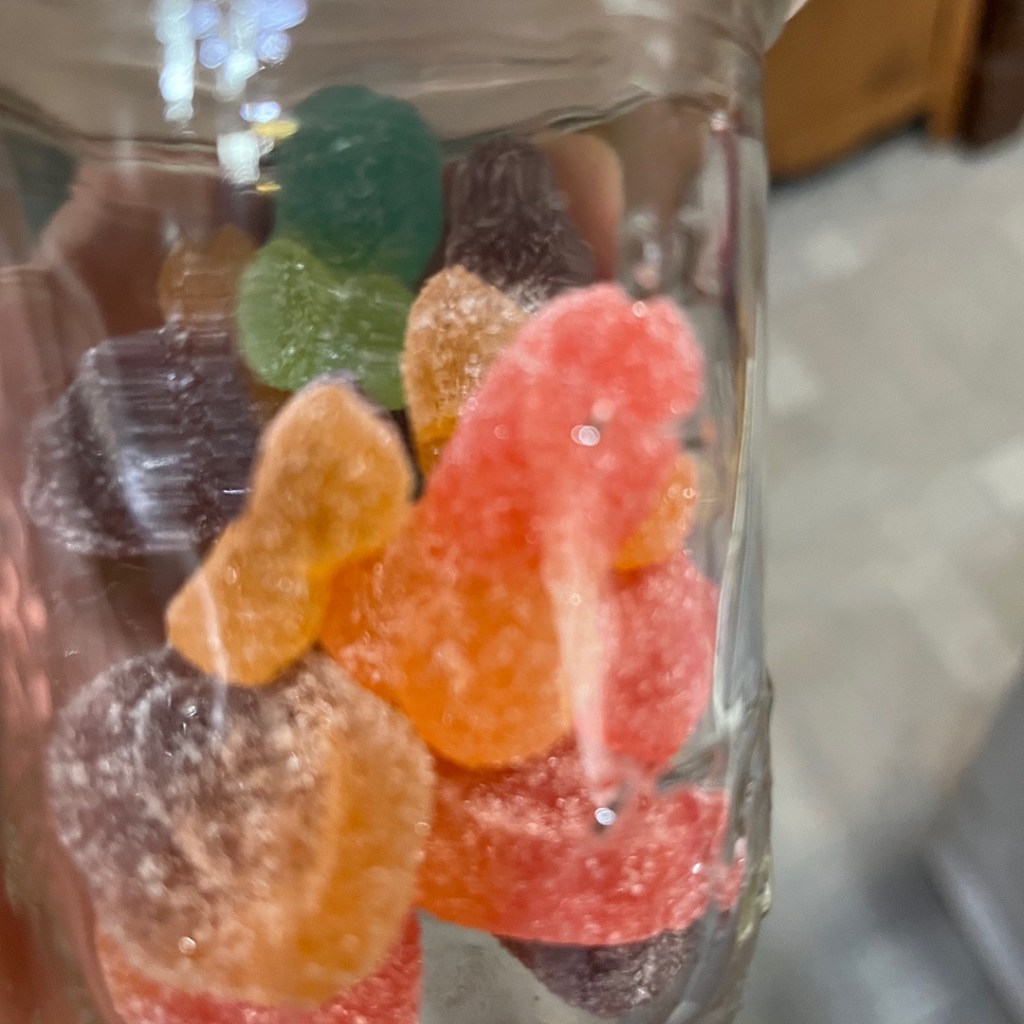
When we finished, I took the teenager to the auto parts store where the Amazon driver left her new Apple Pencil, bought us both discount Diet Cokes at McDonalds and then we headed to a place she’s wanted to visit for a long time— Exotic Dreams and Lingerie— and their neighbor. We bought some anatomically styled sour patch candies and let’s just say our dress form Esther might be donning some knotted red ropes in the future.
The teenager went to work and I finished my story for the cat book and attended a library meeting. Then the teen made a magnificent hamburger dinner with homemade garlic parmesan gourmet fries.
And we attended a foster meeting via Facebook.
To end the night, the teenager broke an ancient ceramic bowl and I dropped a mason jar very painfully on my toe wrestling with the dog gate.
“You better put in that application for a service dog.”
We hadn’t even made it half-way down our block and I already stumbled and fell. The teenager, her dog, and I had left our house at 7 p.m. on just another high-90s day. We were headed to CVS for ice cream.
The CVS is a 2,000 step walk— there and back— so we thought it would be good exercise for the whole family.
Plus, I had about $3.75 in Extra Bucks and a 40% off coupon. A pint of ice cream is $6.99 at CVS so I grabbed a whole bunch of singles and a handful of change.
The dog behaved really well on the walk, but my left foot did not— it kept twisting under me. I felt like I had to lift up my feet in exaggerated steps not to fall. Like high knees marching.
I stumbled twice on the way home but did not fall again.
The teenager made her remark about the service dog. I’ve spent a lot of time with her dog this weekend and thought… just imagine if this dog were useful.
I already did 90% of the 54-page application packet. I talked to those people I want to be my support letters (the teenager and my neighbor, as they would be my literal supports) and my references: the teenager’s father, cat foster godmother (who used to be a social worker) and my long-time therapist (whose wife is a physical therapist).
That leaves one thing: the medical evaluation. My own insecurities make it very difficult for me to ask for help. And it’s taken a long time for me to learn to speak up and out and advocate for myself.
I am nervous to ask my doctor— my family doctor of more than a decade— to do it. Part of me wants to wait until my appointment on August 19. But if he says no, that only leaves me two months to find someone else.
I think I need to call the office tomorrow and leave him a message to ask if he’d do it if I bring the paperwork August 19, or sooner if he wishes.
Again, I have doubts. What if I’m not disabled enough? I don’t want to waste anyone’s time. I don’t want to take a spot away from someone who needs a dog more than me.
But I’m struggling and I’m scared and I’m getting older. And I can do so much on my own but a dog would give me that much more.
I spent a lot of time on the application. Pretty much a whole day. What do you want the dog to do? What’s your typical day? Do you work? Do you volunteer? What are your interests and hobbies? Do you own a home? Do you have pets? Who lives with you? Do you drive? Can you handle travel? Can you take care of the dog? Are you able to train the dog?
If I can get ahold of the doctor’s office, as soon as I know someone will fill out the papers— I will tell my letter-writers and references to do their thing.
My therapist and I had a chat about it. His professional association discourages therapists from doing medical evaluations for service dog applications, but since I was asking for a reference, he was okay with that. He had no idea how many things a mobility dog could do.
He mentioned that in our current times, the emotional support animal and assistance dog phenomenon seems to be getting more and more prolific but that in my case, I’d obviously put a lot of thought into it, done my research, and found a program that could really benefit me.
Fingers crossed, I guess.
Oh, and the ice cream… it was $1.86 after my discounts. I had a $5 bill, five singles and 87 cents in my pocket. I paid exact change.
I have been trying to cook a cabbage for weeks. I envisioned fried cabbage and this fancy edamame and rice ramen I had in the cupboard from a past Hungryroot shipment.
The cabbage was bigger than my head and had a bit of mold on it, so the teenager said I couldn’t eat it. I cut a huge chunk out of the side and sautéed it anyway.
“Mom,” the teenager said, “that doesn’t solve the problem.”
I wanted cabbage. I’m the one allergic to penicillin and molds. So if I’m willing to eat it, I’ll live.
But I was not willing to feed it to Nan. I called her up to tell her the story, and I knew I’d either missed her birthday or it was coming up in the next few days and I had to ask.
I’m terrible with birthdays.
It turns out it’s today. Happy 69th, Nan! You’re still my coolest blind friend (and my only blind friend).
The teenager and I hopped in her Nissan Rogue and took Nan out to DQ for blizzards— we offered to take her for fancy ice cream but she wanted Dairy Queen.
It turned out the teenager had Avenue Q in the compact disc player and Nan had never heard it, so we listened a while and now Nan plans to look up the rest on Spotify.
Wait. What? The teenager is using discs and the old lady is using Alexa to stream music on Spotify?
In other news, I’m 85% done with my service dog application. I’m about 85% certain I want to do it. Several people have expressed support whom I did not expect.
A while ago, the teenager suggested that I needed a mobility dog and someday she would train me one.
Well, with all the mishaps and falls I’ve had since April (mallet finger, smashing into a brick wall, almost breaking my glasses falling literally on my face, falling into the bathtub and whacking my head on the ceramic tile wall and my personal favorite falling through the screen door), I did some research and thought the beautiful, dog-loving teenager might be right.
I had previously blogged about why I thought a dog would help me and I also thought a first dog should come trained and the teen, approaching young adult, could learn from this one. Just like I would.
I requested an application from two organizations. The closest to me was Susquehanna Service Dogs near Harrisburg. They sent me an application today. I have three months to fill it out.
The flow chart of initial steps for a service dog
The application requires my demographic, medical and lifestyle information, plus the financial statement saying that I will pay the $5,000 necessary if I get into the program. I need two letters of support— they need to come from people who support me having a dog and promise to support me and the dog together for the life of the dog.
I also need three references.
And a statement from my doctor.
I just thought I’d document my thought process and journey here. Because I’m hopeful, and doubtful, excited and afraid.
Do I want a dog? Can I handle the commitment? Am I the right kind of disabled to benefit from a dog? Can a dog help me be safe? Can I maintain an active lifestyle? Will they see how a dog would protect my independence?
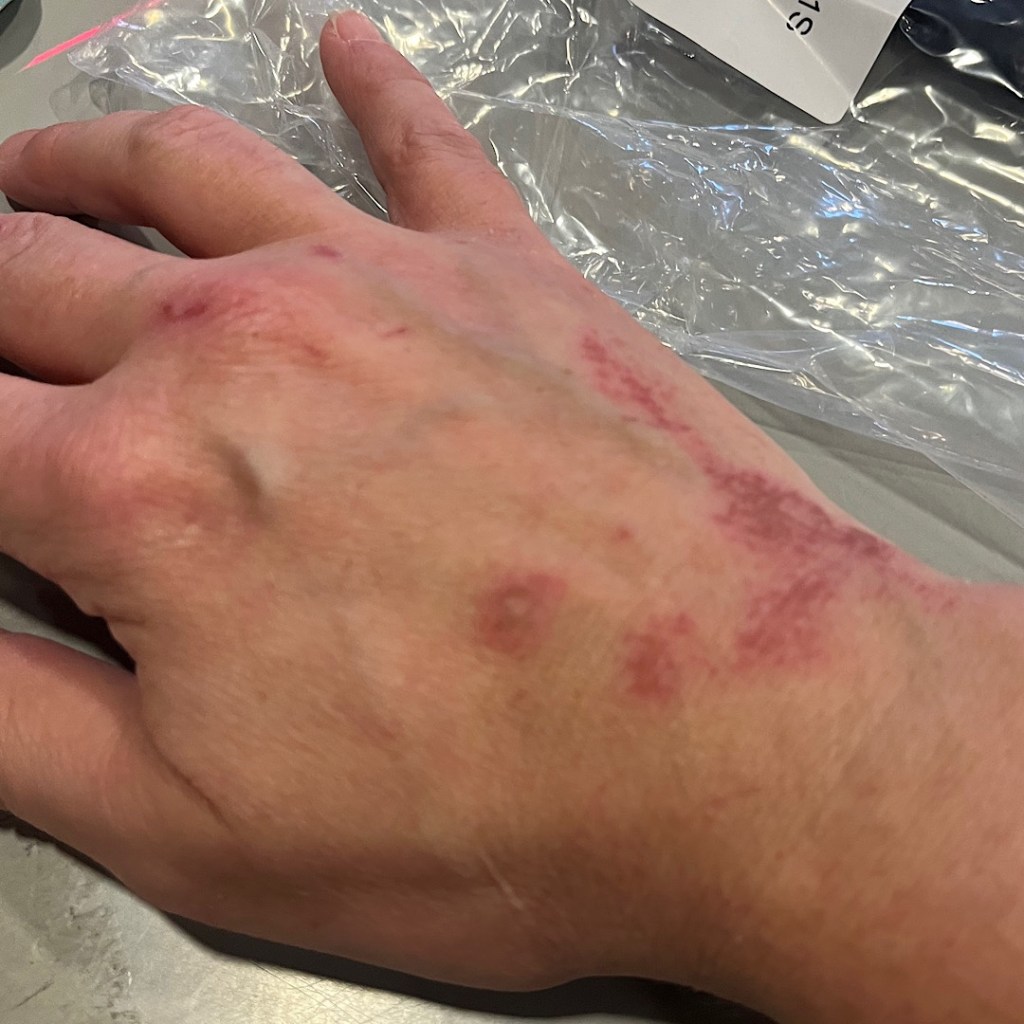
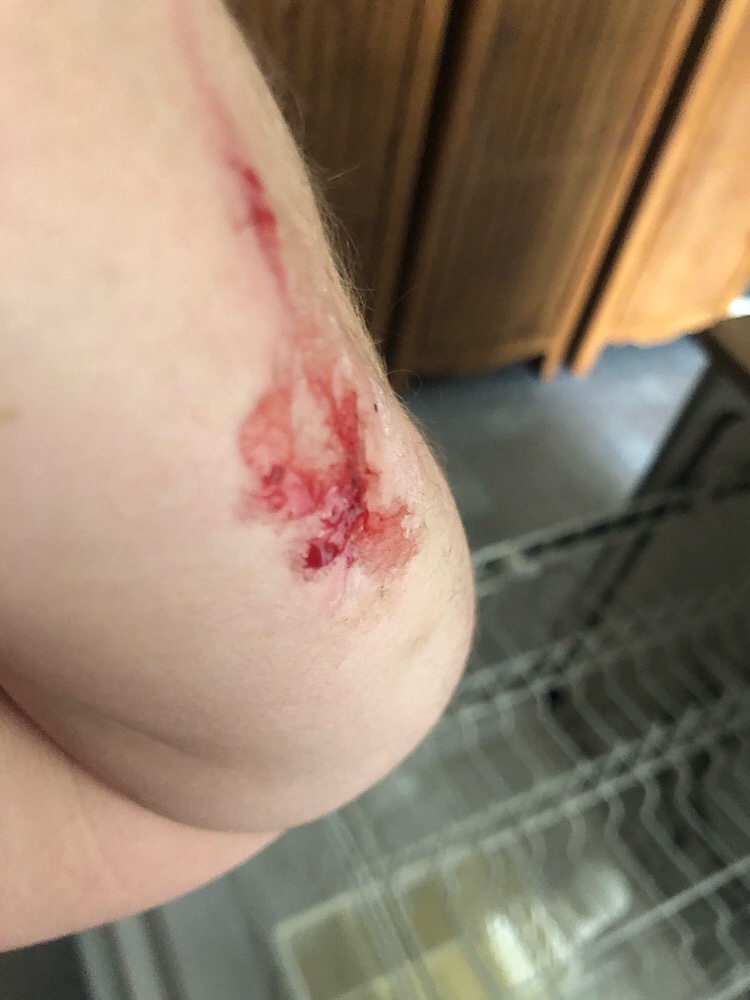
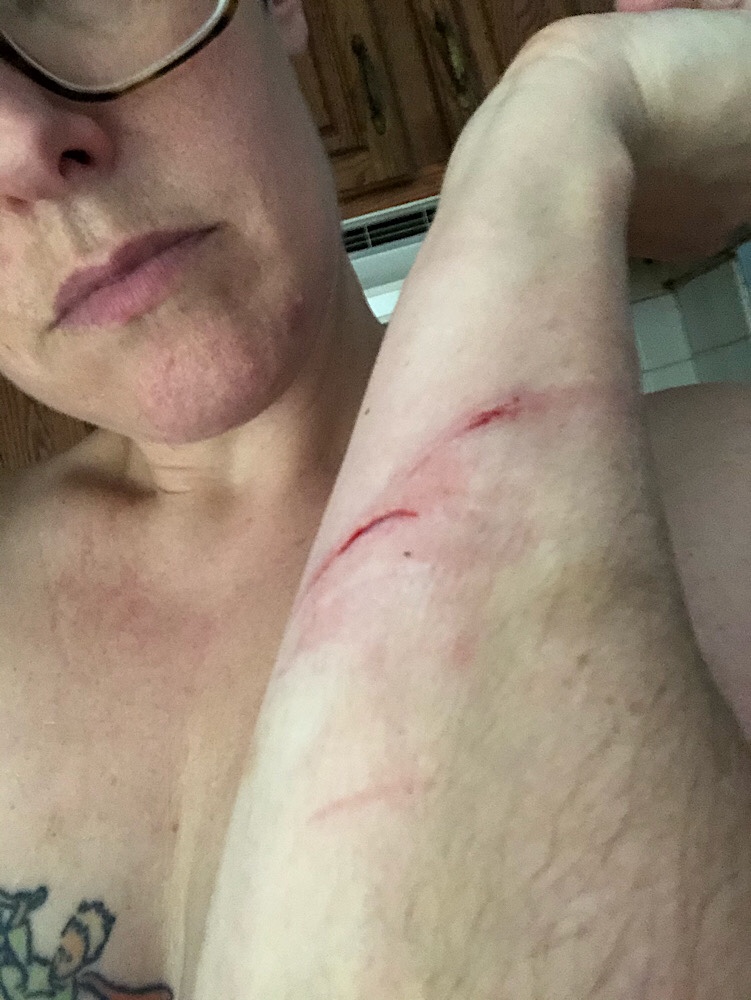
The wounds I acquired last Monday falling through the screen door (yes, there is a blog on that) have mostly healed, except where Bean Dog accidentally scratched off my scabs. The teenager tells everyone it looks like I had a fist-fight with a bear. And we had a family debate over Indian food– the teenager, her father and I, over whether I won or lost. Consensus was I won. (The Indian food came from Nawab in south Bethlehem, who were gracious hosts despite us not knowing that had converted to reservation only for dinner.)
On Saturday, I went to the gym and hit a new personal best with Andrew at Apex Training. I think it was 110 lbs on the barbell for three reps in box squats. My torso, my thighs, everything could take the weight well, except my knees. My knees kissed as I stood up with each rep. It didn’t hurt. It quivered a little, but I definitely had to plant my feet, balance the weight, lead with my thighs and hips and force those knees slowly out. The weight didn’t bother me. My own knees terrify me.
On Sunday, I performed 111% at the Stitch Fix Bizzy Hizzy, which means I shipped 555 items. Goal is 500 for a ten-hour shift, but as I reached higher numbers and saw that 555 was possible, I went for it. After all, both 111 and 555 are lovely numbers. Three prime numbers in a row, twice. Patterns and numbers comfort me. They offer a reminder that while a million permutations might exist, that there is underlying order in the world.
Yesterday I started my shift with refixes at the table in QC that has been assigned as mine for about three weeks. My table, line 4b, table 6, has a manual conveyor line on my left, which is great for my balance but bad for my finger. I hit 162, the daily minimum expectation, but barely.
I was achy, with sore feet and a sore spine, but nothing unusual for a person standing for 10 hours a day. I notice on my phone that around 4 p.m. that my walk was asymmetrical by 1%.
I have averaged six hours of sleep lately, with borrowed kittens and the high heat, so I opted to take a muscle relaxer and sleep versus push myself at the gym. My chiropractor has suggested my recent issues with falls and lack of control in my right leg might stem from overdoing it.
Between the heat wave, the full 10-hour shifts, the general aches and stiffness and the inappropriate levels of sleep, I opted to postpone the gym, take one of my muscle relaxers and sleep. I slept much better, but I could use a solid 8 hours or more.
I’m slowly learning just because I can push myself doesn’t mean I should.
That’s the thing about disability— it like a kaleidoscope of worry and health and what you can and suddenly can’t and then can do. It’s a revolving door of chaos and bodily revolt.
Don’t get me wrong. I know I am lucky. Every damn day I get up, take care of myself, go to work, pursue my side business, go to the gym, and try to do what’s right for the teenager and the pets.
I can walk, even if I may never run that 5K I dream about. I work in a warehouse, even if sometimes it’s hard. I try to listen to and take care of my body. And I am grateful.
But despite all the doctors, the physical therapy, the personal trainer (thank you Apex Training), the vitamins, the stretching, the medication and the regular visits to my lovely chiropractor, Nicole Jensen of Back in Line Chiropractic and wellness center, I still “randomly” have accidents.
I trip over my own two feet and have hands that look like this:
And I fall through the old screen door in the garage.
I burst a tendon and spend 12+ weeks nursing mallet finger from taking off my socks.
I’ve broken bones, smashed teeth, fallen down stairs (most recently at the hospital).
I did this at the hospital
I’m getting older and I’m falling more. In a few more years, the teenager will be a full-fledged young adult and won’t necessarily be here to babysit me.
So I filled out a pre-qualification questionnaire. I probably won’t be disabled enough to warrant a dog, but I have the means to pay for it. I live independently and my condition cannot be mitigated with medication.
But I can walk and function you say, and I do. What could a dog possibly do?
Help me take off (and put on) my shoes and socks
Help me retrieve objects from the floor when I can’t bend.
Help me retrieve objects when I fall.
Help me get up when I fall.
Help me up and down the stairs.
Bark to alert neighbors or people in the household that I need help.*
And I wonder if a dog could “nudge” me if it notices I am unstable and get me to fix my gait or rest.
* this one is apparently controversial — some trainers claim barking in any form is a nuisance and that a service dog should never bother/impact the general public.
Like any topic within disability, it’s complex. But with each fall I take I feel progressively more vulnerable and fragile. It feels like another option to consider.
Monday. I slept pretty decently last night despite the oppressive heat. I had performed 105% in Freestyle on Sunday in the Stitch Fix Bizzy Hizzy warehouse, folding and shipping clothes while dreaming of new sundresses for myself.
I came home a little stiff and achy, a trend that seems to be back-sliding on the recent physical progress I made but the finger held up to its first day out of the splint at work.
I also came home early, as the Teenager planned a movie night for blind friend Nan to watch How to Train Your Dragon, a movie I have not yet seen despite the fact that I made a Toothless stuffed animal at Build-A-Bear.
Nan and I were to stop and pick up dinner at Wawa and the Teenager had made homemade ice cream (that honestly was on par with Cold Stone Creamery). And everyone got their desired dish from Wawa— except me— as I wanted a pre-made salad from the grab and go cooler and apparently the cooler was broken. The employees were removing all the food and the floor around it bore wet floor signs.
So I ate leftovers out of my fridge.
The audio-described version of the movie was intense. The poor man doing the description didn’t have time to breathe.
I was in bed by 8 p.m. The cockatoo had issues at 2 a.m. But all-in-all a good night.
At work today, I was tired, hot and a little bored at my regular table in QC. I did 101%.
I’m still have issues with a strange burning and tightness in my right thigh, and dealing with that is causing lower back pain.
I got home from work and tentatively poked my head around the corner in the garage— checking to see if dog was in the yard. She was not.
I walked up the stairs from the car bay to the main room of the garage. Walking across the big open space in my garage, I tripped over my own foot and fell. I did some sort of corkscrew dive and fell backwards through the screen door to exit the garage then skidded across the floor. I scraped my hand, my knuckles, my elbow and I think my leg and knee.
But then I still went to the gym. Under Andrew’s careful eye at Apex Training, I did my workout. I felt better than when I arrived, even if I am still a little stiff and achy, but such is life with cerebral palsy.
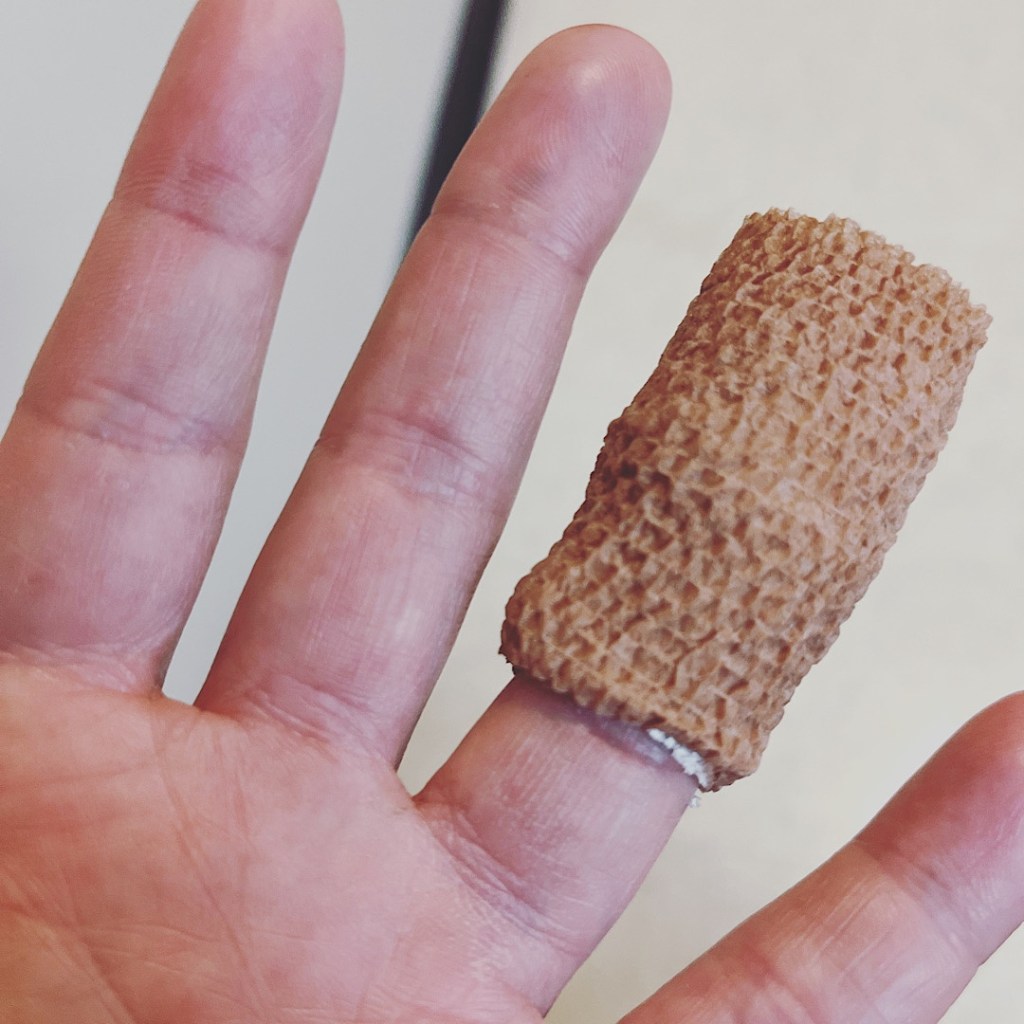
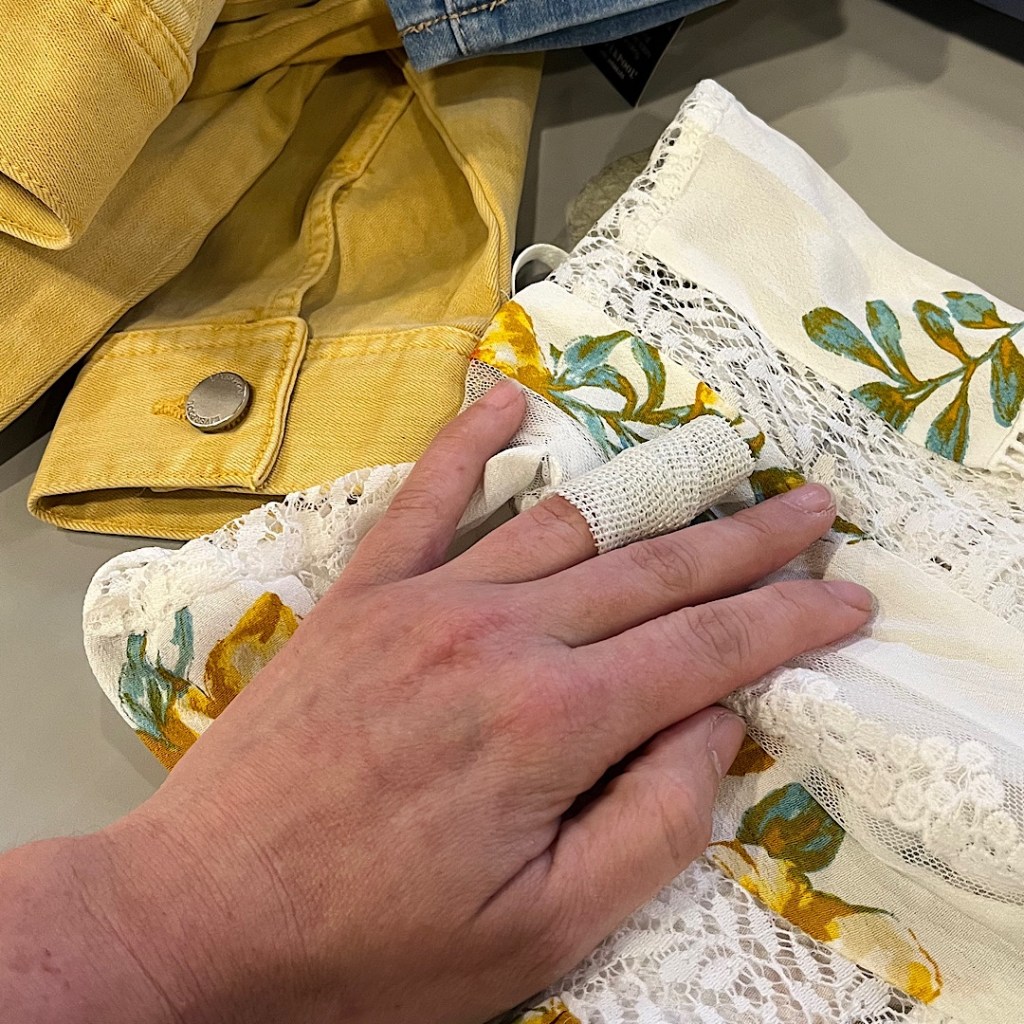
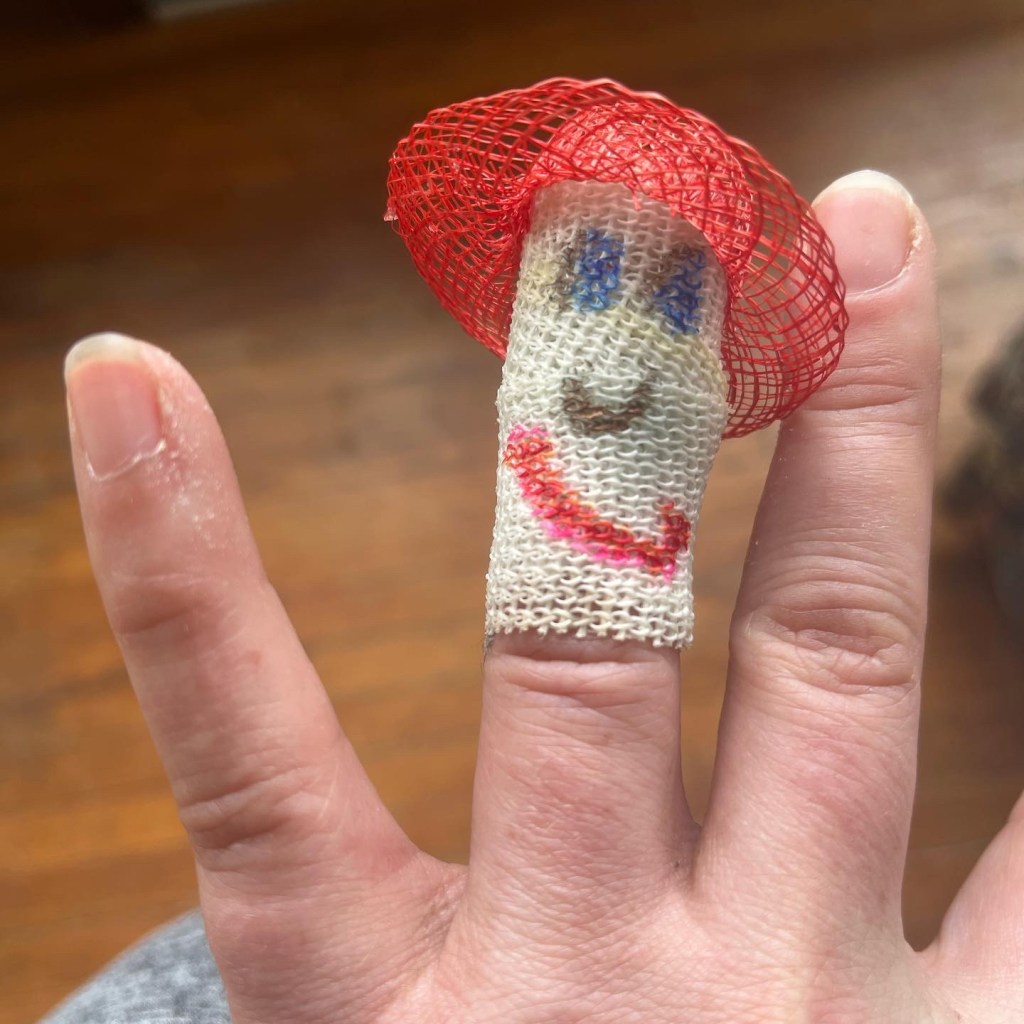
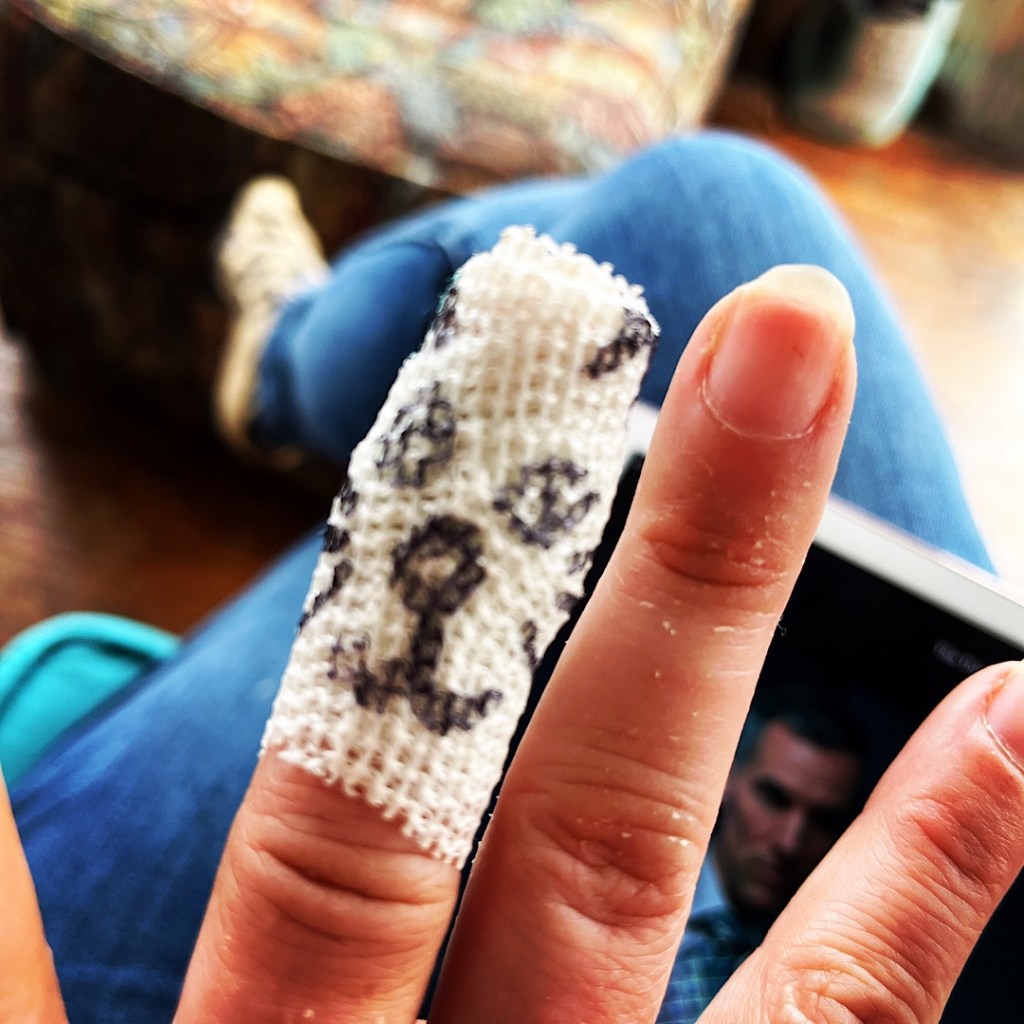
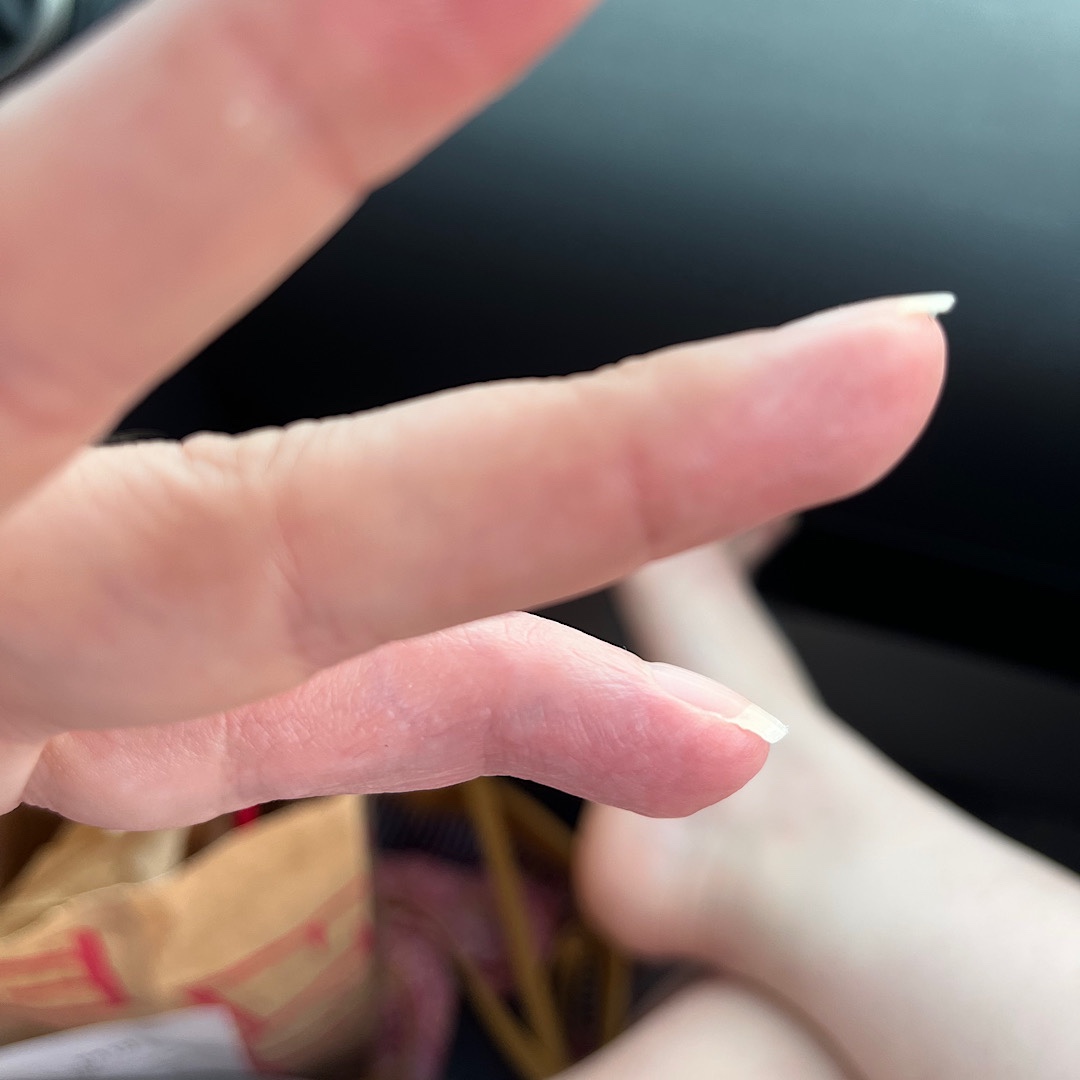
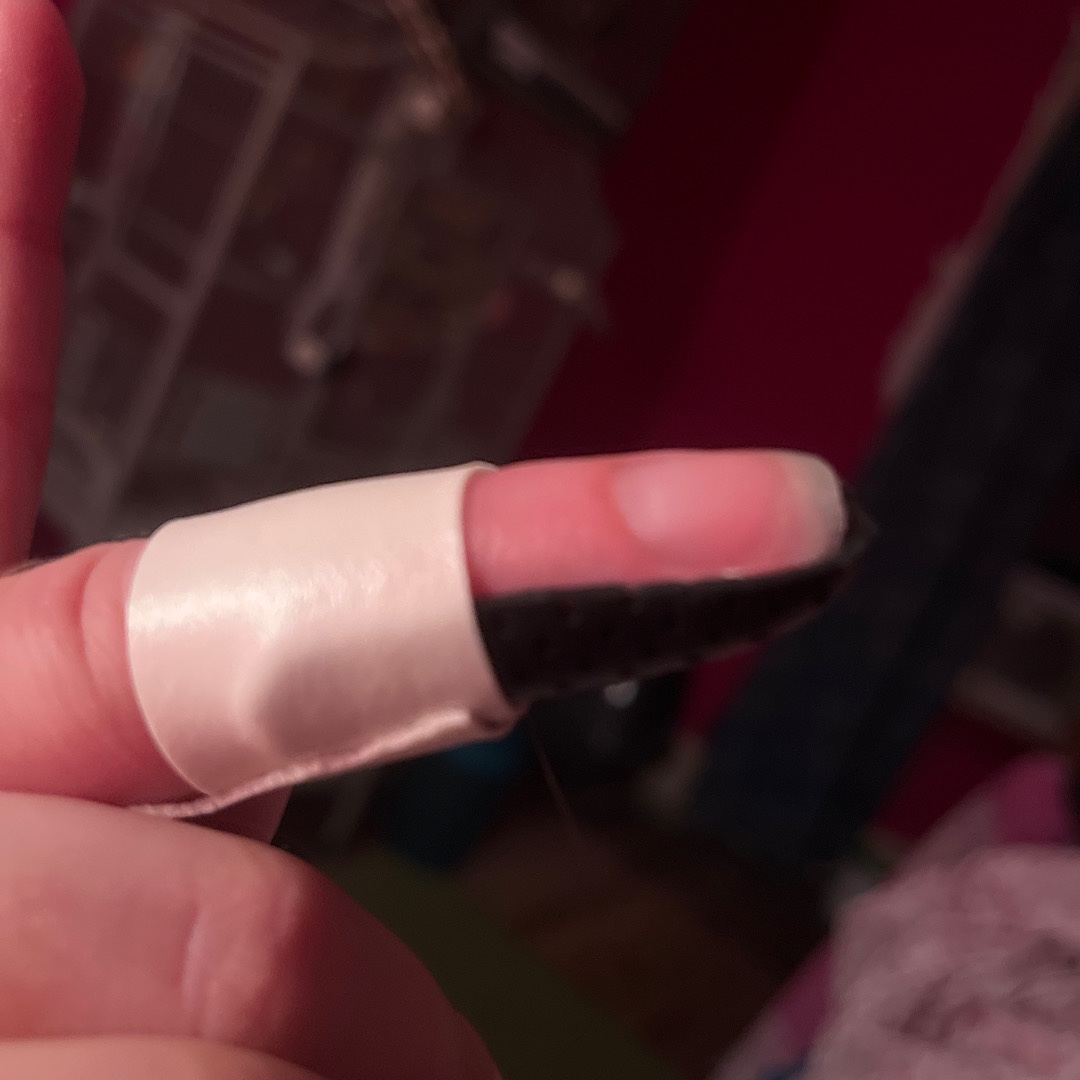
This week marked my 11th week in treatment for my mallet finger. Almost three months caring for this injury. 9 weeks in a cast. About 9 days in a splint 24/7. One week in a splint most of the day, taking it off 5X a day for an hour.
This morning was my third had rehab appointment since the cast came off. They also did the casting so I had two previous visits with them.
Typically, I go in, they make me bend my fingers and they measure everything, tell me the following week’s directions and send me on my way.
Today I went in, the had me heat my hand for 15 minutes and then I got a finger massage. The therapist measured my finger and made me a new night-time splint and told me I no longer need to wear the splint during the day.
Because I do so much work with my hands, if it starts to droop or just bothers me, I can splint it here and there for an hour.
I have another appointment with my hand surgeon July 27, so although the general guidelines say I only have to splint at night for 2 more weeks, it is recommended that I wear it until I see my specialist.
Other wisdom from my therapist as we chatted today:
Completely immobilizing a mallet finger for six weeks is the minimum in his opinion.
The finger can continue healing for an additional six months after splinting is complete. He recommends using individual judgment and awareness of the finger to decide how long to splint at night.
Massage the finger, especially the joints for five minutes several times a day.
Understand that the finger may never resume its former shape/posture/movement but that the end of the finger itself doesn’t have that big of a role in hand function.
Keep bending the fingers several times a day, gradually working into a fist.
Today was my last official day working with a disability accommodation in the Stitch Fix Bizzy Hizzy warehouse. It’s Sunday, tomorrow is the Fourth of July, and I had a helluva time getting out of bed when the alarm went off at 4:15 a.m.
So I didn’t.
I was in the middle of an anxiety dream where I was with an old friend that cut off ties with me a decade ago… and I think a few people I’ve lost were in that dream.
I reset my alarm for 4:45 and started my day a little off and then the Keurig decided I only deserved half a cup of coffee. As. If.
Today was my first day working in my new splint. (If you didn’t know I lost the first one in my car, you can read that story here.)
I’ve suspected since Friday afternoon that my new splint was too tight, but I didn’t confirm it until I started to see marks on my finger, deep ridges, yesterday.
During work today it got pretty unbearable— so when they let us out early I came home, heated the teapot and dropped the custom splint into a bowl.
I poured the boiling water into the bowl and reshaped the plastic. It’s not nearly as perfectly molded as the professional job, but it doesn’t pinch my finger.

















 Angel Ackerman