Arriving in Sana’a, Yemen

20140430-093722.jpg

I recently spent the day in Yemen. Not something your average American would contemplate doing these days. It’s not even something simple to do as the embassies here in the United States won’t issue tourism visas. In order to go, you have to find a travel agency to sponsor you and do the paperwork for entry visas and receive your full visas upon arrival at the airport.

We visited Sana’a, Yemen, as a break from our travels in Djibouti. Our host was Arabian Voyages Travel (www.ArabianVoyages.com). We literally spent a day. An unfortunately timed day as an American drone strike had happened about 48 hours before coloring some Yemeni opinions about Americans and our foreign policy.

My friends used words like ‘courageous’ and ‘brave’ when discussing my plans. I wondered if ‘naive’ and ‘stupid’ might be a better fit. The Yemen day trip was completely the brainchild of my traveling companion who thought 1. a week in Djibouti could get monotonous (he was wrong, I think I could stay there forever) and 2. I needed to see old Sana’a, one of the oldest living cities in the world inhabited for about 2500 years (he was right).

Air Yemenia proved to have the smoothest flight out of the multiple plane trips I took that week. I have issues with my ears and the pressurization of aircraft and Air Yemenia caused me the least discomfort. Plus, they provided a light meal service on a flight only 45 minutes long. Those flight attendants really hustled.

Our entry into Yemen went smoothly, and our guide, Mohammed, met us at the airport door. It was about 11 p.m. so I don’t think the reality of culture shock had set in, though the difference in language intimidated me. In Djibouti, one hears French, Arabic, Somali and occasionally English. Yemen was the first place I ever visited where I did not speak the language.

We climbed into a small white taxi, listening to local music as we drove through Sana’a. Mohammed passed us each a bottle of cold water as he and my companion discussed our visit, the recent drone strike and kidnappings. It was during that car ride that it was suggested that if anyone spoke to us, we should claim to be Canadians. Just in case. We were also not to go anywhere alone, as the travel agency would vouch for our whereabouts upon exiting Yemen.

My companion had warned me that Yemeni’s never sleep. Sure enough, even at such a late hour, the shops of the city were lit. Haircuts were in process. Groceries being procured. It was probably more fully alive than Manhattan would be at a similar hour. We drove into old Sana’a and the electricity was out. The old buildings became an unlit maze connected by narrow streets. We entered a gate, walked through a courtyard, and found ourselves at a quaintly lit reception desk.

From there we climbed stone stairs of unequal height to what would be in the United States the fourth floor. The door to our room resembled a cross between something from a castle and a submarine as we and to step up and duck at the same time to get inside. We opened the windows and shutters to get some air. A single fluorescent bulb powered by a generator lit the room. Even with such dim lighting, the room gleamed with high ceilings and stained glass windows. The car headlights from the street below danced on the ceiling in a kaleidoscope pattern.

I collapsed into bed. My traveling companion picked up the English language leaflets on Islam for nighttime reading. He read some of it aloud until finally the light went dead, some unseen figure had declared bedtime.

We could see nothing but darkness and shadow from the window. I finished my water from the car ride and stared at the missing view. The sounds of life out there matched those of any other city and I knew in the morning there would be an amazing view upon waking.

Our first wake-up call came with the early call to prayer. I had grown accustomed to them in Djibouti but here… It sounded like the mosque was right outside our room. My traveling companion closed the windows, as it was not quite dawn, and we went back to sleep.

When the sun bathed our room, we stirred. I again stared out the window. The buildings, so old, stood like sandcastles decorated with icing.

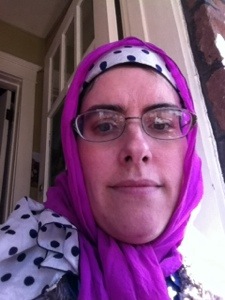
We dressed (I fashioned a hijab) and went down for breakfast in a different courtyard. The meal consisted of local bread (like a cross between a pita and an English muffin), a couple varieties of cheese, butter, jam, tea, and yogurt with the best, richest, most vibrant honey I’d ever eaten. The other patrons of the hotel were European. A family including two children. I’ve forgotten whether they were Slovenian or Armenian or something else.

If I had been nervous about visiting Yemen, it faded.

More about our tourism later…

Finding my rhythm in Djibouti

Yesterday we traveled to Yemen, courtesy of Arabian Voyages Travel. We arrived in the middle of the night Thursday (seeing a variety of shops still open as we breezed through town) and left 24 hours later. I had no idea what to expect of Sana’a. I have never really studied Arab culture except in the context of French colonialism.
We were sponsored for travel by our agency, and we acquired our visas with no difficulty or delay. When we got into the taxi with our guide, he handed us each a bottle of cold water. At that moment, despite the proximity of the American drones and the warnings you hear about traveling in a conservative Muslim country, I felt immediately at ease. I also realized, after several days now in a land where heat is stifling and water limited, that if you offer me a cold bottle of water I will trust you implicitly. More on that later. Now back to Djibouti.

This morning, we went to bed at 2:30 a.m. (midnight flight) after a disappointing attempt to FaceTime with the family. I had hoped to use the hotel internet to contact them, but when planning to get the family together at a certain time, my American sensibilities did not factor that the outside area where M smokes as I play with wi-fi doubles as a bed for one person and the other place where internet is available, the lobby, also serves as a sleeping space for the person working the desk. The man outside slept on two tables pushed together with a flattened cardboard box as a mattress.

So, M and I woke about 8 a.m. to find the hotel out of coffee and croissant. We sat there with our Lipton tea and bread and the server went to the store for croissant. We then headed to Bunna House for coffee. We had heard yesterday from a cab driver that everyone knows the two white people who’ve been tooling around town. The coffee house (bunna is a green coffee that they roast, as the young woman at the Ethiopian restaurant showed us) was full of a wide range of people. At this point the staff knows us and smiles as we head in every day at some point.

Next came the ATM machine. I had been having issues getting money. It declined my requests. So a local explained to us that you have to use Fast Cash. You cannot enter your own amounts. Today, I used the Djiboutian Franc fast cash button. AND IT WORKED! I felt like I had played in Atlantic city and won (even though I completely understand it was my money the machine spit out).

We did some shopping. That in itself is an experience. For clothing, there is a pile of inventory on the table. If you don’t see what you want, the shopkeeper pulls out this giant plastic bag and starts piling his additional inventory on top of the table. If you still don’t see what you want, you tell him and he will go look for it.

I also needed stamps. The tourist office instructed us to visit the tabac. Weaving our way into a crowded group of coffee drinkers, we came to a high wooden counter where an old African woman, shriveled with gold teeth, sat at a desk with her cash box making change as quickly as her long, bent hands could do it. When we asked for stamps, once the crowd thinned, she crossed to the counter. Opening a big drawer, she rummaged within and pulled out a small plastic bag with Djiboutian francs and two stamps. She carefully unknotted the plastic. She pulled out the stamps, which had been stored decorative side in. She warned us that these were not for letters, only postcards. We paid 100 francs each for the two stamps, face value 70.

Stamps found, we went for juice at Cafeteria Sana’a. We also do this every day. Ginger is my favorite, but since our arrival the first day, there has been no ginger. It’s also a place where they have grown to know us. The juice— I got cantaloupe again— comes in a frosted mug and hits the spot when the humidity has all but melted you into a puddle.

M and I don’t design many plans for our travel, but we always develop certain routines. There’s something about a daily trip to the juice bar or an evening stop for coffee that allows me to watch the city and find a place for myself in its rhythm.

20140426-133821.jpg

The Beauty of Djibouti

Day Five.

The time passes by so quickly, with each day bringing some sort of adventure. It could be simple, like the juice bar at Cafeteria Sana’a not having the ginger juice tasted on the initial visit and trying first mango, then cantaloupe, and also lemon-mint on each subsequent stop. Some adventures are frustrating, like when several atm machines refuse to give you money and the tourism agency and official money brokers have different ranges of American dollar bills they will accept. Remember when the United States added all those colors to our boring green money? Well, Djiboutians don’t like old money. Some adventures are hysterical, somehow causing the hotel room chair to fail when sitting.

The environment remains fascinating. People are surprised to see American tourists here. Not surprised to see Americans as we have quite the military presence. French workers and military are here, in addition to a Japanese base, though I have seen only a few French families (late in the evening in the classy restaurants) and no Americans nor Japanese.

The heat (90 degrees F) and humidity (85%) have not bothered me, and I feared it would be unbearable. I have consumed 2-3 liters of water a day. The town shuts down from 1-4 every day to keep everyone from melting. So this is our quiet time where we have snacks from the grocery store, drink more water, sit on the patio (fans blazing), M smokes, and then we return to our hotel room to cool.

Breakfast is croissant or other bread with coffee. Mid-morning we typically stop for juice. Yesterday we had lunch, primarily because we did a tour excursion to Lac Assal and the guide handed it to us. For dinner, we tried the pizzeria in the hotel (where the staff works very artfully on the product though they should have cooked it longer). Then we visited an Indian restaurant recommended by another hotel guest. That place had a delightful ambiance from the moment we entered. Le Santal features Indian and Chinese cuisine and pizza, the international food. (We returned there a second time, prompting the owner to chat with us and give us baklava.) Next, we had Ethiopian, another wonderfully decorated place, but neither M nor I really favor Ethiopian cuisine. With the broken right hand, it presents a bit of a hand-eating challenge. That said, tonight we shall delve into Djiboutian.

I am positively stunned by the geography, especially after our trip to Lac Assal. We would both like to go to Lac Abbé but are reluctant due to the ten hour drive. Tomorrow we will trek to Ile Moucha. Yesterday we visited a variety of places along the way to Assal. I will hopefully break those down later. I would like to save that for the photos and after I pick up a Djibouti book I saw in the store. Except I needed about 6,000 Djiboutian Francs and I only have 4,000 and the ATM refuses to give me money. By the time we figured that out, the shops had closed for 1 p.m. break. The book will at least provide correct spellings.

The tour guide, driver and company did a fantastic job with our excursion. If you are every in Djibouti, call Daniel Jean at Bambu Service Touristik. What I enjoyed, in addition to breathtaking scenery and warm water pools and the salt lake, was seeing the breakdown of how people live. You can see areas of Djibouti-ville that seem like your average developing (“third world”) city, and then there are areas for industry (I passed the big Coca Cola plant, one of the main employers here) and I’d like to believe we drove by some lovely French villas walled off from the rest of the city. In that respect, colonial ideals may still be in full bloom.

The roads are primarily straight. Road signs point to major cities or even the next country. Nomad villages are everywhere, as people move to find water. In some places, the huts are made of wood and metal, others sticks and tarps, and yet in what I assume are the more stable villages, the nomads take the volcanic rock and build their shelters. Because of the severity of drought here (and even our hotel often has water shortages when you turn on the faucet and nothing comes out), some international aid agencies (I believe Japanese UNICEF is one) have started delivering 50 gallon drums of water to these villages.

We ate lunch near the Salt Investment Company at Restaurant Randa (though we packed, courtesy of the tour) which was in the middle of, if I remember correctly, an Afar nomad village. Cats dined with us and of course goats meandered by. Goats are a major cattle animal here. No agriculture and minimal greenery. Goats are perfect for meat and milk and as everyone knows, they eat everything. Camels also, and occasionally donkeys, but not among the families near Restaurant Randa. (I also assume that the men work at the salt operation.)

I had the opportunity to use the nomad toilet facility, which while primitive by Western standards, was quite nice and included a bucket of water and water bottle scoop for cleansing. I mention this because I think it’s very important to understand that nomadic people don’t have a lesser existence than we do. Sometimes I fear that Western ideas of international development focus too much on issues like infrastructure and unemployment and not enough on basics like clean water and education.

The Afar nomads may not have jobs, electricity or running water, but why do they need it? They follow the rain and the water to feed and care for their cattle. Disease and malnutrition are of course serious for any society, especially among people with so little modern resources. But I envy one element of their simple existence: they have survival skills that I can’t fathom. If suddenly my bank cards, car, refrigerator and two-story house disappeared, I would have no clue how to build my own shelter out of sticks and stones. I could probably care for a goat, but slaughter it? No clue. Who, in the end, will endure?

20140423-144113.jpg

20140423-144202.jpg

20140423-144235.jpg

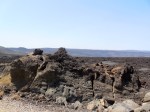
The cat photo is from the restaurant, but the black stone structures in the background are homes.

20140423-144015.jpg

And the facilities…

20140423-144545.jpg

20140423-144629.jpg

Short trip update

20140416-183059.jpg

20140416-183113.jpg

20140416-183125.jpg

20140416-183136.jpg

It’s the eve before the start of the big trip– Baltimore to DC to Paris to Djibouti to Yemen and home but this time coming home via Amtrak from DC to Philly.

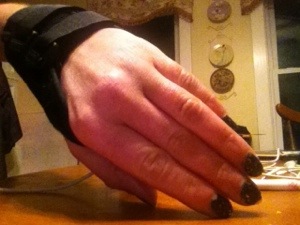
My cast came off yesterday but my fifth metacarpal on my right hand is still broken. For travel, the doctor put me in a wrist brace 24/7 with instructions not to use my hand.

Boo! I wasn’t expecting to go bowling but I thought I could have some function.

I am packed. I got a haircut today and played with tying my hijab one-handed.

I usually travel with my mother-in-law’s Nikon Coolpix S3000. It’s a thin camera with a rechargeable battery. The poor thing won’t turn on. She bought me the L26 hoping it would match hers but it doesn’t– it takes double A batteries which makes it too fat to fit in a pocket and the flash takes forever to charge. My girlfriend lent me her S5200 which is thicker than the S3000 but smaller than mine.

En route: Packing for Djibouti

20140415-114223.jpg

I already called my banks. I emptied my wallet.

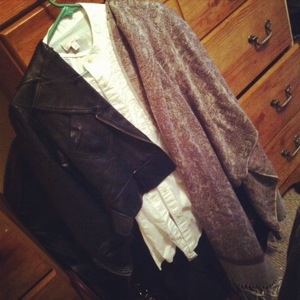
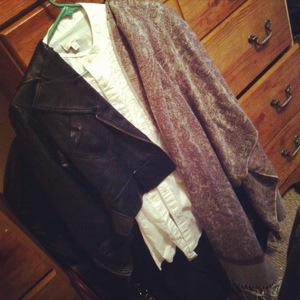
I selected my travel outfit: a white camisole with gauzy white tuxedo style shirt (long sleeved), fake leather cropped black jacket (washable), lightweight black pants, silk scarf and Velcro “Mary Jane” style sneakers.

I will begin in this outfit Thursday a.m. when my family drives to the suburbs of Baltimore to have breakfast with my college roommate. We need to be in DC by noon to head to Dulles for my afternoon flight to Paris.

My traveling companion and I arrive at CDG in Paris at about 6 a.m. Friday, which will be midnight our time. Our plane to Djibouti leaves in the middle of the night Paris time so it’s possible I will wear this outfit for more than 48 hours.

So what’s in the current draft of my suitcase?

Carry on
Change purse
Business cards
Wallet
Notebook
Pen
Feminine supplies
Two pairs underwear
Socks
Boxer shorts
Camisole
Passport
Vaccination record
Paris map
Ibuprofen
Sunblock
Chapstick
Baby powder
Soap
Hand sanitizer
Alcohol wipes
Meal bars
Chargers
Laptop
Disposable toothbrush
Deoderant
Long skirt

Suitcase
Shampoo
Liquid soap
More listerine
Barrettes
Toothbrush
More meal bars
More hand sanitizer
Boxer shorts
Underpants (many of which I will toss when dirty)
Socks
Sandals
Ankle length skirt
Khakis with lots of pockets
Three t-shirts
Bra
5 relatively lightweight long sleeve shirts
Plastic bags
Dryer sheets
Wipes
Cooling wipes
Ethiopian scarf
Messenger bag
Pens

Why I’m not excited

Everyone keeps asking me if I’m excited to leave for Paris. I’m in Paris for a day between flights en route to Djibouti. It makes me chuckle because I’m not really traveling to Paris, I’m traveling to Djibouti. But the average American is much more familiar with the idea of Paris and I suppose Paris is easier to understand.

Last week when my traveling companion and I received our visas, I felt a thrill.

And when I check the weather… It’s 90 degrees in Djibouti with an 18 mph wind and 62 percent humidity that creates a heat index of 100 degrees. That’s a tad scary.

But no. Now, I’m not excited.

Three weeks ago today I broke the fifth metacarpal of my right (dominant) hand. This has provided some challenges and some frustrations. Many of these challenges I believe I conquered but certainly the manual can opener still stands between me and that tuna fish sandwich.

So what makes me excited is the fact that tomorrow the doctor’s staff will remove my rockin’ red cast.

I did attempt to pack yesterday and I’d like to review my choices today, but the cast makes folding near impossible. I may just save that until tomorrow. I also broke the camera I planned to take with me so that lead to some scrambling. I will practice my hijab today. I have booked a haircut for Wednesday.

When I know the status of my broken hand, then my attention will shift to the trip.

Then I shall be excited.

20140414-104100.jpg