Review: The Art of Falling

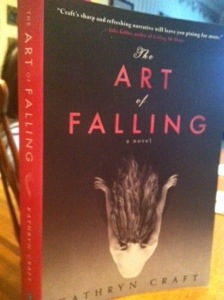
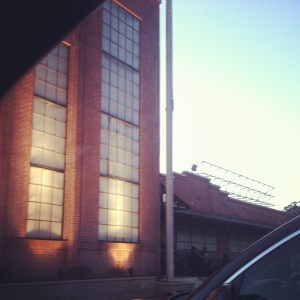
I have waited for Kathryn Craft’s The Art of Falling for almost a decade. I have watched her score rejection after rejection, keep trying, keep editing and keep pitching. Kathryn is the reason I took on a leadership role in the Greater Lehigh Valley Writer’s Group and she’s also a model of diplomacy and character that I emulate.

Plus, I think we have similar standards for our writing.

So I have patiently waited for Sourcebooks to release her first novel, represented by Katie Shea of the Donald Maass agency.

My husband and daughter attended her Lehigh Valley Launch Party at Moravian Book Shop in Bethlehem, Pa. I was home with a cold. But they brought me the book! Signed, pristine and new… And I read it in two sittings.

It was a lighter and easier read than I expected. I’m not sure I ever liked the protagonist/heroine Penelope Sparrow but I felt she was real, her actions, situations and reactions true to what a woman in her place would do. It wasn’t as dynamic as I expected. Changes weren’t huge and scenes weren’t big, but this is also part of the reality.

The connection Kathryn explores between body image and self-esteem is an important one to me. I write about the high fashion industry and I have a supermodel character (Adelaide) slightly younger than Penelope Sparrow who also struggles with these body issues. Although I must say, I applaud Penelope Sparrow for overcoming hers. My character doesn’t fare so well.

I adore Kathryn’s use of secondary characters and how she weaves them into her story to the point where they become inextricable. That, to me, is the gauge of a well-crafted story. Nothing extra or just there.

Oh, and did I mention, the cover is breathtaking?

20140203-092511.jpg

Unification!

Image

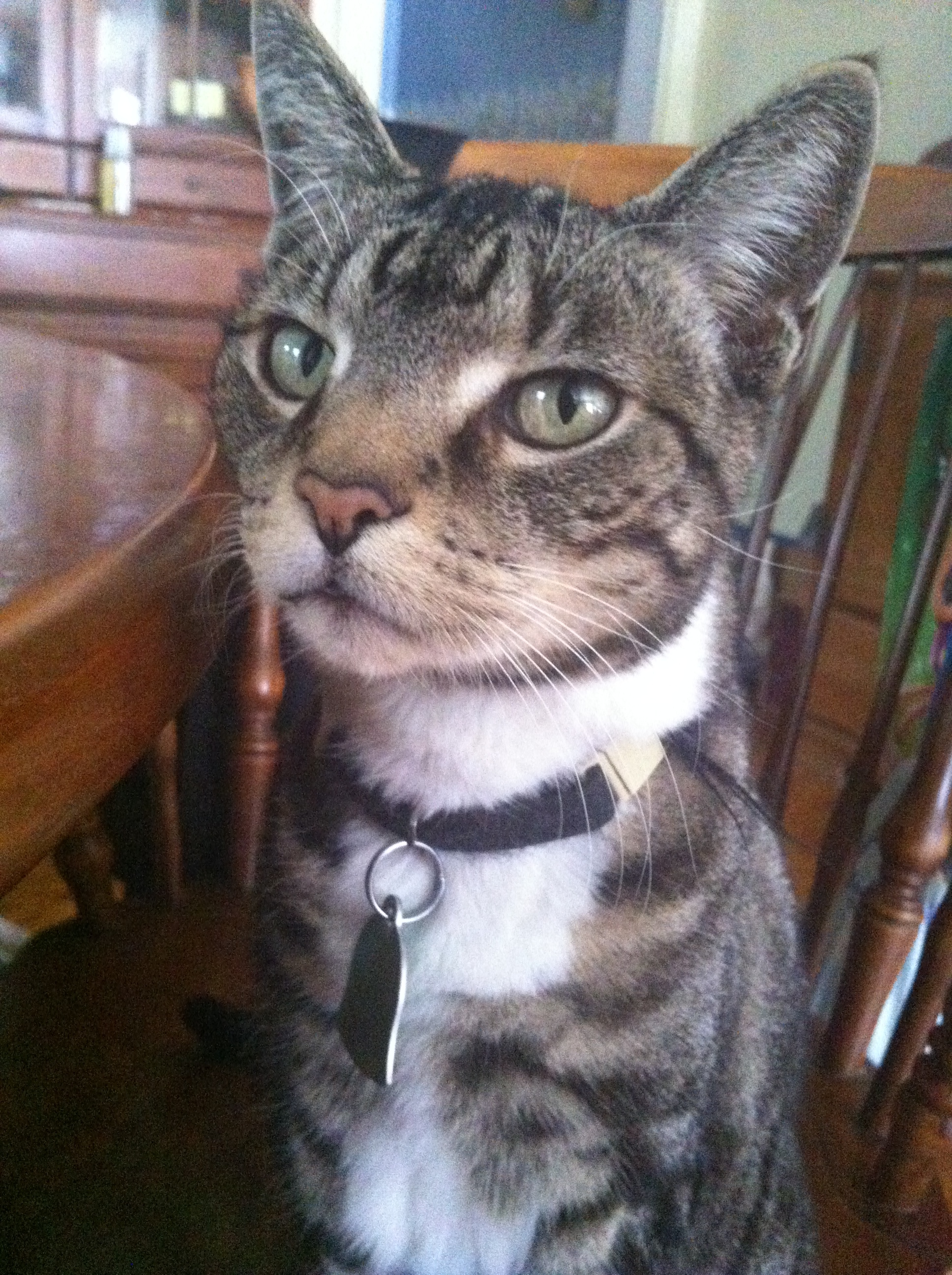
Meet Zoot. She’s my life advisor, also known as my old grouchy cat. When they termed the word “crotchety,” they had her in mind. She’s been my companion for nearly 15 years. 

As Zoot can tell you, I am a complicated person. She will also say I am difficult because I did not share my tapioca pudding or my turkey at dinner last night.

But the reality is, I have many interests, many commitments and a part-time job at my local Target.

I am also hoping to pursue some of my neglected interests this year (fiction writing, translation, photography). If you’d like more on my literary endeavors, here is the place to look:

http://www.angelchatting.blogspot.com/2014/01/false-starts.html

I wrote last week about starting a new novel and the importance of the right start. Before that I was working on a review of Robert Root’s memoir Happenstance for Hippocampus (online) magazine.

If you’d like something yummier, I made a scrumptious simplified version of lamb vindaloo. Recipe available here:

http://www.angelfoodcooking.blogspot.com/2014/01/lamb-vindaloo.html

And if you merely want more photos of cats (or food), I encourage you to look me up on Instagram: angelackerman.


Blogs

My friends have mentioned that this portfolio/ web site isn’t quirky enough to encapsulate my personality and versatility. I’m still sorting that out. Until one of those friends nails me to the wall and imposes deadlines on labeling and displaying such quirks, progress may be slow.

I have decided to use an older blog of mine to chronicle current projects:
Chatting With Imaginary Friends

Today’s entry is mundane but sets a stage.

http://bit.ly/1kb3snZ

Another facet of my life that doesn’t appear on http://www.angelackerman.com is my cooking blog, which may be my most prolific and longstanding online work.

Angel Food Cooking

Health: Gluten-free cooking workshop at Warren Hospital (2004)

WarrenCookingThis article stemmed from a cooking workshop/presentation at Warren Hospital in Phillipsburg, N.J. It occurred almost ten years ago. The host was the executive chef of the hospital, Mike DiCenso. At the time, gluten-free cooking, Celiac disease, gluten intolerance and the connection between gluten and autism/sensory disorders was not quite as mainstream a conversation as it is now.

I pulled this article out of deep storage. The information in it remains pertinent, if not more relevant than it was a decade ago.

YouTube writing advice

One of my writing friends has a daughter at one of the local arts-themed charter schools. My friend spearheaded a NaNoWrimo event for the kids and asked local published authors to come to the school or Skype with the students. My friend and her daughter asked me to get involved. The plan is to submit short videos to the teachers. So, I started a YouTube channel.

We only have a weak internet single in one room of our house and of course, it’s our messy craft room. My hope is, once I get more comfortable to start doing these on my new laptop in better locations. They are completed unscripted. And my high school English teacher previewed the “write what you know” one and implied that I make the facial expressions of a Muppet.

I did the editing myself and am using my old MacBook circa 2005 for filming, video editing and uploading.


My daughter saying farewell

My daughter saying farewell

I apologize if this image offends anyone. But I find it beautiful and I wanted to share.

My husband’s 94-year-old grandmother died last week after a long battle with cancer. For the first year-and-a-half she did well, a round of radiation with my mother-in-law as her live-in caregiver and nurse. After her birthday this year (July 4), she retired to her bed and did not leave her bedroom again.

With the help of hospice nurses, my mother-in-law cared for her as if she were a newborn baby. I wish I could say it was peaceful as her obituary claimed, but the last two weeks were not. I will spare the gruesome details and say only that I now understand how zombie legends started. Apparently, my grandmother-in-law’s heart kept going even when her body had begun serious decomposition.

Nana died at home. This was the third and final great-grandparent that my daughter had. The first passed away when she was five or so and we brought her to the viewing with one brief glance into the casket. The second followed a year or two later, and this time my daughter heard more about the choices that had to be made about end of life care and “pulling the plug.”

This time, my daughter, at nine, helped care for her dying great grandmother and attended the whole funeral– riding in the limo with her grandparents, attending the whole viewing and funeral, and even going graveside. (My daughter sat beside the grave with her grandparents and boisterously asked, “Are they going to drop her into that hole?” The pastor laughed.)

My mother-in-law had asked for three pink roses tucked into Nana’s hand– one for each of her three great-grandchildren (all girls, the other two are in their twenties). The funeral director knew Nana well and slipped a peppermint into her fingers as he remembered her always having a hard candy to share.

I found so much beauty in that day. The sun-drenched October day turned out perfect, sandwiched between cold, rainy days. My daughter did such sweet things, like helping her aunt arrange the blankets around Nana before they closed the casket.

But this photo summarizes it for me: My darling baby, kneeling before her great-grandmother for a farewell, using those quiet moments before the public calling hours. Yes, you can see the body, but it’s almost indistinguishable. Bathed in light with color from the flowers. It was a peaceful moment.

Photography: A Child Says Adieu (Nana’s funeral, 2013)

This manuscript made possible by a loving husband

IMG_8727

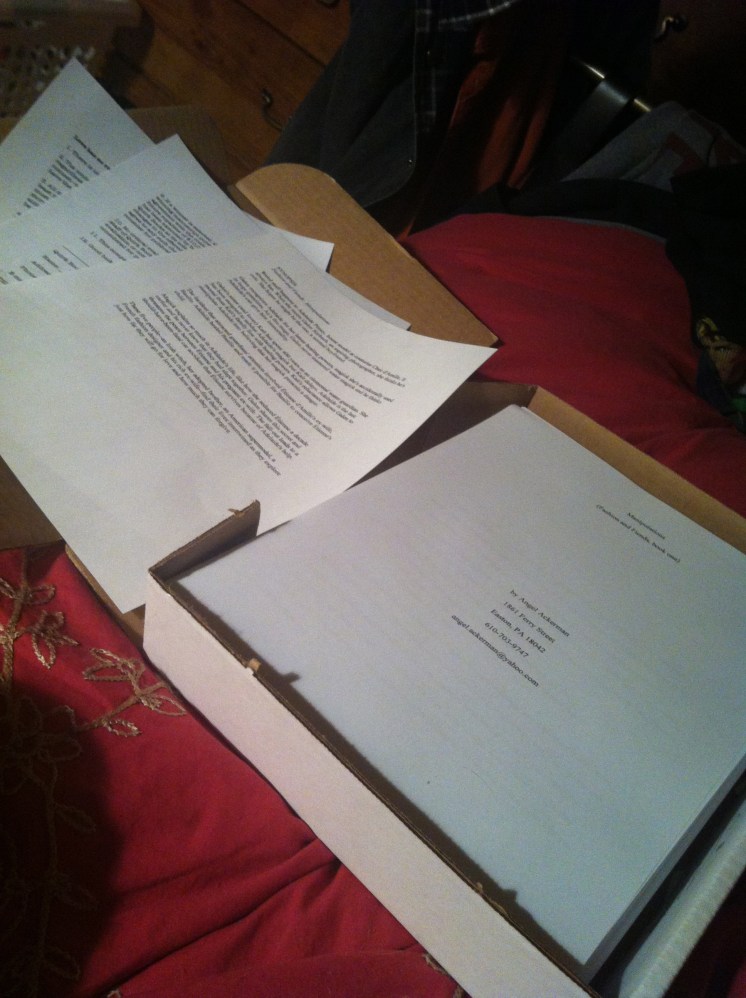
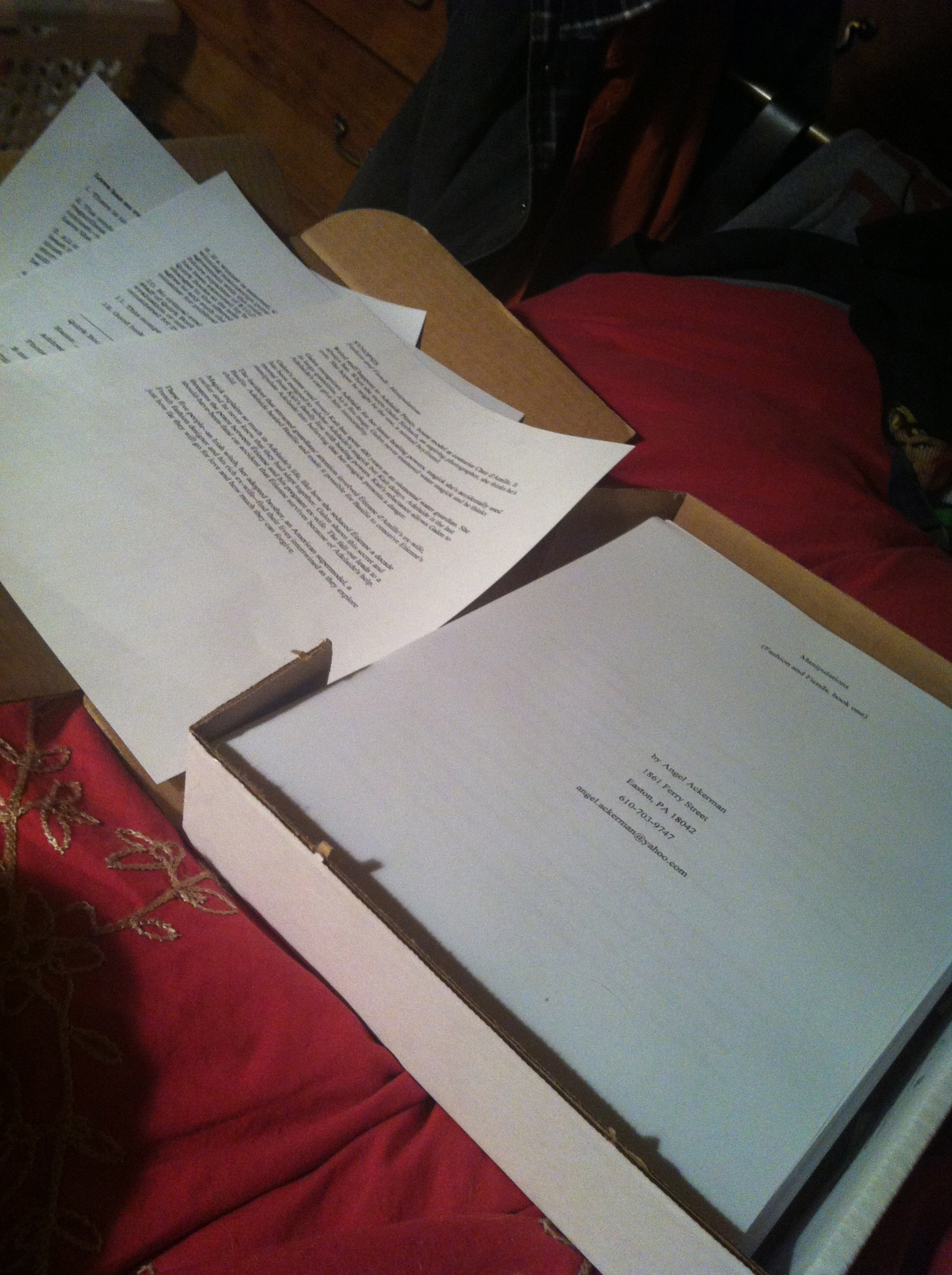
On Friday, one of my college acquaintances, now an editor of a mystery imprint at a small press (and one I love!), posted a call for manuscripts for the Quirk Books “Looking for Love” contest. The postmark deadline of the contest is today. And despite an overly busy schedule I thought, what the heck I’ll submit.

Quirk Books is a small press that for the last ten years has published, well, quirky books. I’ll refer to their web site to summarize their company: “Quirk Books is an independent book publisher based in Philadelphia. Founded in 2002, Quirk Books publishes 25 strikingly unconventional books every year. Our bestsellers include the pop culture phenomenons Miss Peregrine’s Home for Peculiar Children and Pride and Prejudice and Zombies. We also publish award-winning cookbooks, craft books, children’s books, and nonfiction on a wide range of subjects. Learn more about us and explore our books here on QuirkBooks.com.”

I’ve known that my paranormal fiction set in the high fashion industry doesn’t quite fit the genre norms for paranormal romance, chick lit or women’s fiction. I also know that if Quirk is looking for love, I got love.

I use the supernatural in my fiction to explore what makes a healthy relationship. The supernatural love interest in my manuscript turns out to be a bully, and the ingenue’s experience mirrors that of a domestic violence victim. Meanwhile, the divorced guy… Perhaps this would be a good place to insert the 250-word synopsis I prepared for Quirk.

Weird stuff happens to Adelaide Pitney, house model at couturier Chez d’Amille. It always has. When she meets Galen Sorbach, an aspiring photographer, she thinks he’s cute.

For once, she hopes to have a normal boyfriend. 

Galen recognizes Adelaide for her latent healing powers, magick she’s accidentally used in large quantities. As a fire mage, Galen never mastered water magick so he wants Adelaide’s power to gain immortality.

Galen’s sister Kait has spent 400 years as elemental water guardian. She has been assigned to subdue Adelaide’s magick, but Kait delays. Adelaide is the last mortal from Kait’s family line with healing powers. Kait’s reluctance allows Galen to manipulate Adelaide into believing her magick presents a danger.

 The incident that attracted the attention of the guardians involved Étienne d’Amilles’s ex-wife, Basilie. Adelaide healed Basilie and made it possible for her to conceive Étienne’s child. 

Magick explains so much in Adelaide’s life, like how she seduced Étienne a decade earlier and he never realized it was her. Galen shares this secret, threatening the peace between Étienne and his pregnant ex-wife. The fall-out leads to a car accident that Étienne survives because of Adelaide’s help. 

 These five people– a 400-year-old Irish witch, her adopted brother, the American supermodel, a French fashion designer, and his rich ex-wife– find their lives intertwined as they explore just how far they will go for love and just how much they can forgive. 

So I struggled with this synopsis as only a writer can struggle, and the only day I had to print the manuscript was Sunday. Then I got called into work early.  And my husband, he volunteered to print it for me. I had one manuscript box left.

And yesterday, it went into the mail. It almost didn’t since the money I gave my husband to mail it has somehow disappeared.

REVIEW: The CAKE Entertainment Experience, 9/22/13

Starland Ballroom

Starland Ballroom

This essay is a rough draft of a concert review I wrote of the CAKE concert I attended last week. I put it together because I want to remember my impressions of the night. Hopefully, I’ll prepare a more polished version later.

CAKE at the Starland Ballroom, 9/22/2013

The CAKE Entertainment Experience, as lead singer John McCrea billed it to us, amused me in a way no other live concert ever has. The venue was small, and therefore intimate, and a $7 parking pass came with early entrance to the general admission Starland Ballroom. The Starland Ballroom sits beside a junk yard in what appears as an old industrial park and the drive through town brings you through some every-one-identical post World War II tiny ranch homes which heightens a sense of quasi-dilapidated creepiness.

The band had no opening act, opening for themselves at 9 p.m., and played two sets. They were hard-at-work promoting their latest album, the self-released Showroom of Compassion. The set list (see below) featured a wide array of songs from their entire discography, which kept the crowd happy and engaged.

My husband had remarked that this was the first concert where he really knew all the music of a band, and I didn’t even realize that at the time of the show we owned their five main albums. I came home and bought the one we were missing, and the only reason I hadn’t before is because it was Rarities and B-sides. When they performed a cover of “War Pigs” from that album as an encore, it wounded my heart in such a way I had to go get the missing piece to our collection.

The concert was fun and familiar and laid back like hanging out with an eclectic bunch of friends. Picture it as five guys: three dressed casually, but well, in clothes that hung nicely against them; of course there’s one guy with the sport coat and nice slacks (Vince DiFiore); and finally the crazy friend full of big personality, in his trucker hat, bushy beard, light blue zip up hoodie and burnt orange jeans with the faded batch on the back pocket from his wallet (McCrea).

McCrea’s conversations with the crowd and guidance for audience participation made the evening feel more like a party, which I suppose is the difference between an intimate venue and a large stadium concert. I’m done small venues before– college sports centers or renovated classic theaters– but I’ve never enjoyed the interaction between audience and band quite like this one.

The audience sing alongs were not only fun but became quasi-competitive with the division of attendees to sing the lines from “Sick of You” as McCrea’s “escapists” (“I want to fly away”) and those full of “gratuitous hostility” (“I’m so sick of you”) based on the geography of the room and a disappearing pizza sign, not our true feelings.

Of course, the musicians did not disappoint. I don’t even know what exactly Fiore played but I know it was more than simple trumpet and keyboard. He had at least one other percussion instrument in there and something else that sounded like a harmonica but I didn’t catch a glance of it. My husband remarked on how busy he was, and indeed that was true. My main question was how could he play so many instruments for so long and still wear a blazer. He had to be melting!

I am not a musician, in any way, but I did enjoy the solos of guitarist Xan McCurdy and watching the work of drummer Paulo Baldi. I couldn’t see much of bass guitarist Gabe Nelson although I could watch his fingers. McCrea did introduce everyone and highlight their segments in various songs.

For a people watcher, the venue offered a unique opportunity to watch the younger generation drink too much and pass out on the floor before the show even started. And I watched with captivated confusion as a very inebriated small blonde woman performed a badly choreographed bump-and-grind against her very beefy football player type boyfriend and then tried to persuade the stranger beside them, a sober woman, to join them.

The band gave away a Red Delicious apple tree at the end of intermission. The recipient made promises that she would care for the tree forever and send pictures every few years.

The Starland itself was recently remodeled after flooding in Hurricane Sandy. The ticket prices were very reasonable at $45/head after the taxes and fees. Apparently, CAKE was one of the first bands to performed at the reopened concert hall.

We arrived in Sayreville around 6 p.m. when the concert wasn’t billed to start until eight. We noticed a random dot on Google Maps listed as “Brass Monkey Sports Pub.” Everyone one in our party was not only old enough to purchase alcohol but also of a generation that can recall the words to the Beastie Boys song of the same name, so this was our reason for seeking it out.

We found ourselves in a strip mall, near a Chinese massage parlor and an African grocery. At the end unit of the strip mall, we discovered a liquor store. And almost nothing else. We peeked around the corner and there stood a woman smoking a cigarette. She confirmed that this indeed was the Brass Monkey. We headed in, and for a brief moment, based on the strange location of the place and the configuration of walls near the door that didn’t let you see in, I worried that perhaps we had found ourself at a certain kind of bar that involved dancing girls.

But no. We had a round of drinks with football on the telly. Some folks played pool in the corner. The rear wall was the back of the coolers in the liquor store which made a queer kind of sense in my mind. That killed almost an hour.

From there, we headed into the industrial park. We parked right in front of the Starland’s door. They lined us all up, gave us wristbands if we were 21, and left us there standing under the darkening sky with at least six airplanes circling in a holding pattern overhead.  They opened the doors at eight. The crowd consisted of every age, college kids, even some parents and their kids.

THE SETLIST

SET ONE
Sad Songs and Waltzes (cover), Fashion Nugget
Opera Singer, Comfort Eagle
Frank Sinatra, Fashion Nugget
Bound Away, Showroom of Compassion
Long Time, Showroom of Compassion
Mustache Man, Showroom of Compassion
Federal Funding, Showroom of Compassion
Wheels, Pressure Chief
Sick of You, Showroom of Compassion

Intermission

SET TWO
Love You Madly, Comfort Eagle
Stick Shifts and Safety Belts, Fashion Nugget
Mexico, Prolonging the Magic
Sheep Go to Heaven, Prolonging the Magic
Never There, Prolonging the Magic

ENCORE
Short Skirt Long Jacket, Comfort Eagle
War Pigs (cover), B-sides and Rarities
The Distance, Fashion Nugget

Column: Halloween requires vampire TV (2006)

The paranormal has certainly blossomed in the mainstream during the last seven years. Spurred by the Twilight series and somehow morphing to Fifty Shades of Grey, there seems a bevy of options for fans of the supernatural. Pop culture always has monsters to offer society, whether you look at the classic fiction of the nineteenth century (Frankenstein and Dracula among them) or the mid-twentieth century soap opera Dark Shadows or Anne Rice’s successful franchising of her vampire chronicles and Mayfair witches.

As a mom and someone rapidly approaching 40, I have reached the out-of-touch generation. I’m still stuck in the era of Buffy and Angel, when YA wasn’t even a genre let alone an attraction for adults. I love some Harry Potter, but Bella and Edward make me cringe. And the best thing about Fifty Shades? Certainly not the writing or the sex scenes, but instead I’m excited that erotica is getting some attention from the mainstream. I never thought I’d see the day where erotica hit the shelves at Target.

I always loved vampires as a youngster. Vampires offer an examination of our individual struggles of good vs. evil in our own souls, a close look at the struggles of addiction, and an exploration of personality and the tendency to dominate or submit. The older I get the more I embrace more monsters: the witches who challenge their own power and their place in the universe, the werewolf who has to keep his animal under control, the psychic who must decide what to tell people and what to keep secret.

These are the themes the intrigue me as a writer and why I write paranormal fiction in my free time. I have three finished paranormal manuscripts and I am currently revising the second book in the series. I hope to revise my synopsis and get pitching to agents and editors again but that’s a topic for another day.

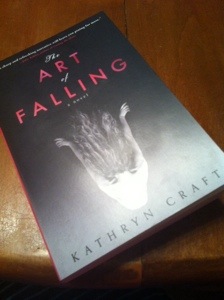
Today’s nugget (that spurred this whole blog entry) is an entertainment column I wrote about family friendly vampire television shows available in 2006.

vampire TV

Excerpt: Orphans and French Masculinity in the Interwar Era

This is an excerpt/introduction from a paper written for a seminar at Lafayette College, taught by Joshua Sanborn, inspired by a class taken at Moravian College, taught by Jean-Pierre Lalande.

EXAMINING FRENCH MASCULINITY & THE GREAT WAR:
DID LES PETITS POUSSINS OF THE INTERWAR PERIOD BECOME
LES COQS GAULOIS?

Angel Ackerman
History 353 Gender and Sexuality in Modern Europe
May 12, 2009

When researching French masculinity, it quickly becomes apparent that on some level every stereotype—the seducer, the adulterer, the drinker, the connoisseur, the philosopher, the artist, the swordsman, the braggart—bears truth.  (1) In fact, various scholars have agreed that Cyrano de Bergerac, “…swashbuckler, poet, unsophisticated lover and universal character; the most accomplished expression of gallantry for Frenchwomen,” serves as an icon of nineteenth century
French maleness on the cusp of modern martial masculinity. (2)

But manhood, and many social institutions, would undergo great change throughout Europe as science—beacon of hope at the end of the 1800s, a great force to improve the quality of life— created weapons that would decimate many parts of France and inflict upon all European nations a brutal loss of life previously unimaginable.  The devastation permanently altered the social, political and economic landscape in Europe.  The battles of World War I slaughtered nine million
men, with one-third of them leaving a widow and average of two children.  In France, the Great War robbed 700,000 children of their fathers and more than a million “wards of the state,” a term that could mean either orphan, child without father or child of a permanently disabled man.  With about 1.5 million men dead, an entire generation in France grew up without a father (3)(which would make them orphans as the French orphelin means simply “child without father” unlike its
English equivalent).

In the midst of this fatherless phenomenon, French masculinity shifted shying farther from traditional martial masculinity even as the country sought to restore its former paternalistic glory. Literary themes of the early twentieth century and interwar era discuss the societal struggles caused by absent father figures, floundering government and the threat posed by neighboring Germany, but how does the generation of fatherless boys contribute to France’s changing expectations for men?  Did French war orphans fit the traditional male gender roles or did they become “a pampered bunch of wimps” from single-parent households led by women? (4)

With this in mind, one potential answer to whether or not single mothers reared a generation of wimps is this:  It was neither the absence of paternal role models nor the actions of French mothers that created a generation of men who would not subscribe to martial masculinity of the previous age.  A societal backlash against the sufferings of the Great War caused this shift, potentially exaggerated in war orphans because of their familial loss.  The orphan’s experience
served as an allegory for France as a whole as it dealt with altered masculine roles; fatherless orphans did not cause the change.

To examine this idea, one must establish a selection of men who lost their fathers in World War I.  This seems simple enough.  Search some prominent historical figures and politicians, seeking those born between 1905 to 1910.  I skimmed hundreds of biographies in encyclopedias, academic databases and even, in quasi-desperation, Wikipédia (French Wikipedia).  Articles in French yielded the best results, as could be expected, especially when searching terms like
“pupilles de la nation” (wards of the state) and “mères de deuil” (mothers in mourning).  But, with a limited time frame for this particular project, I could only locate two orphans to use as my case studies:  author Albert Camus and playwright/ actor Jean-Louis Barrault.

For Camus and Barrault, their status as orphans altered their interior attitudes regarding masculinity, not the behaviors that would define them.  War orphans cannot be blamed for the wimpish state of French manhood after the Great War, because the war had changed French maleness for the entire nation.  War orphans were one voice among many reacting to the loss of traditional masculine honor codes.  Barrault and Camus, like their artistic peers, lamented this
lack of masculine definition.

Of course, the experiences of two men do not lead to firm conclusions.  But these two men, thanks to their creative sensibilities, have contemplated these questions of what it means to have a father and what makes someone a man.  Raised in different family environments on different continents, these two men came to many of the same conclusions.  If coupled with the observations of significant playwrights of the Interwar era, the experiences of Camus and Barrault verify the cultural context of the 1920s and 1930s.  Orphans articulated the dilemma of shifting masculinity which continued into World War II with the French surrender.

ENDNOTES
(1) My title plays tribute to one of the World War I postcards featured in Marie-Monique Huss’ book, Histoires de Famille 1914-1918. (Paris: Noesis, 2000) Le petit poussin is the little chick on one postcard expressing his hope that he will one day become a great rooster of Gaul. (213)  Why the rooster?  According to the French president’s official web site (www.elysee.fr) The rooster is one of the symbols of the French republic because of its appearance on the coins of the Gauls. It is often used by foreigners today to represent the French in sporting events.  “Le coq apparaît dès l’Antiquité sur des monnaies gauloises…Il est surtout utilisé à l’étranger pour évoquer la France, notamment comme emblème sportif.”

(2) The quotes comes from Edmond Rostand, Cyrano de Bergerac (Paris: Bookking International, 1993). This quote comes from the back cover of an edition purchased in Paris in 1995: “Cyrano de Bergerac, héros au grand nez et coeur d’enfant, bretteur et poète, amoureux ingénu, est un personnage universel; c’est l’expression la plus accomplie du panache à la française.” Scholars who have cited him include Robert A. Nye, Masculinity and Male Codes of Honor in Modern France (Oxford: Oxford University Press, 1993) labeling Cyrano de Bergerac as an example of French panache, modesty, and swordsmanship (226) and Huss in Histoires de Famille calls him moral, elegant and displaying the appropriate war scars to be a proper French male (117).

(3) Olivier Faron, Les enfants du deuil: orphelins et pupilles de la nation de la Première Guerre mondiale, 1914-1941 (Paris: Éditions la Découverte, 2001), 13.

(4) The idea for this paper came from Jean-Pierre Lalande’s Twentieth Century French Theatre class at Moravian College in fall 2008. From my notes on Jean Anouilh’s Antigone, 22 October 2008: “Hémon- represente les hommes pragmatiques… ‘je ne vive pas sans elle [sic]’ ‘that’s totally stupid.’ stereotype of a spoiled young man. a né [sic] après la première guerre. 1920- pampered bunch of wimps- Hémon. No 45-year-olds in 1942. lost generation, les jeunes ne sont pas capable.”