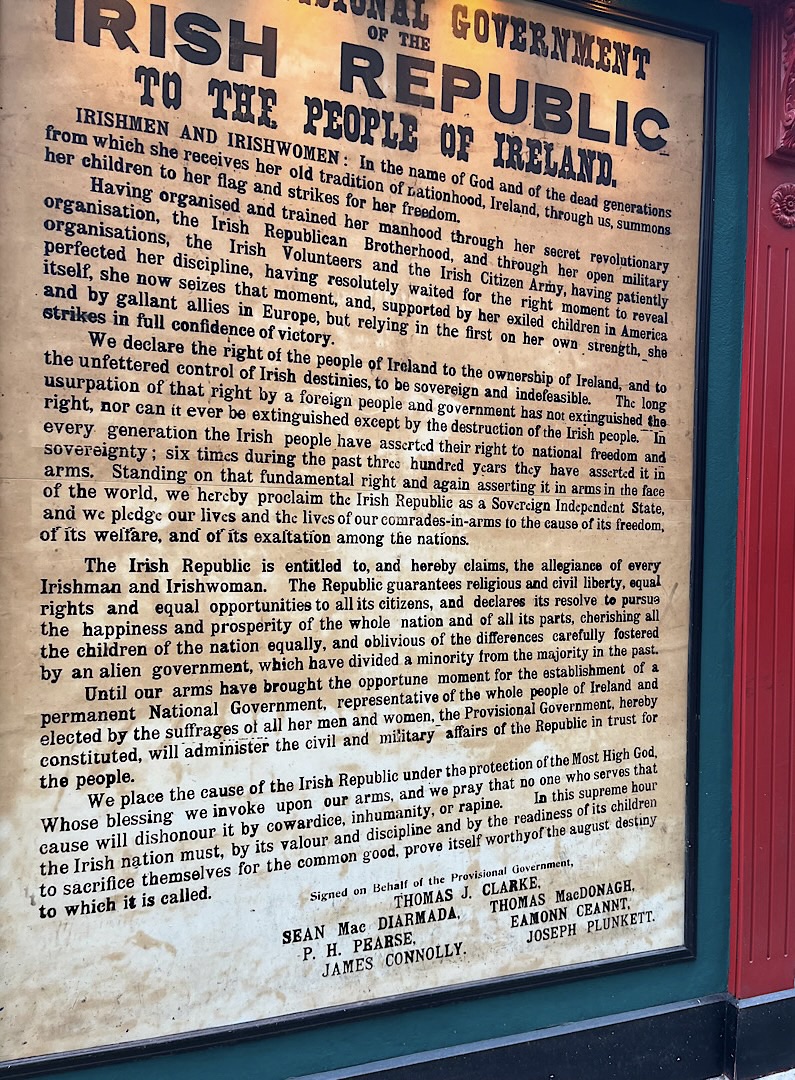
Ireland has only had its independence from the British for about a hundred years. And the North of Ireland is still part of the United Kingdom, a fact that leaves the Irish with a special understanding for a land undergoing occupation, a people being oppressed, or a refugee needing a home.
My academic interest is post-colonial Francophone Africa, especially in how the French treated the North African Muslims differently than the other African colonial populations. I never finished my master’s in world history, but now I wonder if I did finish if it might be pertinent to look at the British and the Irish, the Protestants versus the Catholics, as the most powerful cultural conflicts often have roots in religion. Many Irish are pro-Palestine and pro-Ukrainian people. It’s not hard to see why.
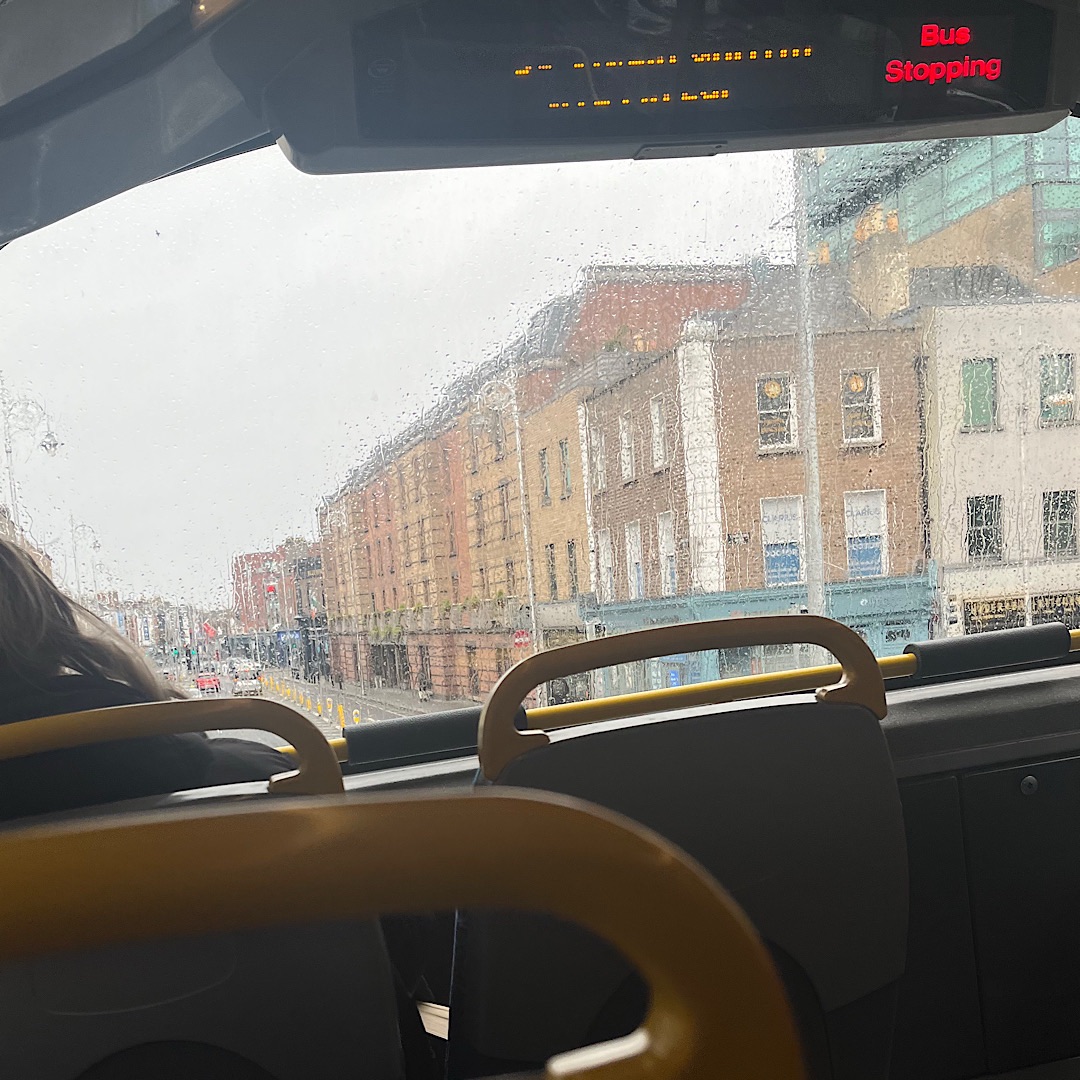
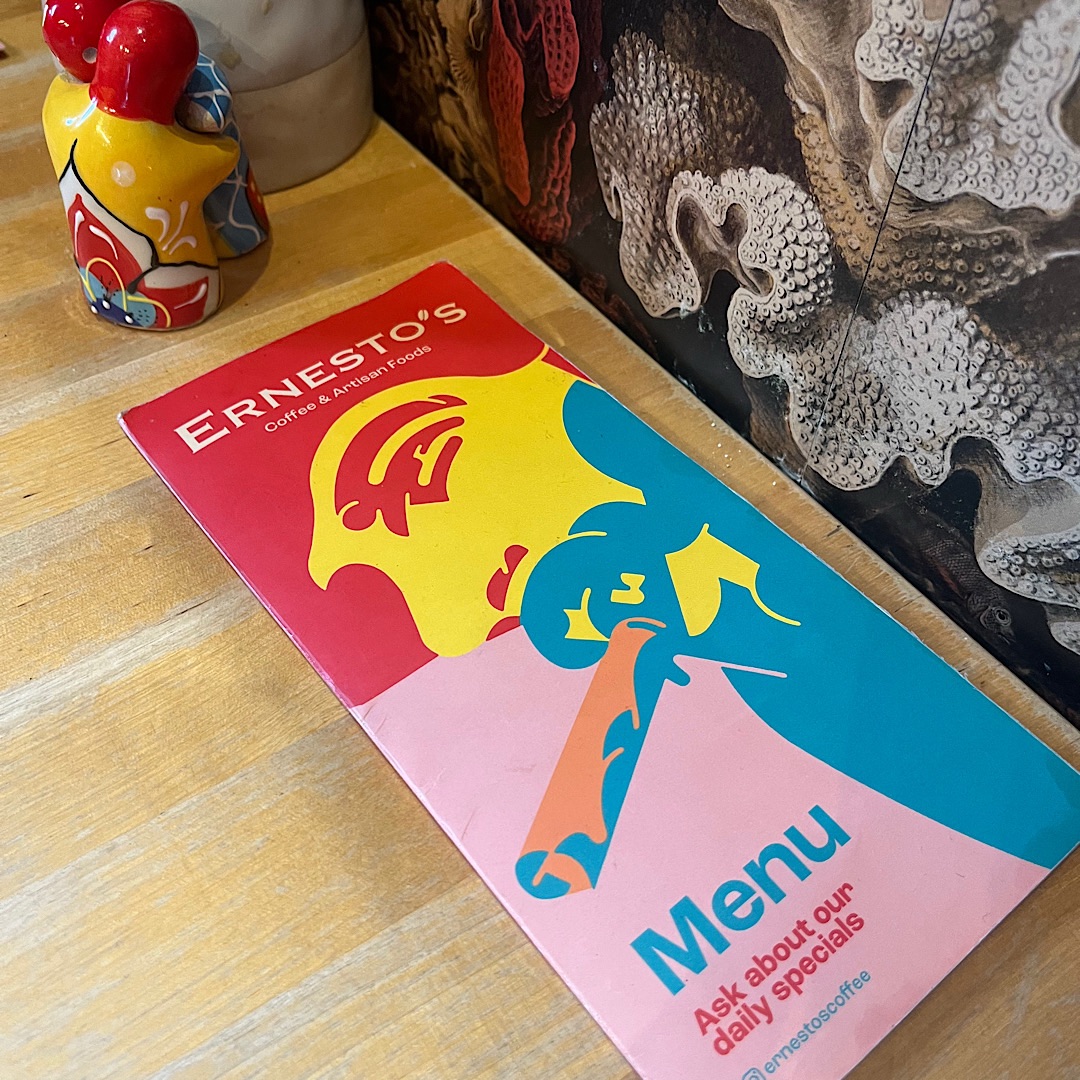
For breakfast, we hopped on a double decker public bus, green and yellow TFI (transportation for Ireland), We rode the 13 and the 27. We headed over to Ernesto’s Café, and we arrived just in time as it got very busy by the time we left.
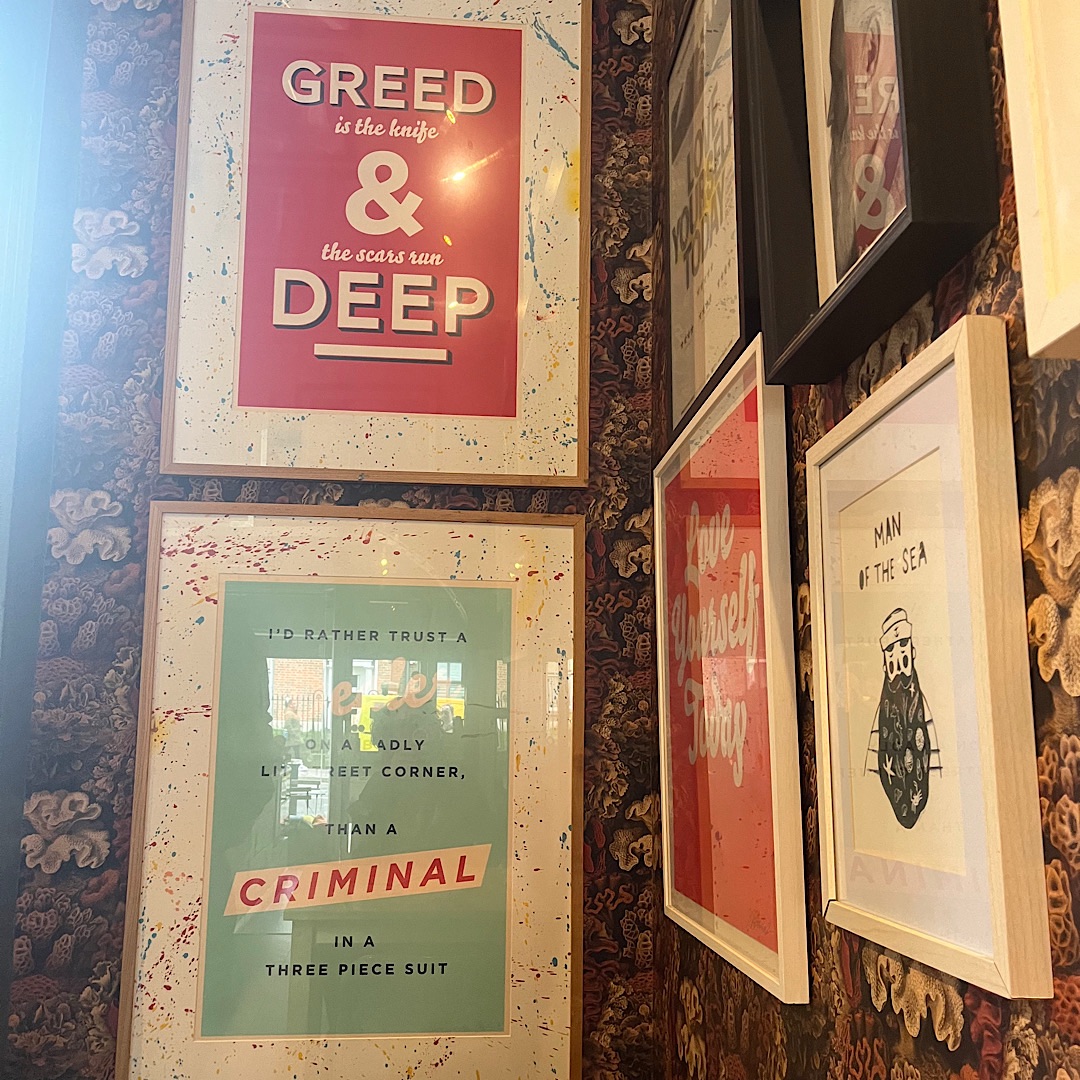
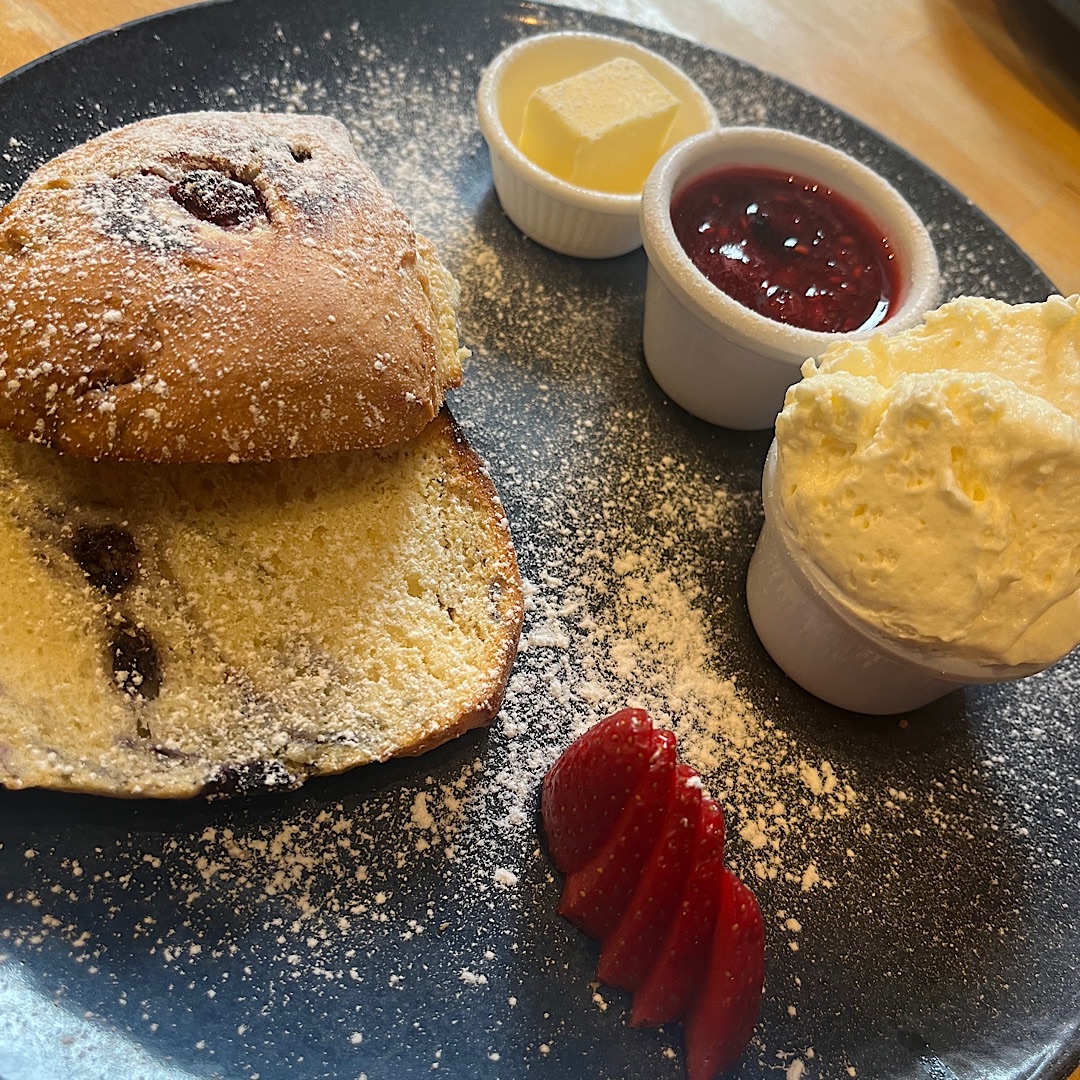
The café decor has a certain revolutionary Spanish theme while creating artisanal breakfasts. I had the berry scone with chantilly cream, berry compote and of course Irish butter.
From one of the posters on the wall:
I’d rather trust a dealer on a badly lit street corner than a criminal in a three piece suit
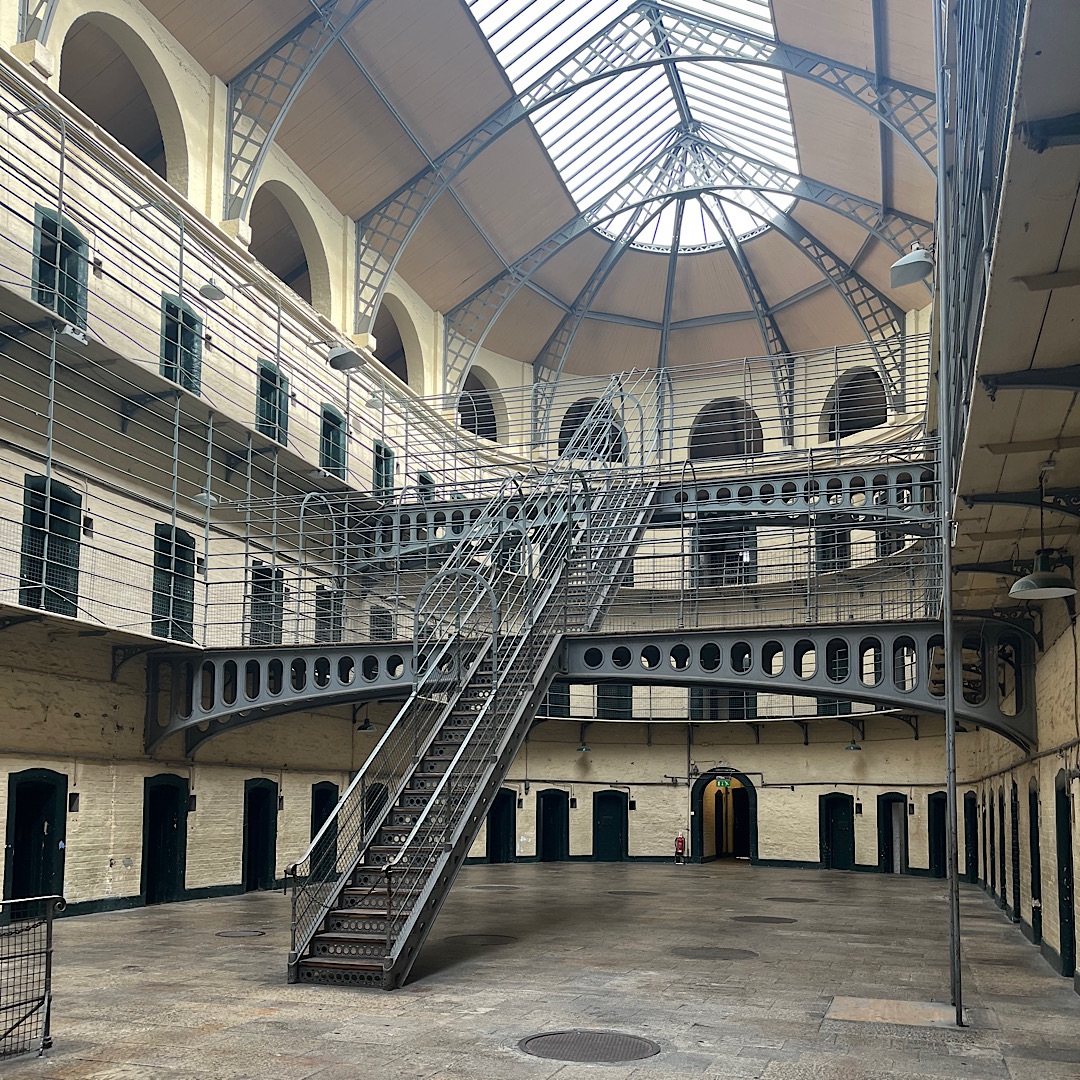
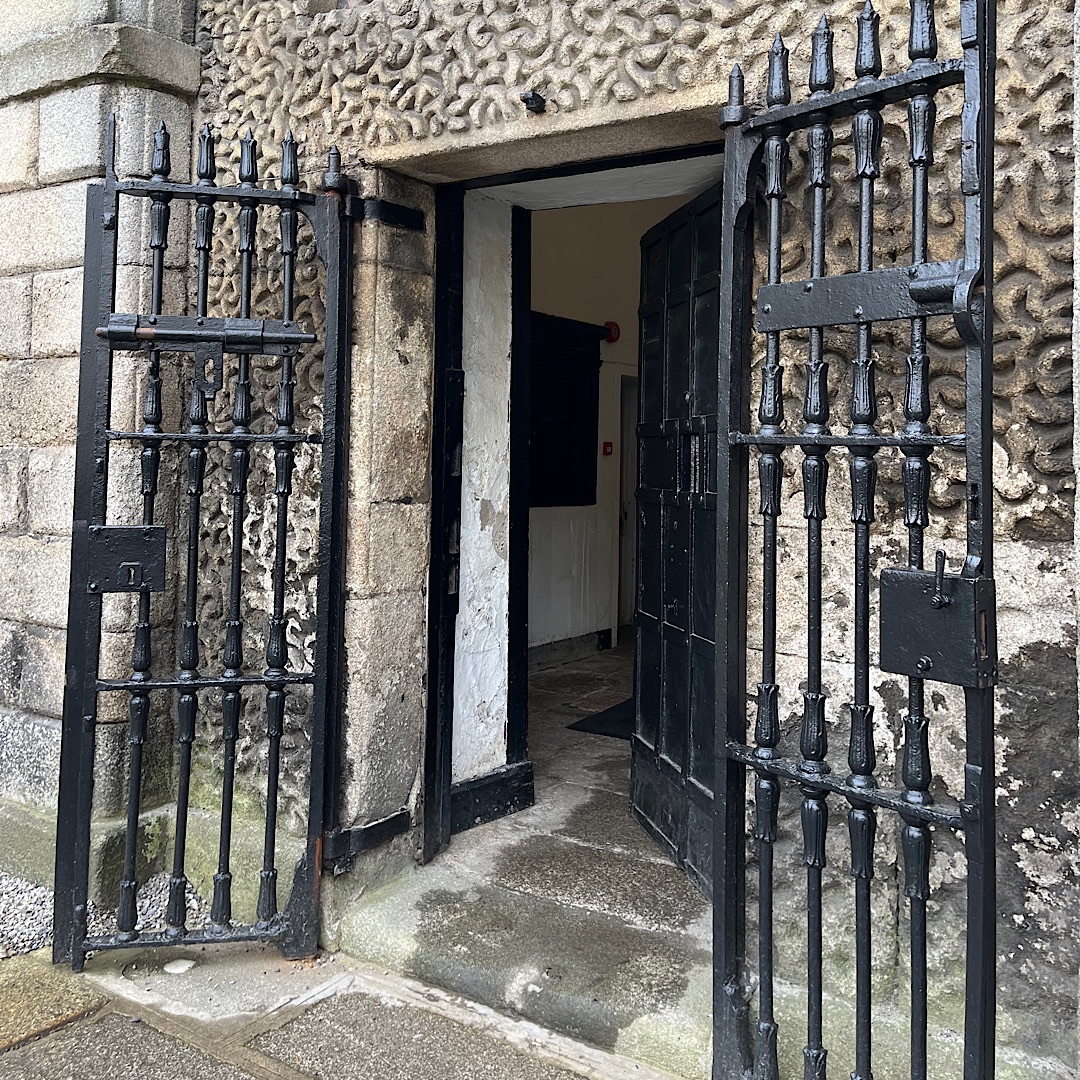
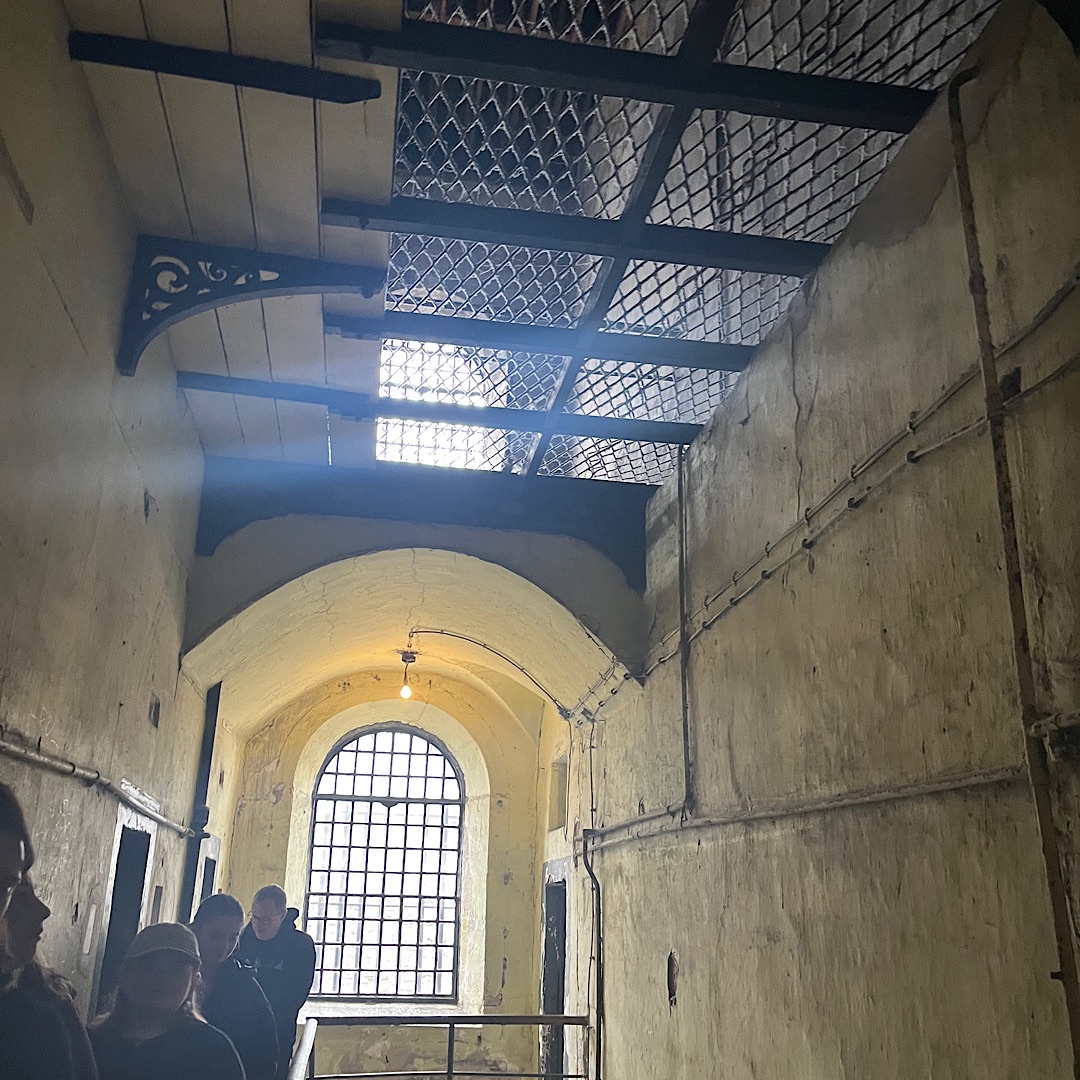
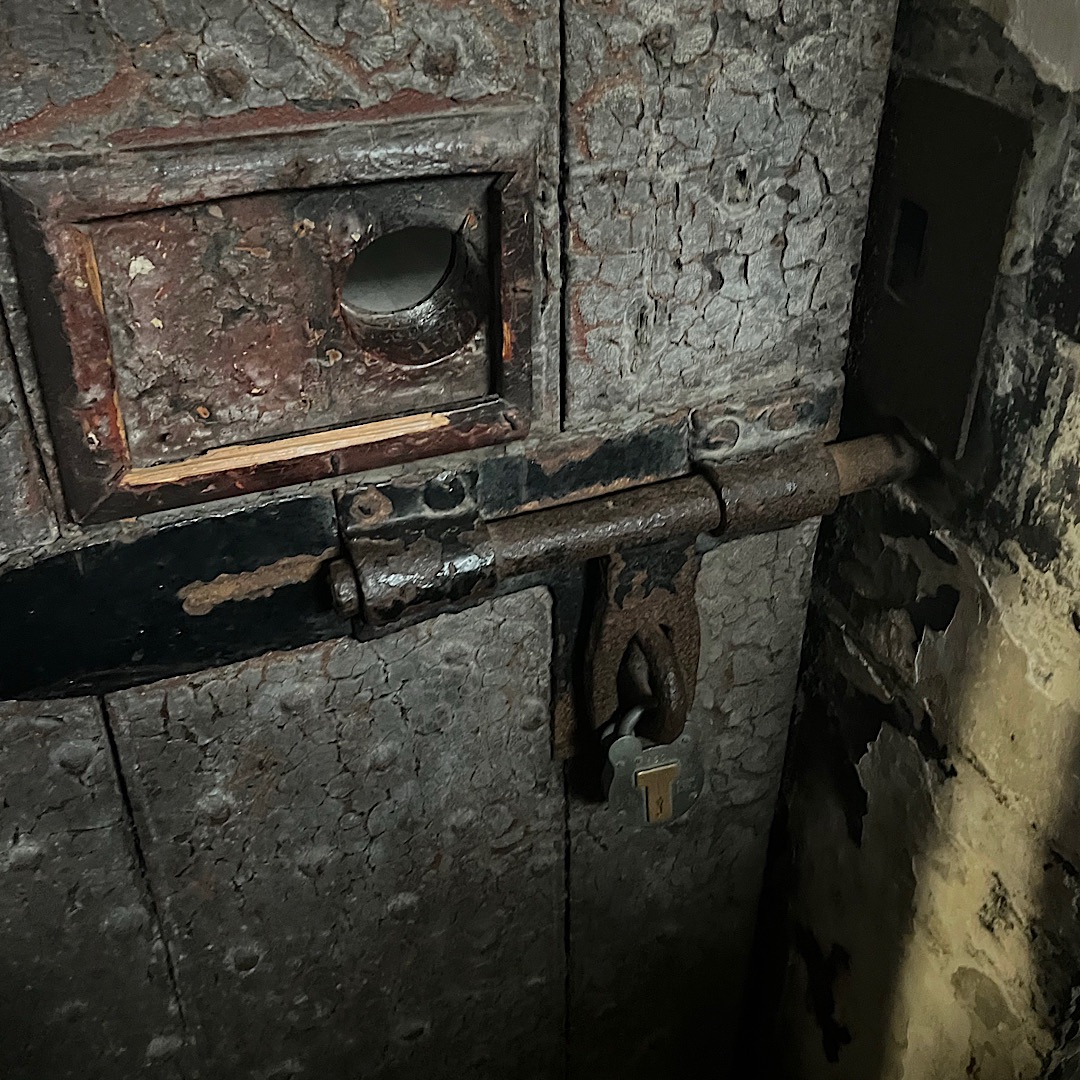
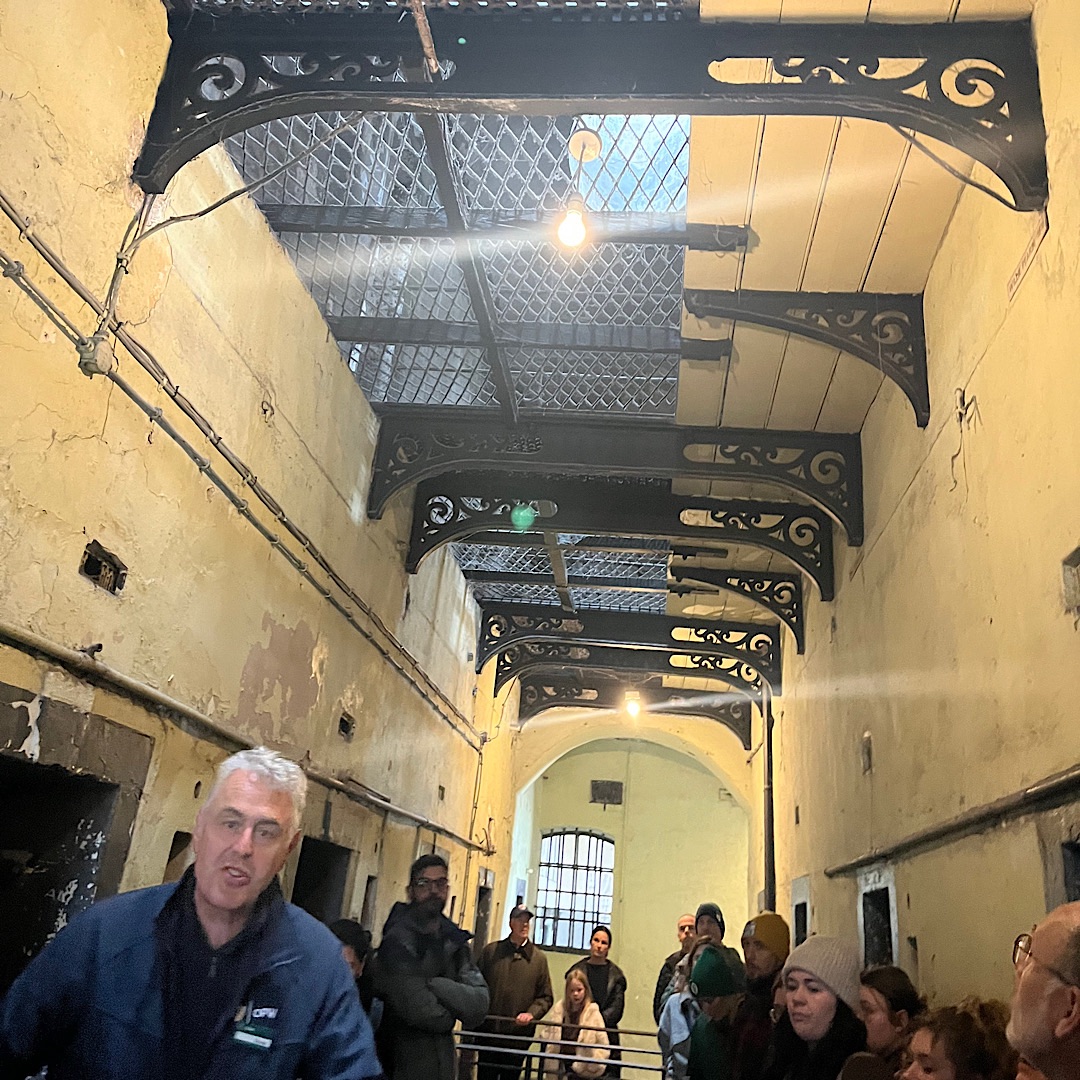
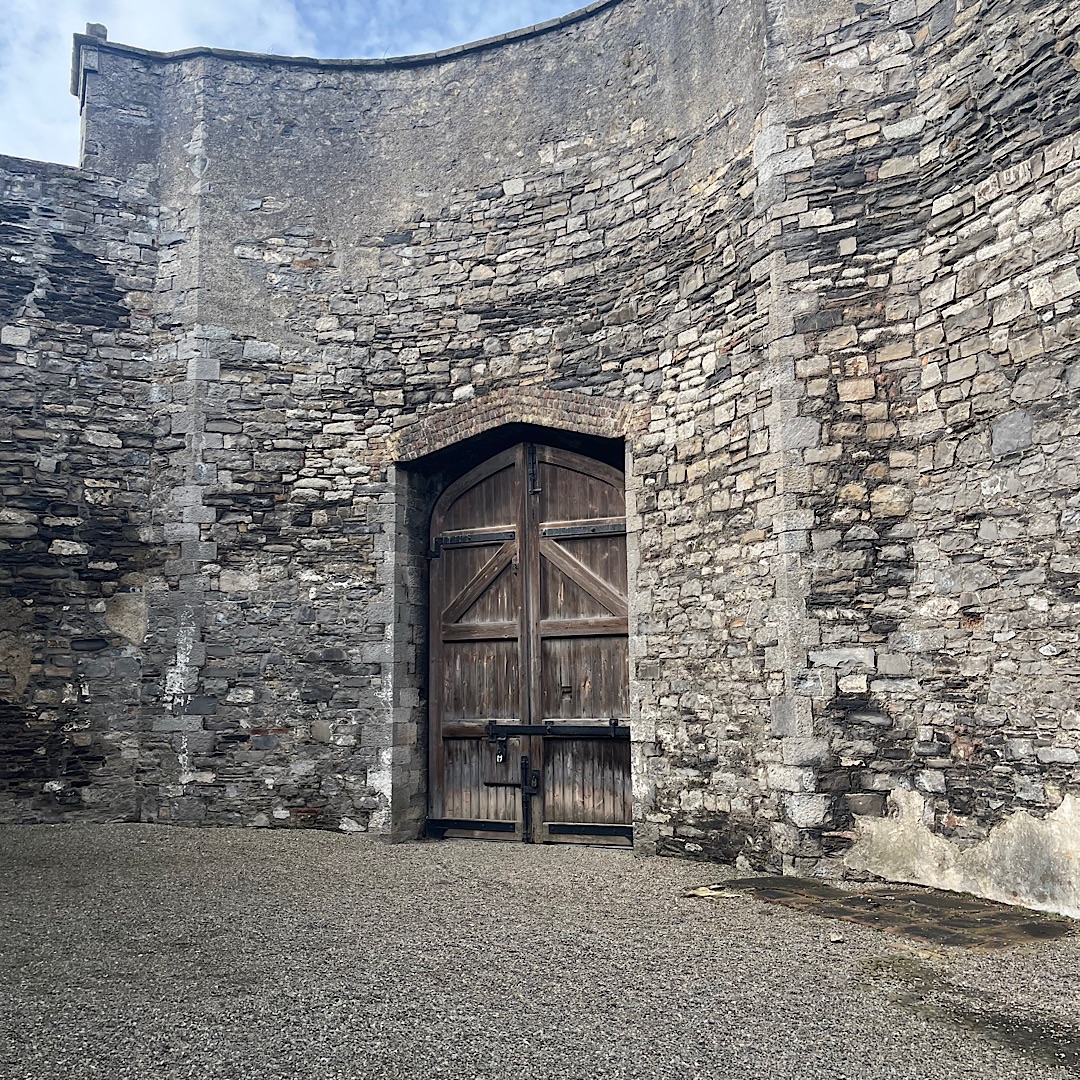
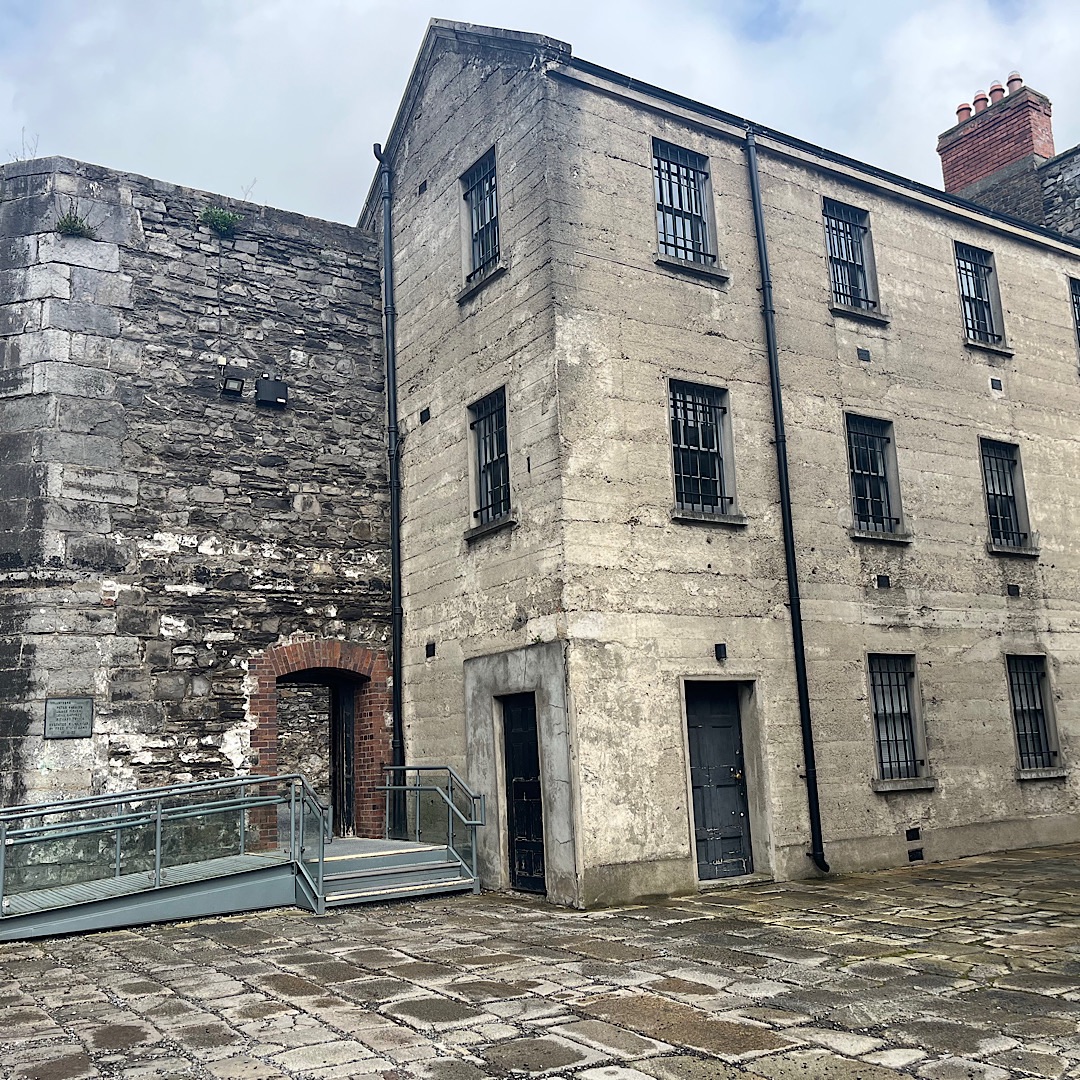
Upon return to our hotel, M managed to grab tickets for Kilmainham Goal, the old county jail turned famous Dublin prison that housed the leaders of the Easter Uprising. The narrow halls are from its early county jail days where prisoners were housed one per cell. The larger Victorian-era addition looks much more like our modern prisons today. The jail housed men, women and children. And the amount of people passing through its doors went up 10-fold during the Potato Famine, as (1) begging became a crime and (2) people committed crimes to go to jail to have food and shelter.
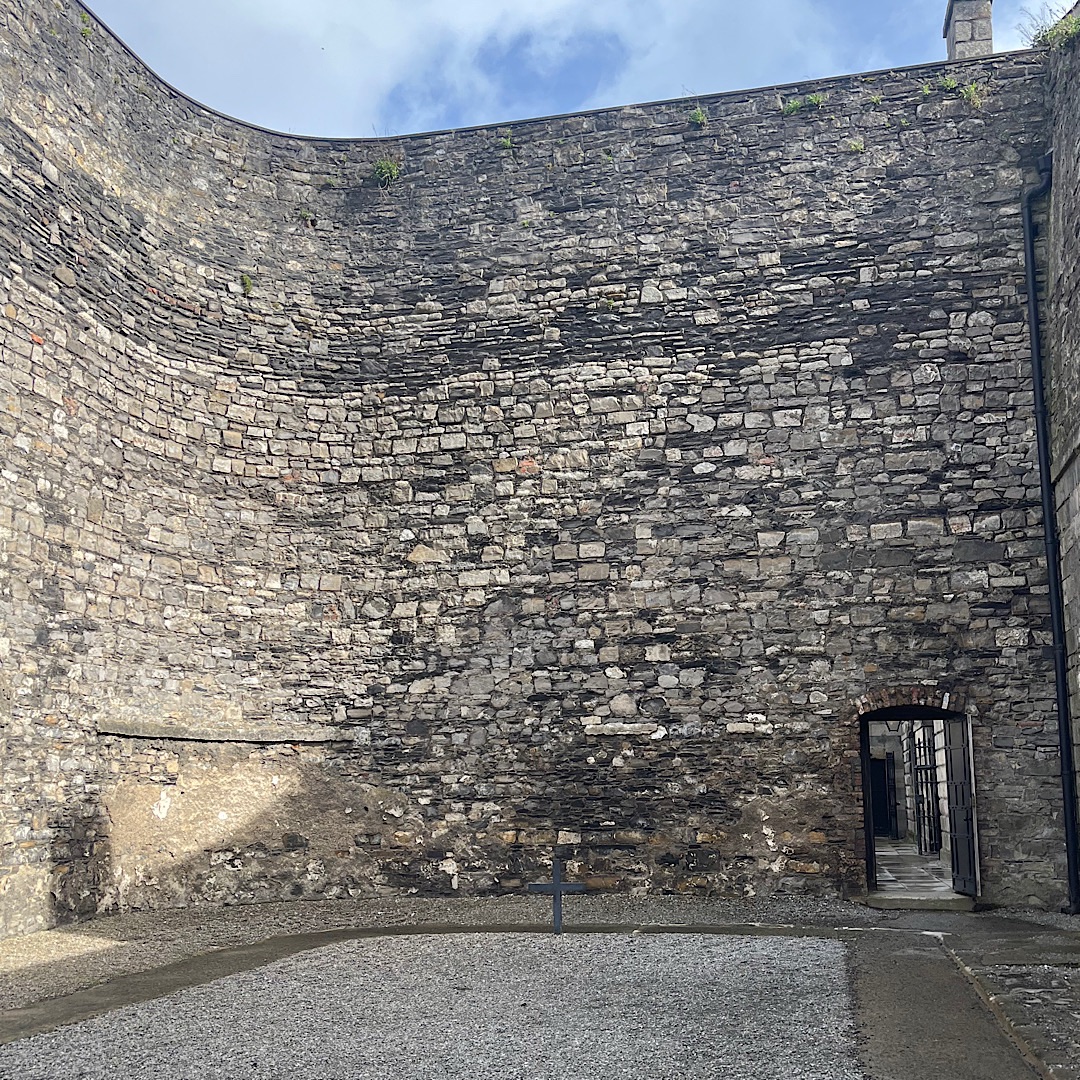
It’s hard to see against the stone, but in the one photo there’s a small cross. That’s where most of the leaders of the Easter Uprising were shot by British firing squad. One man was shot on the opposite side because he never recovered from wounds sustained in the uprising and he was shot while propped up in a chair.
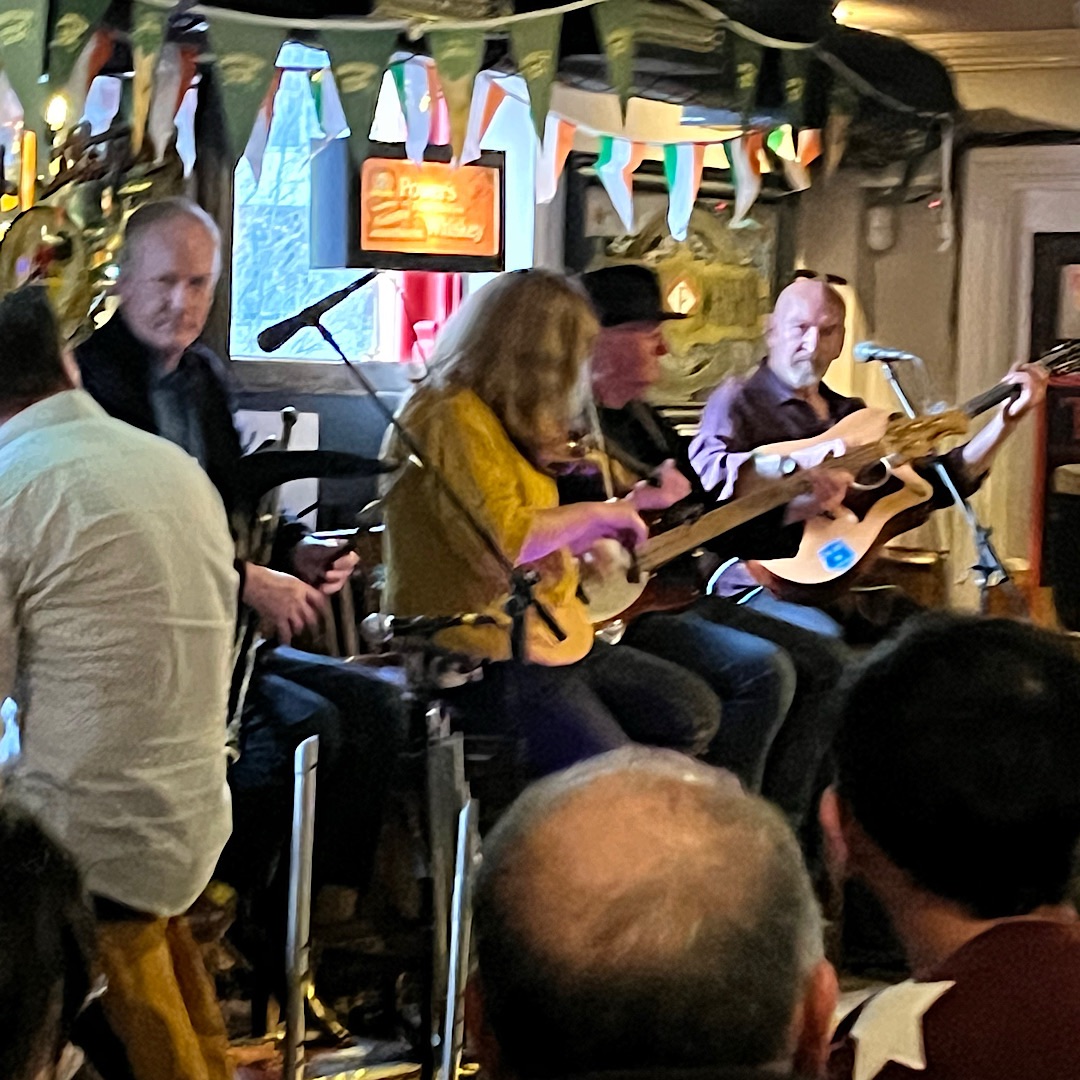
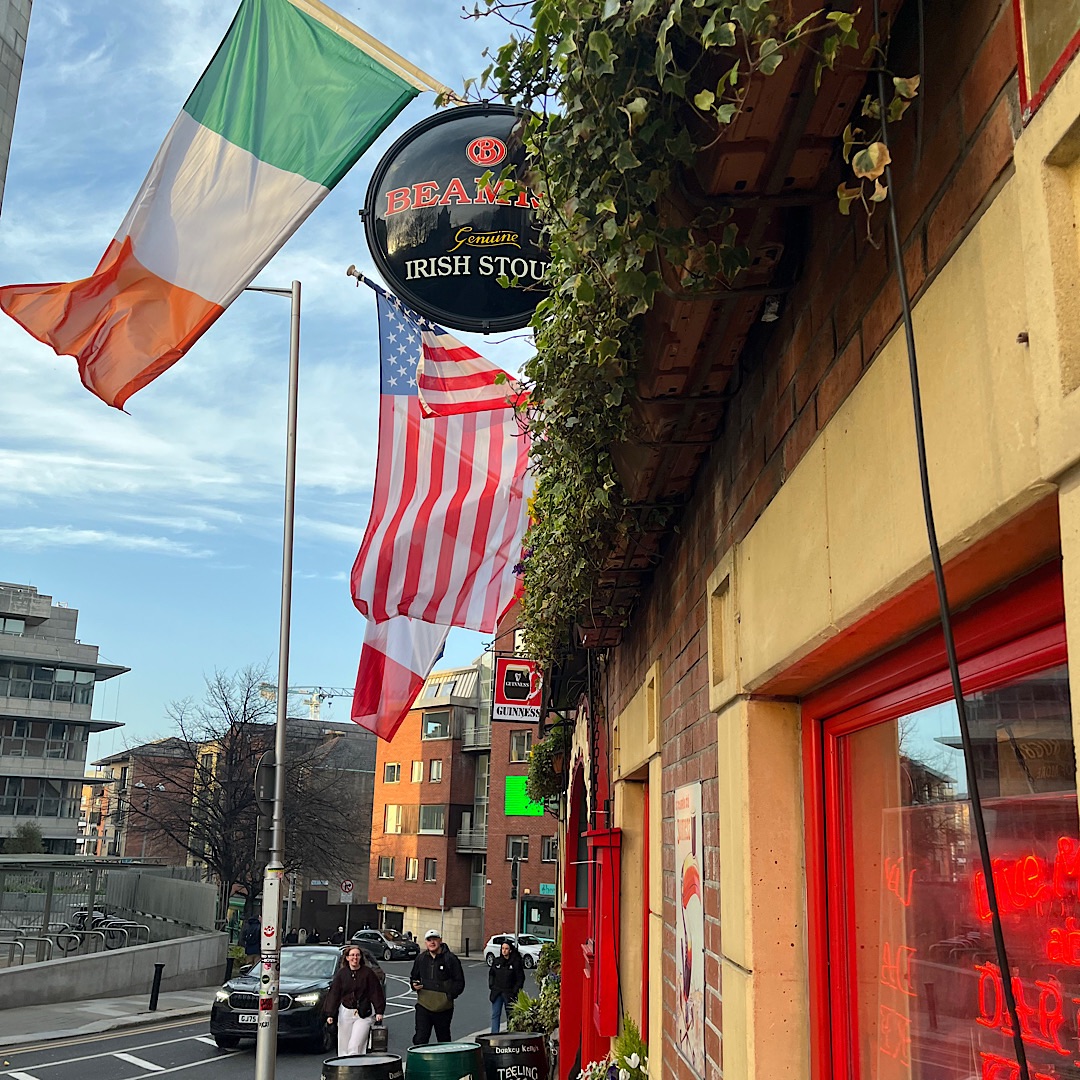
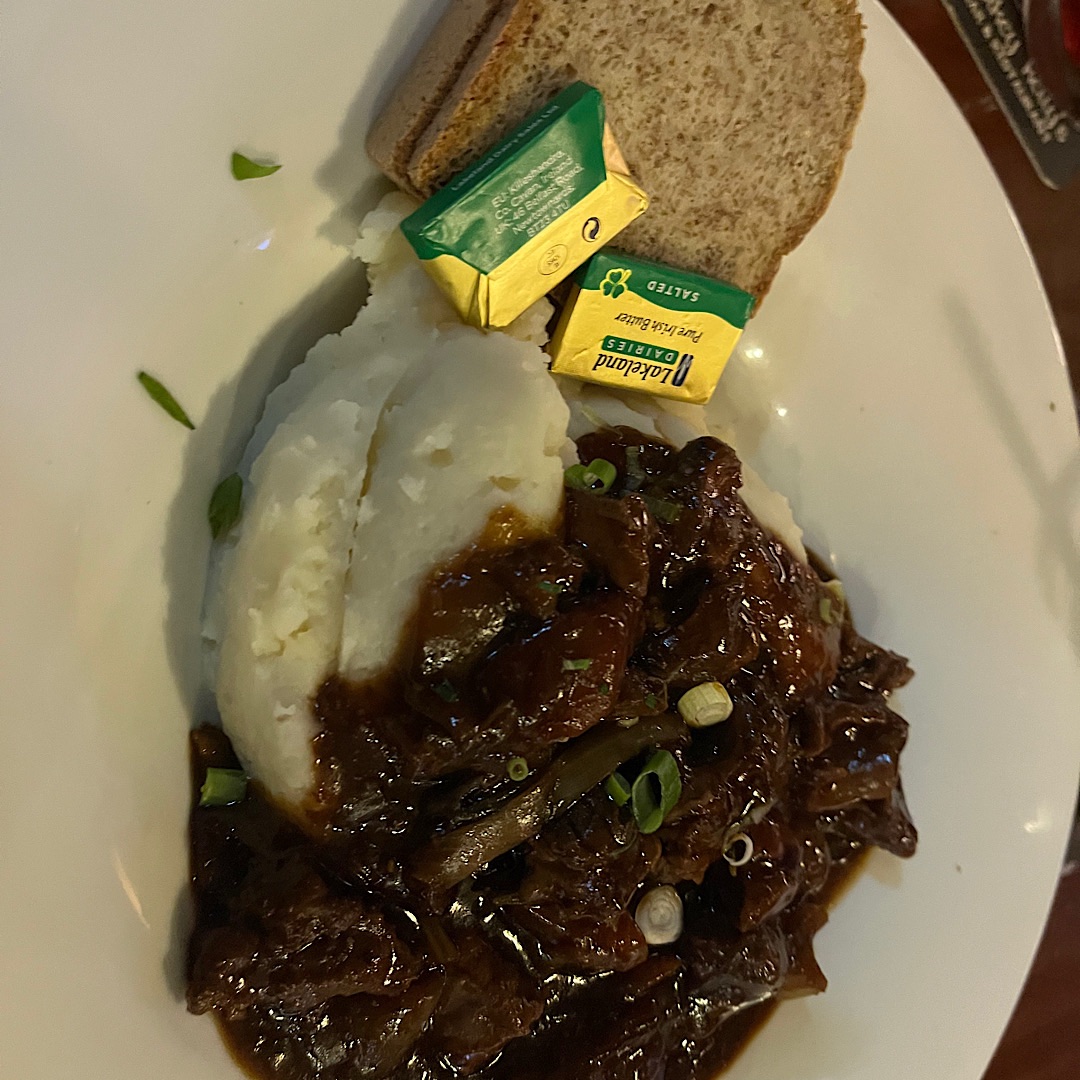
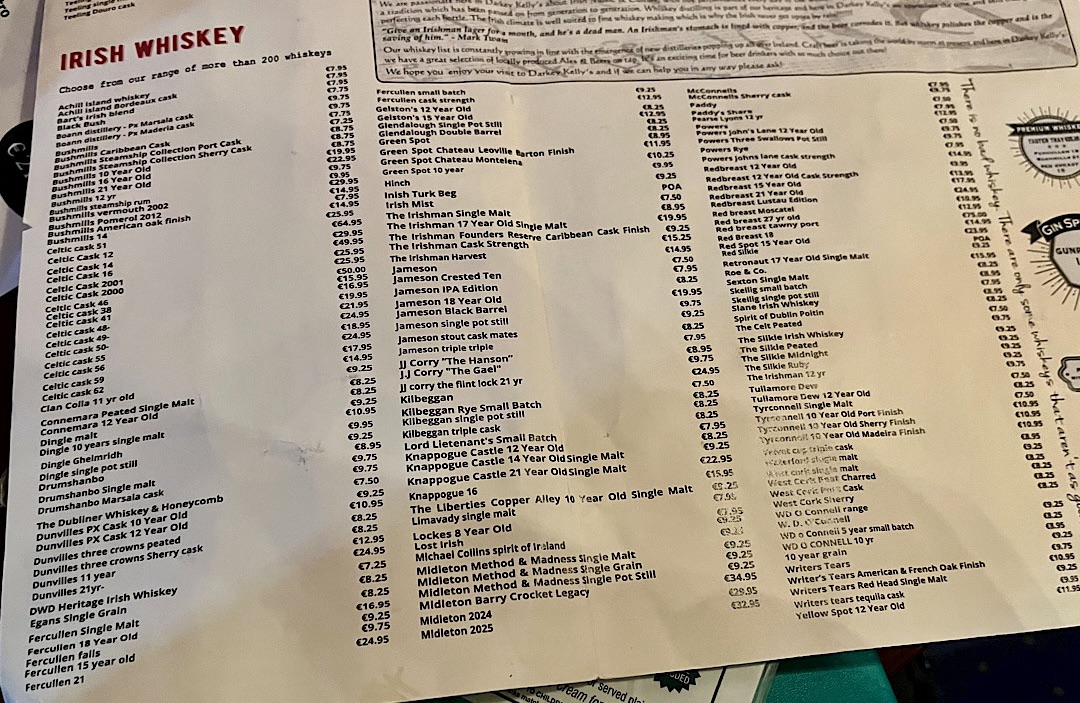
In the evening, we went to Darkey Kelly’s to listen to Irish music and I had Guinness Stew.
I’m mentioning it here because most of the traditional Irish music talks about fighting the British– which they’ve done for 800 years.
Nothing we did today featured an interactive tourist experience.
I wish I could tell you I went to bed early last night, but at 7 p.m. I got my second or third wind. M suggested Indian takeaway, because we felt it would be a great experience to get takeaway, because Americans do take-out and our takeaways are lessons not dinner.
And Spice & Rice had fal— an extremely spicy item.
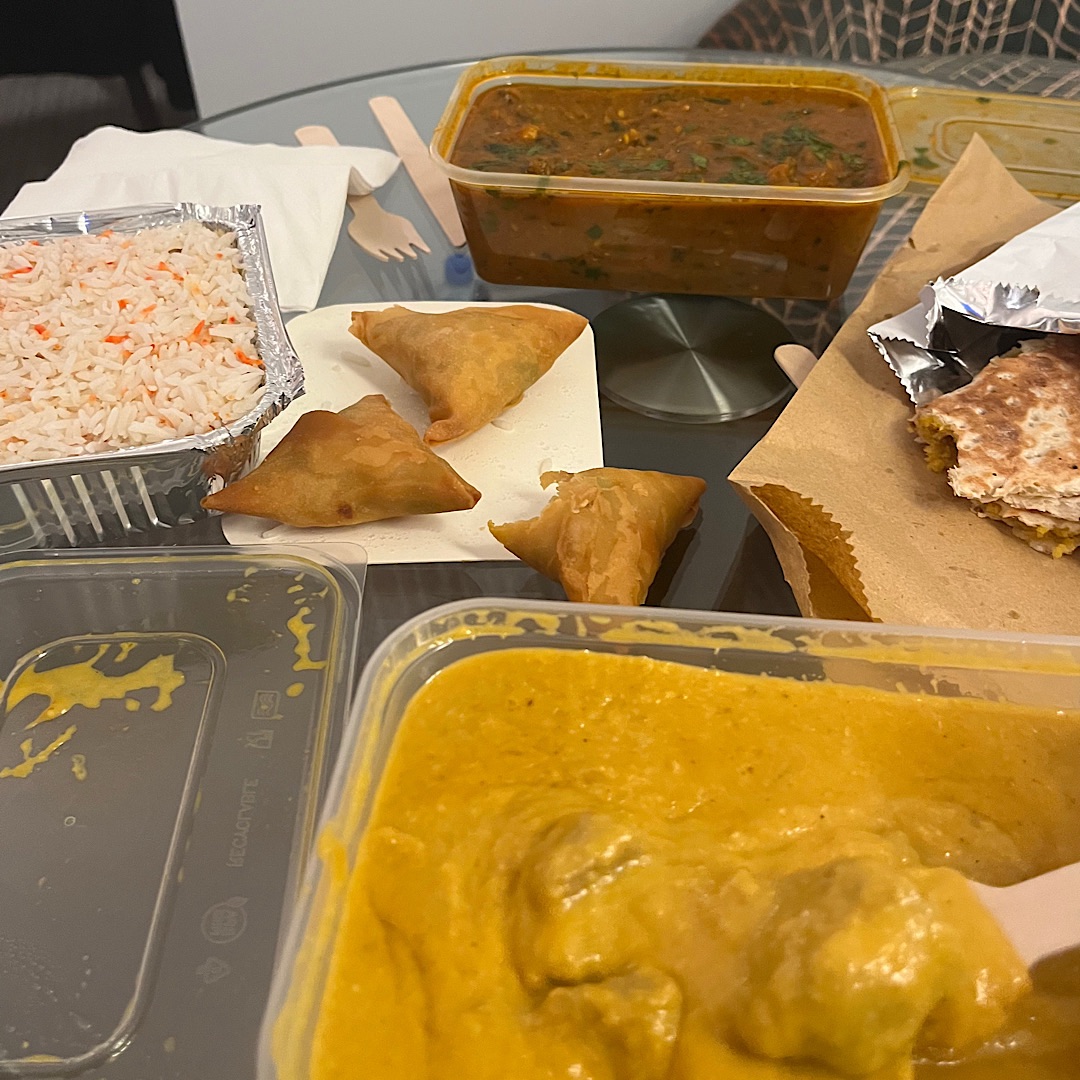
He did not order fal. He ordered spicy chicken vindaloo and I ordered lamb korma, which shocked him because I don’t normally do mild dishes. I got the meal for one deal for 20.95 euros, which included a drink, a starter, a pilau rice, a naan (I got mango peshwaari)and poppadom. So much food. I don’t know how they consider that meal for one. That is easily meal for two.
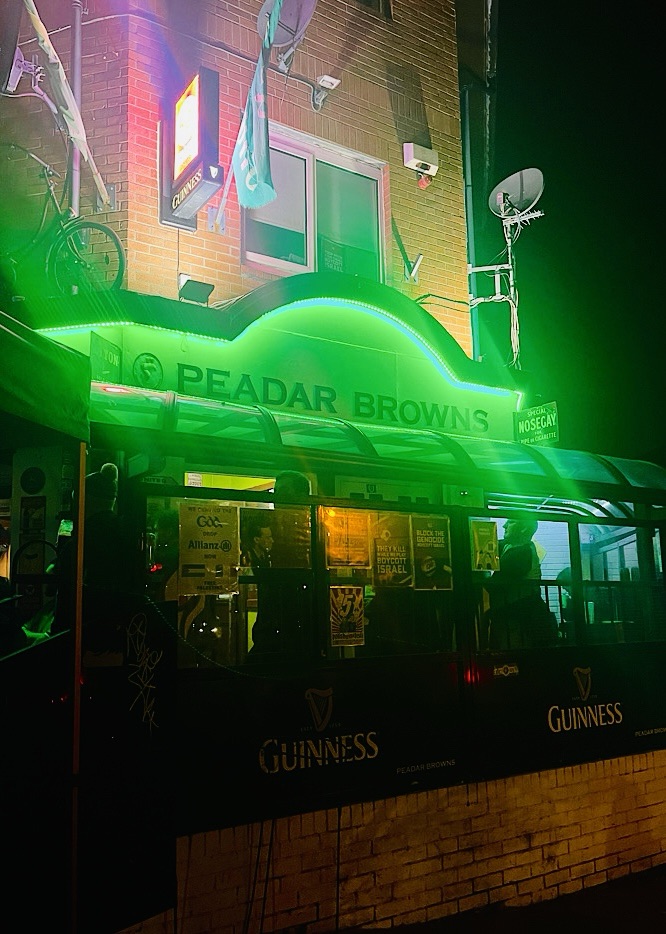
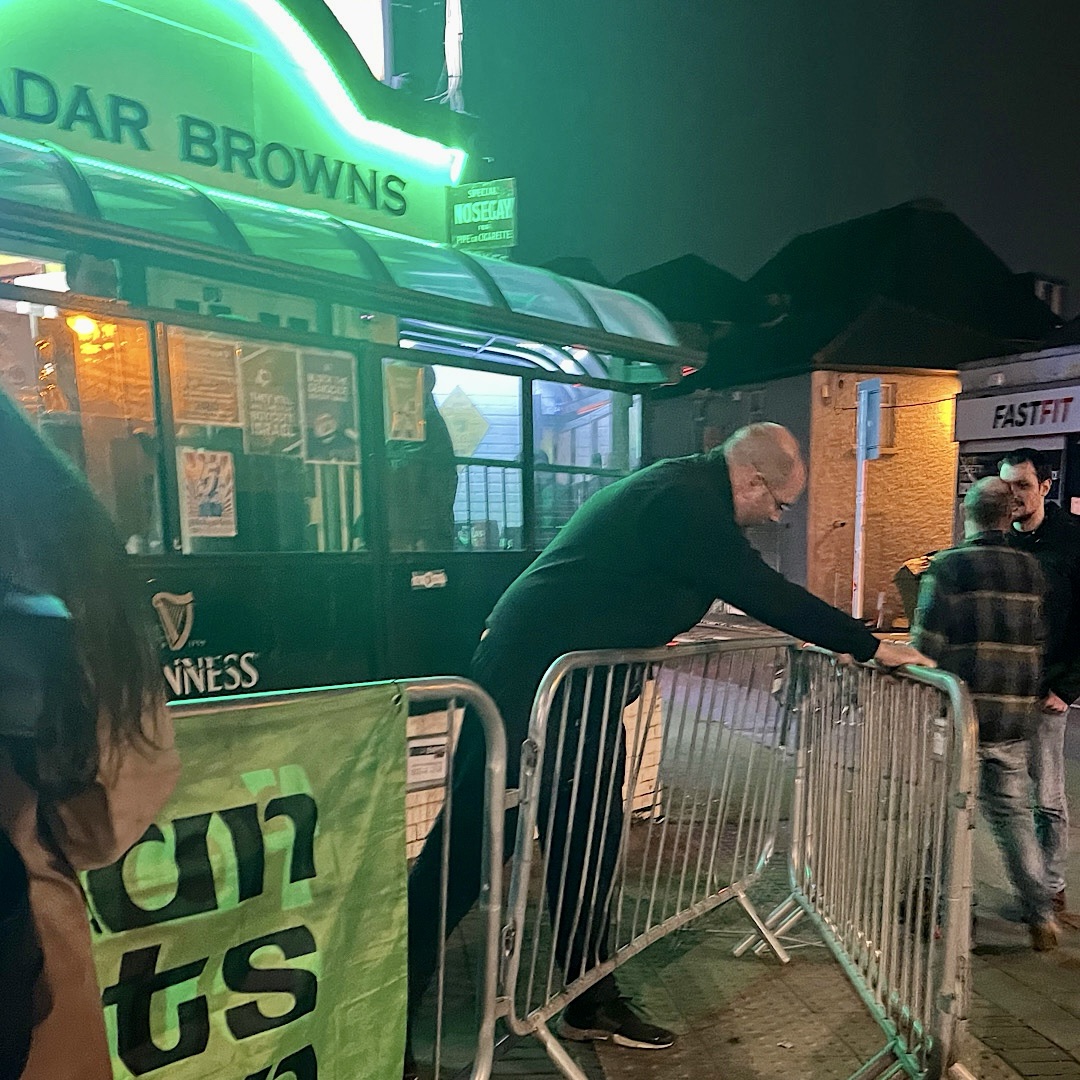
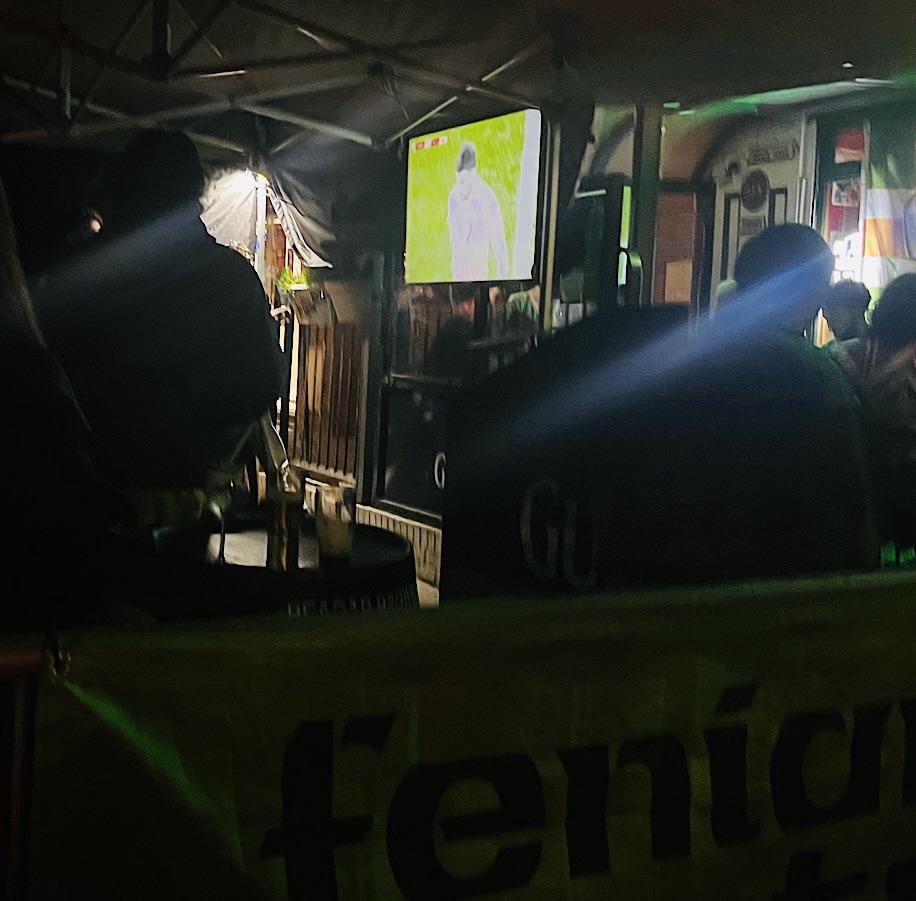
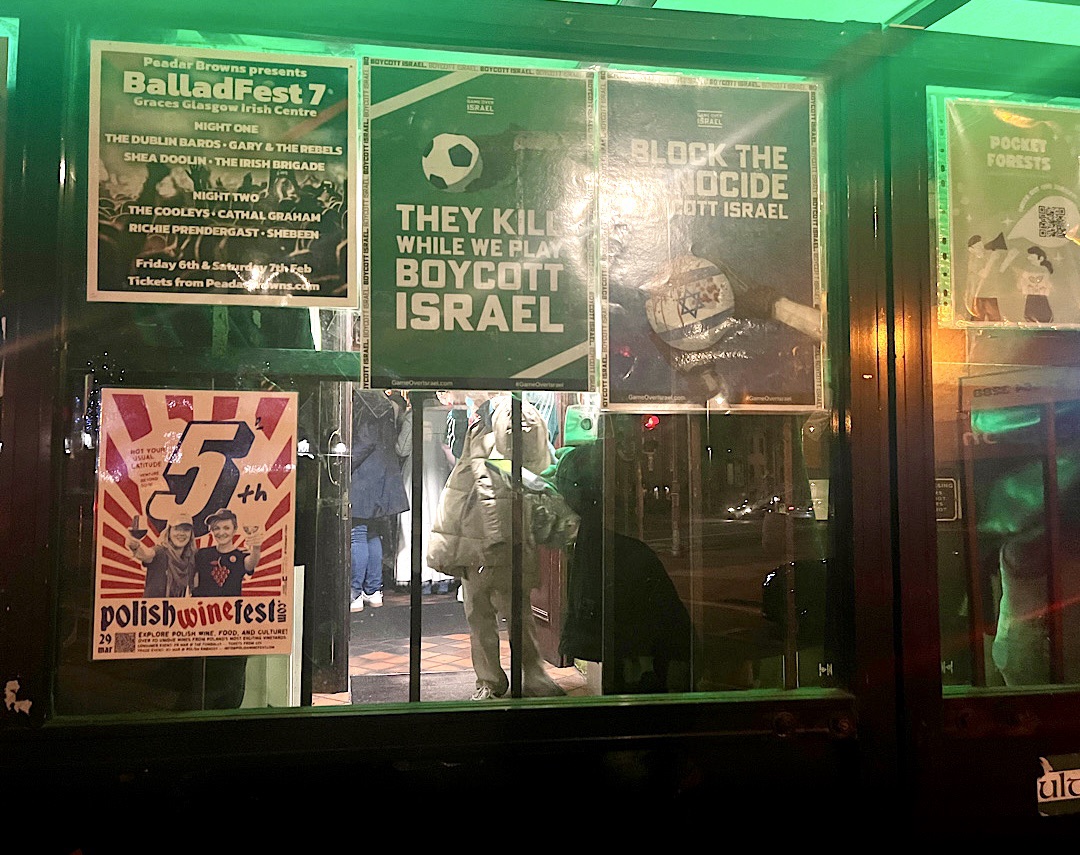
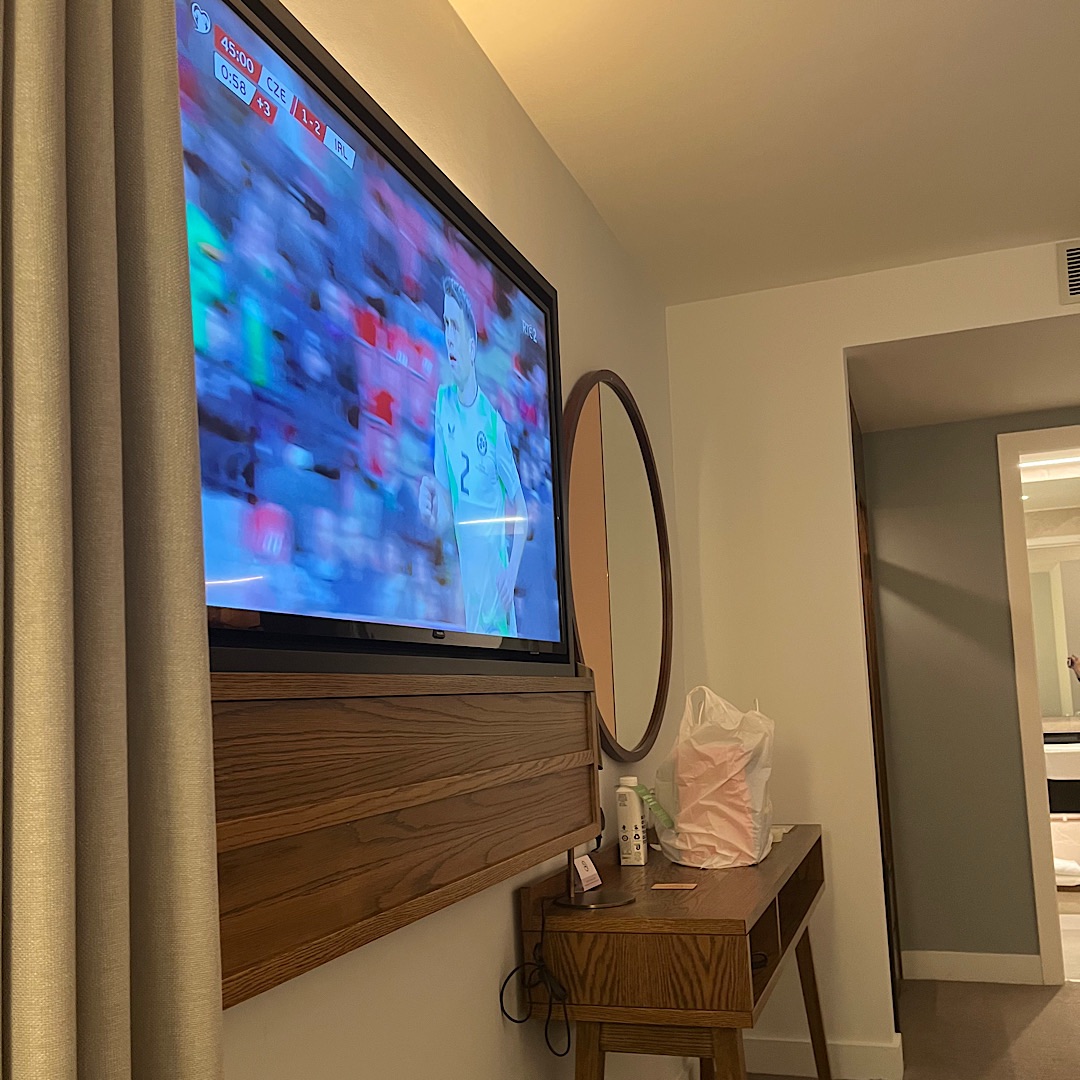
We wandered down to the restaurant around 7:30 p.m. and it was dead, enough so that M was nervous that maybe the food would be bad. While the food cooked, we meandered to the end of the block to Peader Brown‘s, a traditional Irish pub that has a history of Irish Republicanism. They had several televisions visible from the tented outdoor area as they were at capacity because of the World Cup Qualifying match between the Czech Republic and Ireland.
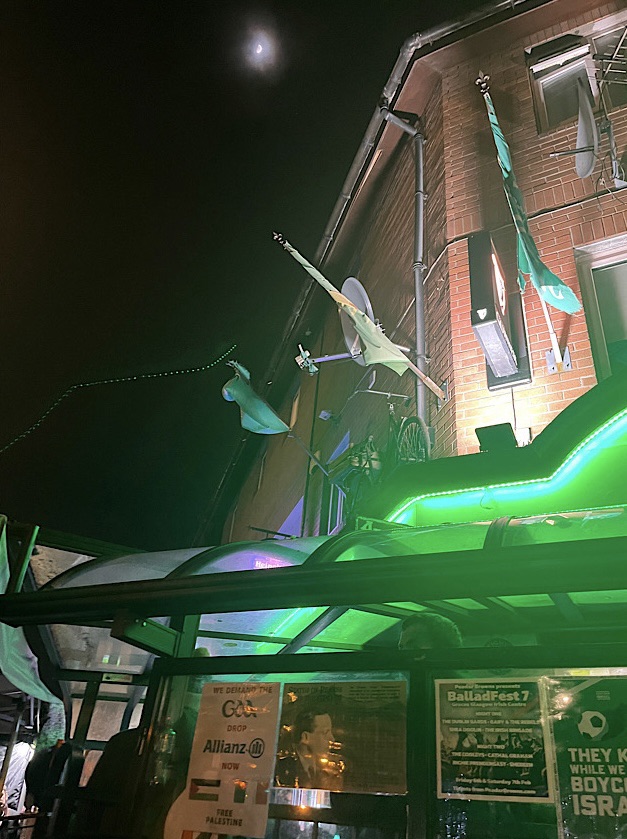
The moon was bright and the game was amazing, each time we went to return for our takeaway, the Irish team scored. We wondered if maybe we were a good luck charm.
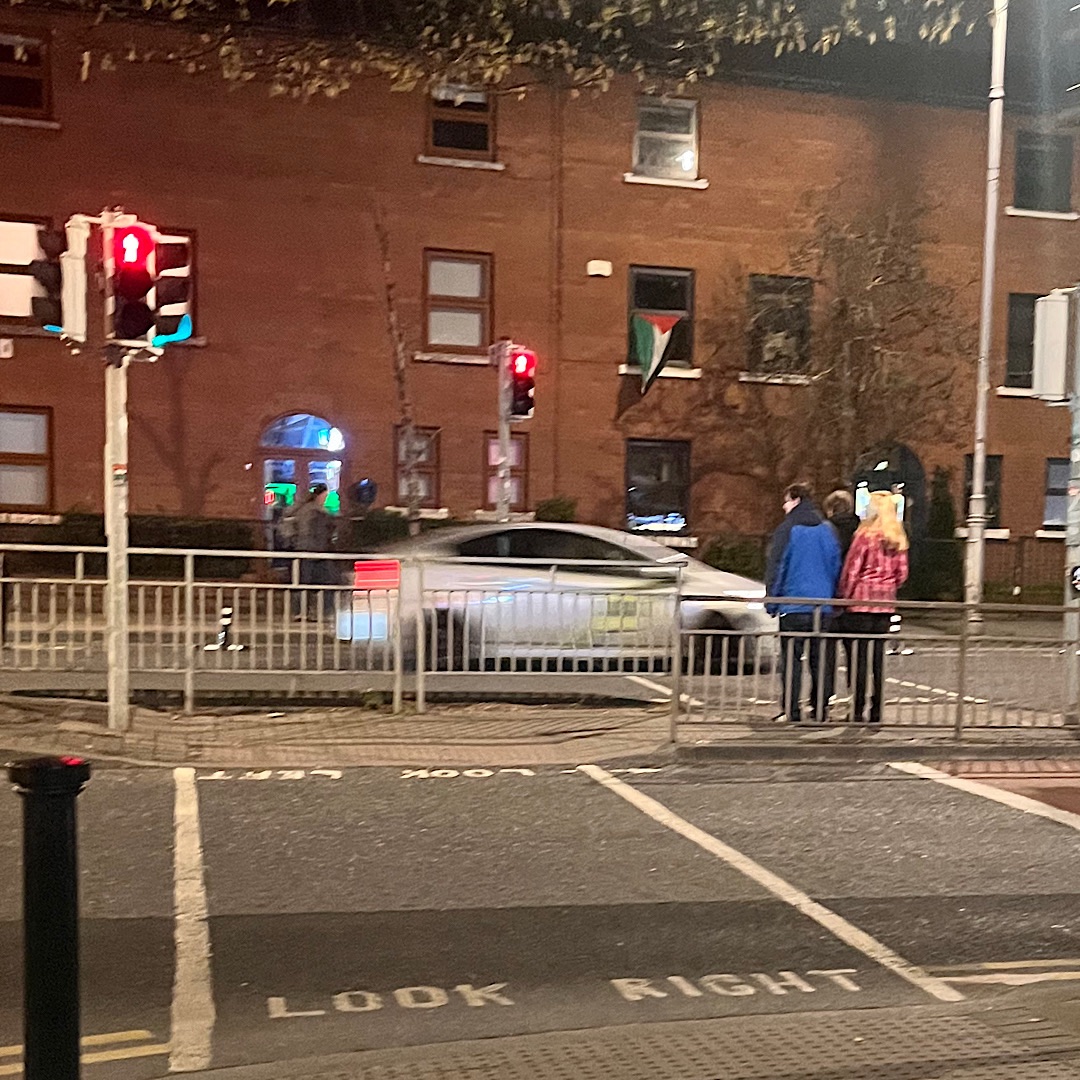
We read the pro-Palestine posters, and M even noticed a Palestinian flag across the street. That’s not surprising as the Irish are acutely aware of the politics of ownership by occupation.
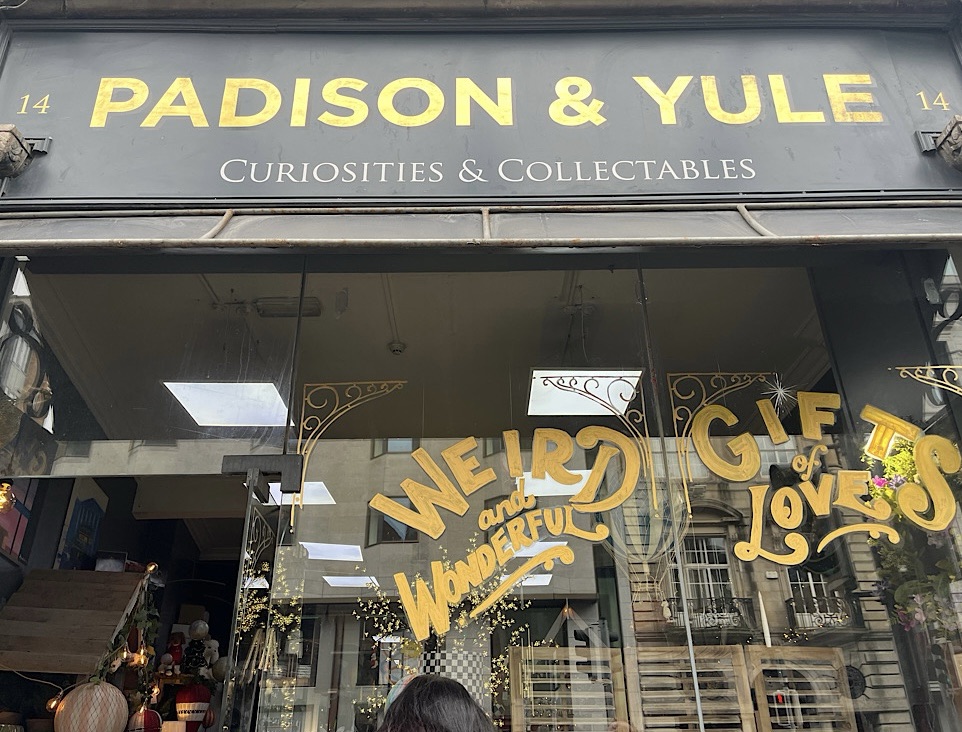
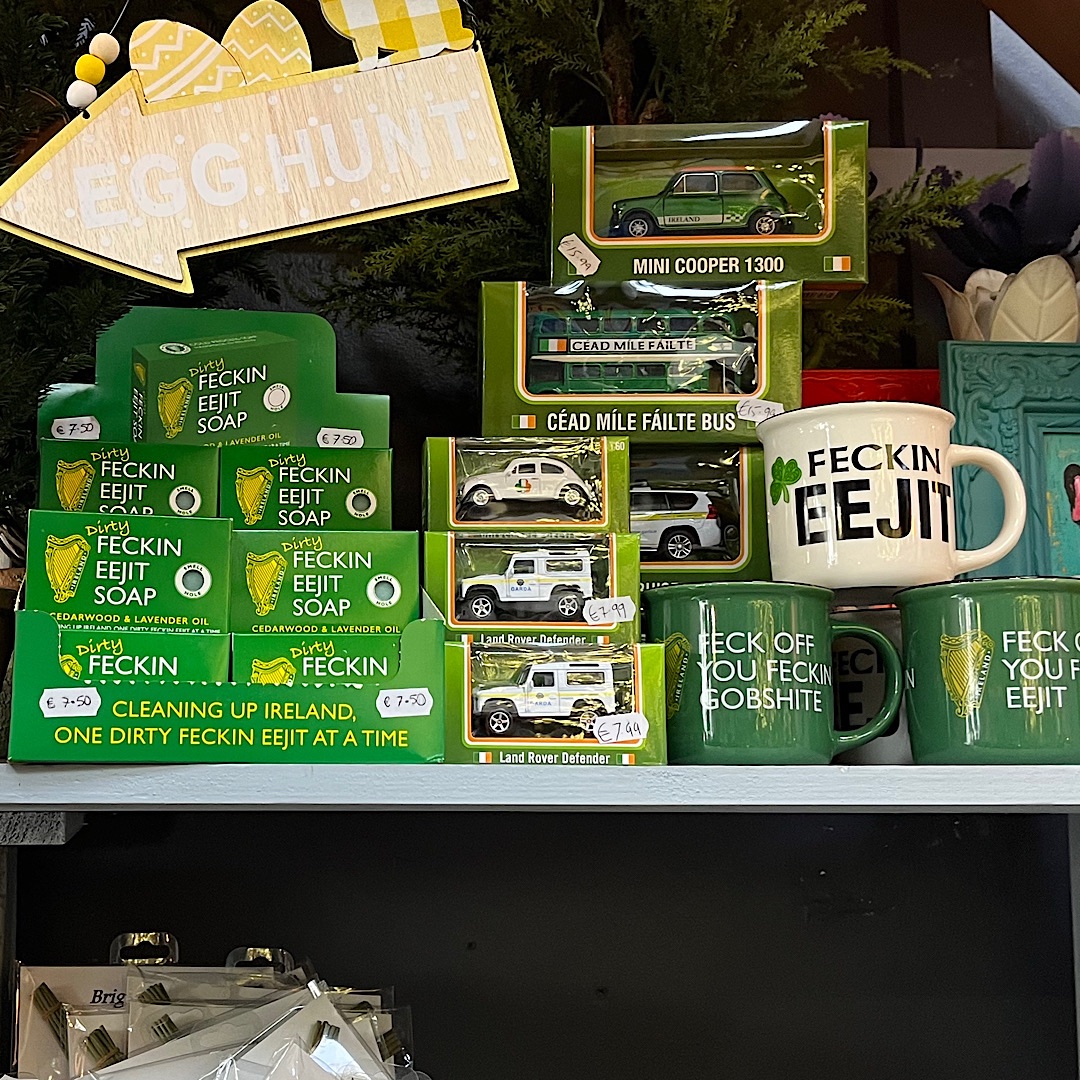
We also started calling the Czech team and each other feckin eejits as I had stopped at a curiosities shop earlier in the day where they had some interesting mugs and dirty feckin eejit soap. (“Weird is wonderful,” the window said.”
This also led to M and I conversing about why Ireland has such a “cussing culture” and my hypothesis went to the idea that the Irish have a long history as a working class culture, people who have survived on an island for a very long time (in Dublin’s case 900 years).
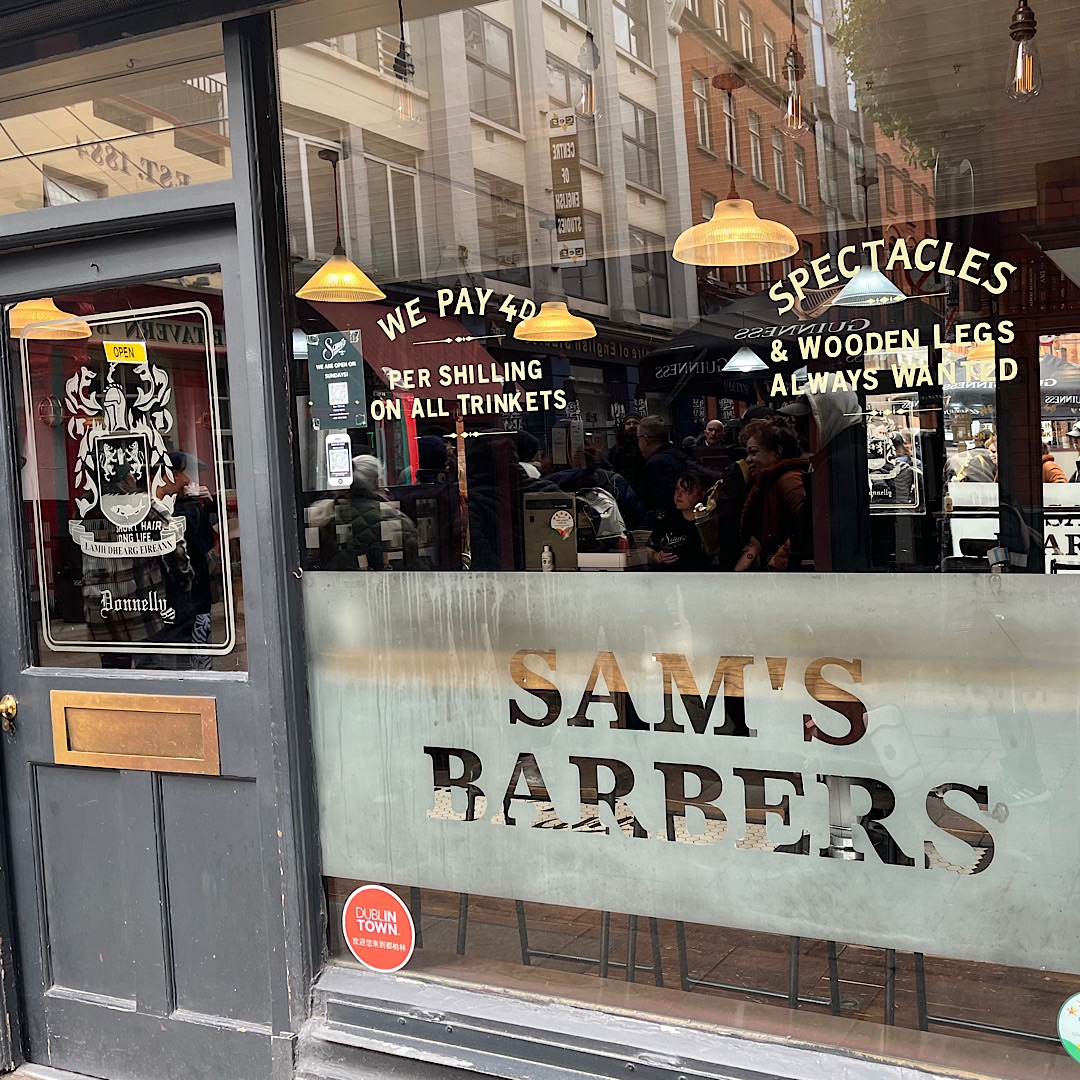
Speaking of oddities, I saw a sign in the window of the barber:
“Spectacles and Wooden Legs always Wanted.”
We brought the takeaway back to our room where we stuffed ourselves with a delicious feast that we could not finish. So we piled it into the fridge, but we have no microwave so we may need to reheat it with some creativity with hot water from the electric kettle.
And then we turned on the game.
Now we were exhausted and stuffing our faces with Indian food, but the Irish team was giving it their everything. And we couldn’t stop watching.
The game remained 2-2 and went into double overtime, and an Irish player and a Czech player collided so hard the Irish player left on a backboard. (I have to Google that and see if he’s okay.) Those boys were tired, sweaty, covered with grass stains and still playing an intense game.
And then it went to penalty kicks. M tapped out. He can’t handle penalty kicks. But I had to know who won. The Czech team missed the third kick. The Irish team missed the fourth. Then the Irish team missed the fifth and the Czechs did not. The Czechs won the game on the fifth penalty kick.
This weekend was indeed the three-day whirlwind tour. What started as an exploration of the Museum of printing ended up covering at least six states (not including our home state of Pennsylvania), a plethora of bookstores, a variety of art, rare books, a lexicographer’s grave, and a wild ride down memory lane.
And I have not even had the opportunity to sort my thoughts and keep up with my blogging because the internet was soooooo bad in our hotel last night (even though I paid for “enhanced wifi”). It kept kicking me off like it was 1999 and I was using a dial-up modem.
And now it’s Monday morning, not quite 7 a.m. and I am trying to get myself organized. But first, I get a shall talk about Sunday.
The plan was to get up, find internet, have breakfast, and go on a Waltham Massachusetts Volkssport walk at 10 a.m. when we could access the walk box. The wrinkle came when the temperature dropped to 30 degrees with no chance of the sun warming things up until late in the day. And we did not bring coats.
Gayle at least brought a sweatshirt. I brought t-shirts and my paisley sportscoat.
With the time change, we checked out of the hotel by 6:20 a.m.
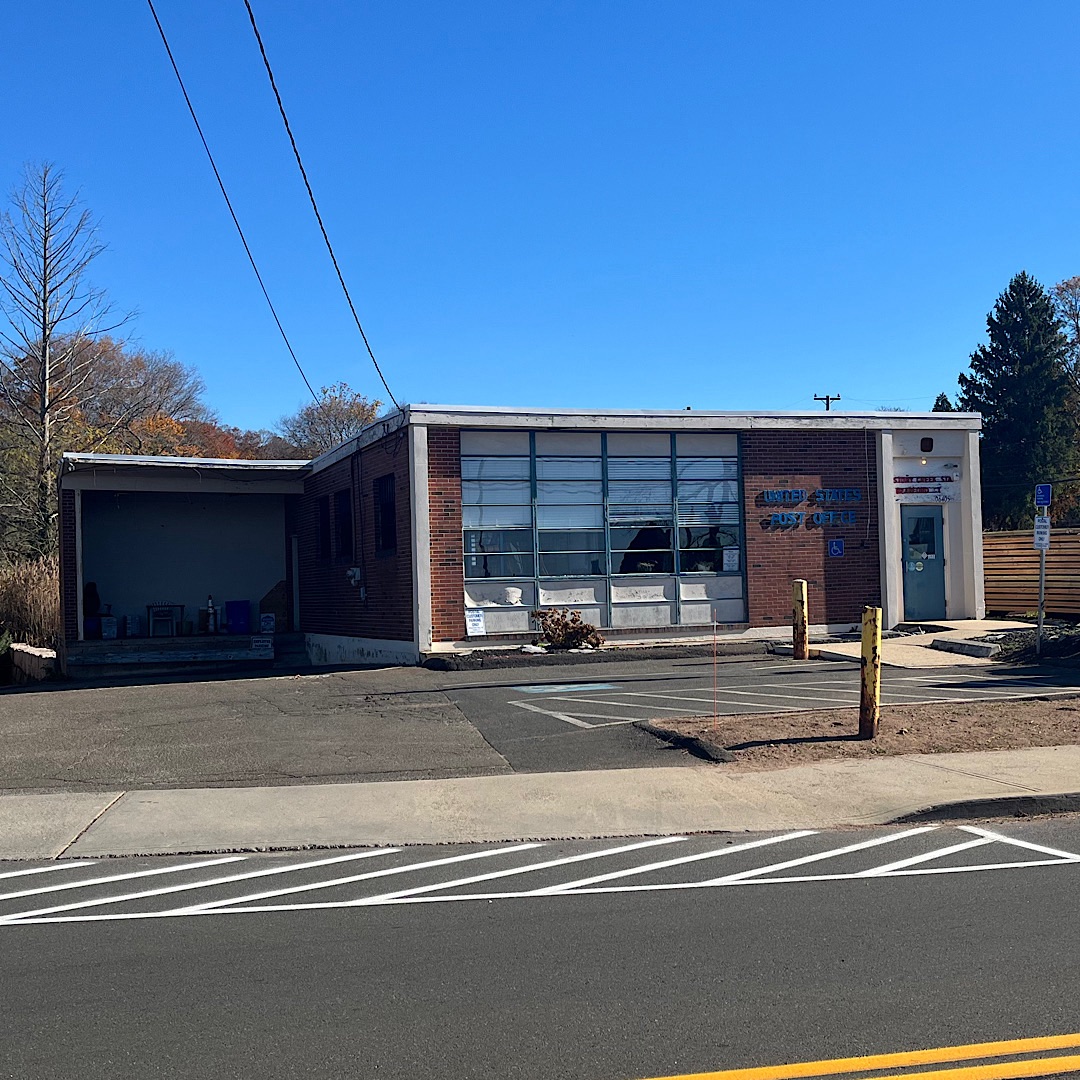
We then ended up in Attleboro, Massachusetts and neighboring Pawtucket, Rhode Island at 7:20 a.m. It’s not easy to find a breakfast spot open at sunrise on a Sunday morning. So we visited the local Market Basket– and the place was mobbed, with baggers and everything. They opened at 7:20 and people were already pouring out of the place with full carts at 7:20! They had more registers open than a Wegmans the week before Thanksgiving!
In the parking lot of the grocery store, which sat in a grocery plaza looped into the commuter rail station, we plotted our next move. Honey Dew Donuts. Apparently, a Massachusetts, Rhode Island, and New Hampshire chain with some super nice doughnuts, solid coffee and bagels that resemble rolls but have phenomenal flavor. And Gayle had hot apple cider. Because Autumn. In New England.
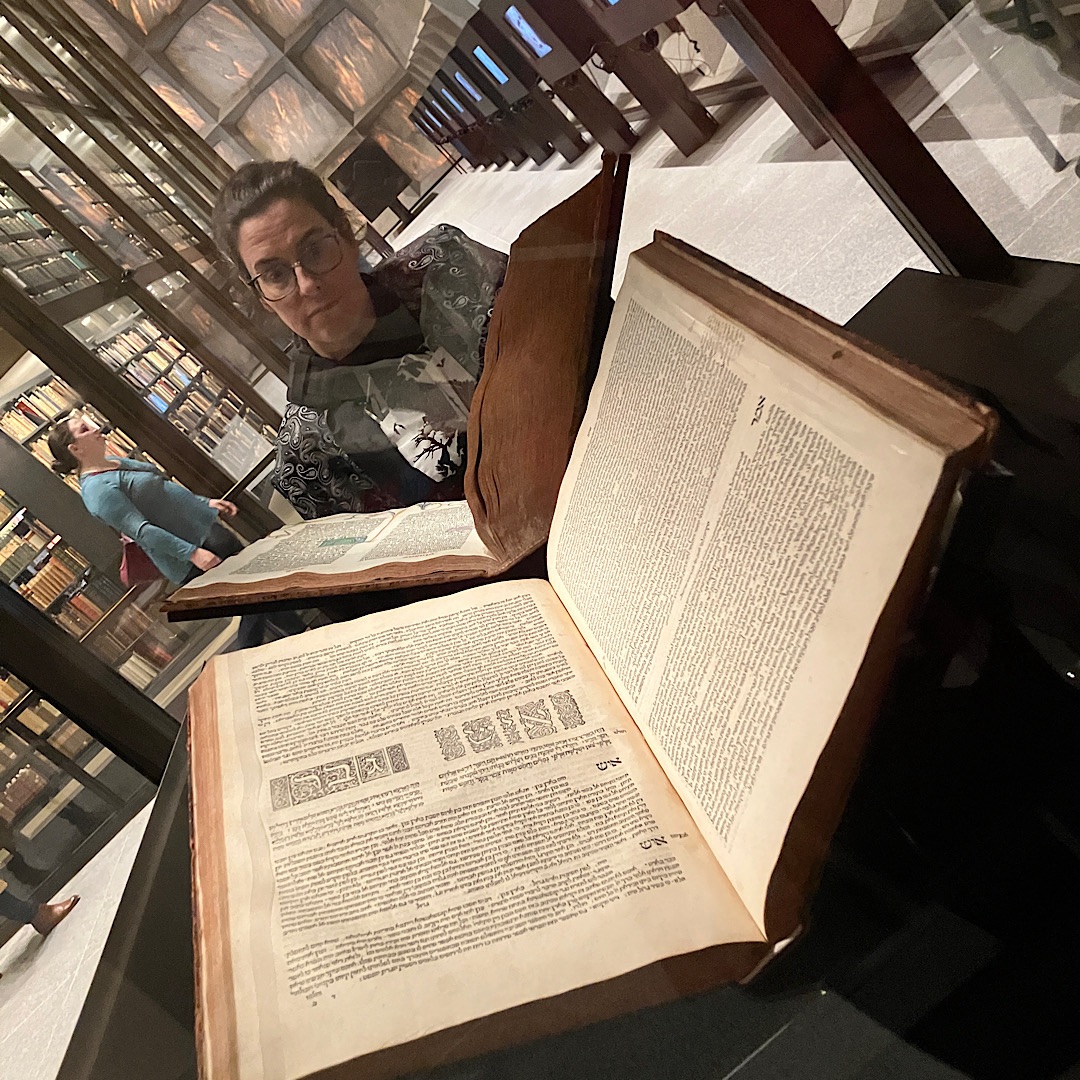
After our egg sandwiches in Rhode Island we drove another two hours to the TA in Brandford, Connecticut. While there, Gayle managed to find a reference to a nearby Gutenberg Bible– because where else do you find info on a prestigious, historical Bible but in a truck stop. But the library where the Bible lived did not open until noon.
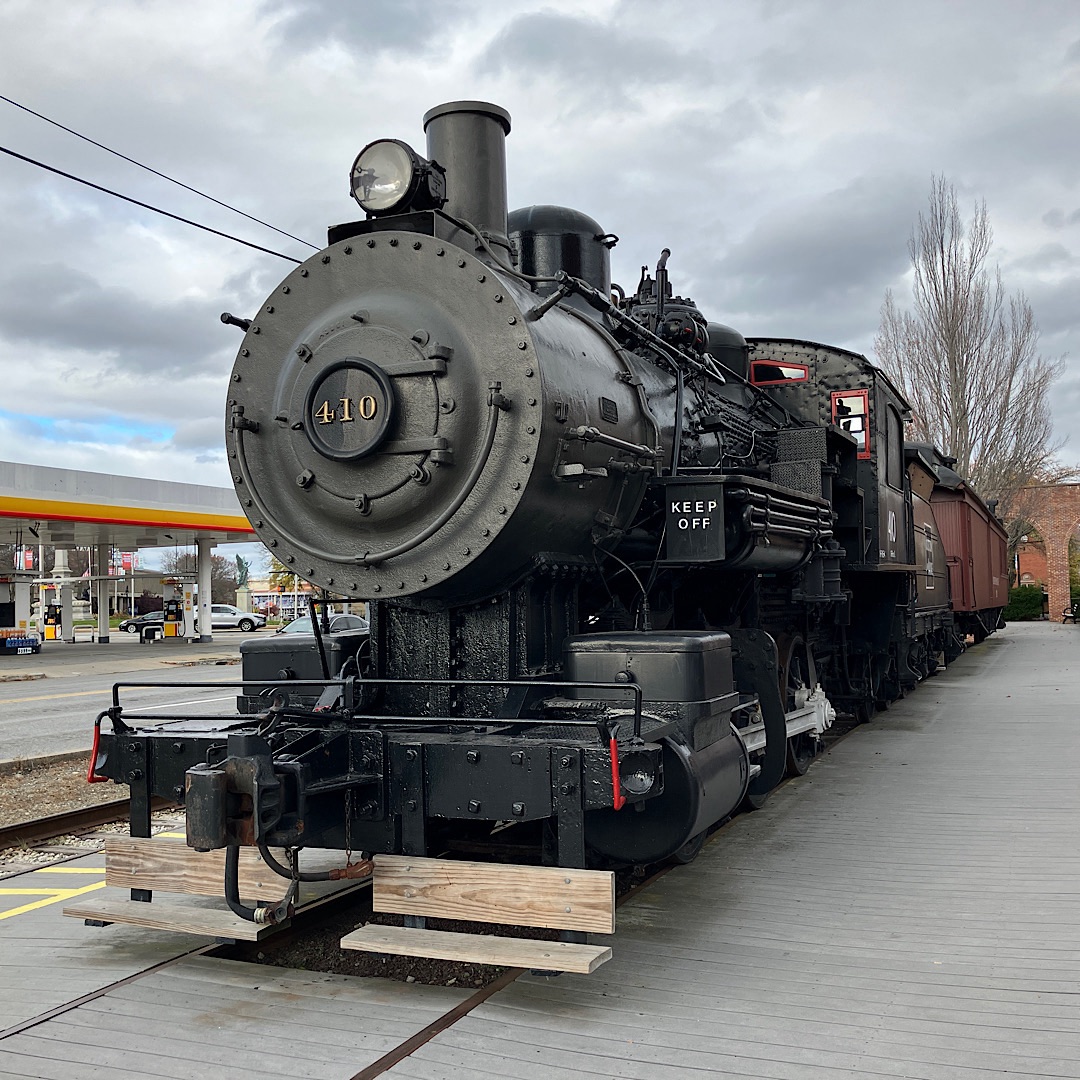
It was about 9:45. The map indicated that the area we had stopped in was close to The Thimble Islands and a google search showed a variety of picturesque parks. I picked one with some rail relics and off we went. Except Google took us to the top of one of the rail trestles or something, not the nearby walking path.
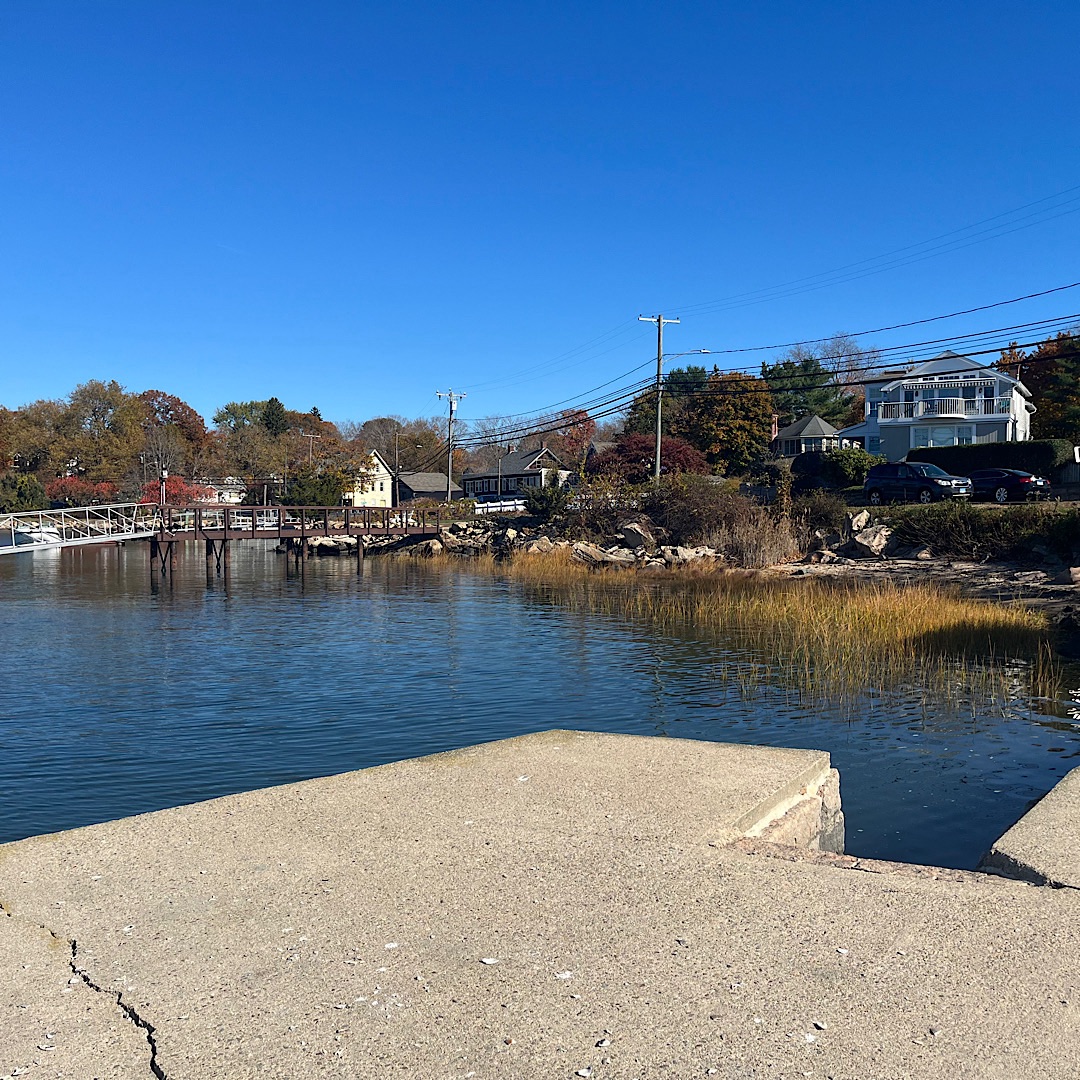
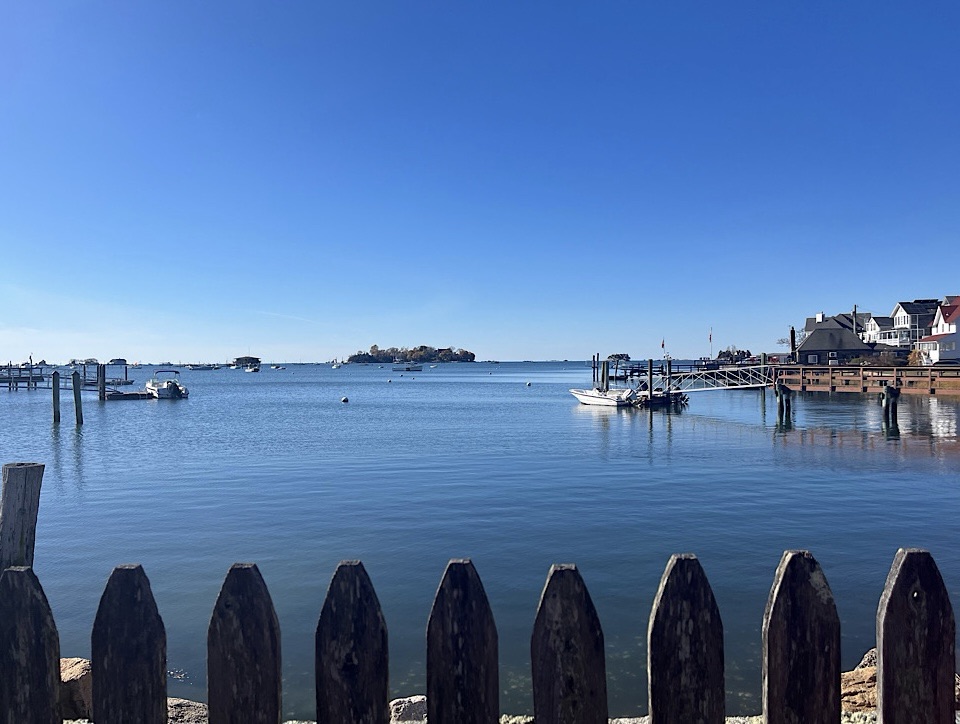
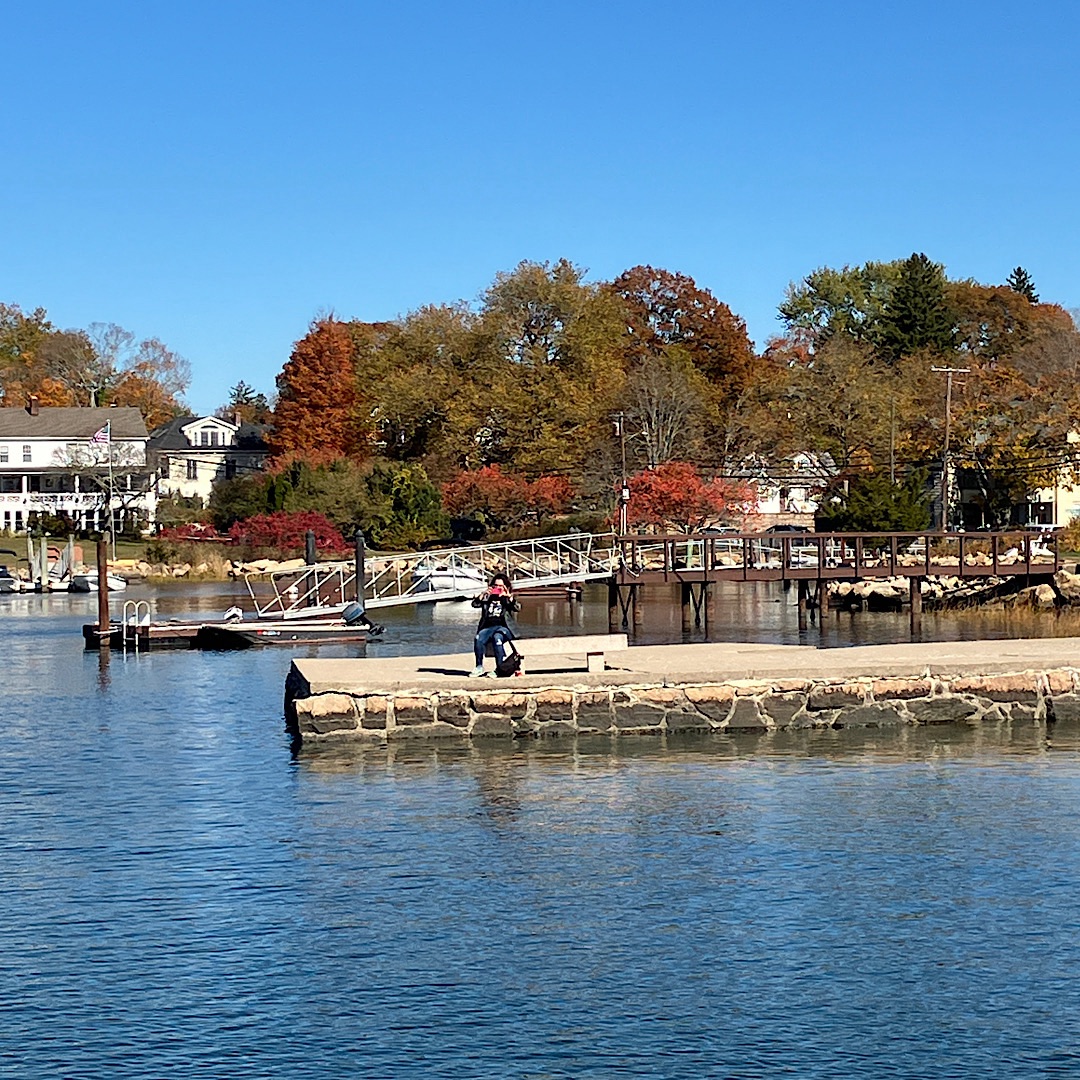
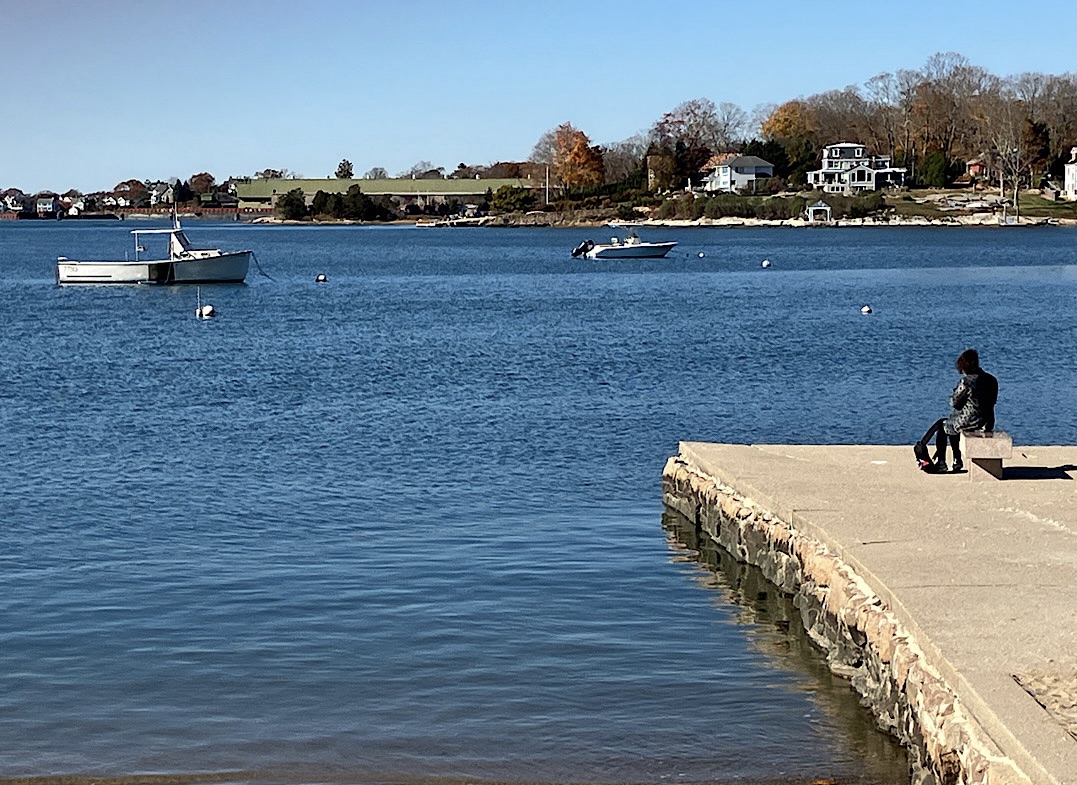
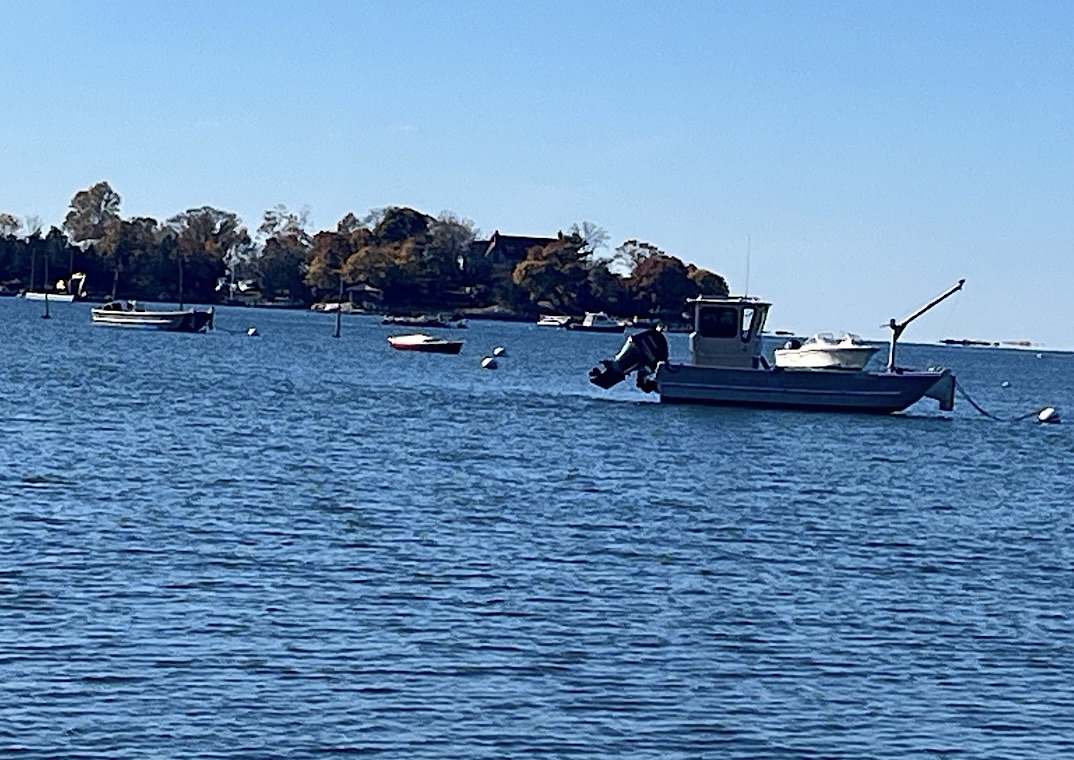
But we did see some amazing views of the water. Gayle suggested we get back on the road and forget the Bible. But how could we be that close and not see the Bible? I clicked another nearby park and somehow ended up in adorable Stony Creek, Connecticut. We walked around the very busy village, seeing families and dogs and boats and the view of the Thimble Islands.
Now, remember: We’re just a couple of nerds hanging out waiting to see a Bible.
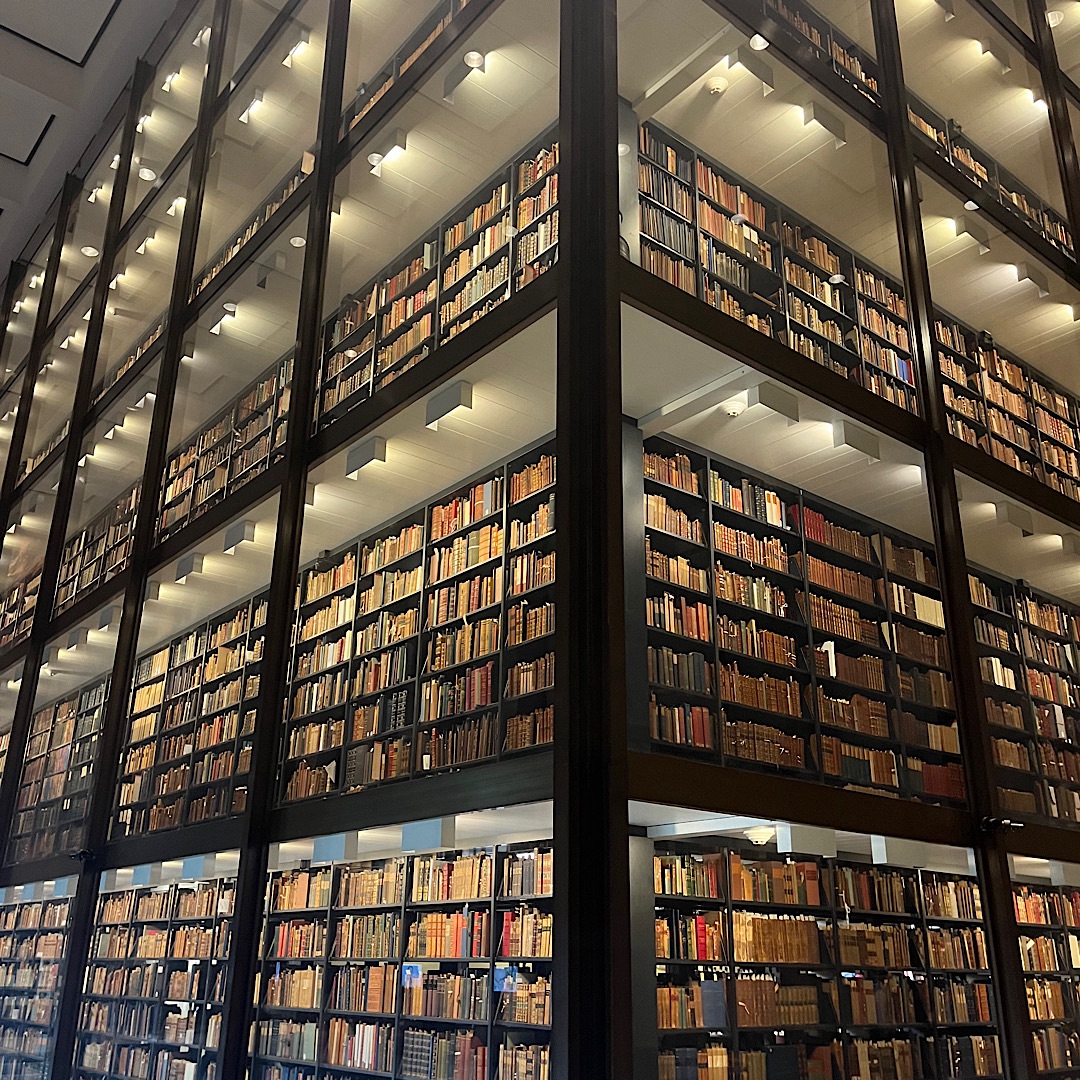
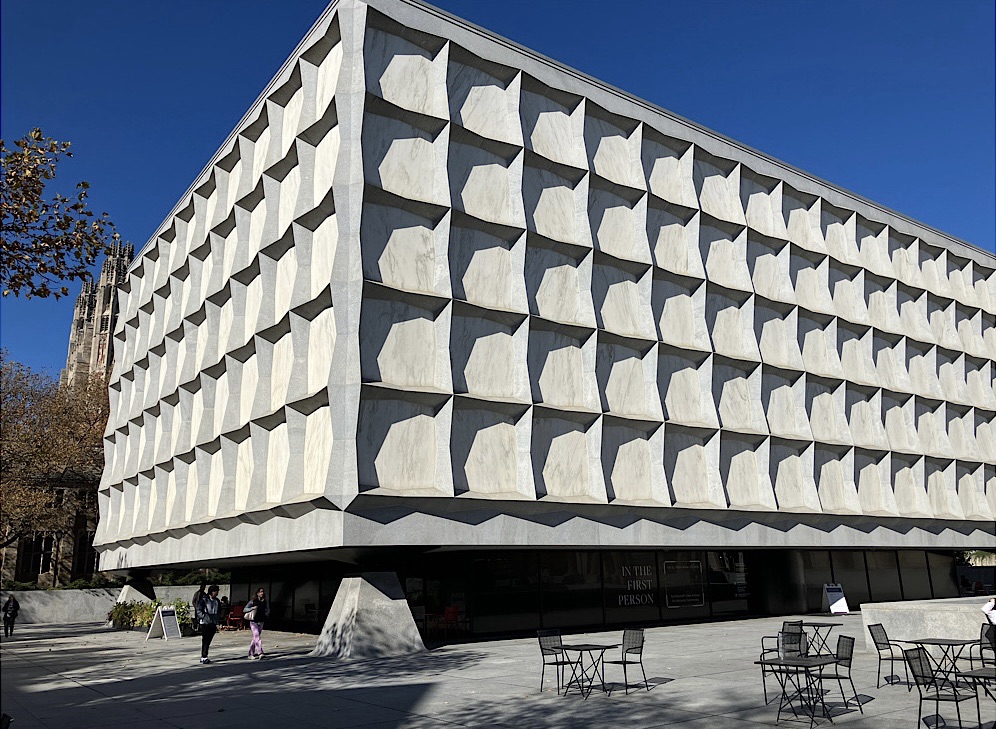
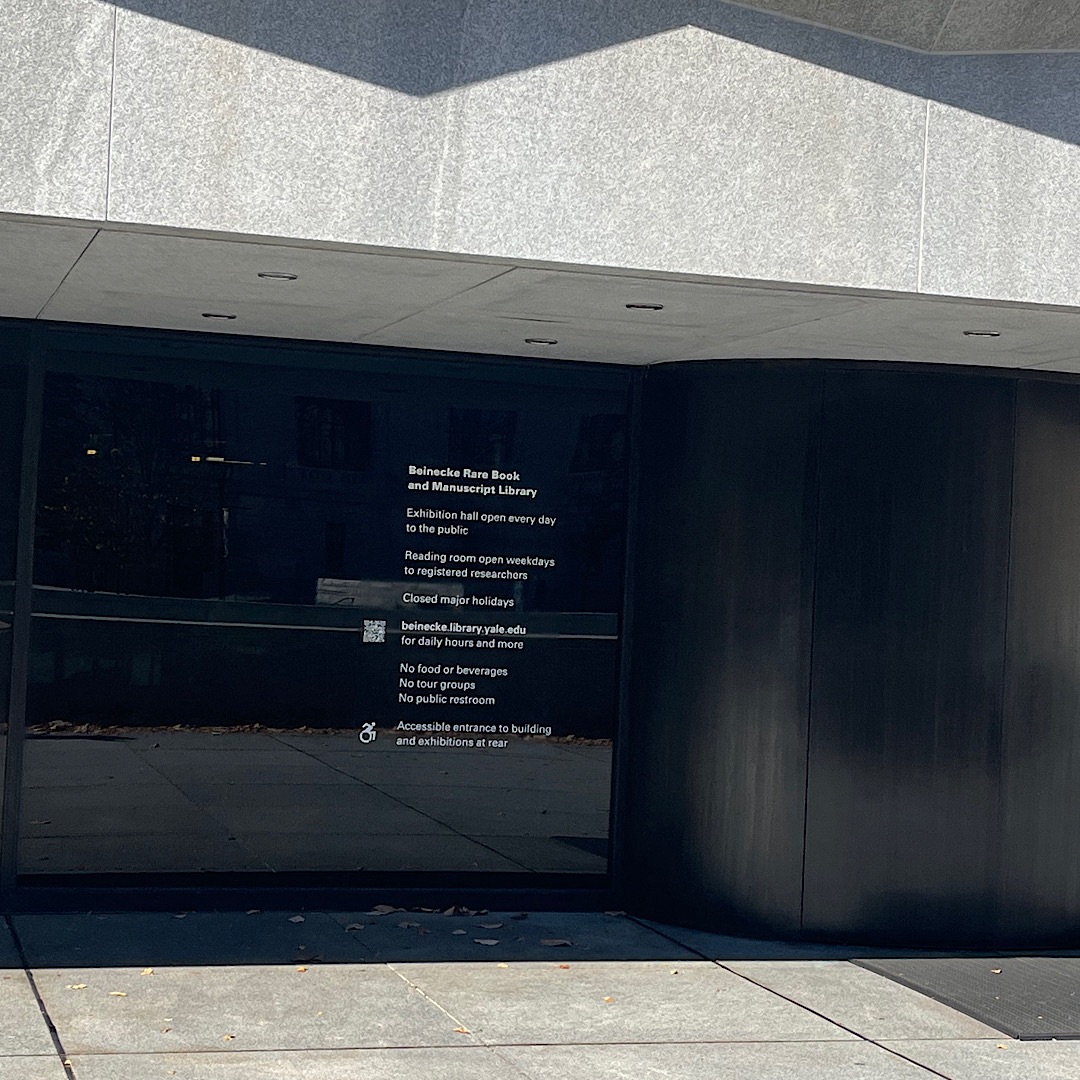
We get back in the car at almost 11, and this is where I learn that the Bible is at the Beinecke Rare Book & Manuscript Library at Yale University in New Haven.
And we could certainly arrive on the Yale campus a little early and poke around. We found a parking space very easily, and New Haven does not enforce parking meters on Sunday, so we got parked and realized we were near a cemetery. The cemetery had some lovely type that attracted Gayle’s eye so we went in and discovered that it was the cemetery that featured Eli Whitney’s grave. And Gayle and I both knew that we should remember who that was. Luckily the brochure reminded us that it was the inventor of the cotton gin. And if I remember correctly, the cotton gin spurred the Industrial Revolution.
Gayle and I decide to explore Grove Street Cemetery and on our way to find Eli I spot Noah Webster. I double check and sure enough he’s the Noah Webster of the dictionary.
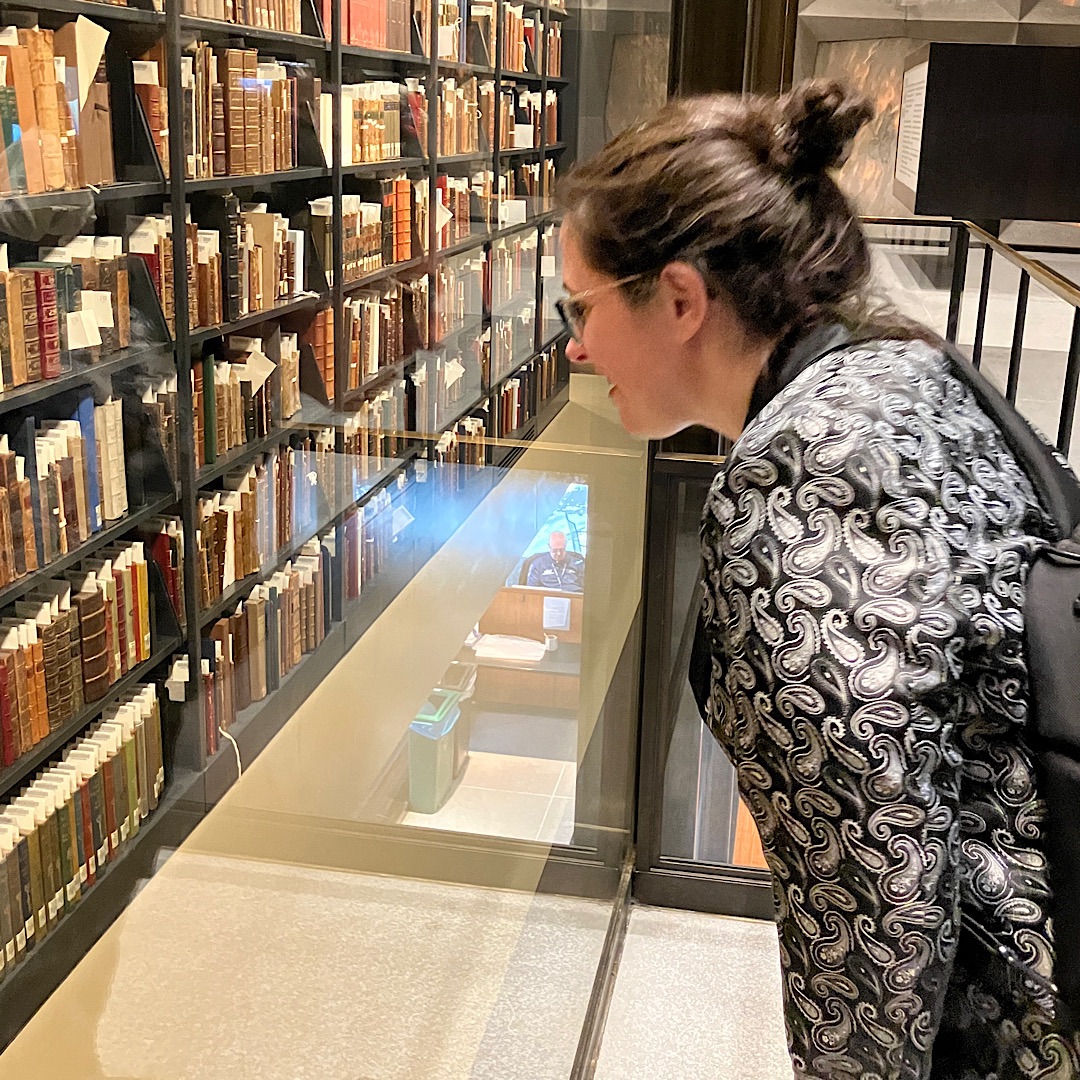
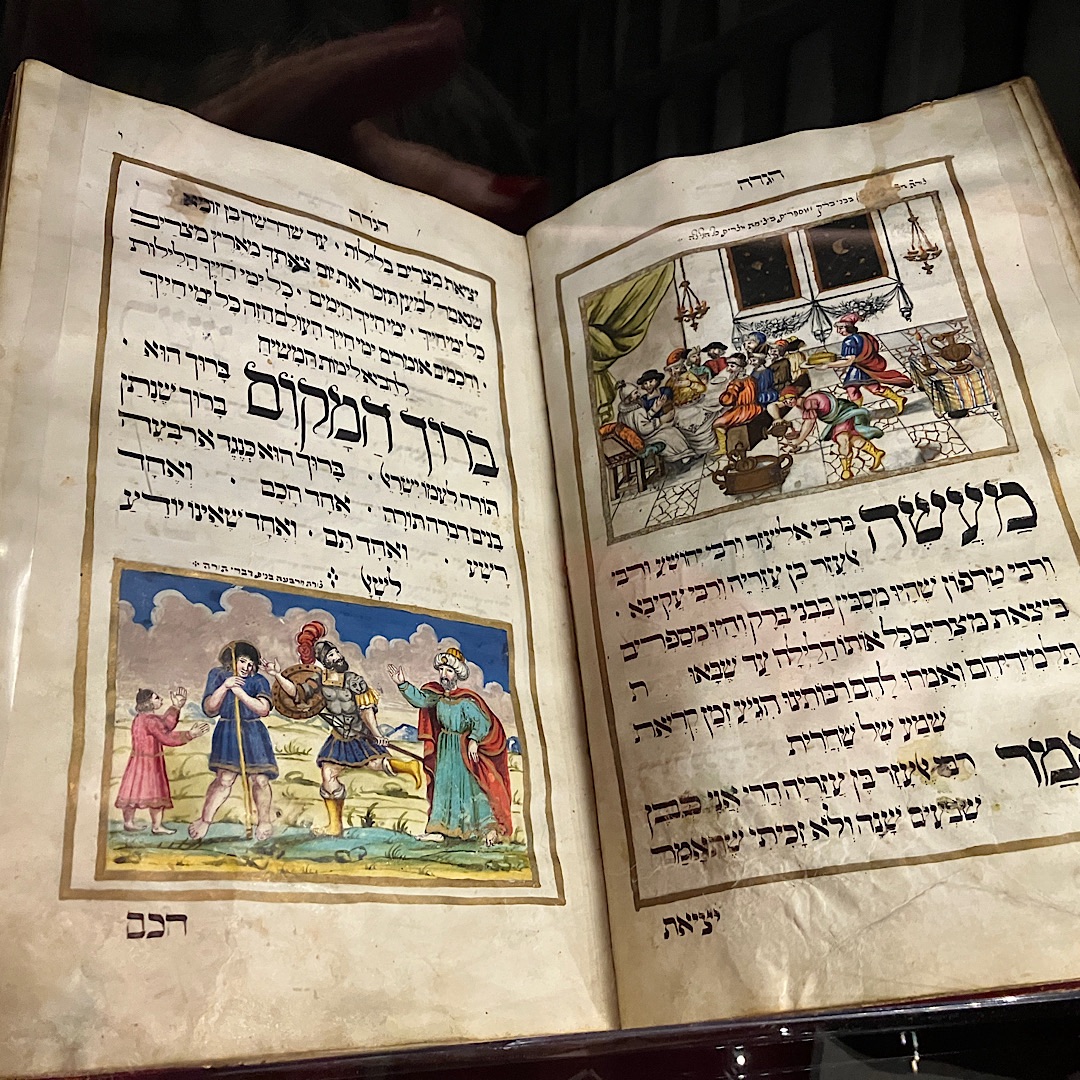
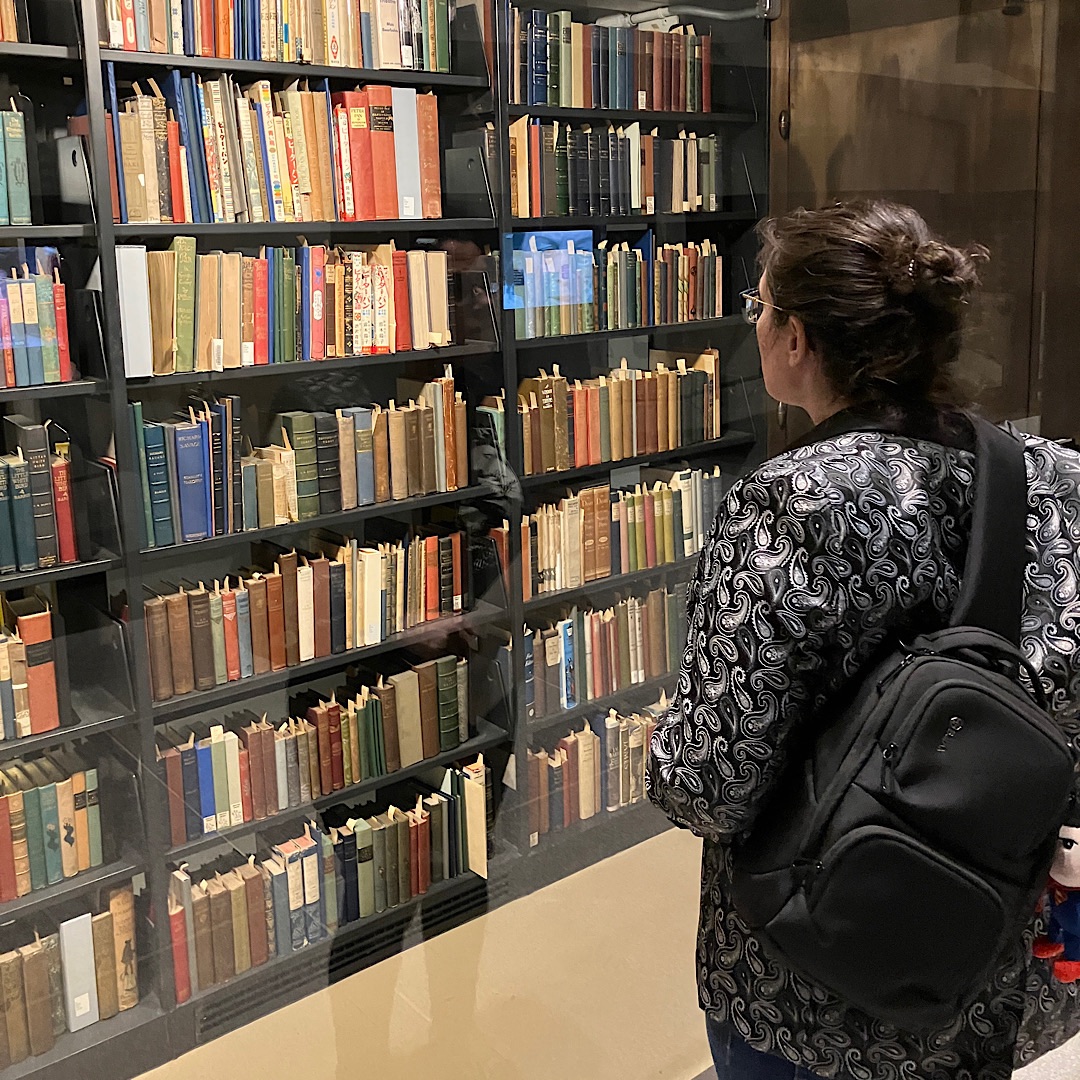
And then we visit the Beinecke Library… Which the revolving door seals up with a cover so you can’t even see the front door when the library is closed.
Checking out of our lovely Doubletree hotel (goodbye cookies!), Gayle and I headed to Sammy J’s Luncheonette for breakfast. Gayle made a comment about the proximity of the state line, not realizing it was so close. So I decided to take her to the next state– less than six miles away– for breakfast.
I knew it was a good choice when we arrived and had to circle around the building to find a parking space. And we found ourselves in a weird dumpy area, next to a fire station and what looked like an empty grocery store. There was a back door to the restaurant that asked customers to please not wear cleats in the restaurant.
I think we found the local spot where all the boomer men eat, which is surely the sign of a good diner. I had a kielbasa and cheddar omelette with baked beans and marble rye toast. Gayle had cranberry walnut pancakes.
After we finished eating, we put gas in the car and the GPS took us a lovely back route to the museum. We arrived in Haverhill about forty minutes before the Museum of Printing opened. Gayle suggested perhaps we could go early, park the car and walk the town. I pointed out that I didn’t believe the museum was in a town.
And sure enough, the museum was in a residential neighborhood, wooded, on narrow, badly aged one-lane streets. So we went to a shopping plaza about 1/3 of a mile away. It had a Marshall’s and I’ve been trying to use a gift card that Little Dog’s Mom gave me for my birthday.
At 9:25 a.m., we turned up on the doorstep of Marshall’s. And they open at 9:30. We waited– and here’s the kicker– a crowd assembled with us. TO GO TO MARSHALL’S. That killed fifteen minutes. And I got some cool stuff: coffee, syrup, candy and PINK NAIL POLISH.
We got into the car a little before 9:50 a.m. and drove back to the museum.
And there, my friends, let me tell you, the folks at the Museum of Printing can REALLY pack stuff in. The museum is relatively small but has just everything in it. The story the museum tells covers so many different aspects of printing. I’ll be writing more about that over at the Parisian Phoenix blog.
Then we stopped at Andover Bookstore, and Andover was cute and at the tail end of a scarecrow festival. The town was quaint but also a bit boring.
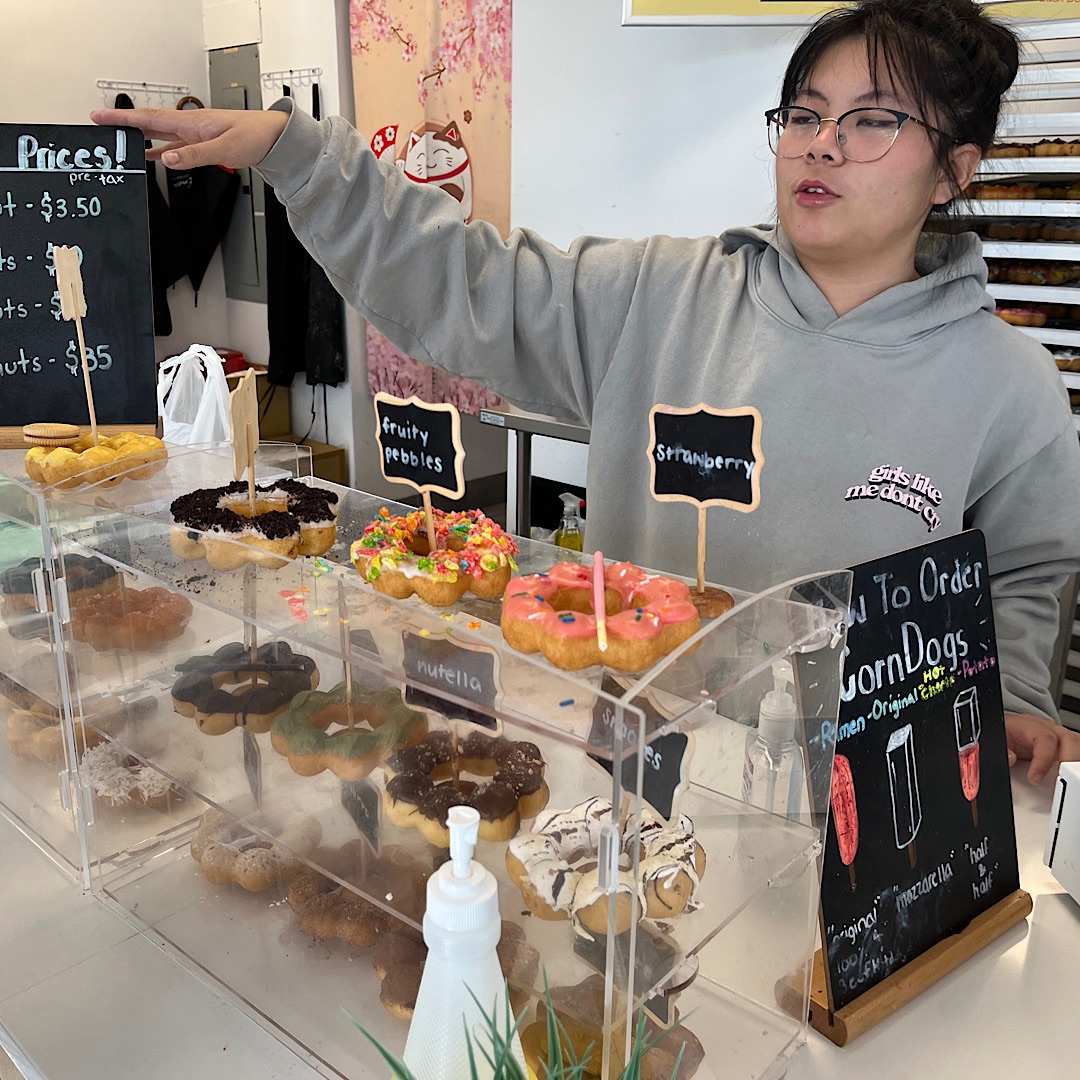
Next we visited Lowell, which I’m fairly certain is my great-grandmother’s birthplace. I actually downloaded a new parking app for Lowell. It has a rich history as a transportation center, canals and trains and all that jazz. Once we parked the car we noticed a sign, “Mochinut: More than Just a Donut.” I asked Gayle, “Can we go see what that is?”
And after we ordered some mochinuts (which we tasted after dinner and the ‘classic’ tasted like funnel cake) and a brown sugar thai tea with pudding and boba, we found an art store (a good one) and then we meandered to lala books where E.H. Jacobs is having a book event next week. Very cool store. Had small town vibes in a very urban space. And I bought some local books.
At that point we came to our hotel to find a charming desk clerk. She asked if either of us had pets with us. I answered, “Just my hair.”
We’re at an Extended Stay America. The dishwasher has a swamp in the bottom of it, the sink drips and the internet keeps dropping even though I paid extra for the “enhanced” wifi because I couldn’t get on the internet at all and had no cellular service. I even got to call tech support!
That’s when we went to a nearby Mexican restaurant, Gayle found it and told me to order a margarita. The host was from Macungie. We started chitchatting when I asked if he had a t-shirt with the same phrase as the neon in the doorway: eat tacos, drink tequila, have fun.
And all I need to say about that is that the cocktail I had included cassis, rhubarb bitters, maple syrup and fig and was beyond delectable. And they had this enormous appetizer of Brussel sprouts. It was sweet, savory and just yummy.
Yesterday, my friend Gayle and I embarked on an adventure. I wanted to motivate myself toward more movement and healthier living and Gayle enjoys visiting new towns via self-guided walks designed by local clubs of the American Volkssporting Association. Gayle has wanted to hit the Ephrata, Pa., walk (which is about 90 minutes away from our homes) and I love a day trip. The walk is maintained by the Susquehanna Rovers.
Gayle packed lunch. I packed sunscreen. I even tossed some electrolyte powders packets in my bag, knowing it would be a sunny summer day. I took my muscle relaxers.
Off we went.
The background
Now, as someone with a mobility disability (cerebral palsy, spastic diplegia), I suspected– or perhaps even knew– that this would end with some sort of injury or discomfort. I had hoped that having this walk, a 5K by design, would motivate me to get away from my desk and wander around the neighborhood.
That didn’t happen. I could blame the heat wave, but in reality, I doubt I would have changed my behavior even if the weather were nice.
In the end, I said to myself, “Anyone can walk a 5K.”
And in one respect, I was correct. I did it. On the other hand, it was stupid. And I’m suffering because of it. But that’s getting ahead of myself.
I wanted to use this walk to see how my movement was in a more long-term commitment. I wanted to test my breathing and my heart rate. I suspect a lot of my health issues will not resolve until I lose at least 20, if not 30, or even 35 pounds (at which point I ask myself– how did I gain this much weight so quickly?)
So this walk would help me evaluate my true status and make health-related goals.
That was my logic. Was it a tad reckless? Maybe, maybe not.
The Walk
Ephrata has a lovely main street, historic buildings and apparently monuments– none of which we saw because the 5K was mostly through residential neighborhoods. And we missed a turn somewhere and ended up shaving off about a half mile. Our time for our 2.8 mile 5K was about 31 minutes a mile, and we periodically stopped to enjoy the shade, look at weird buildings, and sometimes cuss about hills.
AVA walks are rated, and this was a 1B which means it was supposed to be easy, with sidewalks and the occasional hill. But if you looked at the “fine print,” the walk was rated “medium” for strollers and “hard” for wheelchairs. I think for the foreseeable future Gayle and I need 1A walks that are easy for wheelchairs.
So here’s my analysis of what we saw in Ephrata on the 5K:
A gnome garden. I like this tiered design of outdoor knick knacks. I’m not sure what sense it makes, but it seems like a concept the no-longer-a-Teenager would embrace.
A neighborhood egg stand, that was closed.
Your going to have to google this for yourself. “Best Kept Secrets Tour.” “Shopping, Food & Fun adventures.”
The strangest “double” homes I’ve ever seen. The walk took us through an entire neighborhood of attached, split-level homes. I own “half a double,” and some neighborhoods in my area are row homes that expand an entire block. But I have never seen neighborhoods like these. I fail to understand the logic. There are two reasons to “attach” homes– one is to lower the cost by sharing a wall, and the second is to squeeze more people into a smaller space.
These homes have the space to be detached. They are on suburban lots. So, if you are going to invest in a suburban home, why would you want (or even accept?) being attached to your neighbor. There were also attached ranch homes, with the same concept, but just without the extra stories. And some had a strange shared doorway in the middle, like a breezeway, so they were both attached and detached.
We did see a lot of great distant views. Mountains in the distance. Clear skies.
One of the first things we encountered was the Anne Brossman Sweigert Charitable Foundation, with a family sculpture out front and a sign engraved on a grave marker. (They also have not updated their website in almost 10 years according to the “grant history” tab.) Why did they place their sign on a grave marker? So it didn’t blow away? Fade?
Around the two-mile mark, we realized we had missed the turn and reached our threshold for the residential tour, and ironically, we ended up taking a street parallel to the main drag back to the hotel where the walk-box is stored.
Interlude: Early in the walk, I noticed my right leg was pulling in toward my left leg. So, minding my fitness and strength coach’s advice, I led with my knees to make sure I wouldn’t end up tripping over my own legs due to my knees facing inward. I tried stretching, to see if I could get my hips and thighs to move more outwardly, but I couldn’t come up with the right movement.
Nothing hurt, but damn everything was tight, and my legs fought me with every step.By the time we climbed the hill and stairs by the hotel, my back was starting to feel the stress. My legs didn’t want to lift. So I made it to the car and popped another muscle relaxer.
Step count: about 8,500
The Ephrata Cloister
We went to Ephrata Cloister, driving down the main drag and wondering why the walk couldn’t have shown us all these lovely local businesses and perhaps led us to a cafe where we could have rested. We had a savory-and-sweet vegan chickpea and carrot salad with a side of grapes for lunch. From there we headed into the gift shop.
At the gift shop, I found an impressive collection of wood crafts, paper folding kits for Moravian Stars, quilted cards, replacement ink for quills, Amish novels and a nice selection of Pennsylvania Dutch nonfiction books.
The no-longer-a-Teenager is mostly Pennsylvania Dutch on her father’s side. One paternal great-grandfather was Welsh, but all of her other paternal great-grandparents were Pennsylvania Dutch. Her paternal grandmother’s father spoke Pennsylvania Dutch (Leroy Buss) as his first language, learning English at the one-room schoolhouse he entered at age five. I would have loved to buy her a Pennsylvania Dutch to English dictionary or Superstitions and Folklore of the Pennsylvania Dutch, but the budget did not allow.
We visited the museum where we learned that the Cloister was a spiritual community with roots in Germany that came to Pennsylvania, just like the Quakers and the Moravians, in the early 18th century for religious freedom.** They had strict beliefs and practices, one of which was celibacy so it became impossible to keep the community alive. (The “householders” later became the German Seventh Day Baptist Church. Householders were the families on neighboring farms who supported the community and their religious beliefs without going all in on the celibacy, vegetarianism, and sleeping on a wooden block disciplines.)
We also saw a really long glass horn.
** 1720. That’s more than FIFTY YEARS before the Revolutionary War.
The tour
Gayle and I like to support local history and nonprofits, and who doesn’t love the story of a good old colonial cult. So, we embarked on the tour.
First, we watched a really information-packed but poorly acted and filmed movie. You can watch it online here. (This was where Gayle thought she lost her phone and I got a text from a client who needed me to do something later that day.) We were told the tour was 45 minutes to an hour long, depending how many questions people had, and that we should be on our way at 3 p.m., 3:15 p.m. at the latest.
Gayle was hoping the tour would send us all over the grounds walking from building to building. I was suddenly starting to hurt and could barely stand. Neither of us voiced what we were thinking to the other.
“You’ll love the tour guide,” the volunteer at the desk said. “He’s really knowledgeable and passionate.”
Our tour guide took ten minutes to get us out the door because already other members of the tour were asking stupid questions covered by the movie we had just watched. We walked out to the middle of the yard, not even a half acre away where the tour guide announced we had reached the village.
We stood outside for a long time, at first talking about architecture, then the idiots with us had to debate how old the trees might be, and whether they were “original.” I was mesmerized the whole time by a man who looked very Mennonite/new order Amish/”Dutchy.” You don’t think the Pennsylvania Dutch have certain genetic “looks,” but they do.
Now, somewhere around this time, it became difficult to know when the tour guide was telling us historical fact, and when he was expounding on his own “theories” (his word). He talked a lot about significance of numbers, how the triangle formed by the Village served as a reminder of our path to God, and the powers of the mystics. This is where I, as a journalist and a historian, started to get annoyed. He provided no proof of the sources of his ideas. (Here are some of the official lectures on the topics.)
We stood in the main living area of what became the Sister’s House. Eventually we ended up in the Meeting Room. We were *locked in* the building, so strangers who had not purchased the tour could not wander in. I know this because the Dutchy man needed to leave and he could not without interrupting the tour.
I faded in and out of the door mentally because my legs were hurting at about an eight. When we left the meeting room and entered the add-on kitchen, I was ready to fight the sweet little old ladies for a space on the small bench. My heartrate had been soaring since we started the tour (130s when standing and 110 when seated) probably in response to the pain. There was room for all of us.
Interior of the Meeting House (saal, meaning “room.”)
At this point, my plan was to sneak out of the tour when he let us out of the building and to tell Gayle to take her time as I would sit outside and read my book. But it turned out the tour was only to this building.
Our tour guide unlocked the door at 3:40 p.m.
The repercussions
By the time I went to bed, my pain levels had reached a nine. They are between a six and seven today and I’m taking it easy. I think my body has forgotten how to walk. As a person who deals with spasticity, which means my muscles in my legs never relax, I have a theory. This is the first long walk I’ve taken probably in years, certainly since I started taking muscle relaxers. It’s the first long walk I’ve taken since I started fitness training with Andrew, and even more certainly, the first I’ve taken since he had to pause our sessions several months ago. And I sit at a desk now, 8-10 hours a day, seven days a week, and walk 3,500 to 5,000 steps a day.
So, sure I overdid it.
But I still maintain that I have never moved the way I moved yesterday. I fried my adductors.
Hard to believe for several months from 2020-2021 I was a picker in the Stitch Fix warehouse where I walked miles and miles and miles every night, five days a week.
For more about this trip and some discussion of books, printing and those arts at the Cloisters, see ParisianPhoenix.com.
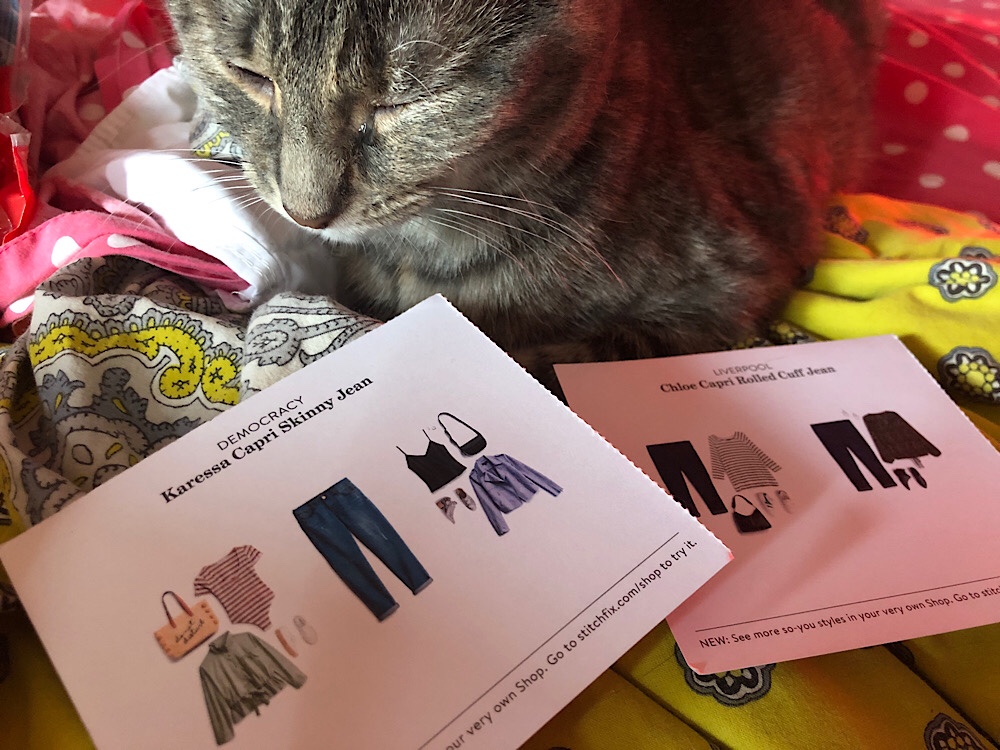
Since starting work at the Stitch Fix Bizzy Hizzy, my fascination for the company has not waned. When they began more than ten years ago, I remember reading about them in Vogue — they were the first subscription fashion service and how I wished to have the income to do something like that.
Subscription boxes were brand new then.
Now that I work in the warehouse I still marvel: at the miles and miles of clothes, number of clients, years customers have spent with the service, and the volume of mail in and out of that warehouse everyday.
With my interest in fashion and my curiosity regarding the business & warehouse specific logistics, I developed a new intrigue for style cards.
When you “style card” as a work center, you are supposed to print 900 sheets a night— each sheet has one personalized note and five style cards.
I asked my friends who get fixes to save them for me.
So I have been collecting them, reading them and now I have started to sort them by category and alphabetize them by brand. I find this organizing soothing. And they could be a great primary source archive of early 21st century fashion.
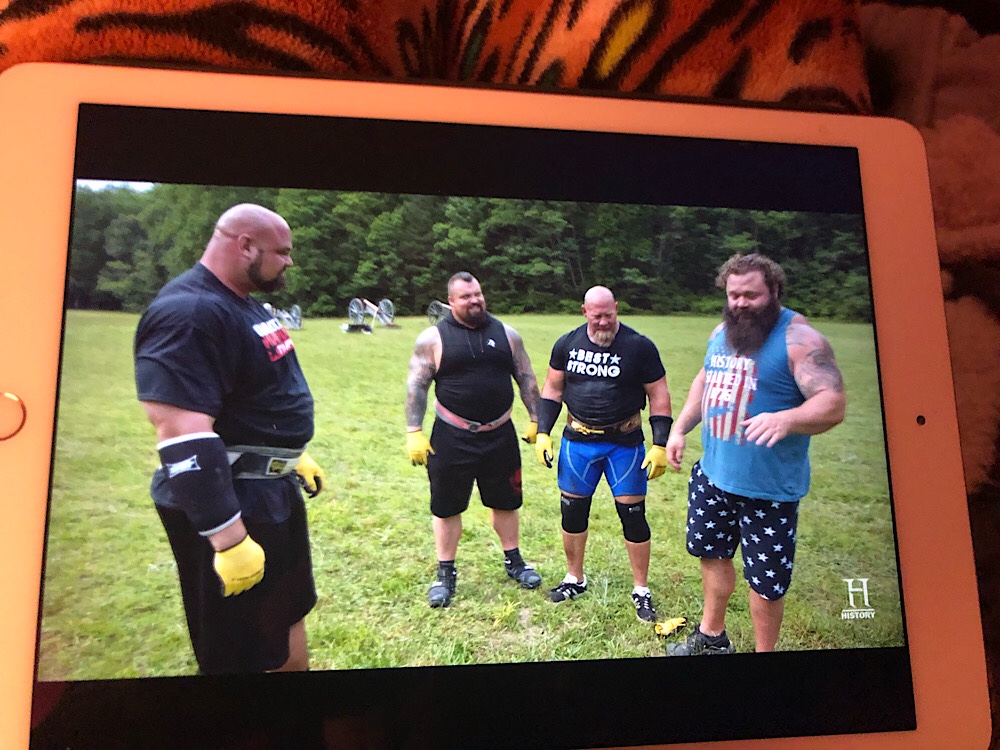
I spent today binge-watching The Strongest Man in History, a History Channel series where competitive strong men Robert Oberst, Eddie Hall, Brian Shaw and Nick Best try to replicate some of the most legendary strong man feats in history.
Left to right: Shaw, Hall, Best and Oberst
Now, at first I scoffed at the thought of professional strong men in a History Channel documentary series but I have to admit; they did at extraordinary job. The show was witty, had a great historical depth, and allowed the viewer to see a different side of these athletes— and for me, it offered a chance to see just how intelligent and athletic these men are.
Just some foster kittens for company
It made me lament how far I’ve left myself go with my own fitness goals, and I could offer excuses but excuses remain excuses.
I’m sad that I finished everything series.
And I’m very impressed with Nick Best, who, at 50, keeps up with the younger men.
I once had a stranger walk up to me and ask if I felt out of place. She specifically asked me if I felt as if I were in the wrong time.
She continued to tell me that she saw an air of an earlier era about me, circa the 1950s, which struck me as odd because my specialty in my academic work was 20th Century colonial/post-colonial Francophone Africa.
I gravitate toward post-World War II history and have to feign interest in anything 19th Century or earlier (though I can handle specific topics like the Industrial Revolution and Early French secularism because of their direct impact on the areas I enjoy) and have equal distaste for things that happened during my lifetime.
I love movies based on real events, and the rise of cinema celebrating real people and their achievements (like First Man, for example) and even historical settings (like the Downton Abbey feature film) are likely to get me into the theater.
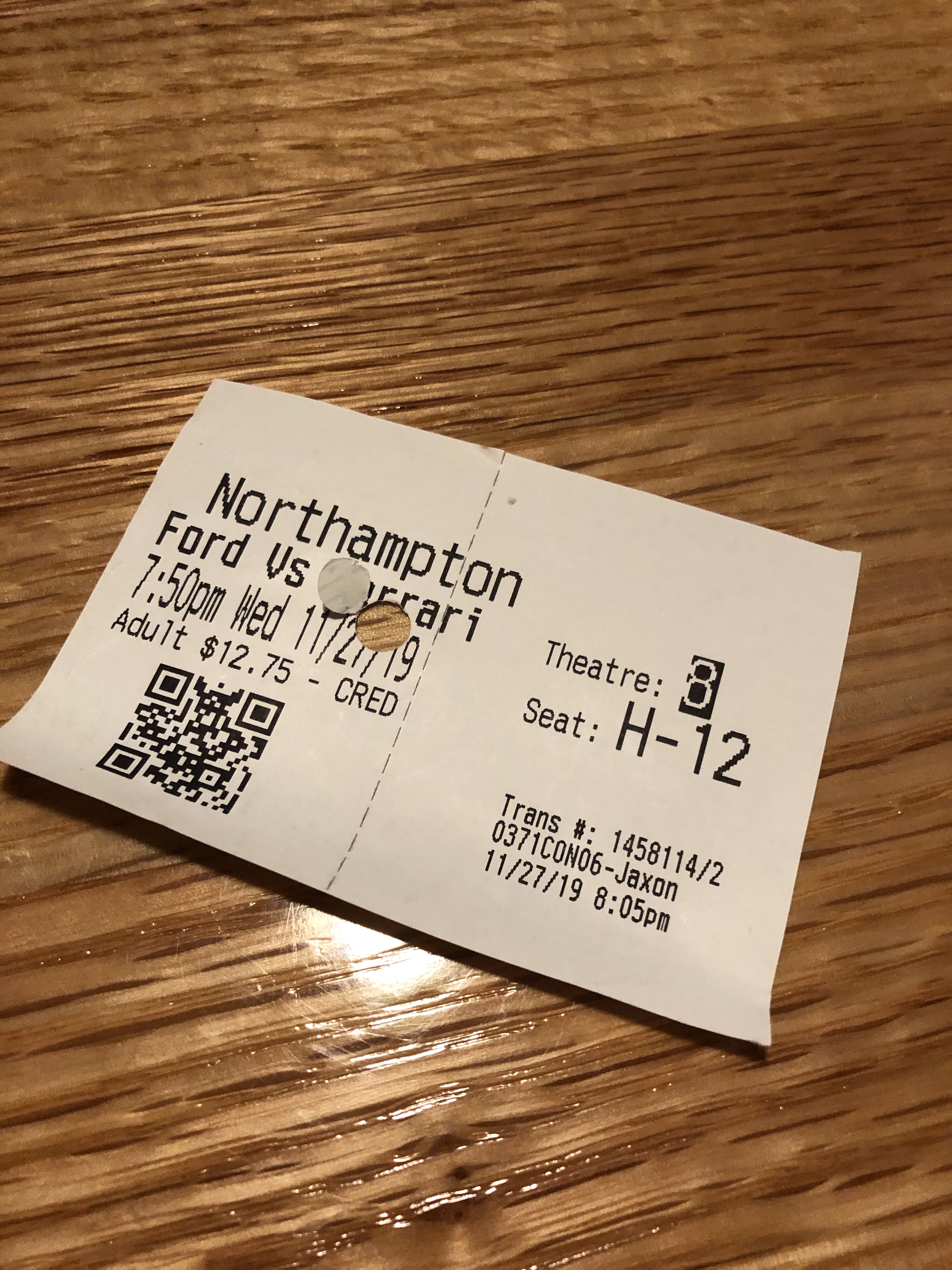
Ford v. Ferrari had been on my calendar since I saw the trailer months ago.
In addition to “liking” the mid-Twentieth Century and, of course, how can you not look at Ford v Ferrari and not see a nod to American Industrial Complex v European Artisan Mindset… I also really like cars.
I can recite most of the Nicolas Cage version of Gone in 60 Seconds. My initial thought when I say the Ford v Ferrari trailer was “oh, they made a biopic for Eleanor.”
So last night my teen daughter and I saw Ford v Ferrari. We laughed. She cried. She jumped from her seat at every spin the car made. And squealed with every race lap.
And it was also interesting to see Lehigh Valley native Lee Iococca represented on the big screen.
But I left the film with a sense of homesickness, or maybe heartsickness. Perhaps a piece of my soul belonged to someone perhaps my dad’s age, born in the late 40s or maybe 50s, and perhaps they died young. Maybe these yearnings I have for the past are desires to finish a life someone else didn’t have the chance to complete.
I normally don’t enjoy street fairs and community celebrations unless they have a theme that interests me. Carnivals and municipal anniversaries don’t do it for me.
I love the history of Easton’s Heritage Day, especially since I am a history nerd.
When the “founding fathers” signed the Declaration of Independence on July 4, it took several days for the messenger to arrive in Easton. He got to town on a Sunday and read the Declaration of Independence on the town circle. Now, for 200 plus years, the town officials plan a community fair downtown and re-enactors read the Declaration of Independence on the circle on the first Sunday after July 4.
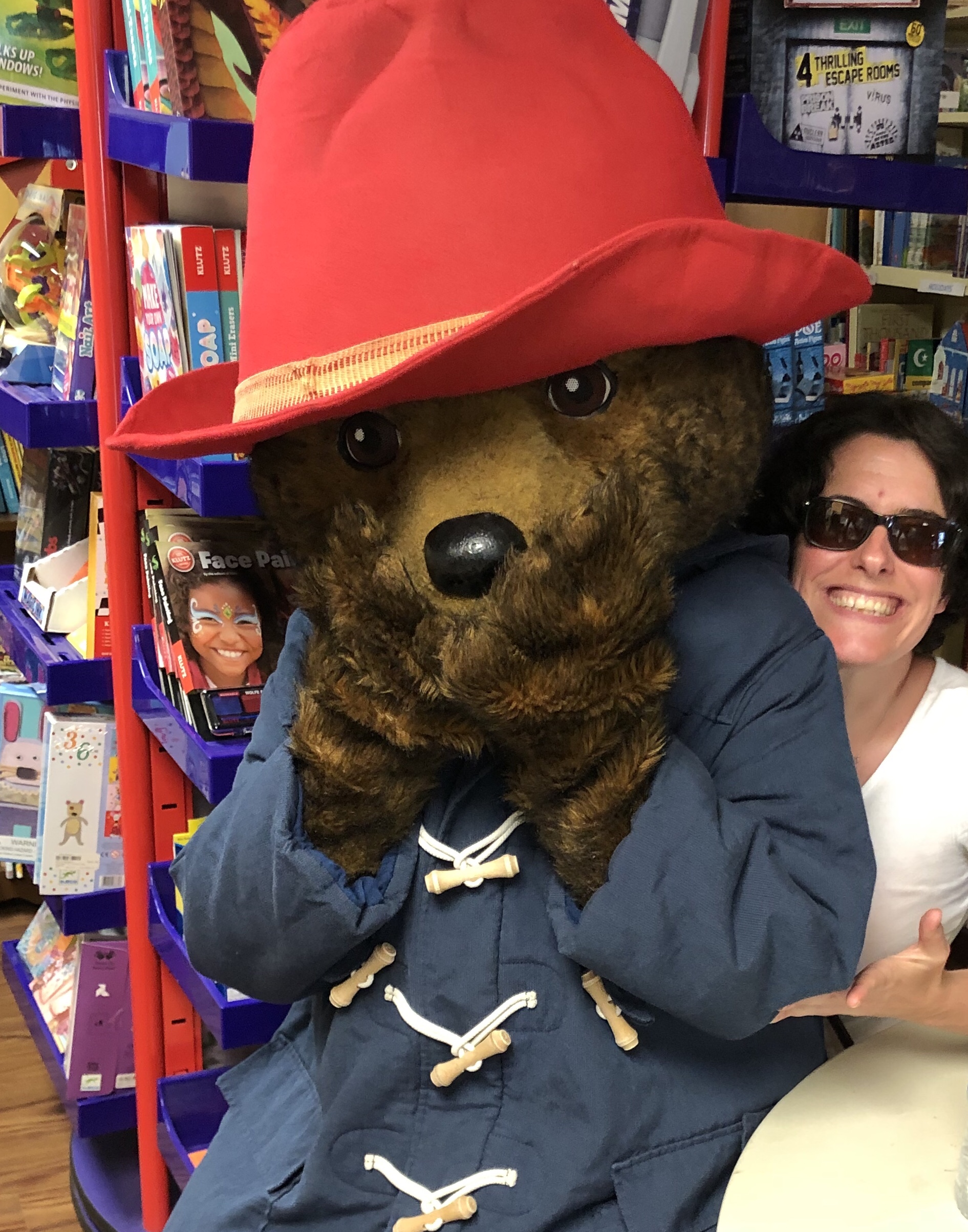
My daughter works downtown for Book and Puppet Company, a fun bookstore and let’s just say she helps with “character visits.”
Like when Paddington Bear visited today:
Naughty Paddington
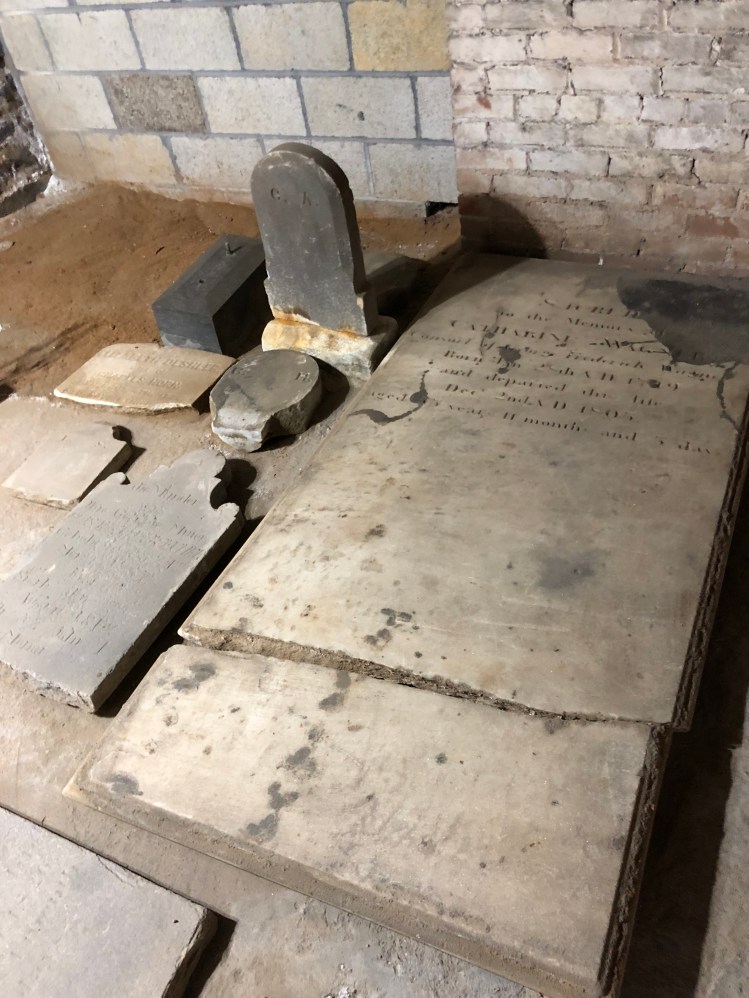
I had also heard that the Grave Cellar at Saint John’s Lutheran Church would be open, so that was enough to entice me out of my anti-Street fair attitude.
Parking at meters would be free for the day or $5 (cash only) at the garage. I found a spot very close to the book store.
And my daughter mocked me for asking the police officer if there was a geographic boundary on the free parking. My use of geographic apparently highlights my nerdness.
The Grave Cellar and Parsons-Taylor House
When St. John’s Church expanded quite some years ago, they moved the graveyard to another local cemetery but some of the graves still exist under the church. Not as creepy as the Paris Catacombs but pretty unusual.
From there we went to the tiny Parsons-Taylor house. George Taylor, one of the signers of the Declaration of Independence, lived and died there.
My daughter looked in great detail at the craftsmanship of the house and furniture.
And the grazing begins…
We started exploring nearby shops, and we felt a little hungry but didn’t want to eat until we’d seen all the offerings so we shared a slice of buffalo chicken pizza from a new restaurant in town. Then we shared a lavender lemonade from Green Marketplace.
Lavender lemonade
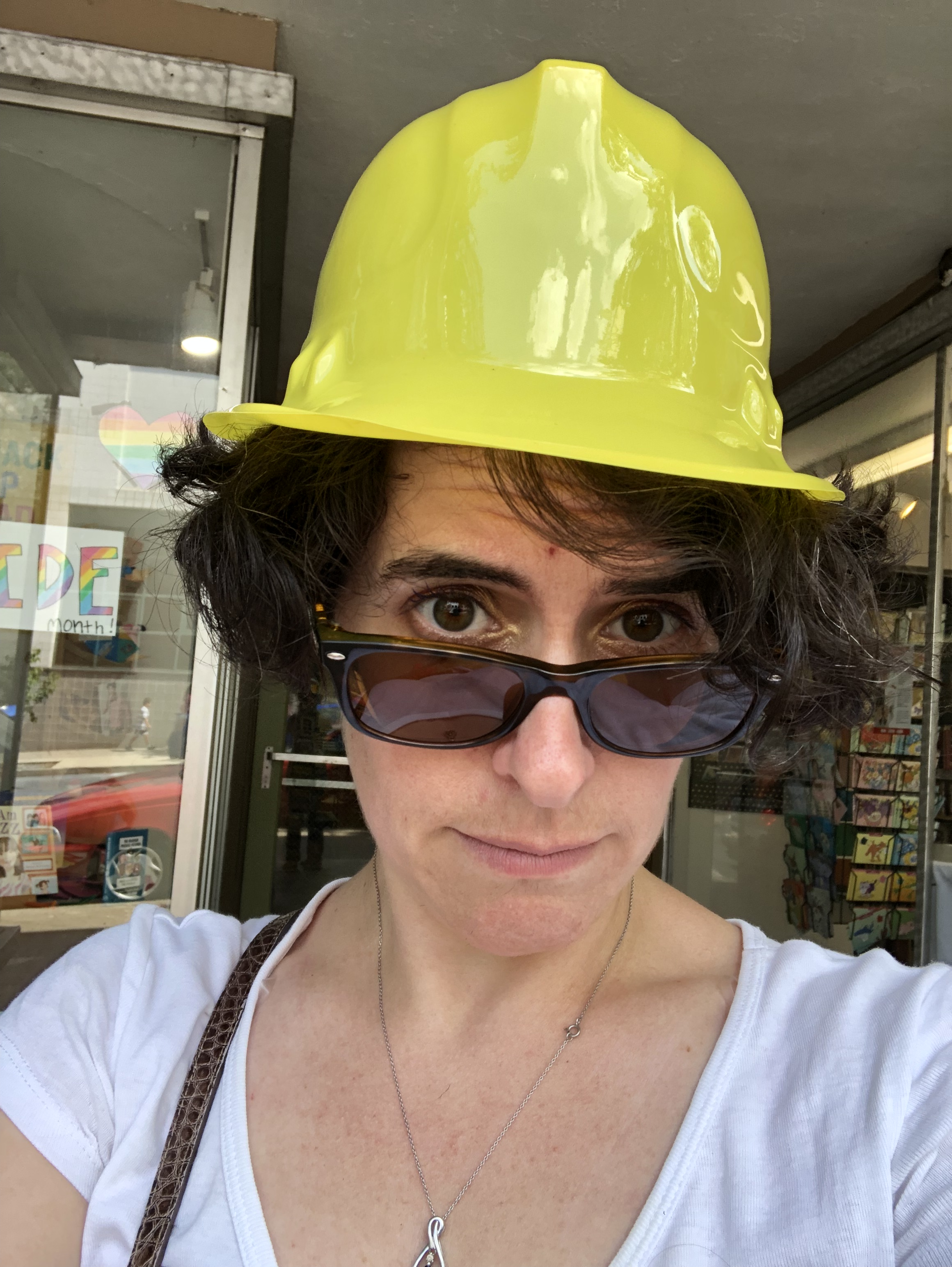
Then we looked at classic cars and city construction equipment and I got a hard hat.
We also saw how the wind twine into sisal braided rope.
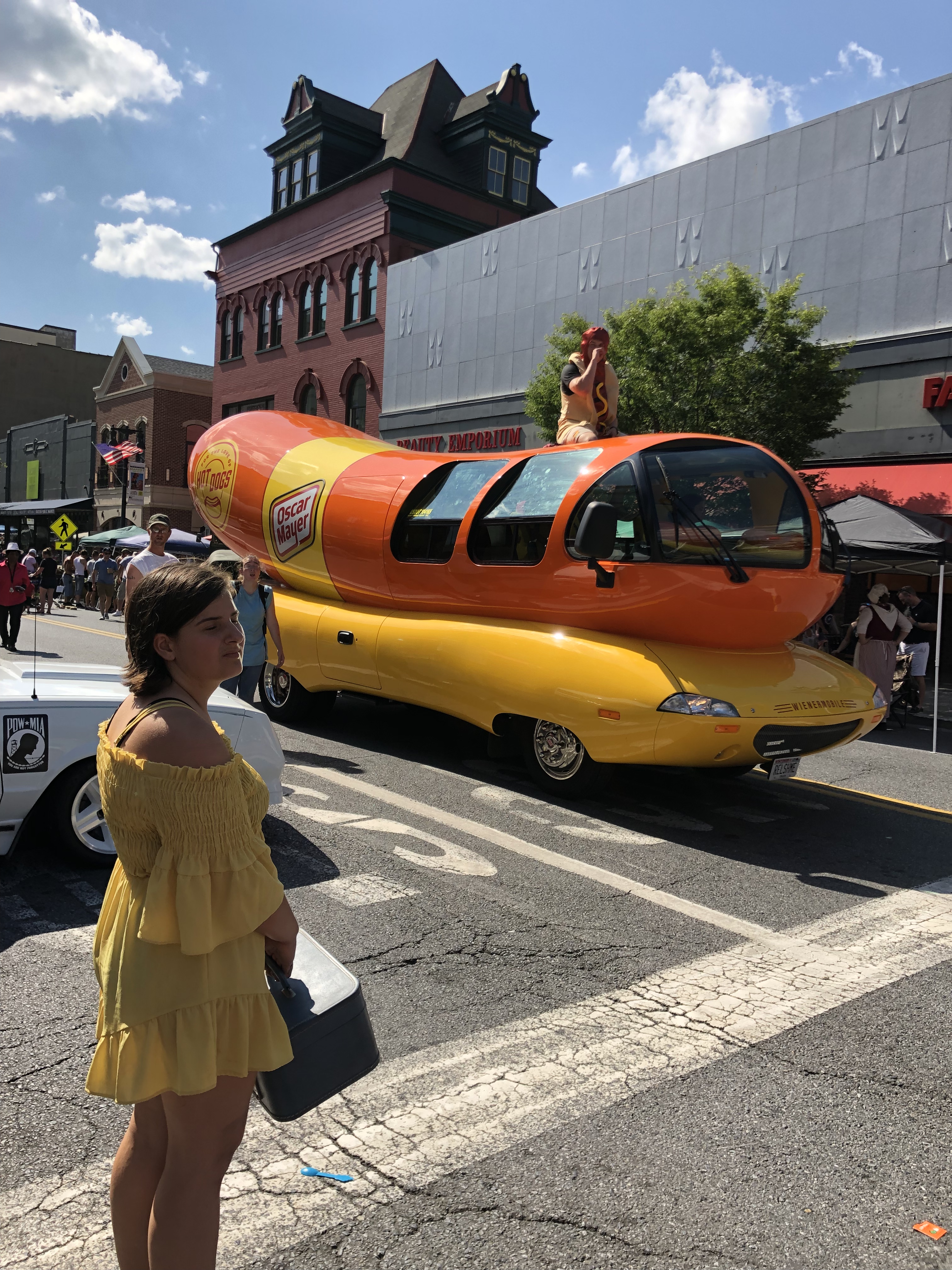
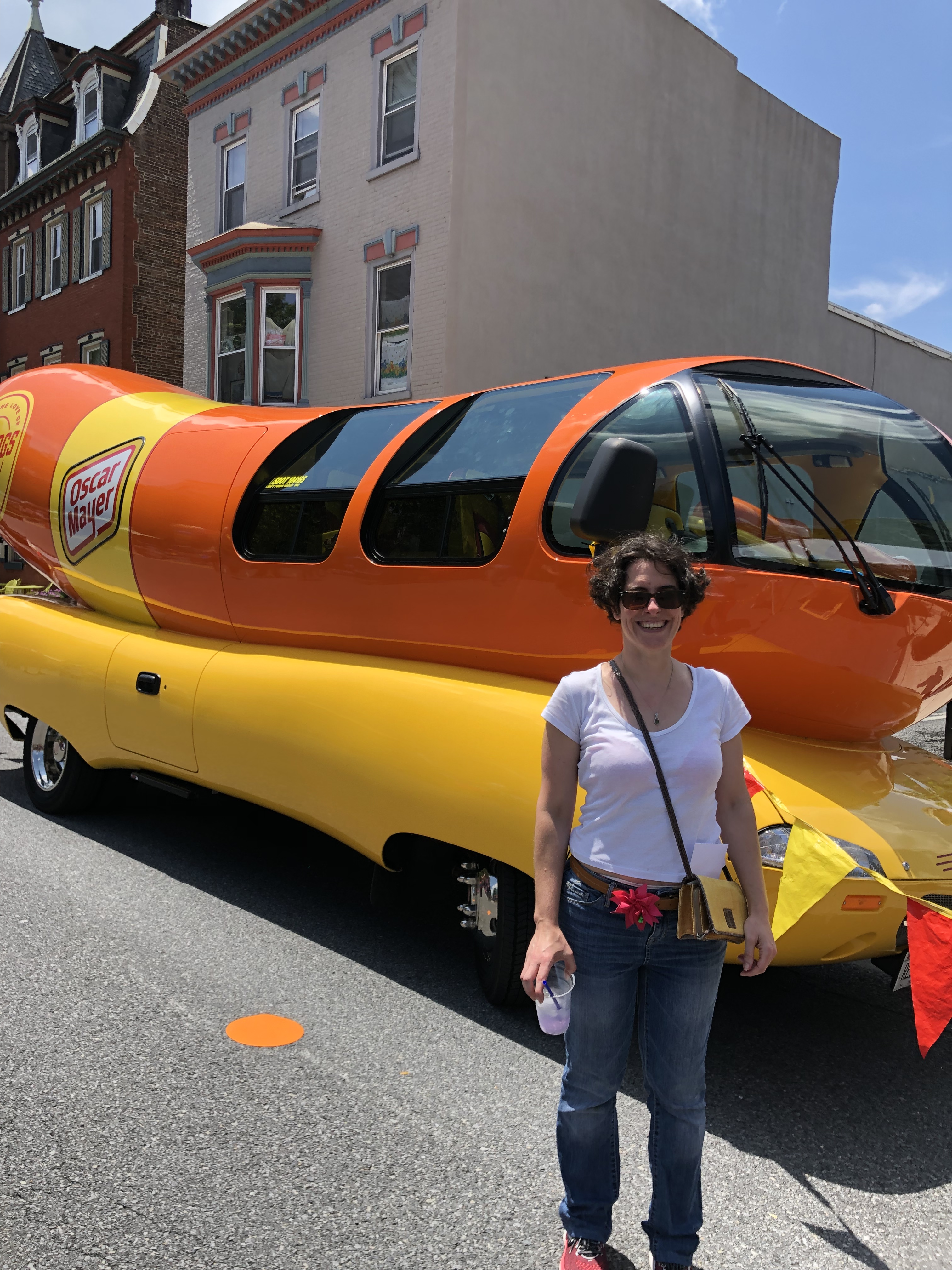
Then we meandered down another street and watched some of the kiddie activities and I found the Oscar Mayer Weinermobile. I was very excited.
Donating Blood
And then I saw a sign that a local church was hosting a blood drive. So I registered. The last time I tried to donate blood was 25 years ago, and can you believe they had my address on file from that time period? I didn’t give then because my blood pressure was too high.
I haven’t given since then because tattoos, piercings, anemia and travels to exotic third world countries.
But I’m O-negative when it comes to blood type so I should give. And I did. For the first time.
Then we went to my daughter’s “office” and Paddington Bear came to visit.
Shopping and more food
After work, an artist drew her and she bought a vintage Monarch train case at Salvage Goods.
We also explored the dollar store on the circle. That might have been the only disappointment of the day.
And the teen had some bacon nachos from Porter’s Pub and I had one chicken and one steak taco from the restaurant at 645 Northampton Street that has really good food.
Our last stop was Easton Public Market again for a watermelon lime slush from Modern Crumb.
So today I got an unexpected email from the folks at SAGE Academic Publishing. About four years ago, I wanted to write some short encyclopedia entries for them and they said no because I didn’t have a Ph.D. It was one of the things that made me consider graduate school.
They advised me that if I could find someone to co-author who had the necessary credentials, I could write for them.
I enlisted my college era friend Annette Varcoe, a brilliant scholar in American history and Women’s studies who had a freshly-minted Ph.D. after her name. She allowed me the pleasure of helping her edit her final dissertation.
The topic at hand was one of my favorite places in the world, Djibouti, and the article was based on a capstone project for my international affairs degree I had just completed. She knew nothing about Djibouti but her critical eye brought life to my dream and she got hooked on this region of the world and conditions there. Our first article was on poverty in Djibouti. She approached me a few months later and asked if I would consider doing another on security.
We did. Both pieces were submitted fairly close to each other. We probably wrote them both in 2014. The poverty piece was published in July 2015. I got the email that the second has now been published. March 2018. My career looks current even if I have stalled a bit!
This refreshed my memory that I never actually saw a book review I submitted to Global Studies South. Since my husband is home from work today using up his vacation, I asked him to look me up in the academic databases to which the Lafayette College libraries subscribe.

















 Angel Ackerman